- Not a substitute for professional veterinary help.
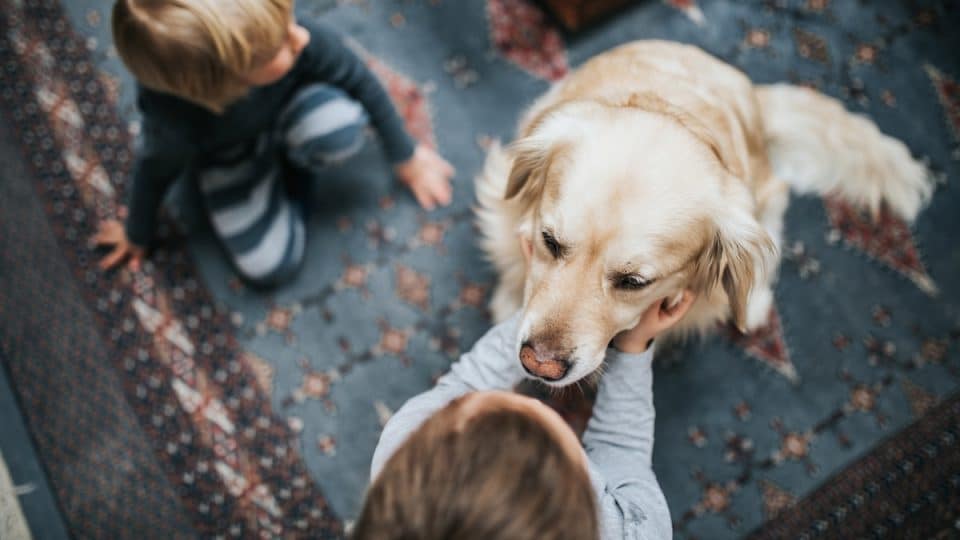
From a human perspective, there’s not much cuter than a little kid embracing a pet—but for a lot of dogs, unpredictable movements, loud sounds, and the possibility of rough play can make young children overwhelming or even scary. To keep everyone safe, it’s important to be able to recognize the signs that your dog is uncomfortable with a child.
Most healthy adult dogs give warnings before they respond to a perceived threat. That means you have time to intervene before a potentially dangerous situation develops. The challenge lies in interpreting your dog’s body language and understanding what they’re communicating.

To learn what signs to look for and how to handle your dog’s discomfort, we spoke to vets and certified dog behavior consultants about healthy interactions between dogs and children.
Calm Behavior vs Uncomfortable Body Language Chart
| Comfortable | Uncomfortable | Very Uncomfortable |
| Loose or wiggly body | Tense or stiff body | Leaning away, shaking, or lunging |
| Wide, loose mouth | Yawning or licking lips | Growling or baring teeth |
| Initiating physical contact | Ignoring the child | Attempting to avoid or escape interaction |
| Soft eyes | Side eye, looking away | Whale eye (whites of the eye visible) |
| Ears relaxed or perked up | Ears pulled back | Ears flat against head |
| Tail high or neutral | Tail held low or mid-level | Tail tucked or arched over the back |
| Tail wagging fast and loose | Tail wagging slow or to the left | Tail held stiff or wagging fast |
Signs of Healthy Dog and Child Interactions
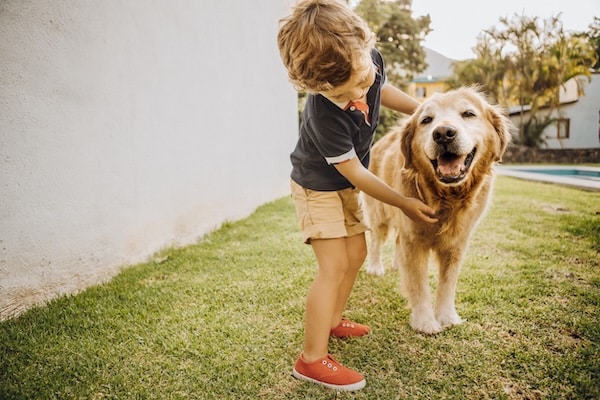
If an interaction between a dog and a child is going well, the dog’s body language will be loose and relaxed. “A loose or wiggly body, soft eyes, relaxed mouth, and neutral ears are all signs of a content dog,” says Dr. Liza Cahn, a veterinarian at Embrace Pet Insurance. Your dog will also likely be calmly accepting or actively encouraging interaction rather than seeking to escape it.
Here are some things you might see if an interaction between your dog and a child is going well:
- Loose, wiggly body or relaxed posture
- Tail and ears in a neutral position
- Soft, relaxed facial expression
- Horizontal, gently wagging tail
- Play bowing or seeking out interactions
- Affectionate gestures like licks or nuzzles
- Happy or excited vocalizations
Orbon Alija via iStock
Signs a Dog Is Uncomfortable Around a Child
Some dogs don’t want anything to do with kids and make their disinterest clear with avoidance. Others, however, might be initially willing to engage but spooked after initial contact. Here’s what discomfort can look like, both its subtle early signs and the clearer warnings that follow.
Early signs of discomfort
According to Allie Bender, a certified dog behavior consultant (CDBC, CPDT-KA) and the owner of Pet Harmony, the early signs a dog is uncomfortable around a child can be easy to miss if you’re not looking for them.
“It’s important to recognize that a wagging tail does not always mean a dog is happy,” adds Dr. Cahn. That’s why the context of the situation, along with your dog’s body language, is key.
Here are some early warning signs your dog might be uncomfortable around kids:
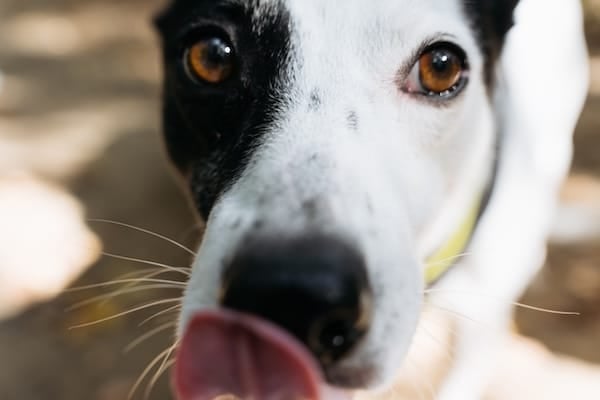
- Lip licking. When not around food, dogs lick their lips when nervous, sick, or in pain. It’s a self-soothing behavior, but can also be a sign of submissiveness.
- Drooling. Some dogs drool more than others, but if your pup starts salivating heavily during interactions with a child, it could indicate anxiety.
- Yawning. A single yawn could indicate either boredom or excitement, depending on accompanying body language. Repetitive yawning, however, is a common self-soothing mechanism for dogs when they’re feeling stressed.
- Side eye. A less extreme version of whale eye, your dog might glance at you (or your child) without turning their head to indicate mild annoyance. The whites of your dog’s eyes may be less visible than with whale eye, and their posture may remain relaxed.
- Ignoring the child. Though it may seem like a passive behavior, if your pup ignores your child’s attempts to interact, they may be unhappy with the exchange or are becoming stressed by it.
- Pulled-back ears. If your dog’s ears are pulled slightly back but not flattened against their head, it may be a sign of discomfort that could worsen with continued interaction.
- Wagging tail to the left. A tail wagging to the left often indicates uncertainty, especially if it’s held low or in a neutral position.
Overt signs of discomfort
According to Dr. Cahn, these stress signals can be viewed as a ladder in canine communication. “They’re a way for dogs to express their discomfort with us,” she says. If you ignore or miss your dog’s early warning signs, they may escalate to aggression.
Here are some of the more overt signs your dog might display if they’re uncomfortable with a child:
- Tense posture. If your dog becomes rigid or stiffens, it’s a sure sign of stress or fear. They might also shift their weight backward if they’re feeling fearfully defensive or lean forward if they’re going on the offensive.
- Shaking or trembling. Some dogs shake when they’re excited, but it can also be a sign of stress or fear, especially when accompanied by other signs of discomfort.
- Avoidant behavior. Step in if interactions are one-sided and your dog is not enjoying the attention, so they don’t feel like they have to escalate things to be heard.
- Growling or whining. Though dogs sometimes whine to get attention, it can also indicate unease. Growling is a more extreme form of vocalization in which your dog is delivering a warning. If ignored repeatedly, your dog may feel like they have to resort to a snap or bite.
- Whale eye. A more extreme version of side eye, whale eye is when your dog turns their head but keeps their eyes fixed on something. It exposes the whites of their eyes more significantly than side eye and is a more overt sign of discomfort.
- Flattened ears. When your dog pins their ears back flat against their head, it’s their way of showing they are afraid or in distress.
- Tucked tail. Your dog may hold their tail low when they’re feeling uncertain about a situation. A tucked tail also indicates pain or severe discomfort.
- Stiff or frozen tail. Even if your dog’s tail isn’t tucked, if it’s held stiff and unmoving, it could be a sign of fear or defensiveness.
Irina Orlova via iStock
What To Do If Your Dog Is Uncomfortable
“No matter how comfortable and happy a dog appears, all interactions between dogs and young children should be supervised,” says Dr. Cahn. Every dog has their limits, and it’s your responsibility to be alert to the signs that your pup is approaching theirs. Here are some steps you can take to promote peace, comfort, and safety during interactions between your dog and children.
1. Teach children how to interact safely
Instructing children how to interact safely with a dog is crucial for everyone’s well-being. If your child is old enough to understand, teach them about dog body language so they can recognize the signs a dog is uncomfortable and adjust their own behavior accordingly.
2. Intervene at the first sign of unease
If your dog starts showing signs of stress, step in sooner rather than later. For older children, ask them to leave the dog alone, explaining how the interaction is making them feel. With younger children, shift the child’s focus to another activity, or remove your dog from the situation. Adding a dog gate or play pen can be a helpful way to create a barrier between your child and dog.
3. Create a sanctuary space for your dog
When your dog feels uncomfortable around a child, it’s important for them to have a space to retreat. Create a safe zone for your pup, like their own room or an off-limits corner with their bed or crate. Use high-value treats to help your dog form a positive association with the space, practice relaxing in that part of your home, and teach your children not to bother the dog when they’re in it.
4. Give your dog an out
Don’t force your dog to endure interactions with a child if it’s making them ill at ease. Teach your children not to hug your dog or hold on to their collar, as this restraint could escalate your dog’s stress levels. Let your dog leave the room if they want to or train them to go to their safe space on cue.
5. Never punish your dog’s warning signs
As much as you may want your dog to like kids, you can’t force them to. And while the behavior may be frustrating, you should never punish your dog for growling or offering other warning signs. They’re trying to communicate with you and your child. It’s critical to take heed so they don’t feel ignored or desperate to the point they have to escalate to aggression.
6. Use desensitization and counterconditioning
While the first priority is to teach your children how to listen to your dog and respect their boundaries, you can also train your dog to handle certain situations better.
For instance, if you have a herding dog who goes wild when your small child zig zags across the room, you can spend some time working on desensitization and counterconditioning. Similarly, if your dog gets stressed out when your baby or toddler cries, you can work on getting them used to this sound.
When To See a Professional
Dog body language can be hard to read, and it’s always better to be safe than sorry, especially where children are involved. “It’s never wrong to consult a professional,” says Dr. Cahn. “I would encourage pet owners to do so at the first inkling that something may be wrong.”
If you’re concerned about your dog’s behavior around children (or your child in particular), Dr. Cahn recommends starting with a vet visit. Pain and illness can exacerbate anxiety or contribute to uncharacteristic aggression, so it’s worth ruling out underlying medical issues. Your vet may also be able to recommend a professional dog trainer or canine behaviorist.
If you’re not ready to commit to a consultation or in-person training, consider an online trainer instead. Sometimes it’s easier anyway to capture certain behaviors and interactions in a video and have your trainer review it and offer suggestions.
Regardless of which training path you choose, a behavior professional can help you learn to recognize your dog’s signs of discomfort, says Bender—and better still, they can also work with you to develop a plan to manage it.