- This post contains affiliate links. Read more here.
- Not a substitute for professional veterinary help.
When you have a new kitten, it’s hard to want to leave them. Their tiny paws, big personalities, and endless curiosity can make it all too easy to cancel your plans. But for most pet parents, work and other obligations mean you’ll eventually have to leave your kitten home alone.
The good news is that cats are naturally pretty self-sufficient, even from a young age. Some kittens can spend up to eight hours on their own, though the total time depends on their health, temperament, and age. In particular:

- Kittens 2-3 months old can be left alone for 2 hours
- Kittens 4-6 months old can be left alone for 3-5 hours
- Kittens 6 months and older can be left for 6-8 hours
The key is preparation. While it can be nerve-wracking to leave your kitten home for the first time, they’ll usually be okay as long as you account for their basic physical and emotional needs.
“Make sure they have access to water, food, items to scratch, and a litter box,” says Joey Lusvardi, a cat behaviorist and founder of Class Act Cats. “They should also have places they can hide if they’d like, and the area should be a comfortable temperature.”
In this guide, we’ll list nine helpful tips to keep your kitten safe and happy while you’re at work.
1. Kitten-Proof Your Home
Young cats are especially curious, and they don’t yet have a sense of what’s safe and what’s not. Lusvardi recommends doing a “cat-proofing audit” before leaving a kitten alone—essentially looking for things they could chew, break, or that could fall on them, and scoping out any places they could get stuck.
He suggests taking the following steps:
- Remove cords or secure them with a cord protector.
- Add dial covers to your stove so that your cat can’t accidentally turn it on.
- Pick up strings or anything your kitten might swallow.
- Put away plastic bags, food bags, or jars.
“Depending on how old they are, they may need to be kept in a single room that has all their needs met until you’re positive they aren’t going to injure themselves while you are gone,” says Lusvardi. If you don’t have a full room to dedicate to your cat, a kitten playpen can also help to keep them contained and out of trouble.
A pet camera can also help you keep tabs on them throughout the day until you’re comfortable giving them full access to the house.
2. Provide Easy Access to Food & Water
When you’re setting up your kitten’s space, Lusvardi recommends placing your kitten’s food and water away from their litter box, as cats have a strong instinct to avoid eating near their waste.
He also suggests using an automatic feeder to dispense dry kibble while you’re away. “Cats prefer eating smaller meals spread through the day,” he explains. “It reduces stress for them to be fed closer to how they’d eat in nature. An automatic feeder used for some meals can allow you to have consistency and have your cat get fed while you are at work.”
nensuria via iStock
3. Leave Kitten-Safe Toys Out
A bored kitty who doesn’t have enough opportunities to play or showcase their natural instincts can become anxious, destructive, or aggressive and act out in unexpected ways. Leaving toys out for your kitten is a great way to keep them entertained while you’re at work.
You’ll want to ensure they won’t create a safety hazard, Lusvardi cautions, recommending avoiding toys with loose pieces that your kitten could swallow.
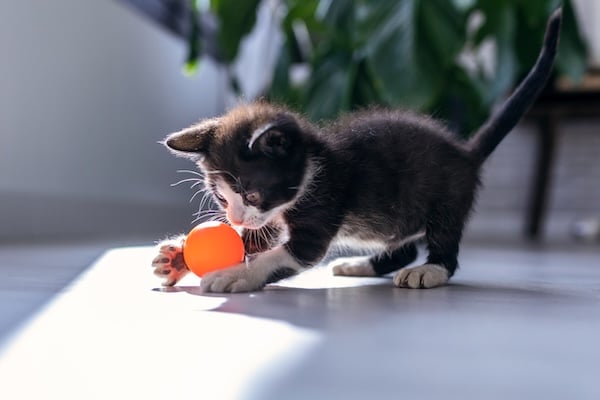
Consider choosing toys that encourage solo play. Ball track toys are a great choice, and food puzzles meet two needs at once, working your kitten’s body and brain.
4. Provide Watch Spot Access
Kittens are curious by nature, and sometimes the best entertainment is simply having something interesting to watch. A window with a view of birds, squirrels, or people walking by can offer visual stimulation throughout the day.
A cat tree, sturdy shelf, or other appropriately sized surface also gives kittens safe places to climb, nap, and observe their surroundings. Just make sure they can get onto—and down from—the perch safely. You’ll also want to check that your windows are securely closed or use a cat-proof window screen to ensure your kitten can’t get out while you’re at work.
5. Leave on Entertainment (e.g., cat TV)
A window perch can provide plenty of stimulation on its own, but you can also keep a kitten entertained by turning on the radio or television. Keep the volume low and choose programs that are soothing or interesting to cats. Cat TV, for example, features videos designed specifically for cats, with birds, fish, or other animals moving across the screen.
Just remember that entertainment can’t replace interaction. Your kitten still needs opportunities to play and spend time with you when you’re home.
6. Hire a Cat Sitter to Drop In
Hiring a cat sitter for drop-in visits while you’re at work is a great way to provide companionship, especially if your kitten is quite young or still settling into their new home.
A sitter will play with your kitten, refresh their food and water, scoop the litter box, and make sure they have everything they need to be comfortable at home. Even a short visit can help your kitten get through your eight-hour workday.
NickyLloyd via iStock
7. Get a Partner Kitten
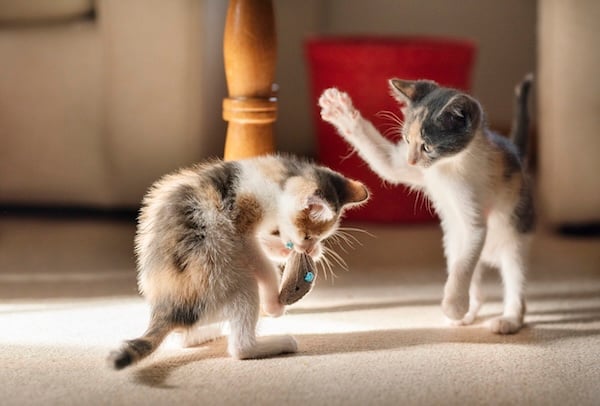
Cats are social creatures, and having another kitten or an older cat around can make alone time a lot less lonely. Two cats mean more opportunities to play, explore, snuggle, and burn off some of that seemingly endless kitten energy while you’re working.
Of course, not every kitten needs a companion. You’ll want to consider personality, age, and individual needs when deciding whether to adopt two kittens. If you do decide to adopt a pair or add another cat, make sure you provide enough space, food, water, and litter boxes to meet both cats’ needs.
8. Keep a Consistent Routine
A predictable routine can help your kitten learn what to expect throughout the day. Try to keep major parts of their schedule—such as meals, playtime, bedtime, and when you leave for work—relatively consistent whenever possible. The goal is simply to give them enough consistency that their daily routine feels familiar.
“Keep things as close to consistent as you are able to. That may mean your evening routine is pretty consistent after a certain time, but on the weekend it’s slightly different,” advises Lusvardi.
If your work schedule is hectic, a cat sitter can also help you create more of a routine for your kitty—whether you have someone on call for unexpectedly long workdays or a regular sitter to manage a busy workload.
9. Spend Time Before & After You Go to Work
When you have to be away from your kitten for a significant portion of the day, it’s important to make your time together count.
Before work, spend dedicated time with your kitten. Playing with them can also help them burn off some energy before you leave.
When you get home, give your kitten another opportunity for play, exploration, and social interaction. You don’t need to spend every waking minute together, but a few intentional moments can go a long way toward keeping your kitten happy and building your bond.