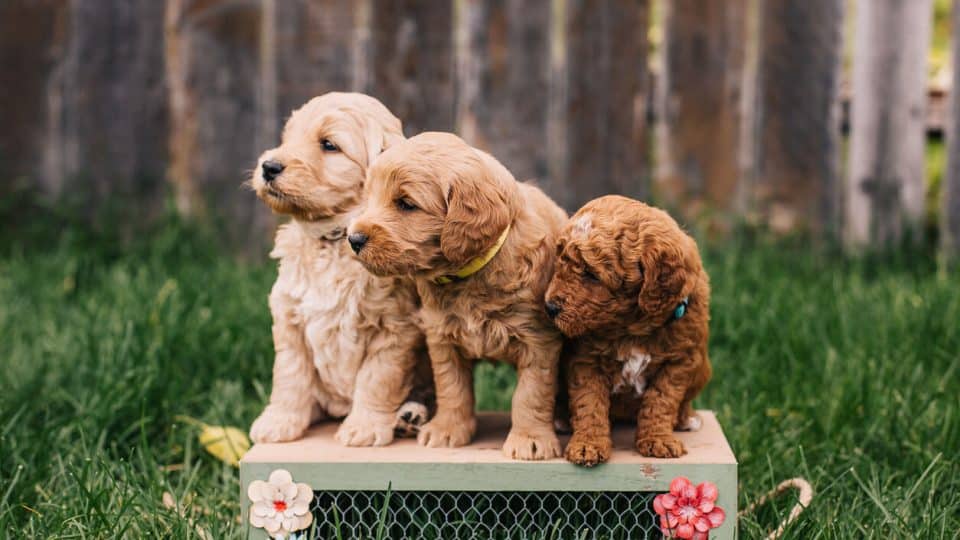
Few moments are as special as bringing a new puppy home—especially a puppy as cute as a Goldendoodle!

A Goldendoodle is a cross of a Golden Retriever and Standard Poodle. This hybrid breed, or so-called “designer dog,” combines the Golden Retriever’s affectionate personality with a Poodle’s intelligence and low-shed coat. These traits make them the third most popular dog breed in America, according to our ranking of the most popular dog breeds of 2024.
Fluffy Goldendoodle puppies may look like living teddy bears, but they quickly grow into smart, energetic dogs ready for a life of adventure. Goldendoodles can become affectionate and loyal companions, but like all dogs, they need plenty of care and devotion.
Read on to learn everything you need to know about raising a Goldendoodle puppy, from training and growth to grooming and socialization needs.
Key Goldendoodle Puppy Facts
Goldendoodles come in four sizes: petite, miniature, medium, and standard. In other words, there’s a Goldendoodle for just about every home!
While every puppy has their own personality, expect plenty of energy, intelligence, and a strong will to please!
- Litter size: Standard Goldendoodles usually have 8-10 puppies per litter. Medium-sized dogs generally have about 5-7 puppies, while miniature and petite dogs will have between 3-5 puppies.
- Puppy weight: Standard Goldendoodle puppies typically weigh between 5 to 12 pounds when they arrive home at the age of 8 weeks.
- Coat: Goldendoodles can have straight, wavy, or curly hair. They usually have low-shedding coats, but the amount of shedding will depend on their genetics.
- Puppy temperament: Once a Goldendoodle puppy settles into their new home, they’re boisterous, playful, and want to stick close to their family’s side at all times.
- Energy levels: All Goldendoodles are high-energy dogs, but dogs with Miniature Poodle in their lineage will typically have more energy than those with Standard Poodle lineage.
- Maturity: Goldendoodles typically settle into their adult size and personality around the age of 2 years.
- Unique traits: A Goldendoodle’s trademark trait is their long, low-shed coat, which can be allergy-friendly, depending on the individual dog.
- Bonding likelihood: Goldendoodles bond quickly with their humans. While some dogs will pick a “favorite” person, others love everyone in the family equally.
Where To Find Goldendoodle Puppies
The American Kennel Club doesn’t officially recognize Goldendoodles, since they’re a hybrid breed. The Goldendoodle’s popularity means they’re often bred through irresponsible practices, like puppy mills and backyard breeding.
However, it’s possible to find Goldendoodle puppies from responsible, ethical breeders who care about the well-being of their dogs, if you know where to look.
Goldendoodle breed club
The Goldendoodle Association of North America (GANA) is the only American Goldendoodle breed club. Only breeders who agree to their code of ethics and health test parent dogs can join. Breeders can earn bronze, silver, and gold certifications. You can find breeders who pass the tests in your area with GANA’s breeder directory.
GoodDog Marketplace
Good Dog is an online pet marketplace that connects prospective pet parents with rescues or breeders who meet their standards. All Goldendoodle breeders need to submit information about their breeding practices and ensure the physical and emotional well-being of their dogs.
Rescues and shelters
If you prefer to rescue a puppy, groups like IDOG Rescue focus on rehoming Goldendoodles and Labradoodles across the country. You can also check out local shelters and rescues to find a Goldendoodle or other Doodle dog in need of a home!
Recommended health tests
When you adopt a Goldendoodle puppy from a breeder, the puppy should have earned a clean bill of health from a reputable vet at their 8-week checkup. The breeder should provide proof of this vet visit and offer a health guarantee.
For example, Megan Smith, GANA gold-certified breeder of mini, medium, and standard Goldendoodles, offers 24-month health guarantees on puppies from her kennel, Acadia Goldendoodles.
As a minimum, both of the puppy’s parents should have had their hearts, hips, and knees tested, but many breeders also test their eyes and elbows. Breeding dogs should also receive testing for the following genetic conditions to minimize the chances of puppies inheriting any health issues:
- Progressive rod cone degeneration
- Von Willebrand disease
- Neonatal encephalopathy with seizures
- Golden Retriever progressive retinal atrophy
- Ichthyosis
- Degenerative myelopathy
Goldendoodle Puppy Physical Characteristics
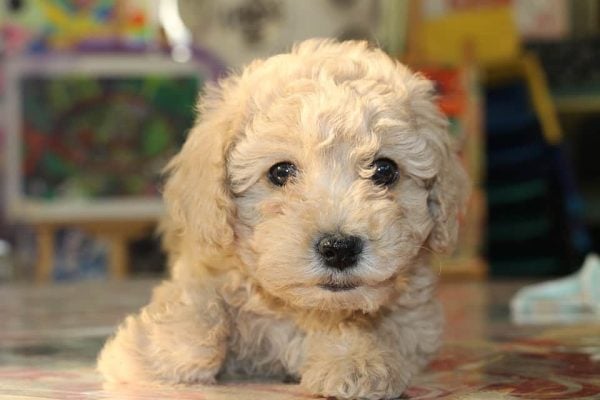
Smith says puppies are usually around 5 to 12 pounds when they leave their mothers. “The size they are when they leave us does not predict their adult size,” she explains. Adult size depends on the dog’s genetics.
The number of siblings a puppy has can also have an affect on their size when they leave their mom. Puppies from smaller litters get more space to grow in the womb and have less competition for milk. So, they may be bigger when they go home than a Goldendoodle puppy born into a larger litter.
According to Smith, Goldendoodles will grow rapidly for the first six months. Then, they’ll grow in smaller intervals until they reach their adult height at around a year old. They’ll continue to fill out until the age of 2, when they’ll typically settle into their full adult weight.
These variations make it difficult to track an individual puppy’s growth pattern, but a puppy growth calculator can give you an idea of their first several months.
| Age | Weight in pounds (lbs) | Height at the withers (shoulder) | Tips |
| 8 weeks | 5-12 lbs | 3.5-4 inches | Tiny and easy to hold in your hands, but full of energy. |
| 12 weeks | 11-20 lbs | 5-6 inches | Their small size means they might fit into tight spaces, like behind your furniture. |
| 6 months | 25-45 lbs | 13-16 inches | They can reach garbage cans and may be able to climb the counters. |
| 1 year | 50-90 lbs | 17–21 inches | Dogs have reached their adult height but may continue to gain weight for another 6 months. |
Raising a Well-Adjusted Goldendoodle Puppy
“Goldendoodle puppies may be a little timid or unsure when they arrive at their new home,” Smith says.
During the first week or two, expect your puppy to be reserved and cautious of their new surroundings and family members. Once this period ends, however, they tend to bond with their humans quickly. From then on, expect a Velcro dog who wants to be by your side for life.
Because of their intense loyalty and devotion, these dogs can become clingy and anxious without proper training. You can set your Goldendoodle up for success with the right training and activities.
Positive reinforcement
“Goldendoodles need consistency,” Smith says. Otherwise, they can develop bad habits, like nipping, leash pulling, and not listening to commands. Gentle, positive reinforcement is the best way to teach good manners.
Since they bond so closely with their humans, they can develop separation anxiety, especially if someone usually stays home with them throughout the day. You can help them learn independence with the following techniques:
- Leaving them alone for small chunks of time, like when you go to the grocery store or out to dinner.
- Setting up a baby gate that allows your puppy to see you without getting constant attention.
- Staying calm when you leave and return home to teach them that people coming and going isn’t a big deal.
- Rewarding them for staying calm when left alone.
Potty training
Goldendoodle puppies are easier to train than Golden Retrievers but slightly more difficult than Poodles, Smith says. A good breeder will begin potty training before the puppy leaves their mother so they can catch on quickly when you bring them home.
Puppies have smaller bladders than adult dogs, so you’ll need to take them out more often when they’re younger—usually every 2 hours.
As adults, miniature Goldendoodles will need bathroom breaks about every 4 hours, medium Goldendoodles every 5-6 hours, and standard Goldendoodles every 6 hours, according to Smith.
Check out Rover’s guide to potty training.
Crate training
Crate training is essential for Goldendoodles, Smith says. The crate can become your new puppy’s safe space and help them adjust to their new surroundings more easily. With consistency and a gradual approach, they’ll take to it well, she says.
Smith suggests starting out with the crate in your bedroom so your puppy feels close to you and learns to feel secure inside it. You can also place something with your scent inside, like an old T-shirt.
Find more tips and step-by-step instructions with Rover’s guide to crate training a puppy.
Exercise and activities
Every Goldendoodle puppy will have their own preferences for exercise and games. In general, though, they prefer activities that play to their natural instincts, like retrieving and hunting.
Some ideas to try with your puppy include:
- Catch
- Fetch
- Tug-of-war
- Swimming
- Dock diving
Socialization
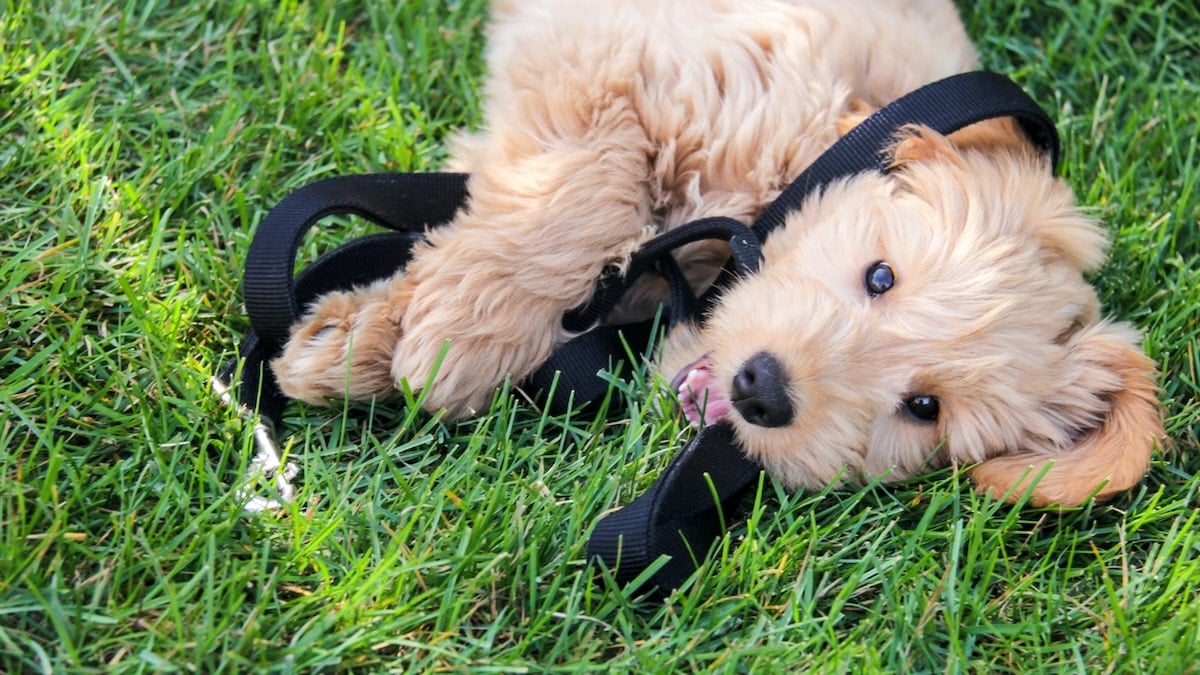
Some Goldendoodles are more fearful around strangers and other dogs than Standard Poodles and Golden Retrievers. Socializing a puppy early and often will help get them used to new experiences.
Expose your puppy to a variety of new stimuli, like:
- Meeting people of all races and genders.
- Meeting other dogs and cats
- Playing with children of all ages
- Going to dog-friendly outdoor festivals
- Walking on different surfaces, from shiny floors to rough gravel
- Experiencing loud noises, like slamming doors
- Swimming in lakes or pools
- Being held or puppy-sat by strangers
“As the puppy’s world gets larger, and they get used to new people and places, they will gain confidence,” Smith says.
Adjust for fear periods
Socializing a puppy is crucial, with a small caveat. All puppies can go through fear periods where they find new stimuli especially scary.
Fear periods happen once when your puppy is between 7-11 weeks old, and once when they’re older in life. Mini and petite Goldendoodles typically go through their second fear period around the age of 6-9 months, while standard or medium Goldendoodles typically experience theirs around the age of 10-14 months.
If a dog has a particularly scary experience during a fear period, it may lead to more anxiety as an adult. So, be especially patient during this time and don’t force any interactions if your puppy doesn’t seem interested.
Grooming Routine for Goldendoodle Puppies
Goldendoodle puppies have a thinner coat that will shed out and be replaced by a thicker adult coat, Smith explains.
Adult Goldendoodles should go to the groomer every month or so for a trim, but puppies can go a few weeks longer without haircuts.
That said, Smith suggests regular baths and trims anyway. At-home baths and brushing will help your pup get used to the grooming process.
Goldendoodle puppies also need regular tooth brushing, nail trims, and ear cleaning to look and feel their best.
Health Considerations
In general, responsibly bred Goldendoodles from genetically tested parents will have a lower risk of serious health conditions, though it’s important to keep up with annual vet visits to make sure they’re in good health.
Your puppy will also need to follow the core vaccine schedule—like all dogs—so they’re protected from potentially fatal diseases. Ideally, puppies should avoid other puppies and dogs who haven’t had all of their vaccines until a full week after their final round of vaccines. This will typically be when they’re between 12-18 weeks old.
As rambunctious and naturally curious pups, Goldendoodles can end up chewing on things they shouldn’t, from splintering sticks to your favorite underwear. It’s important to supervise them around potential choking hazards—and it never hurts to have pet insurance for any unexpected vet costs.
Essentials Checklist for Goldendoodle Puppies
If you’ve already found a breeder or rescue and you’re ready to bring your pup home, you can prep for their arrival by gathering the following Goldendoodle puppy essentials:
- Puppy food: Choose a nutritionally complete puppy food formulated for your puppy’s size range—for example, a small breed formula for a mini Goldendoodle and a large breed formula for a standard Goldendoodle. We like Purina Pro Plan.
- A harness and leash: Go with a non-retractable leash and an adjustable harness that you can let out as your puppy grows. We recommend the Copatchy dog harness, since it’s puppy-sized and comfortable for dogs new to harnesses.
- A puppy crate: Smith recommends choosing a crate that will comfortably fit your dog’s adult size, so you won’t need to buy a second one when they grow. You can use a removable crate divider to keep the space snug until they grow into it.
- Chew toys: Grab a variety of chew toys with different textures, which will give your puppy something to gnaw on during teething. While store-bought toys are great, you can make your own—try a fray-proof rope made from an old T-shirt!
- Puzzle toys: Give your puppy’s brain a workout with puzzle toys, like snuffle mats or memory-testing treat dispensers.
- Puppy pads: Even if you’ll be potty training your pup outside, it never hurts to have puppy pads on standby as a teaching tool.
And, of course, don’t forget the most important things: plenty of love, affection, and devotion for your new companion!