- This post contains affiliate links. Read more here.
- Not a substitute for professional veterinary help.
Whether you’re a new or seasoned dog parent, you’ve probably heard the term “kennel” used in a few different ways. It can refer to an individual crate, a large outdoor pen sometimes called a “kennel run,” or even a professional dog boarding facility.
Whether a kennel of any type is good or bad for a dog depends on how it’s used. For example, kenneling (or crating) your dog for short-term confinement can be beneficial for potty training, travel, and decompression. But kenneling a dog becomes harmful when it’s used as a punishment or for long periods.

In this guide, we’ll walk through which type of kennel may be best for your dog, how kennels and boarding facilities differ, and how to set your pup up for success the first time you step away.
Which Kennel Is Best for Your Dog?
Which type of kennel makes the most sense for your dog will depend on what you need the kennel for—like training, nap time, travel, or outdoor use while you’re away.
Here are the most common kennel types, how to use each one, and which dogs they work best for.
| Type of kennel | Primary use case | Best for | Acclimation period |
| Indoor crate | Potty training, sleeping, downtime | Puppies, dogs adaptable to crate training, and dogs who like a den-like space | Short to moderate; should be introduced gradually and positively |
| Airline crate | Travel and transport | Dogs flying or traveling long distances | Moderate to long; dogs should be comfortable well before travel |
| Outdoor kennel or dog run | Contained outdoor time, exercise | Dogs who enjoy being outside, pet parents who can’t directly supervise their dog’s outside time, and escape artists | Short; pair with enrichment and monitoring |
| Boarding kennels | Temporary care while pet parents are away | Dogs whose pet parents are traveling or unavailable | Varies; social, adaptable, and healthy dogs will have an easier time acclimating |
Crates Vs. Kennel Runs
For home use, a kennel is a space to contain your dog for short periods. A kennel setup might look like a crate in your living room or a big enclosed kennel run in your yard. People use indoor kennels to help potty train their dogs, offer a cozy place to sleep and relax, and travel safely.
Outdoor kennels are enclosed spaces attached to a crate or dog house that allow dogs to spend time outside without close supervision while remaining safely contained. They typically offer enough space to walk around and even exercise.
Adult dogs can generally stay in their indoor crates for up to 6 hours (3-4 hours for puppies and senior dogs), but anything beyond that is too long. For outdoor kennel runs, safe time limits typically depend on your climate and weather.
Is an indoor/outdoor kennel right for you?
The biggest benefit of indoor crates and outdoor kennel runs is that they can keep your dog safe when you can’t closely keep an eye on them. When determining if either is right for your dog, consider:
- Age. Puppies often need smaller indoor crates for potty training, whereas adult dogs may need more space. Puppies will also likely need more supervision in an outdoor kennel to prevent them from developing unwanted habits, such as barking.
- Size. Your dog should be able to stand, turn around, and lie down comfortably in their indoor kennel. The size of a kennel run depends on the amount of outdoor space you can spare and whether you plan to use it for exercise.
- Energy level. High-energy dogs may benefit from larger spaces, such as kennel runs, while calmer and anxiety-prone dogs often settle well in crates.
- Special needs. Dogs with anxiety, mobility issues, or medical conditions may need added comfort, considerations, or ventilation in their kennels.
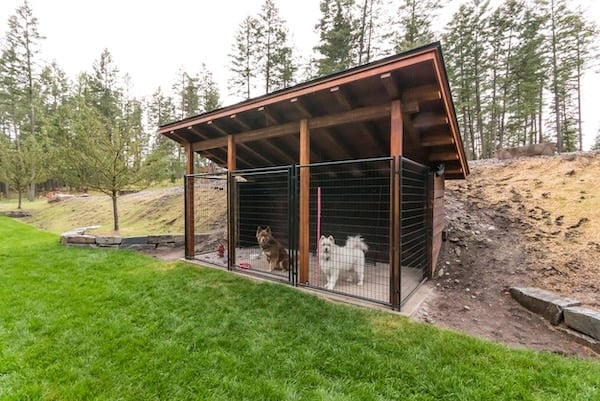
PC Photography via iStock
Kennel Shelter vs. Boarding
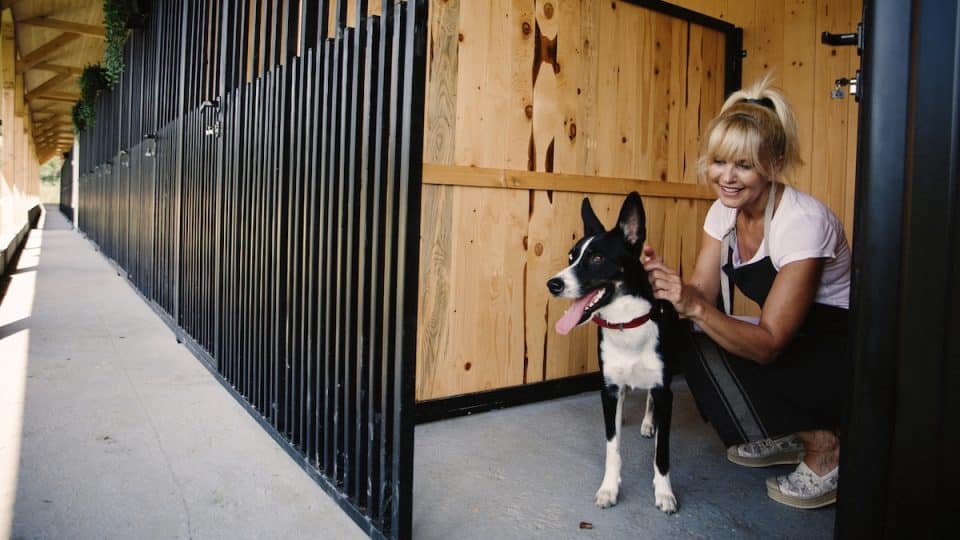
The word “kennel” can sound worrisome when you’re researching boarding options, especially if it brings crowded animal shelters to mind. A good boarding kennel, however, isn’t like a shelter. These facilities, designed to watch dogs while their pet parents are away, will offer dogs their own comfy sleeping space. Pet parents can often opt for add-ons and perks like extra playtime or training sessions.
Benefits of boarding kennels
Dog boarding at a kennel can be a good option when:
- You’re traveling for multiple days or weeks
- Your dog does well with and enjoys new people and other dogs
- You need someone to administer medication to your dog while you’re away (medical boarding)
A good boarding kennel is organized, clean, and welcoming, with comfortable, well-ventilated areas for dogs. It should also have staff who know each dog’s name (and personality), stay consistent with daily routines, and provide full transparency about supervision and care.
Risks of boarding kennels
As with any new situation, it’s important to do a quick risk analysis. Here are some potential risks associated with boarding your dog at a kennel.
- Stress or anxiety. Some dogs, including noise-sensitive or reactive dogs, are more likely to experience stress or anxiety when staying at a boarding kennel.
- Exposure to illness. Large boarding facilities can increase the risk of infectious disease transmission among dogs. It’s important to check vaccine requirements.
- Lack of supervision. Because boarding kennels host multiple dogs at the same time, staff may not have enough time to spend individually with each dog. Always ask about the kennel’s staff-to-dog ratio before booking a stay.
Is a boarding kennel right for you?
Not every boarding kennel will work for every dog. When boarding your dog, consider:
- Age. Puppies and senior dogs may need quieter spaces and more supervision than a boarding facility can provide.
- Size. Some dogs, especially small pups, need playmates of a similar size. Consider asking how play groups are separated out.
- Socialization. Boarding facilities are best suited to dogs who are adaptable and socially confident in new places and with new people and pets.
- Special needs. Dogs with medical conditions, mobility concerns, or behavioral issues such as separation anxiety or resource guarding often require more customized care than a boarding facility can provide.
For dogs who aren’t a good fit for boarding kennels, in-home boarding or house sitting might be a better alternative. When a sitter stays in your home, or your dog stays in theirs, your pup is better able to stick to their normal routine, helping to reduce stress while you’re away.

Evgeniia Gordeeva via iStock
Leaving Your Dog Alone for the First Time?
To make alone time easier for your dog, there are a few things you can do:
- Meet their needs before you leave. A walk, some playtime, or a mentally stimulating activity like a puzzle toy can help take the edge off and help them feel calmer while you’re away.
- Build up their alone time slowly. Start with a brief departure and gradually increase the time. You can use a pet cam to gauge how long they’re comfortable on their own.
- Leave them with a comforting item. Give them an item of clothing that smells like you to make them feel less lonely. New puppies and dogs with separation anxiety might also benefit from having a heartbeat toy.
How long can dogs be left alone?
Your dog’s age will be a key factor in how long it’s safe to leave them home alone. While every dog is different, here’s a general guideline:
- Puppies. A common rule of thumb is not to leave a puppy alone for more than the number of hours equal to their age in months. For example, a 3-month-old puppy should not be left alone for more than 3 hours.
- Adult dogs. For many healthy adult dogs, the maximum time you should leave them alone is 6-8 hours. However, aim for 4-6 hours if leaving them in a crate.
- Senior dogs. Older dogs may have a harder time being home alone because they may have less bladder control, so you’ll want to adjust accordingly to their specific needs.
- Dogs with separation anxiety. There’s no hard and fast rule for the amount of time to leave a dog with separation anxiety, as the baseline can change quickly. The main idea is to be away for less time than it takes your dog to become upset about your absence, whether that’s ten minutes or three hours.
Having trouble with crate training or kenneling? You don’t have to go it alone. Get expert help from a professional trainer who can work through your dog’s issues with you, or lean on your community of dog walkers and dog daycares as you train your pup to be comfortable alone.