
- This post contains affiliate links. Read more here.
- Not a substitute for professional veterinary help.
Crate training is a hot-button topic in the pet world. Is crate training cruel for dogs and puppies? Does it offer them valuable structure and security? According to the RSPCA, your dog’s crate should be a place where they feel secure, safe, and comfortable. There are compelling arguments on both sides, which makes reaching a position you feel confident about tricky.
When it comes to crate training, there’s no single answer that will apply to all dogs. Simply put, the decision to crate train or not really depends on your dog’s personality, adaptability, and history within confined spaces.

If you’re weighing the pros and cons of crate training or exploring why crate training is important, we’ve consulted the experts to help sift through the noise. Whether you have a puppy who needs crate training or an older adult dog who has never been in a crate, each pet parent can assess their personal circumstances to determine what makes the most sense.
We’ll also look at some safety precautions to make the crate training experience as positive as possible. Plus, we have safe alternatives should you determine crate training is not for your dog.
Pro-tip: When properly conditioned, a crate can be a safe haven for some dogs. Find a dog trainer near you to determine whether crate training would be a good fit for your particular pup.
Benefits of Crate Training
As a new pet parent, you might be wondering: Is it ethical to crate train a dog? Advocates of crate training cite a lot of advantages. First, crates can be useful—some even say critical—tools for both potty training and getting a dog used to and comfortable with separation from their pet parent.
Crates are also a safety tool to keep a dog protected during transport, confined during recovery, or out of danger when a human can’t monitor them. Additionally, crates can be a positive and comforting environment for dogs, who may choose to rest in them without prompting or encouragement.
Signs your dog will be adaptable to crate training
If you’re concerned that crate training might be a cruel experience for your dog, you can explore how adaptable your dog would be to crate training as a first step. According to Julie Burgess, CPDT-KA, a fear-free-certified dog trainer at Senior Tail Waggers, almost any dog can be a good candidate for a crate, provided (1) training is done properly, and (2) you have an appropriately-sized crate. Dogs who are adaptable to crates will typically approach crate training with signs of relaxed interest:
- curiosity
- excitement
- an upright tail
- relaxed ears
- cocked head
But you don’t just have to put a crate in front of your dog and see how they feel. A dog’s acceptance and enjoyment of a crate depends both on their personality and how they’re trained to use the crate, which means there’s a lot you can do to influence your dog’s attitude.
If your dog is generally adaptable, and you’re ready to invest the time and patience it takes to crate train, it could be a positive experience for both of you.
-

Christine McCann via iStock
Cons of Crate Training
Opponents of crate training regard crates as unnecessary and sometimes flat-out abusive—and for some dogs, they undoubtedly are. But can crate training hurt a dog, and is crate training a dog or puppy cruel in certain situations?
Dogs with separation anxiety, for one, may struggle with a crate. While it’s true that some dogs with separation anxiety will do better in a smaller space, those with confinement anxiety may find the crate adds to their stress. If crating a dog appears to exacerbate their anxiety, Burgess advises against pushing it.
Even with proper training, some dogs with severe separation anxiety will continue to view crates as scary, says Amanda Dwyer, CTC, SAPT, FFCP-T, trainer and owner of Westward Hound.
Signs of a dog not adaptable to crate training
“If your dog is exhibiting symptoms such as howling, drooling, crate soiling, trembling, or self-injury in their crates, they may have separation anxiety and could benefit from working with a trainer who is certified in this specific behavior,” says Dwyer.
Do Experts Recommend Crate Training?
So, do vets recommend crate training? According to Dr. Dwight Alleyne, DVM, a veterinary advisor for Betterpet, crates can certainly be used for good, but they can also be used inappropriately.
“Crates can be necessary to train a dog how to handle being separated from their owner, and to learn housebreaking techniques,” he says. Used in moderation—and with your dog’s comfort and safety always top of mind—a crate can be a helpful tool for many pet parents.
At the same time, Dr. Alleyne concedes that using a crate for housing or punishment, instead of training, can indeed be cruel. And crating for long periods of time is also to be avoided.
Below, our experts answer some frequently asked questions about crates and crate training.
Are crates scary to dogs?
“They can be,” says Dwyer. “Especially if dogs are not properly introduced and conditioned. Most animals (us included) prefer not to be contained in a space they cannot escape from.”
Negative past experiences with crates can contribute to feelings of unease, as can forcing a dog into a crate against their will. The key is to establish the crate as a safe space, introducing dogs gently and incrementally. With time and patience (and sometimes professional help), most dogs will be able to come to associate their crate as a safe space, not a dangerous one.
Are dogs actually den animals?
Some in the pro-crate camp suggest that dogs are den-dwellers. This is presented as evidence that dogs are naturally drawn to the seclusion and safety of a crate.
However, most experts agree that dogs are not den animals. “Dogs are domesticated to socialize with humans, so unless they are in the wild, I would not consider them den animals,” says Dr. Alleyne. Rather than appealing to our dog’s instincts, Alleyne explains that crate training is more about helping with certain canine behaviors.
-
castenoid via iStock
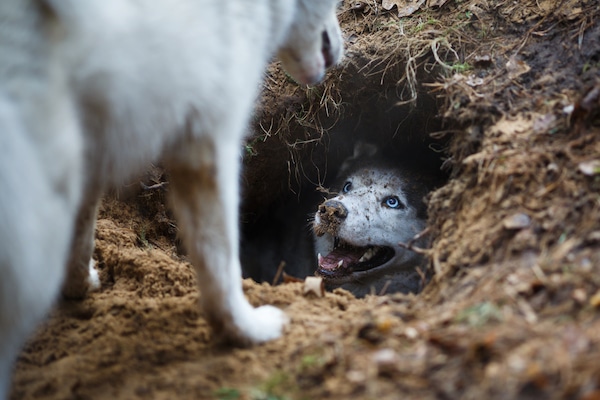
Even in the wild, dogs only use dens in a limited capacity—mainly to nurse their young and convalesce during illness. What’s more, unlike crates, dens don’t have locking doors, and animals can come and go as they please.
While it’s true dogs aren’t den animals, this doesn’t mean they can’t be trained to use and enjoy a crate. They may not view it as their natural “home” or habitat, but a crate can still provide a safe, private getaway when your dog needs some alone time.
Is there an ethical way to crate-train a dog?
Some countries, including Sweden and Finland, have made crates illegal except in very limited circumstances, such as transporting a dog or during dog shows. These laws are grounded in good intentions, as they’re meant to eliminate the potential for crate misuse and abuse.
Even so, plenty of experts worldwide argue that crate training has its place and that it can be done ethically. Burgess lays out some key considerations for an ethical approach to crate training at home. She tells Rover that crates should:
- Never be used as punishment.
- Be introduced slowly and gently.
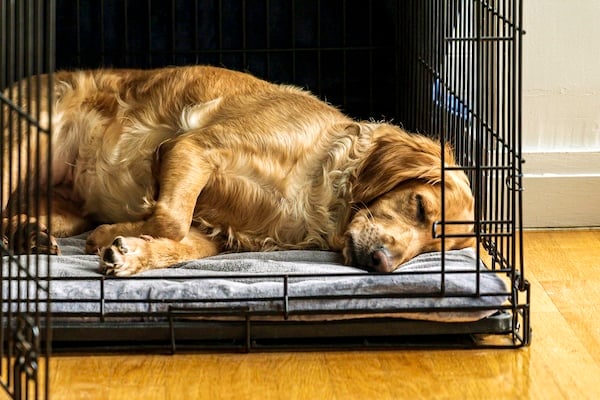
- Be big enough for your dog to stand up, turn around, and lay down comfortably.
- Be used for limited stretches of time
- Have a crate bed on the bottom, or a blanket or comforter to make them cozy and comfortable.
- Be cleaned regularly with mild soap and water.
Is it cruel to crate a dog at night?
Most adult dogs can be left in a crate for up to six hours (eight hours while sleeping overnight), and puppies and senior dogs should ideally only be left in a crate for two or three hours. However, the amount of time you can safely leave your dog in a crate will also depend on their size and temperament.
For example, if your dog struggles with separation anxiety or previous trauma like abuse or neglect, staying in a crate overnight might trigger them. Dogs that require a significant amount of exercise and mental stimulation might also struggle with being crated overnight.
Are crates the best way to manage your dog?
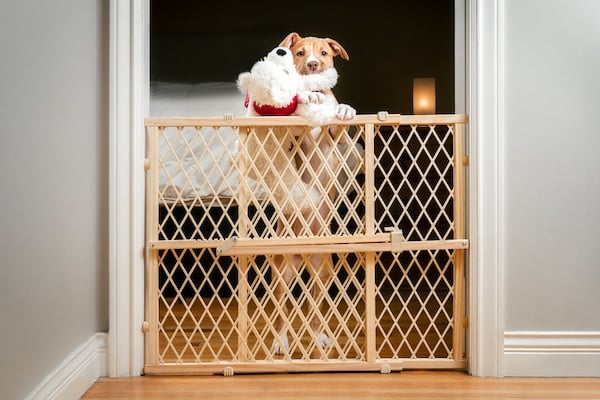
There’s no single answer to this. For some, a properly used crate is indispensable to keeping the peace. Others rail against crates, citing more “humane” ways to maintain order in the home, such as dog gates or doggy daycare.
It’s critical to remember that crates are not a magical fix-all for negative canine behavior. Crate training takes time, patience, and thoughtful consideration of your pet’s comfort and safety. It will work for many dogs—but not all of them. If you decide that crate training isn’t for you, or training is a bust, we have safe alternatives from our experts to follow.
Petra Richli via iStock
Ways To Ensure Cruelty Free Crate Training
Think your dog and household could benefit from a crate? Here are some fear-free, positive reinforcement-based ways to use crates.
1. Limit time spent in the crate
Even a well-trained dog who’s acclimated to his crate shouldn’t be left in there for too long. Dogs need opportunities to stretch, exercise, play, and be with their humans. Plus, dogs can only hold their bladders for so long (less so for puppies), so they also need regular access to potty areas.
2. Make the crate a cozy space
If you do have to leave your dog in the crate for an extended period of time, try to make the space as comfortable as possible for them by including crate comfort items like bedding, lick mats, toys, or a dog crate fan. If you use a crate fan, try positioning it strategically so your dog can move out of its way if they become chilled.
“Eating and chewing are calming behaviors that make a dog feel good,” says Erickson.
“Some dogs like lots of layers of soft bedding, and some may find comfort with an adaptil diffuser nearby, or sprayed on the bedding,” says Dwyer.
“Some dogs seem to like having a blanket or sheet placed partially over their crate to screen out visual stimuli,” she adds. Similarly, crate covers can offer privacy for dogs who need to occasionally shut out the world for some peaceful R&R.

Never leave toys that your dog could choke on in their crate. Viktoriya Telminova via iStock
3. Watch for signs of stress and respond accordingly
Pet parents should pay attention to dogs exhibiting stressful behavior in the crate, such as barking, panting, drooling, whining, or shaking.
If this occurs, Dwyer recommends letting the dog out and resuming training at an easier step until they are no longer showing signs of fear. It’s important to take crate training slowly, at your dog’s pace.
4. Choose a crate design that minimizes stress
You want your dog’s crate to be a positive, pleasant place for them to relax. If you’re in the market for a new crate and your pup is anxious, consider a plastic design, which tends to provide more coverage than a metal crate. This can help minimize stressful stimuli for nervous dogs.
Crate Alternatives: Creating a Safe, Crate-Free Space
Still unsure where you stand on the “Is crate training cruel” debate? If you think crate training might not be the best fit for you and your dog, here are some tips for creating a crate-free, puppy- or dog-proofed space in your home instead.
Use X-pens or gates
“For puppies who are still being house-trained, or small dogs, you can use an appropriately sized X-pen or confinement area to keep them safe when alone,” Dwyer tells us. Since larger dogs may be capable of knocking over an X-pen, they might require a sturdier baby or dog gate to cordon off a dog-safe room.
Keep the room familiar and clean
Erickson also tells Rover that uncrated dogs should be kept in a room with which they’re familiar and comfortable.
“The space should be free of any items that the dog can chew, especially items that could be dangerous, such as cleaning supplies and electrical cords,” she explains. “The area should also be set up so that the dog can have toys to play with and a comfy place to relax.”
Use your pet cam
Additionally, Dr. Alleyne suggests adding pet cameras in the home to monitor a pet’s behavior while they’re alone.
Creating a dedicated space for your pet may be more work upfront. But the peace that comes with knowing they’re safe at home makes it well worth the effort.
Have alternative care plans
For dogs who can’t be crated or pet parents who don’t want to crate their dogs, Burgess lays out several alternatives to crating for times you need to leave the house:
- Hire a pet sitter to stay at your house so your dog doesn’t have to be in a crate. Some pet sitters will take your dog to their house and offer the same scenario.
- Some dog boarding places offer cage-free boarding, so your dog has numerous places to sleep while not being confined in a crate.
- Enlist the help of a friend, neighbor, or dog walker to care for your dog while you’re away.
Non-crating options for safe travel
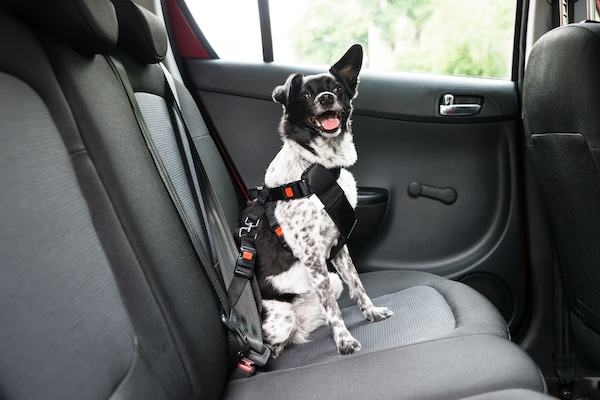
Typically, a crate makes car travel easier. But they’re not the only way to travel with your dog.
“For transportation, there are a variety of pet seat belts that can attach to a dog’s harness (not the collar!) that help keep them safe while traveling,” says Dwyer.
“[Pet parents] may also need to have a calming supplement on board if anxiety is going to be an issue,” adds Dr. Alleyene.
-
AndreyPopov via iStock
When To Seek Professional Help
We get it—crate training is tough. If you’ve tried every trick in the book and your dog is still struggling in their crate, you may be thinking about throwing in the towel. But before you do, all of our experts recommend seeking help from a pro.
“If pet parents are having trouble, they should first seek professional assistance to see if there is an improvement,” advises Dr. Alleyene. Learn how a local trainer can offer a customized plan for your dog, help you practice during your sessions, and provide helpful feedback.
And yet, even with professional training, there will be some dogs who simply cannot adjust to crate training—whether it’s due to past trauma or severe anxiety. And that’s okay too!