- This post contains affiliate links. Read more here.
- Not a substitute for professional veterinary help.
On a beautiful summer day, nothing beats being on the water. To level up your next boating adventure, why not include your dog among your passengers? Who knows: you might discover that boating is your new favorite summer activity to share with your furry sidekick.
Of course, there are some safety precautions you’ll want to consider before bringing your dog on a boat. For starters, always check the weather forecast before heading out on the water. And because the sun is at its peak between 10 AM – 4 PM, try setting out early in the morning or in the late afternoon—to avoid spending your entire excursion during those peak sun hours.

When the water is calling, the following steps can ensure a safe and enjoyable boating day with your dog.
Before You Bring Your Dog, Ask Yourself These Questions
Some dogs will love boating, while others…not so much. Before taking your dog out to sea, it’s important to consider whether they will enjoy the activity in the first place. If this is your dog’s first time on a boat, run through this checklist for clues about how they might react.
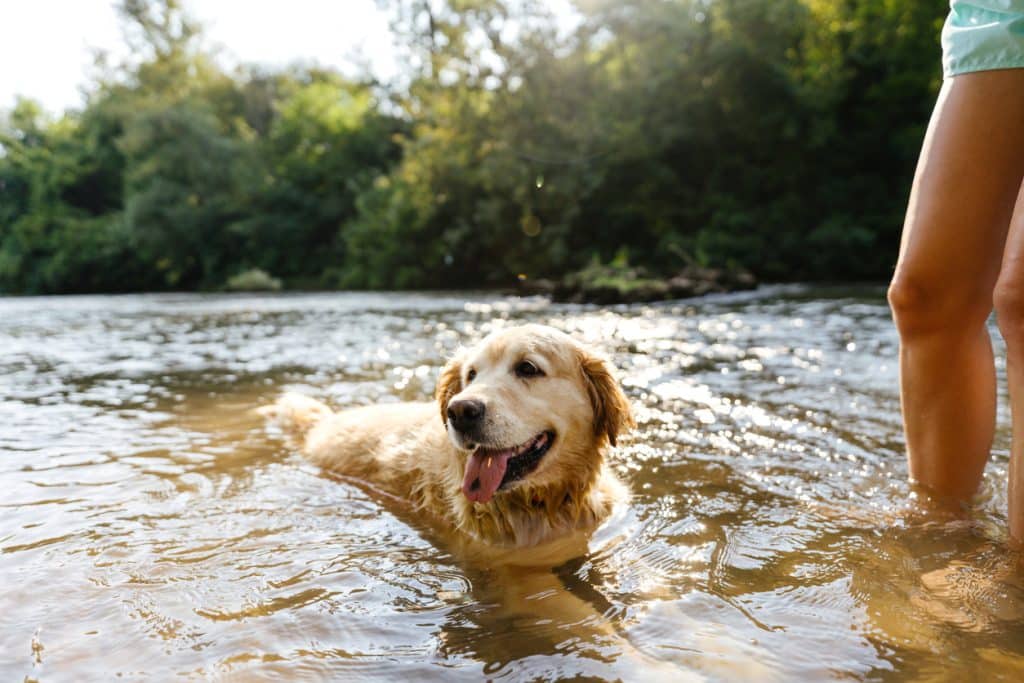
Does your dog like water?
Many dogs love the water—but this fondness isn’t universal. Whether it’s because of their stocky build or they just hate being wet, some dogs struggle with swimming and prefer to avoid the water altogether.
Nervous dogs who are unsure about the water might find being on a boat frightening. But if your pup usually exhibits an interest in water activities, there’s a good chance they’ll enjoy being on a boat.
-

iStock/AleksandarNakic
Will your dog get seasick?
Motion sickness is an unfortunate reality of boating for humans and dogs alike. Dogs who get carsick may not fare so well on an unsteady watercraft. They’re more likely to experience seasickness, including drooling, vomiting, and diarrhea.
It may be better to leave queasy pups at home, or you can ask your vet about medications that will help.
Will there be a secure place for your dog to rest?
Ideally, the boat will have a designated spot for your dog to relax and take a break from the sun. A special “dog zone” also keeps your pup from scrambling underfoot or getting hurt while the boat is in motion.
What do your local laws say?
There are no federal laws on boating with pets, but you could run into restrictions at the local level. Since laws will vary from state to state, check your local ordinances ahead of time.
Is your dog up-to-date on vaccinations?
If you’ll be traveling by public boat or ferry, it’s important to make sure your dog’s core vaccines are current. You can also add a layer of protection with the Bordetella vaccine, designed to combat highly contagious kennel cough.
Does your dog actually want to be on a boat?
Ultimately, boating is supposed to be fun, not stressful. Perform periodic check-ins with your dog to see if they appear happy—or if they look like they prefer dry land.
If it’s the latter, you can ask your vet about anxiety-calming chews, which might help. But if your dog still decides that boating isn’t their thing, forcing it will only make things worse.
-

iStock/ROMAOSLO
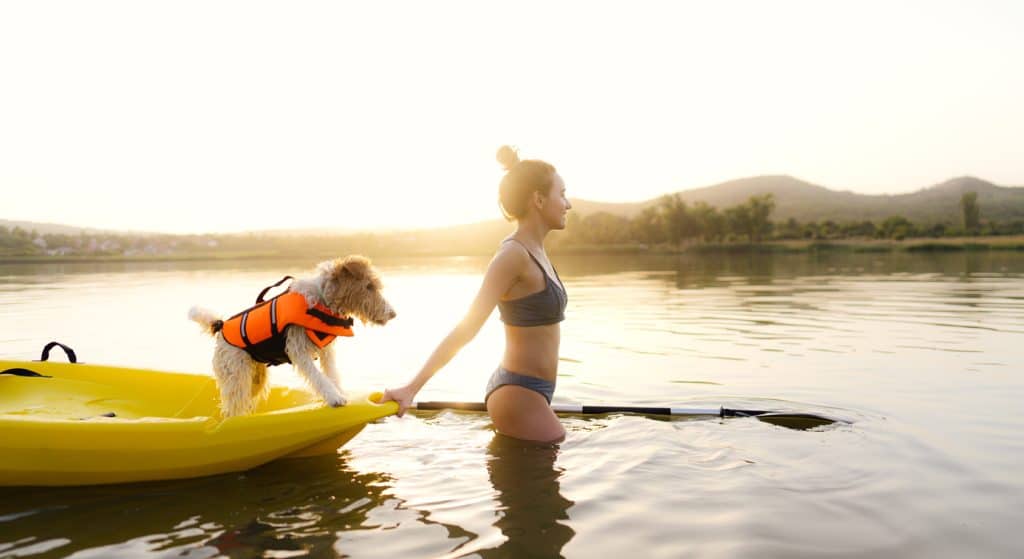
Get Your Dog a Life Jacket
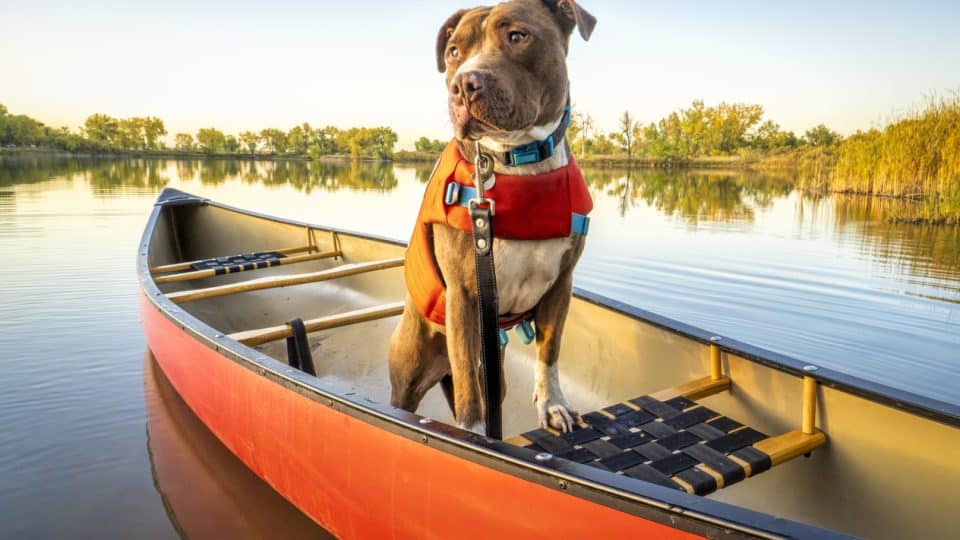
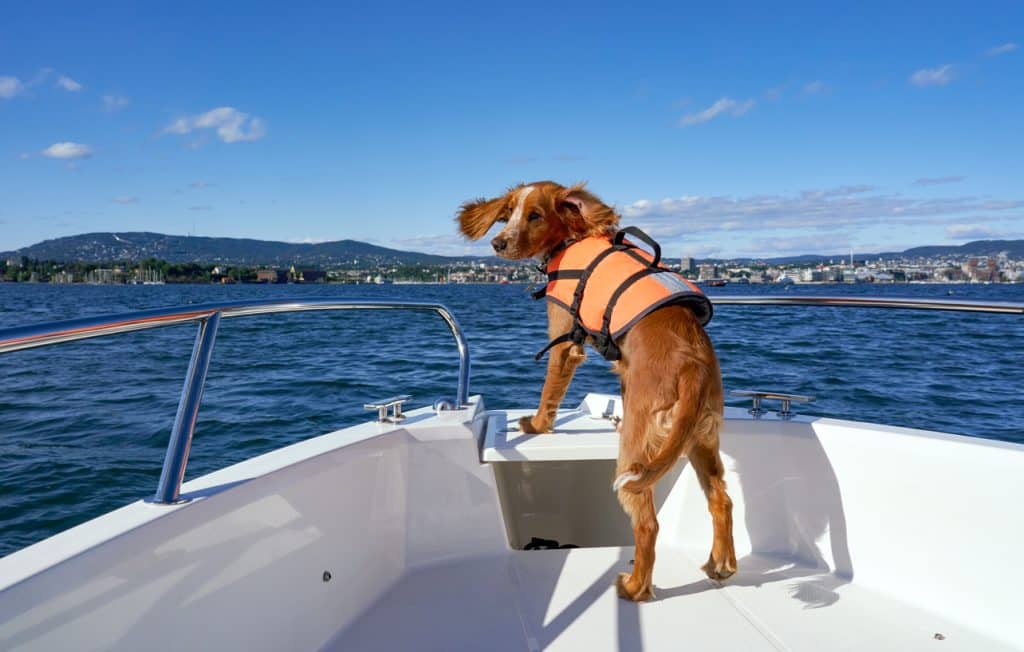
According to Nicole Ellis, a professional dog trainer with Rover, even the strongest canine swimmers should wear a life jacket on the water. “Dogs can get tired and fatigued swimming (even the best swimmers), and having a life jacket offers some security,” Ellis says.
For boating, look for a sturdy dog life jacket with:
- Full-torso coverage. The additional flotation material means a more buoyant pet—which will be greatly appreciated if there’s a dog overboard situation.
- Bright colors. Make your dog easier to spot with a vibrant color or print.
- Reflective accents. These also help with visibility and can make boating during low-light times safer.
- A durable top handle. At some point, you might need to scoop your dog out of the water. A strong handle makes it easier.
- A sturdy D-ring. The ability to attach a leash makes your dog’s life jacket more functional and versatile.
First-timers may need some time to get used to wearing a life jacket. To ease an apprehensive dog’s nerves, let them wear the jacket on land (preferably with treats) before you leave port or shore.
It’s also a good idea to double-check the buckles and straps, to ensure it’s on securely before you head out.
Bring Dog Sunscreen and Paw Protection
Yes, dogs can get sunburned. For a day on the water, consider applying dog-specific sunscreen or using a dog sunshirt, especially if your dog has a thin coat, white fur, or pink skin.
And don’t forget about vulnerable paw pads: if the boat deck is too hot for human feet, it’s likely too hot for your dog. For dogs who will tolerate footwear, a solid pair of dog booties might be able to offer protection. (They’ll also protect seats from scratching). Hosing off the deck with cold water is another option.
Bring External Shade, if Necessary
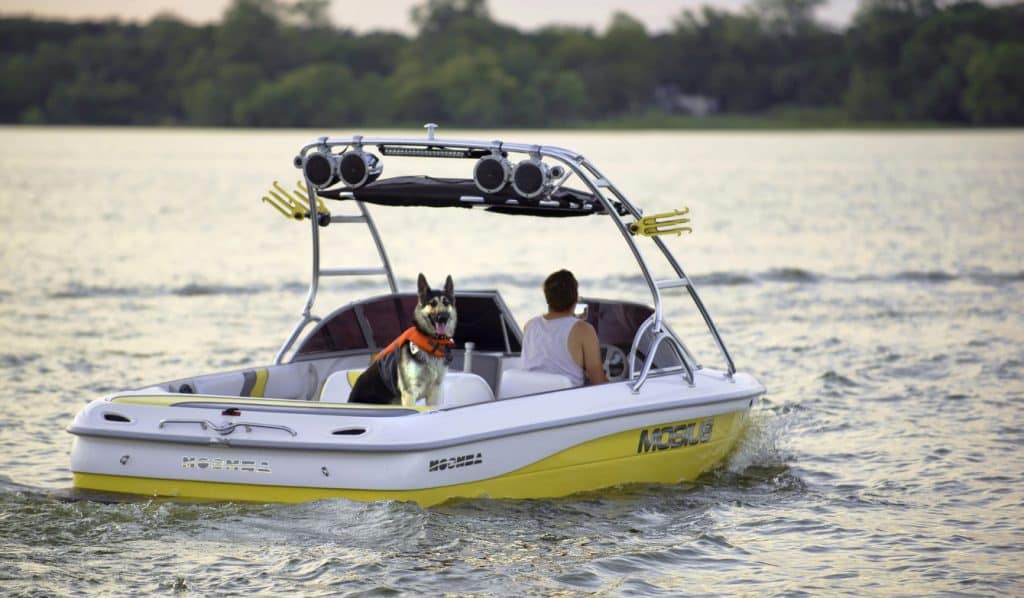
If it’s a hot sunny day, be sure your dog has shade onboard. This might be under a seat or awning—even a large golf umbrella can work in a pinch. Not only does shade keep your dog comfy, but it also prevents heatstroke from occurring.
Heatstroke is a serious risk for dogs, but luckily, it’s also highly preventable. You can keep your dog safe by learning the signs of heatstroke and taking steps to keep them cool.
-

iStock/mj0007
Non-Slip Mats
Until your dog gets their sea legs, it’s smart to keep a few non-slip mats onboard. They’re especially handy for fiberglass boats, which have a smooth and slippery surface.
If you can’t add mats, toe grips can be a good, non-intrusive way to give your dog traction without compromising their gait.
Pads or Astroturf
For longer outings, your dog will need a place to potty. One easy fix is creating a special potty station with artificial grass or absorbent puppy pads. Otherwise, plan to stop on the mainland for a bathroom break every 3-5 hours.
Always Have Fresh Water
Even though you’ll be surrounded by water, you still need to pack plenty of fresh H20 for drinking. Provided your dog doesn’t get seasick, you can also offer snacks and/or food with a dog-friendly travel bowl.
Whatever you do, never let your dog drink unfamiliar water. It could be contaminated with parasites or toxic blue-green algae, which can make your dog sick and isn’t always detectable by sight alone.
Have a Dog First Aid Kit
A pet first aid kit for minor injuries is a good idea, especially for longer sailings. Hopefully, it will just sit unused. But if nausea strikes or your dog incurs a scrape or scratch, you’ll be happy to have it on board.
Train Your Dog to Get On and Off a Boat
If your dog is small, it’s probably easier to carry them on and off the boat. But bigger dogs will need to learn how to board themselves.
What’s the key to getting a big pooch on and off a boat comfortably and confidently? Dr. Alex Crow, veterinarian and writer of Pet Health Guru, has three words of advice for pet parents: “Practice, practice, practice!”
“It can be a weird sensation for dogs to walk on a dock and use a ramp to get onto a boat,” Dr. Crow points out. “This can sometimes make your dog feel anxious or unsure. The more you practice with them, the easier it becomes.”
Here are a few more pointers from Dr. Crow:
- Use positive reinforcement. The more upbeat you are, the more likely your dog will become comfortable in this new environment.
- Treats are terrific motivators. Reinforce good behavior with your dog’s favorite snack.
- Start with a dry run. Before your voyage, try using a docked boat to familiarize your dog with the loading & unloading process.
- Be patient. It can take up to 6-8 weeks for dogs to learn a new trick, and depending on your dog’s interest in boating, this process could follow a similar timeline.
A simpler alternative and a good backup plan is a dog ramp or boat ladder to help your pet get on and off the boat.
-

iStock/AleksandarNakic
Out Fishing? Keep Baits Away
Since some dogs will taste-test nearly everything they encounter, keep any tempting bait or hooks stored in a secure place.
Be Confident In Your “Dog Overboard” Rescue Plan
Before jetting off, you need a solid rescue plan in place—and everyone on board your vessel should be familiar with it.
In the unlikely event your dog goes overboard, don’t panic! Circle back to them and then cut the engine. You can grab them with the top handle if they’re wearing their life jacket. An intermediary like a long-handled grab pole or fishing net, a life preserver ring, or other tools may also be necessary to pull them in.
Takeaway
Sharing your life with a dog means a life packed with adventure—and a whole lotta love. To clock in some quality bonding time while making new memories with your furry pal, give boating with your dog a try this summer.