- Not a substitute for professional veterinary help.
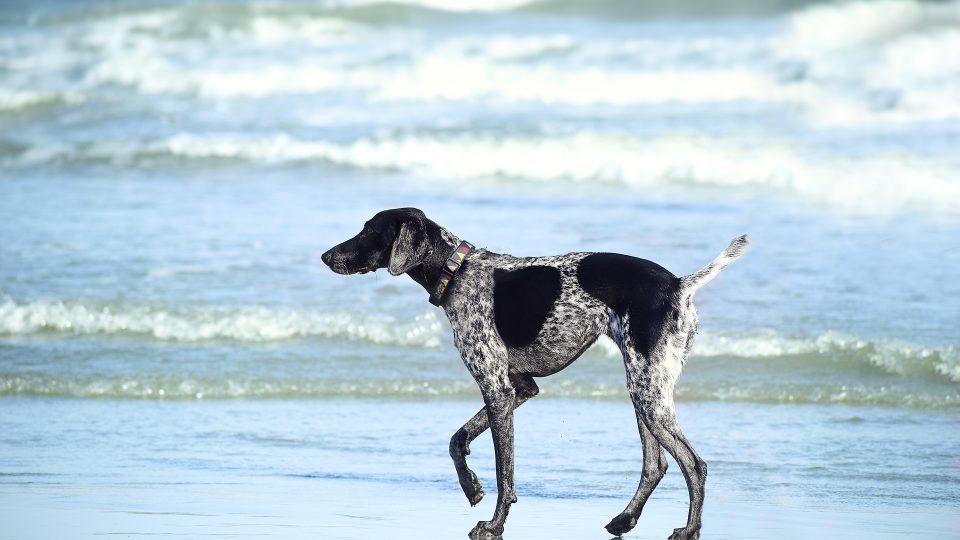
Taking your dog to the beach is a great way to spend long summer days with your best friend. The key to a good time? Considering safety factors like wildlife, beach etiquette, and local rules.

Lots of U.S. beaches allow dogs, but most of them have restrictions, like requiring dogs to stay on leash or only visit specific parts of the beach. Many county websites list which of their beaches are dog-friendly, along with important rules to follow.
Before you plan a day of fun in the sun, you can do a quick internet search for “dog-friendly beach [your location]” to find the best spot, plus any restrictions to know about.
We’ve rounded up our favorite tips for the best beach days with your pup, from great activities to handy training cues and potential risks to keep in mind.
Beach Rules and Etiquette for Dogs
Here are three important guidelines for taking dogs to the beach.
1. Follow your local leash laws
The wide expanse of a sandy beach is a great playground for dogs—but it’s important to share, both with wildlife and other beachgoers.
Keeping your dog leashed is the best way to do that. In fact, most beaches have leash laws requiring you to keep your dog on leash, if not at all times, for certain parts of the day.
These leash laws can feel frustrating, especially if you know your dog will come when you call. But it’s for a good cause: studies have found that not following leash laws at beaches and parks can have negative effects on local wildlife and visitors.
“Leash laws can help keep dogs managed and prevent injury or discomfort to others, including other dogs,” says Renee Rhoades, an animal behaviorist at R+Dogs.
2. Train up on essential cues and calls
Certain training cues are great tools for keeping your dog—and other beachgoers—safe and happy, Rhoades says.
- Leave it. “Other beachgoers might bring food and leave it behind—especially dangerous items like poultry, bones, wrappers, and foods that are toxic to dogs,” Rhoades says. Sharp shells, pieces of driftwood, or washed-up trash in the sand can also pose a risk. Teaching your dog “leave it” can help them steer clear of potential hazards.
- Come. If you decide to let your dog off leash when allowed, it’s important they’re not bothering others and causing chaos, Rhoades says. A strong recall cue can also help your pup avoid dangerous situations, like swimming too far out.
- Settle. Want to grab 10 minutes’ peace with your book as you soak up some rays? Teach your dog a relaxation cue. Practice can help your dog sit quietly with you, Rhoades says—as long as they’ve had a chance to exercise and explore first!
3. Exercise before you hit the beach
Beaches can be overstimulating for dogs, and a hyperactive pup can pose a problem for other visitors. Consider getting a little exercise in before you go instead of counting on your dog getting their energy out when you arrive.
If they get enough exercise beforehand, they’ll have an easier time relaxing with you—and they’ll be more ready to listen to cues.
What Activities Can Dogs Do at the Beach?
Wondering about the best way to enjoy the beach with your dog? Try these activities!
A stroll in the sand
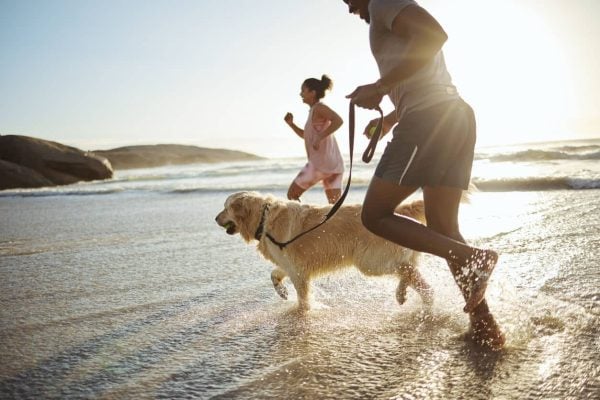
A beach stroll can be an excellent way to expose your dog to new scents and sights, which can provide both mental and physical enrichment, Rhoades says. She suggests using a longer leash, if the beach allows it, so your dog has more freedom to explore.
Just take care to keep an eye on your dog, and prepare to use “leave it” or “come” if your dog gets a little too curious about things they find on the beach!
Water fetch
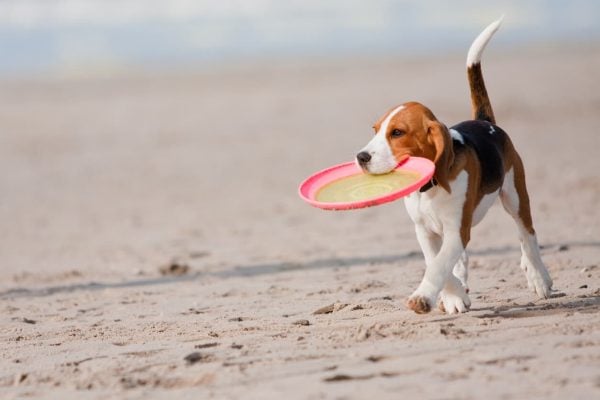
Many dogs will enjoy splashing with fetch or Frisbee in the waves. Water toys add a great element of fun and make for a stimulating physical activity for dogs, Rhoades says.
Keep an eye out for possible hazards with this type of playtime, she cautions, like overconsumption of seawater and physical injury from overexercising.
Swimming
As moving in the water is generally gentler on a dog’s joints, Rhoades says swimming can be a great beach activity, especially after time spent running on harder sand. Breeds like Retrievers, Spaniels, and Newfoundlands are especially famous water fans.
Not all dogs will enjoy swimming, though, so don’t worry if your dog doesn’t want to get wet. Short-legged breeds may have a harder time paddling, while brachycephalic dogs may have a trickier time keeping their shorter snouts above water.
For all pups, a dog life jacket is a good safety measure. Even the best swimmers can have trouble if the current suddenly changes or they start to get tired.
Paddleboarding or surfing
The internet dogs make surfing and paddleboarding look easy—but it can take some practice! If you’re interested in giving it a go, opt for spaces that offer calmer conditions. Dr. Nell Ostermeier, veterinary advisor at Figo Pet Insurance, suggests paddleboarding on a lake or in a secure ocean bay with little wind and small waves.
Since falling in once or twice is a given, make sure your dog is comfortable in and around water before breaking out the board. And of course, don’t forget the life vest!
Digging
Beach digging can be another fun activity for dogs, Dr. Ostermeier says. The urge to dig is a natural instinct, and getting to act on it provides both enrichment and entertainment—without risk to your garden.
Just make sure the sand isn’t so hot that it might burn your dog’s paws. And if your dog is really determined to tunnel, keep an eye out for paw abrasions.
Beach Risks and Dangers for Dogs
A beach environment poses a few possible risks for dogs, and knowing the dangers can help you plan ahead. Here’s what to watch for.
Water risks
Water risks for dogs at the beach include:
- Hazardous ocean conditions. “Most public beaches use flags to describe the conditions—usually green, yellow, and red—with green representing mild conditions and red, severe,” Dr. Ostermeier explains. Always check conditions with the lifeguard on duty if you’re unsure.
- Salt toxicity. Swallowing too much ocean water can cause salt toxicosis, a serious medical condition that requires emergency treatment. If your dog drinks ocean water, pay attention to symptoms like vomiting and seizures.
- Parasites. You’ll also want to keep your dog from drinking dirty or stagnant water, like that in rock pools. This water is more likely to carry pathogens like giardia, Dr. Ostermeier explains.
- Swimmer’s tail. Lots of swimming can overexercise and even sprain a dog’s tail, according to Dr. Ostermeier, who adds that this condition usually doesn’t become painful until the next day. Limiting the time your dog spends swimming, especially if they’re new to the water, can help.
Heat
Too much time in the sunshine and humidity can lead to heatstroke and sunburn for dogs and people both!
Ways to help your dog beat the heat on the beach:
- Bring plenty of fresh water to prevent dehydration.
- Make sure they have a shady area to sit in so they can stay cool.
- Limit time in direct sunlight and apply sunscreen, Dr. Ostermeier recommends, especially for dogs with short coats, light skin, or exposed areas of skin.
- Pay attention for signs of overheating, like lethargy, excessive panting, vomiting, diarrhea, disorientation, and collapse, Dr. Ostermeier warns.
- Stick to cooler parts of the beach or use booties to prevent pad burn caused by hot sand and rocks.
If you notice any signs of overheating or burned paw pads—like pain and blisters—move your dog to a cool space and seek veterinary care right away.
Eating sand or trash
Most dogs won’t eat sand on purpose, Dr. Ostermeier says. If your dog does eat any, it will probably be by accident, not because they find it tasty.
That said, it’s important to watch what your dog eats on the beach—just as you would anywhere else! Eating a lot of sand can lead to sand impaction, a life-threatening condition where sand collects in your dog’s intestine and causes a blockage.
Keep in mind, too, that beaches often have plenty of food trash left behind from other people’s picnics. Keeping your dog on a leash will prevent them from finding leftover food and other things they shouldn’t eat.
Unleashed or reactive dogs
When you bring your dog to the beach, you’ll also want to consider the other dogs in the area. Not all dogs like other dogs or want to engage with them, Rhoades says. Your dog may be perfectly friendly, but they might encounter unleashed or reactive dogs.
Keeping your dog on a leash is the best way to avoid stressful or dangerous interactions with other dogs, Dr. Ostermeier says. “If you allow your dog off leash to play, you’ll need to keep a close eye on them.”
Takeaway
The beach can offer an enjoyable day out for many dogs, as long as you make some considerations or thoughtful setups before you go, Rhoades says.
This means knowing the possible risks, getting familiar with beach-specific restrictions for dogs, and packing essentials like water and sunscreen.
Remember, too, that not all dogs will enjoy the beach. If your dog has anxiety, doesn’t do well in crowds, or dislikes other dogs, you may want to leave them at home, perhaps with a friend or dog sitter!