- Not a substitute for professional veterinary help.
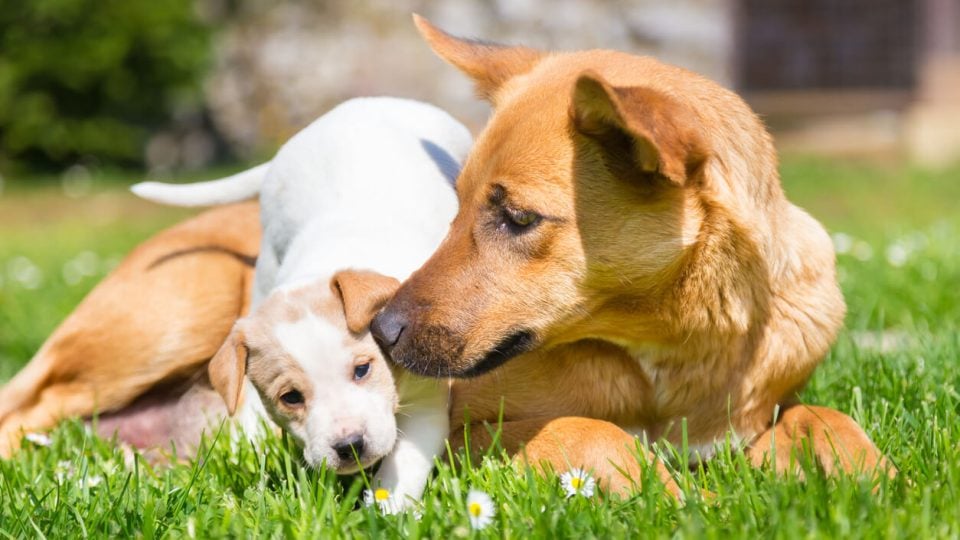
Older dogs often need an adjustment period when a new puppy joins the family. At first, it might seem like your dog hates the new puppy—they might growl or snap at the puppy, or even ignore them completely.

This tension often happens because puppies still haven’t learned to respect boundaries and older dogs may need more personal space or dislike the change to their routine.
But even if the relationship between your puppy and older dog isn’t great a first, they can still form a bond in time, with patience and the right approach. It can take anywhere from a few weeks to several months for dogs to build trust, depending on their personalities and how you support the adjustment.
We asked Joe Nutkins, Dog Training Instructor and Director at Dog Training for Essex & Suffolk, for insight on helping dogs bond with a new puppy. Read on to learn why your dog might be struggling, how to help both dogs adjust, and when it’s time to call in a professional.
Adjust To Meet Your Older Dog’s Needs
An older dog may seem unhappy about a new puppy for several reasons, Nutkins explains. Here’s what you can do to help.
Give them time and space to adjust
A puppy brings new sights, sounds, and smells into your home all at once. What’s more, a puppy’s feeding schedule, potty training, and new toys create new routines. This much change can feel overwhelming and confusing for a dog who already has a consistent routine.
Many adult dogs, especially those used to being the only dog, think of new puppies as a strange visitor. Since you’ll naturally shift some of your attention to the puppy, an older dog will often be watchful or suspicious as they get used to the new family member.
Rule out pain
Pain is a common reason your older dog might seem bothered by the puppy. If your dog has a sore hip, a healing injury, or dental pain, they may already be uneasy. An energetic puppy accidentally bumping into a sore spot can make them feel nervous or defensive.
A vet visit can help you rule out any physical reasons your older dog seems to dislike your new puppy. If there’s something wrong, they can recommend the right treatment approach.
Respect warning signs
Dogs often communicate discomfort in their body language. Learning to spot these cues can help you know when to step in:
- Stiff body posture or a fixed stare
- Lip licking, yawning, or turning away
- Growling or showing teeth
- Snapping or lunging
- Retreating to another room
If the puppy ignores these signals, the older dog may escalate to get their point across. Teaching your puppy not to charge at your older dog can help—and also reinforces this important skill for when they meet other dogs!
Ways To Encourage Your Older Dog and Puppy to Get Along
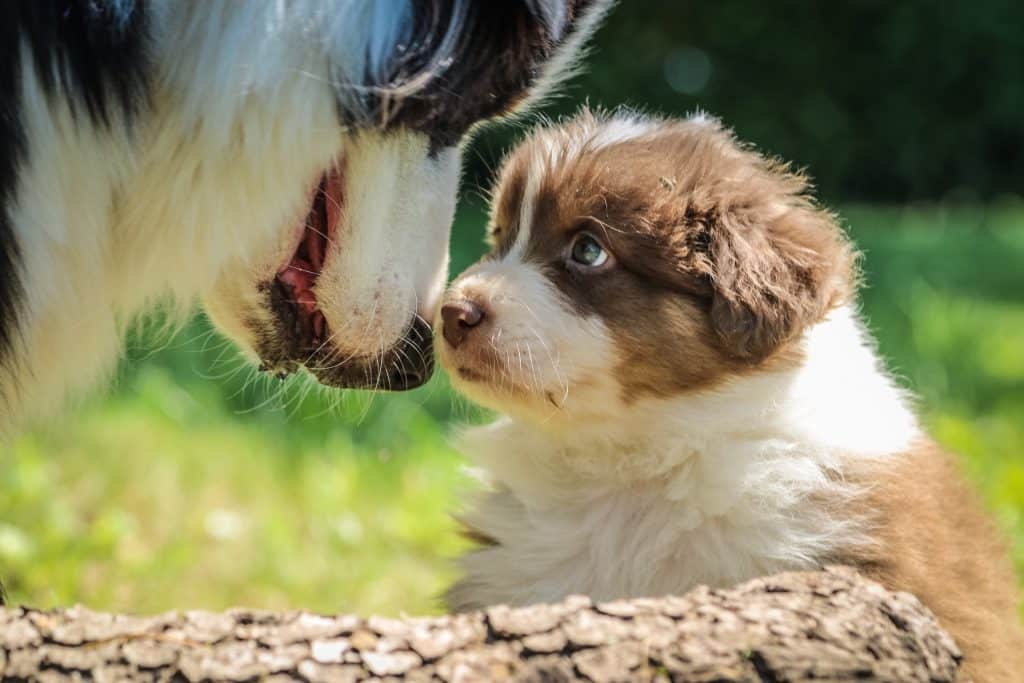
Nutkins shares her go-to strategies for helping your dogs build a real connection.
Give them separate spaces
A puppy pen, crate, or baby gate gives your puppy their own space to rest, which is essential for their development. It also restores your older dog’s usual one-on-one time with you.
In some cases, the dogs may need to stay separated when unsupervised for several weeks. This gives your older dog time to settle into the new routine and feel comfortable with the puppy joining the family.
Train together and apart
Training may need to start separately. If you have a second person available, like a family member, friend, or trainer, each of you can work with one dog on leash at the same time.
As both dogs build skills and confidence, joint training sessions can help them learn to work well side by side.
Walk them separately
Since puppies and older dogs have different exercise needs, separate walks tend to work best. If two people are available, each can walk one dog and then swap the next walk to make sure both dogs bond with each family member.
If you’re the only one walking your dogs, a short walk for your puppy followed by a longer walk with your older dog can help meet each dog’s individual needs without overtiring the puppy. A Rover dog walker can also support your routine.
Reward both dogs
Reward calm, friendly behavior when your dogs are together. For example, you might give your older dog a treat for staying relaxed and your puppy a treat for playing gently.
Give the reward in the moment so they make the connection between the behavior and the reward. Over time, this practice helps both dogs make positive associations with each other instead of feeling stress or competition.
Tire out your puppy, then let them rest
Puppies need more rest than most pet parents realize. An overtired puppy can get the zoomies, bark excessively, or chew on items.
Some pet parents take these behaviors as signs their puppy isn’t getting enough exercise and add even more activity, but this cycle can lead to an overstimulated puppy and negatively affect their development.
Instead, try wearing out your puppy with play or a walk, then help them settle down in a pen or crate. This gives your older dog a calmer environment while making sure your puppy gets enough rest.
Give it time
Progress with two dogs rarely happens on a predictable schedule. Of course, you might hope for a fast friendship, but it’s important to let your older dog’s comfort level set the pace.
Follow your older dog’s cues instead of pushing for a bond right away. Staying consistent with training and space and letting your older dog adjust in their own time will allow the relationship to naturally grow.
When To Hire a Trainer for Help
Nutkins recommends reaching out to a positive reinforcement trainer or behaviorist as soon as you start feeling overwhelmed or unsure how to progress with tension between an older dog and a puppy.
A trainer can work with you in person or virtually by:
- Talking through what’s happening and why
- Building a plan suited to your dogs and household
- Helping you manage space, timing rewards, and reading body language
- Catching subtle cues you might miss and adjusting the plan as your dogs progress
- Providing ongoing support and answers as you put the plan into action
If you need support, a Rover dog walker or in-home pet sitter can help keep both dogs on a consistent routine while you focus on training.