
- Not a substitute for professional veterinary help.
Positive-reinforcement training, also known as R+ training, is one of the most reputable and effective ways to train dogs. It’s so effective that in 2021, the American Veterinary Society of Animal Behavior (AVSAB) officially endorsed it for the training of all dogs. So how does it work?
R+ training teaches dogs through a reward system. When a dog performs a desired skill or exhibits a wanted behavior, they are rewarded. Over time, the dog learns training cues and preferred behaviors thanks to their strong reinforcement history.

With help from professional dog trainers, we review the key principles of R+ training, how to do it, and how to avoid common mistakes.
Principles of Positive Reinforcement
Positive reinforcement is a type of reward-based training. It involves heavily reinforcing the behavior you want to see more of, and it has become one of the most widely used forms of dog training today. It hinges on the idea that dogs are more likely to repeat a behavior if it results in a desirable outcome.
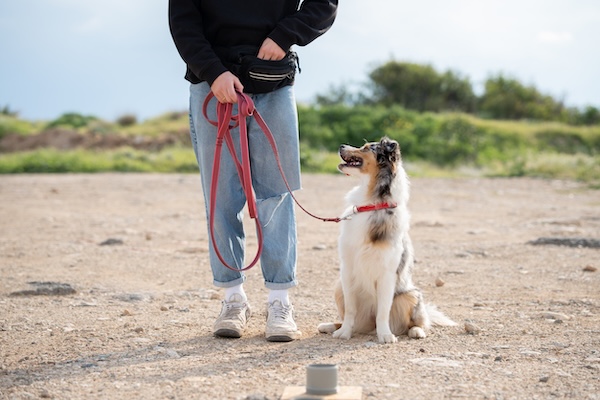
For instance, positive-reinforcement training might look like giving your dog treats for walking calmly by your side. If your dog loves food and they learn that walking politely next to you earns them more of it, they’ll be more likely to keep doing it.
The opposite of positive-reinforcement training is punishment-based training. It aims to decrease undesired behaviors by introducing a negative consequence, like using a prong collar to prevent pulling on-leash. This type of training is not only less effective than positive reinforcement, but it has the potential to cause harm to your pup and the bond you share with them.
Ekaterina Sidorova via iStock
How To Get Started
Positive-reinforcement training is an uncomplicated concept, but there’s an art to implementing it effectively. When putting R+ training into action, focus on the following three steps.
Step 1: Find the right reward
The success of positive-reinforcement training depends on finding a reward your dog finds particularly motivating. For many dogs, that means food. Dogs who are play-driven, however, might be more motivated by a special toy, while more handler-focused breeds may love getting praise.
The bottom line is to get to know what your dog finds the most reinforcing and use that as their reward.
Caitlin Cruz, a professional dog trainer at Pupford, also recommends matching rewards with the difficulty of the task. For instance, use lower-value rewards to reinforce a basic behavior your dog already knows, but use a high-value reward when introducing a new cue or training in distracting environments.
“For most dogs, the highest value items will be things with a strong scent, or foods they do not get very often,” says Cruz. “Think treats like string cheese, bacon, or hot dogs.”
Step 2: Choose a technique
Once you’ve settled on the right reward, you can move on to the behavior side of the equation. There are four main techniques involved in positive-reinforcement training:
- Shaping involves breaking a behavior into smaller steps and rewarding each one. For instance, when using shaping for crate training, you’d first reward for any interaction with the crate (a sniff, a paw in, sitting inside, etc.), before closing the door and adding time spent in it.
- Luring is what Patricia B. McConnell, an applied animal behaviorist, describes as showing an animal something they want, usually food, and using it to encourage them to move in the desired way. For example, you can lure a dog to lie down by placing a treat in front of their nose and moving it to the ground.
- Capturing refers to reinforcing a behavior as it’s happening. For example, you can mark and reward every time your dog play bows, eventually adding a cue to teach them the “take a bow” trick.
- Targeting involves teaching your dog a touch so they’ll follow your palm wherever it goes—like a lure but without food. The food (or toy) comes out after the desired behavior has occurred.
Note: While luring can be useful when introducing a behavior, it should be used sparingly and faded out pretty quickly. It’s important to preserve your dog’s ability to problem-solve through techniques like shaping and capturing.
Step 3: Mark the behavior
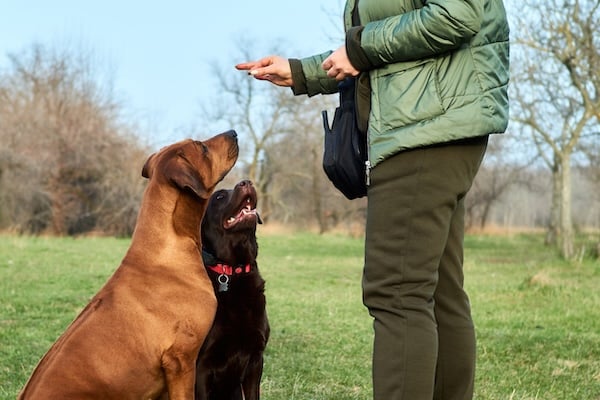
Marking behaviors you want to see again is key for positive-reinforcement training. As soon as your dog does the desired behavior, capture it with a click or marker word (like an upbeat “yes!”) and then immediately reward them.
“The marker is a way for you to communicate to your dog that they have performed the behavior you were looking for and allows you time to dispense the reward,” explains Cruz. “Think of using a marker like taking a picture. You want to mark (or press the shutter button) as soon as you see the behavior you want, not after.”
Before adding a cue, wait until your dog performs the action correctly nearly every time. When introducing it, say the word a split second before your dog does the desired behavior correctly and mark and reward it immediately. Don’t repeat the cue. Simply wait for your dog to perform the action correctly. If they don’t, it’s a sign you’ve moved too quickly in your training.
Zontica via iStock
Tips for Success
For positive-reinforcement training to be effective, you’ll want to ensure your communication is clear and you’ve set your dog up for success. Here are a few tips to do just that.
Get your timing down
When it comes to positive-reinforcement training, timing is everything when marking the behavior you want to see again. For example, when teaching a sit, if you mark before your dog’s bum has touched the ground, you’re actually teaching them that hovering is the behavior you want.
Watch your dog closely so you can mark the desired behavior immediately.
Set up your training environment
When possible, set up your training environment so your dog is more likely to learn. For example, a quiet, controlled space with limited distractions is generally best for introducing new cues or working on obedience basics. Or working on reactivity in a huge field that gives your dog plenty of space to move away from triggers.
In some cases, the environment itself could become a component of training, like proofing recall in an off-leash dog park filled with distracting sights, smells, and sounds to challenge your dog.
Use management
Management strategies help prevent your dog from rehearsing unwanted behaviors while you work on building new, preferred ones.
For example, if you’re training your dog not to bark at passersby, you might install shades or window film so they can’t even see anyone outside. Or if you don’t want your dog to bolt when you open the door, use pet gates to keep them out of the foyer.
As you work to modify your dog’s behavior, management strategies like these can help reduce the frequency of undesirable outcomes.
Keep sessions short and sweet
Don’t underestimate the power of short training sessions. Adding 5 or 10 minutes of training throughout the day can go a long way, keeping energy and enthusiasm strong. Always end sessions on a high note to keep your dog engaged and eager for the next one.
Make training fun
Keep sessions fun by incorporating games and playtime. You’ll get the best results by making it a positive experience. If you or your dog are feeling anxious, frustrated, or bored, take it as a sign to stop the session and try again another time when everyone is feeling more up to it.
Mistakes To Avoid
Training is a learning experience for both you and your dog, so it may take some time to get the hang of it. If your pup isn’t making progress, it might be time to step back and assess. Here are some common pitfalls to avoid when it comes to positive reinforcement dog training.
Moving too fast
Every dog learns at their own pace. Even if your dog picks up on a new cue right away, you’ll want to be careful not to progress too quickly. “Dogs don’t generalize well,” says Ali Smith, a professional dog trainer and founder of Rebarkable. “A perfect recall in your living room doesn’t automatically transfer to a busy park full of distractions.”
In other words, try to avoid putting your dog in more difficult situations than they’re prepared to handle. Don’t be afraid to break a skill down into smaller behaviors or return to a previous stage of training for a while if needed.
Not staying consistent
It’s important to continuously reward the behaviors you want to see until they become reliable, and avoid punishing your dog. When using positive-reward training alongside punishment (often referred to as balanced training), it can create confusion and could even damage your relationship.
It can be helpful to think of positive reinforcement as a lifestyle, not just a training technique. You’re doing more than simply shaping your dog’s behavior. You’re building a relationship with them that’s based on trust, and being consistent with your own behavior can help your dog feel safe.
Fading rewards too quickly
Suddenly stopping rewards can leave your dog feeling confused about whether they’ve performed the task correctly. Instead, you’ll want to wait to gradually phase out rewards once your dog demonstrates fluency with a specific cue (they’re responding 80–90% of the time).
With many behaviors, you can also slowly decrease your rate of reinforcement, or how many treats you give in a specific time frame, as you build a behavior. For instance, instead of rewarding your dog for every step they walk nicely beside you, you can start stretching rewards out for every few steps, then every block, and so on.
Choosing a trainer that’s not really R+
When enlisting the help of a professional trainer, choose wisely. Rover is a great place to start your search, as the trainers on the platform follow reward-based training methods.
When vetting a potential trainer, checking their credentials is a good place to start, but Smith recommends paying attention to their language as well.
A reward-based trainer, she says, will spend more time talking about preventing undesired behavior and reinforcing success than using corrections. She adds that a trainer who talks about establishing dominance is also likely relying on outdated training theories.
Don’t be afraid to ask questions or schedule a meet-and-greet to vet the trainer before making a more significant commitment.
Getting Help
Positive reinforcement is one of the most humane and effective ways to train your dog, but that doesn’t mean it’s always the easiest path.
According to Smith, some dogs may need ongoing management or intermittent refresher sessions to be successful. Sometimes training can feel like you’re fighting an uphill battle against breed-specific traits, such as herding instincts or high prey drive.
Other behaviors, like reactivity or aggression, may require ongoing management, like wearing a muzzle or avoiding areas where there are other dogs.
If you’re struggling with training or not sure where to start, consider looping in a dog trainer on Rover. With the help of an expert, you can come up with a training plan tailored to your dog’s unique needs. Plus, you’ll be supported every step of the way in your training journey.