- Not a substitute for professional veterinary help.
Teaching your dog to “sit” might seem like a boring basic—but it’s a surprisingly handy skill. A well-trained sit cue can develop your dog’s impulse control and even prevent unwanted behaviors, like jumping up on people and door-dashing.
There are several different ways to teach a dog to sit, including:

- Luring
- Capturing
- Shaping
- Teaching from down
With the help of three dog training experts, we review how to teach each one, plus how to troubleshoot and where to get help.
Did you know? There lots of obedience cues to learn! Learn how a local dog trainer can help your dog level up their house manners.
How To Teach Your Dog To Sit
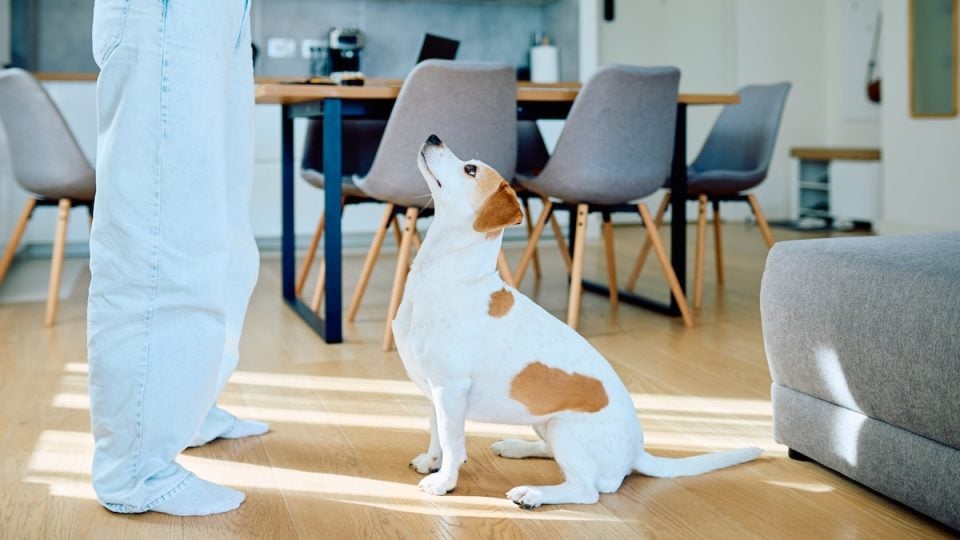
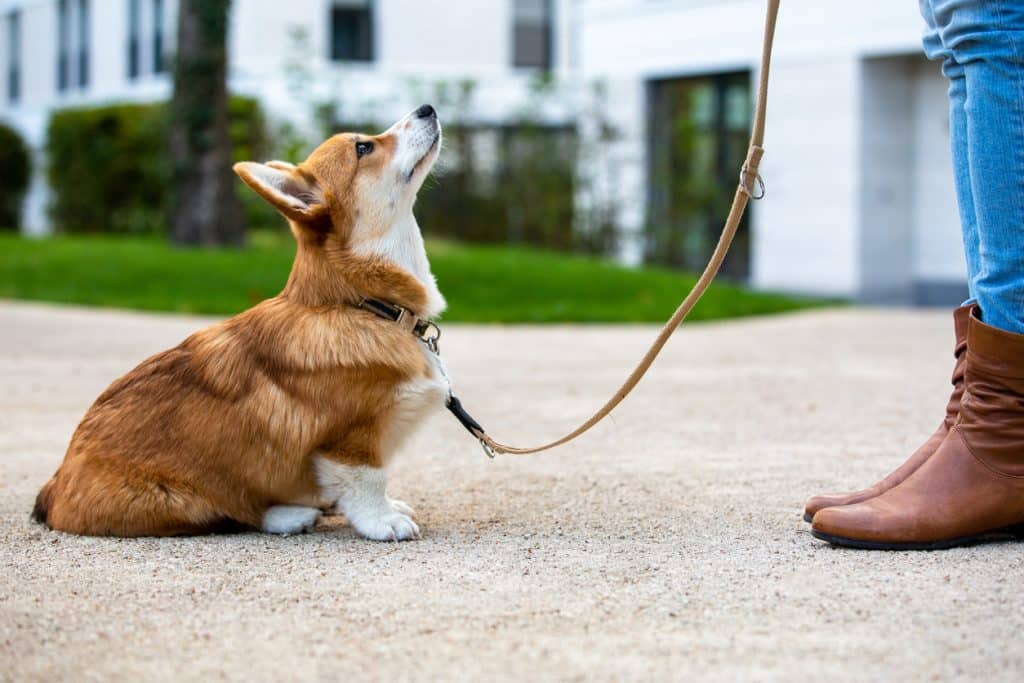
One of the most popular ways to teach a dog to sit is the lure method, in which you use a treat to guide your pup—or “lure” them—into a sit position. Luring is usually the easiest approach and the one that most trainers start with.
Certified professional dog trainer (CPDT-KA) Shoshi Parks lays out the steps for luring a sit.
- Start in a calm environment free from distractions, like your home or backyard.
- Hold a treat between your thumb and forefingers with your palm facing up.
- Put your hand close to your dog’s muzzle, then slowly lift it upwards. As your dog’s nose follows the treat, their butt will lower to the ground.
- Mark the moment your dog sits with the word “yes!” or a clicker.
- Give your dog the treat.
- Repeat at least five times.
Pro Tip: “If your dog backs up when you move the treat over [their] head, she is worried about you invading her space,” says Pat Miller, CBCC-KA, CPDT-KA, a behavior consultant and the director of Peaceable Paws Dog and Puppy Training. “Instead, take a step back and move the treat up toward your chest to encourage [them] to step toward you and sit.“
Remove the lure
When your dog understands the position you want, it’s time to remove the food lure. Only bring out the treat once your dog has completed the sit.
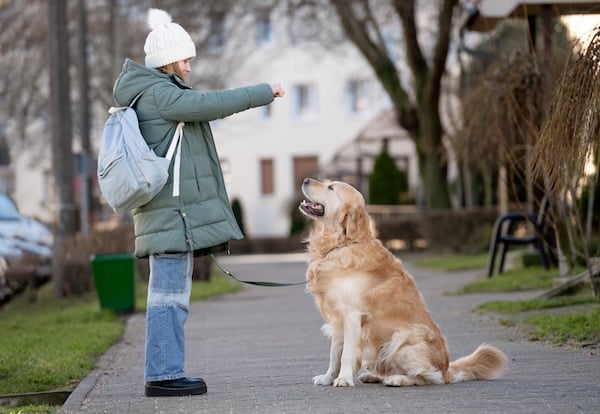
- Hold your empty hand, palm facing up, in front of your dog’s muzzle.
- Lift your hand upward. Your dog’s nose will lift as their butt lowers to the ground.
- Mark the moment your dog sits with the word “yes!” or a clicker.
- Reach for a treat and immediately give it to your dog while they maintain the sit position.
- Repeat at least five times.
Pro Tip: If your dog gets up immediately, ask them to sit again with your hand signal before releasing the treat.
Add a verbal cue
When your dog is consistently responding to your hand signal, it’s time to introduce the verbal cue “sit.”
- Say the word “sit,” then immediately use your hand signal, lifting your empty hand upward with the palm facing up.
- When your dog sits, mark the moment then reward. Repeat five times.
- Say the word “sit,” then wait for 5 to 10 seconds as your dog thinks.
- If your dog sits, mark the moment and reward. If your dog doesn’t sit, show them your hand signal, then mark and reward.
- Repeat until your dog is able to consistently respond to the word “sit” without having to show them the hand signal.
Pro Tip: Use a happy tone, not a commanding or stern one.
-

fotografixx via iStock
Other Ways To Teach a Dog To Sit
If you’re not having success with the luring method, try “capturing” or “shaping” a sit—or teaching sit from down. Here’s how.
Capturing
If you’re working with a particularly energetic dog, you may have better luck “capturing” a sit than luring one. To capture a sit, pay close attention to your dog. Any time your dog offers a natural sit on their own, mark the behavior with a “yes!” or your clicker, then toss them a treat.
With repetition, your pup will learn that sitting earns them a reward. You’ll start being able to anticipate when your dog is going to sit for a treat. To add your cue, say the word just as your dog sits. “With enough repetitions, she will respond to your cue by sitting when asked,” explains Miller.
Shaping
“Shaping” a sit is similar to capturing one, but the behavior is broken down into incremental steps. First, mark and reward your dog for just slightly bending their hind legs. Then, gradually raise the criteria so they have to bend a little more, until they are eventually sitting all the way.
Pro Tip: “Shaping is a very valuable skill, and it can be complex,” says Miller. “If you’re not already familiar with it and you want to give it a try, you might need a good force-free professional to help coach you.”
Teaching from “down”
Sometimes a dog will lie down but not sit. Miller tells us that if you can get your dog to lie down (or approach them when they’re already lying down), you can carefully lure them up into a sitting position. You can also shape this behavior by raising the treat bit by bit, rewarding each small movement towards a sit.
Pro Tip: “Add the cue when you know you can get [them] to do it and eventually fade the lure as described above,” says Miller.
When a Sit Can Come in Handy
Sit is an important skill that can set your dog up for a lifetime of good behavior. It’s useful in lots of situations, including the following:
- Greeting people on walks
- Crossing the street safely
- Preventing your dog from dashing out of open doors
- Keeping your dog from jumping on house guests
- Calmer greetings when you return home
- Getting weighed at the vet’s office
- Putting on their leash & harness before a walk
- Can be used as a polite way to say “please”
- Teaching other behaviors like “down,” “sit pretty,” “stay,” “roll over,” and “go to bed”
Training your dog to sit is also great for bonding. “Having at least a few trained behaviors is a great way to increase communication between you and your dog, and good communication is key to a good relationship,” says Aaron Teixeira, ACAAB, CPDT-KA, board-certified applied animal behaviorist and professional dog trainer.
What not to do
The best way to teach a dog to sit is with consistency and positive reinforcement. Here’s what to avoid:
- Pushing your dog’s hind legs or any kind of force, even if it’s gentle
- Repeating the cue “sit” over and over
- Using a harsh voice
- Pulling on their leash or collar to force them into a position
There are also a few situations where you might not want to cue a sit, like when:
- The sit position causes pain or pressure. Teixeira explains that some breeds, like Greyhounds, can experience discomfort in a sitting position. The same goes for dogs with medical conditions, such as hip or knee problems, obesity, or arthritis.
- The surface you’re walking on is slippery or icy. Hold off on having your dog respond to the sit cue to avoid an accident.
- Your dog is feeling fearful or anxious. It’s best to refrain from using the sit cue to avoid adding more stress to the situation.
“Touch” is a great alternative to “sit.” It can help move your dog away from a trigger or in another direction, or function as a recall cue over short distances. “[This] will help to get the dog engaged with you and compliant with their trained behavior, which I think is often the ultimate goal,” says Teixeira.
-

VYCHEGZHANINA via iStock
Troubleshooting & Tips
Running into some issues teaching your dog how to sit? It happens! Below are some of the most common problems pet parents run into when teaching a dog to sit, plus how to get back on track.
Dog hovers their butt
Sometimes a dog’s anatomy is such that even when in a resting position, their rear doesn’t quite touch the floor. In these instances, you can accept that as a “real” sit, says Pat Miller. But if your dog doesn’t get all the way to the floor even though they can physically, they may not understand what you want from them.
If that’s the case, Miller says you can try shaping the behavior. This could also be a sign of pain that you’ll want to have your vet check out.
Dog backs up when you move the treat over their head
This can happen when your dog doesn’t understand what you’re asking of them. It can also mean your dog is feeling like they don’t have enough space. To help, take a step back and move the treat up toward your chest and try again.
Dog jumps up for the treat
This may happen because you’re holding the lure too high. Try lowering your hand closer to your dog’s nose while your dog is in a standing position.
Dog stands up immediately
If your dog is struggling to hold the sit position, try practicing in a distraction-free location. Miller also says you can hold the treat in front of your dog’s nose for longer to encourage your pup to stay put. Then gradually add low-level distractions so they learn to sit still, even when things are happening around them.
How To Get Help
Not every dog takes to “sit” right away, and that’s okay. “In any given group of dogs, some will naturally ‘get it’ faster than others,” Miller explains—so make sure you’re giving your dog enough time to learn this new skill.
And if you’re getting stuck, don’t hesitate to bring in a pro to help. A good trainer can help you figure out what’s not working and come up with a plan that’s tailored to your and you pup’s needs.
Not sure where to start? Learn how dog training works on Rover!