- This post contains affiliate links. Read more here.
- Not a substitute for professional veterinary help.
Figuring out travel for humans is hard enough—and when you add traveling with a canine companion, things can get more complicated still. Whether you’re moving with your dog or are embarking on an adventure together, planning ahead can dramatically reduce stress for both you and your pup.
To get insight on how to prep ahead, we spoke with Dr. Stephanie Liff, veterinarian and owner of Pure Paws Veterinary Clinics. Whether you’re traveling with your dog by plane, car, train, boat, or bus, we have expert tips to help you and your pup have a safe and fun experience.

General Travel Tips
While some travel tips are specific to your mode of transportation, others you’ll want to follow no matter how you and your pup get to your destination. Here are some general tips for traveling with your dog.
- Schedule a vet visit in advance. A few months before your trip, schedule a vet appointment to ensure your dog meets all travel requirements for your mode of transportation and destination.
- Consider anxiety meds. If your dog tends to get nervous or nauseous when traveling, consider asking your vet for medication for your trip.
- Ensure vaccinations are current. “Pets must be vaccinated at least for rabies in order to travel, but some states or countries require additional vaccines, and some require a waiting period post-vaccination, so discuss your plans with your vet ahead of time,” says Dr. Liff.
- Make copies of your dog’s health records. Whether you’re traveling domestically or internationally, you’ll want to carry physical copies of your dog’s health records, certifications, and vaccinations (especially rabies records).
- Ensure IDs are up-to-date. Check that your dog’s microchip and collar tag have the most recent information. You may even consider adding a temporary travel tag with the destination address or phone number.
- Pack enough medication and food. “Make sure you have enough medication for your entire trip and any delays that could arise, if your pet takes medication,” suggests Dr. Liff. She recommends doing the same for your pet’s food.
- Train ahead of time. Practicing essential obedience cues like coming when called and “place” can help keep your dog safe in unpredictable environments.
- Limit food on the day of travel. To prevent accidents or upset stomachs, limit your dog’s food intake during trips. “I generally recommend patients eat about 25-50% of a normal meal before travel,” says Dr. Liff.
AndreyPopov via iStock
Travel by Car
Traveling by car allows for stops and often provides more flexibility, says Dr. Liff. Plus, many pets are also already well acclimated to car travel, she adds. Even so, you’ll still want to plan ahead. Here are some things to consider before hitting the open road with your pup.
Plan your breaks in advance
Look at your route and plan potty breaks and stops for your dog to exercise and sniff around. Dr. Liff recommends scheduling bathroom breaks every 4-6 hours—but adjust this time according to your dog’s specific needs.
The “search along route” feature on Google Maps is an excellent tool for finding public parks, nature preserves, and other outdoor spots along the way. If your route goes through a college campus, many have large green quads for leashed walks. Look out for farm-supply stores, too, as many allow dogs inside (a great option when the weather is less than ideal).
If you’re not sure a place is dog-friendly, use an app like BringFido to double-check.
Locate emergency vets along the way
It’s always a good idea to prepare for the unexpected. Before heading out, find a few 24-hour animal hospitals along your route. One strategy is to look in the cities or major metropolitan areas you’ll be passing through and search for emergency clinics there. Specialized directories like PetFlight’s Emergency Vet Search make it easy by allowing you to search for clinics by city, town, or zip code.
Once you find a few clinics, save the contact information in your phone or download the addresses to your offline maps. If you’re traveling through more remote areas or are unable to visit a physical facility, consider using a pet telehealth app like Vetster or FirstVet.
Keep your dog secure
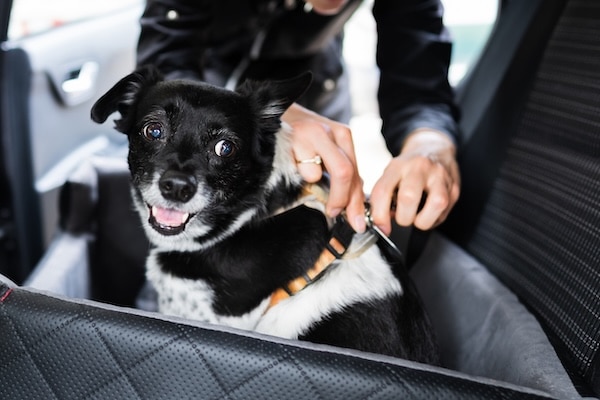
Unrestrained pets can be just as distracting as looking at your phone while you’re driving. To keep everyone safe, secure your dog in your vehicle when traveling together. Crates, carriers, booster seats, car harnesses, and seatbelt attachments are all options to consider. Before purchasing a product, check the Center for Pet Safety’s website—the only nonprofit organization that has testing and performance requirements for these items.
Ирина Мещерякова via iStock
Travel by Plane
Flying with a dog requires careful planning to keep the journey as stress-free as possible for both you and your pup. Here are some items to add to your to-do list to ensure smooth travels.
Confirm airline regulations
Airlines often have different rules when it comes to traveling with dogs, and these regulations can change depending on whether you’re flying domestically or internationally. Most airlines have weight limits for flying in the cabin vs. cargo, and some may have breed restrictions, additional pet fees, or cap the number of dogs allowed in-cabin per flight.
Before booking, call the airline directly to confirm all their rules, requirements, and paperwork.
Check pet entry requirements
If you’re flying internationally with your dog, many countries require specific documentation, such as a USDA-endorsed pet health certificate. For help navigating pet entry requirements, find a USDA-accredited veterinarian near you to assist you with getting any vaccinations, tests, or treatments that the country you’re visiting requires.
Confirm rules about crates and carriers
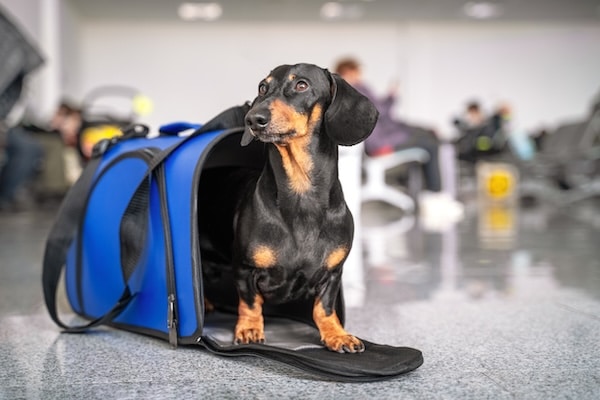
If your dog is small enough to ride in the cabin, you’ll need to ensure their pet carrier can fit under the seat in front of you. (You’ll also need to check with your airline for their specific size requirements.)
For dogs who are too big and have to fly cargo, their crates must follow International Air Transport Association (IATA) guidelines. These rules include having a crate with sufficient ventilation; a solid, leak-proof bottom; a mandatory “live animal” tag; and attached food and water containers. The crate must also be large enough for your dog to sit, stand, turn around, and lie down in a natural position.
Whether your dog is riding with you in the cabin or in the cargo hold, allow plenty of time before your trip to get them used to their carrier or crate.
Avoid sedation
While anti-anxiety medicine may be okay, most vets and airlines warn against sedating dogs, especially those in cargo. “Pets that are sedated can have more issues with blood pressure fluctuations and hydration, so it’s best not to sedate if we can avoid it,” explains Dr. Liff.
If your pup is a nervous traveler, it’s important to discuss options with your vet well in advance. Some dogs simply may not be a good fit for air travel.
SolStock via iStock
Travel by Train
While not as common as flying or driving in the U.S., traveling with your dog by train might be another option to consider, especially when traveling internationally. Though you might find it a bit more restrictive, especially with larger breeds, these train travel tips can help you get one step ahead in your preparations.
Check rail line rules
Before hopping on a train with your pup, make sure to check the rail line’s weight limits and specific rules. In the US, for instance, Amtrak has a weight limit of 20 pounds for pets—this includes the weight of the carrier, which small dogs must be in for the entirety of the trip. Additionally, for most routes, Amtrak only allows pets on trips up to 7 hours.
When traveling abroad in places with a more robust rail system, you might have more flexibility. For example, in Europe, some rail lines allow larger dogs in the carriage as long as they’re leashed and muzzled. Some of these rail lines may also require you to purchase a specific ticket in a designated section of the train.
Be strategic with seating
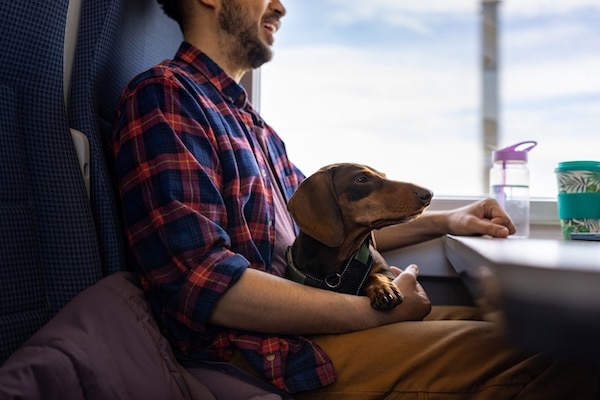
If you can pick where you can sit with your pet, book a seat at the end of the car for more legroom. This location will be especially helpful if you need to store your dog’s carrier under your seat for the trip. Staying near the doors will also make it easier to hop on and off the train.
If available, booking a table seat also provides a den-like space for your pup, away from the foot traffic in the aisle.
Check the route for longer stops
Ask the conductor where the service stops and longer breaks will be located along your route. That way, you and your pup will be ready to pop out for a quick potty break or a walk around the platform as soon as the train stops.
valentinrussanov via iStock
Travel by Bus
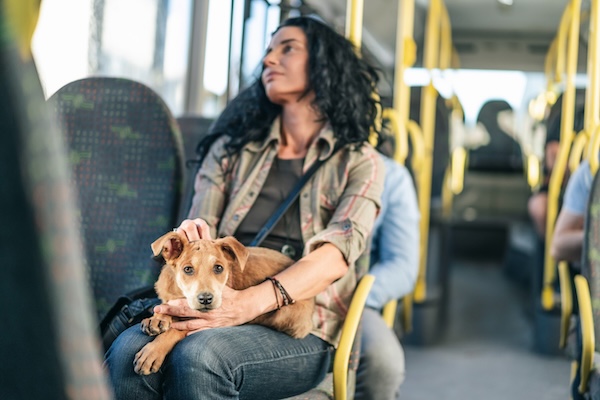
Like train travel, traveling by bus can often be more restrictive with a dog. Here are some ways to maximize your pup’s comfort when they’re in a more confined space.
Check regulations
While large bus chains like Greyhound may have strict pet regulations, local buses and urban transit may offer more understanding policies. Your bus system may have varying guidelines such as:
- Carrier not required, but dogs must be leashed
- Dogs must be on your lap or on the floor next to you
- Small lap dogs ride for free, while larger dogs cost the standard fare
Choose your seat wisely
If you can choose your seat, pick one with extra legroom, typically behind the driver or near the middle exit door. This additional floor space will give you more room for your carrier or for your larger dog to lie down.
Opt for a window seat as well. This will keep your dog tucked away and free from people bumping into them as they make their way down the aisle.
You may also want to avoid sitting in the back of the bus, as this is where the engine’s noise is the loudest.
Help with temperature control
It’s a good idea to bring a blanket for longer bus rides, or a portable fan for more crowded local buses in the warmer months. Dr. Liff also suggests bringing a pet pad or blanket for your dog to sit on for comfort and sanitation if they’re not required to be in a crate.
Kerkez via iStock
Travel by Boat
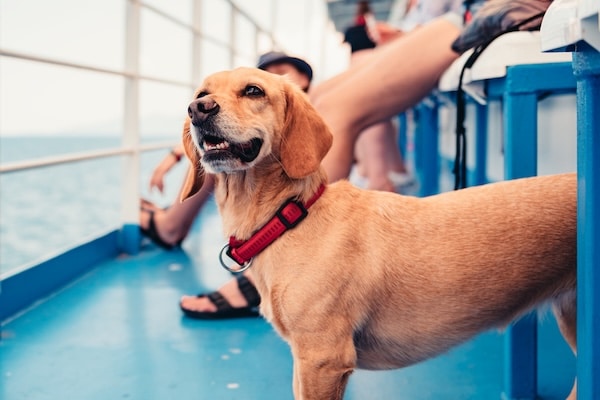
While less common, some pet parents may need to travel by boat or ferry with their dogs. If that’s you, check the specific ferry or boat’s rules ahead of time, as some have more stringent rules than others.
Consider meds and paw protection
Though it’s less common in dogs than in humans, some pets can get sea sickness, says Dr. Liff. “If you notice your pet gets queasy with travel, ask your vet for medication,” she recommends.
Boat decks can also be hot and slippery, so you may consider having your dog wear booties with grip for safety and paw protection.
Check if long-haul ferries or boats have a pet relief area
If you’re taking an extended trip on a ferry or boat, confirm the ship has areas for your dog to use the bathroom. The space will likely be limited and require your pet to use small potty patches, so you may want to practice ahead of time if your pup isn’t used to them. Teaching your dog to potty on cue can also help them quickly get the job done.
Check etiquette
Like other modes of public transport, rules for traveling with a dog will vary depending on the agency. Shorter ferries may require dogs to stay in a car, while longer trips may have specific areas where dogs can be. If on a cruise, some lines may require you to keep your pup in a designated kennel the entire time.
What To Pack
Below are some essentials you’ll want to bring with you no matter how you and your dog travel.
- Favorite toys. Don’t forget your dog’s favorite puzzle or stuffy for comfort and entertainment.
- Treats. Pack your dog’s favorite snacks to help navigate stressful situations and to reward good behavior.
- An extra leash. Keep an extra leash on hand in case one breaks or gets dirty.
- Food and water bowls. Collapsible travel bowls make it easy to offer your dog meals and water on the go.
- Medication. Keep your pet’s medications easily accessible.
- First aid kit. It’s not a bad idea to keep a kit on hand in case of emergencies.
- Health information. Pack printed copies of your dog’s vaccine records and any required health certifications.
- Bathroom essentials. Don’t forget poop bags, potty pads, disposable dog wipes, hand sanitizer, and whatever you need to do to clean up the doo.
- Crate and bedding. Ensure your dog’s crate meets your mode of transportation’s requirements, along with any bedding you put in it.