Hiking 101 for Dog Sitters & Walkers
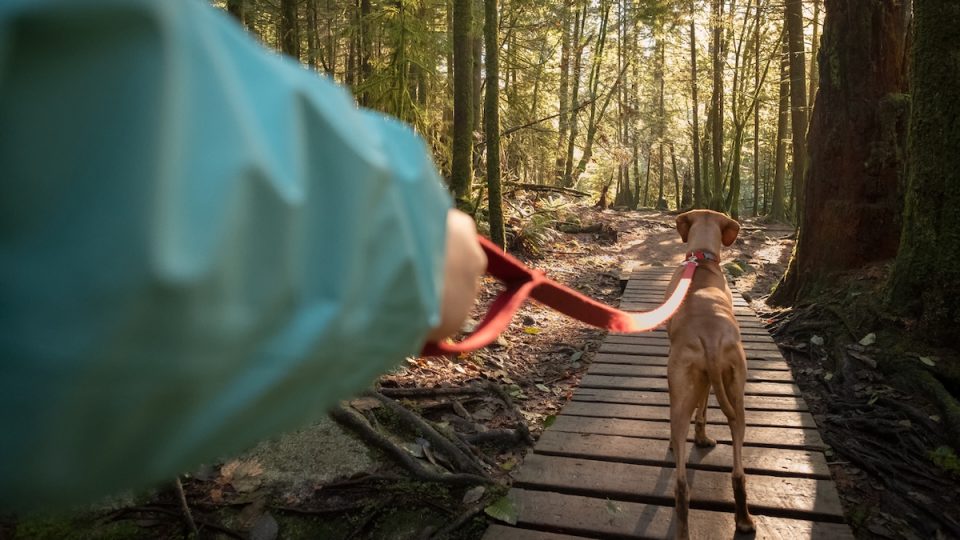
Looking for a way to level up your pet-sitting services? Offering hikes is a fun way to give active pups the extra exercise and enrichment they crave while giving your business something that stands out from the crowd.
Of course, a successful hike takes a little more planning than a stroll around the neighborhood. In this guide, we’ll cover how to choose the right trails, pack the essentials, keep dogs safe on the adventure, and practice good trail etiquette so you can hike with confidence.
Is This Dog Trail-Ready?
Not every dog is built for a day on the trails, and that’s okay! Before lacing up your hiking boots, make sure your Rover pup is a good fit for the adventure.
Dogs who are great hiking companions:
- Have approval to go hiking from their owner
- Are up to date on vaccinations and protected with flea, tick, and heartworm preventatives
- Enjoy meeting new people and dogs and don’t have a history of reactivity
- Walk well on a leash without excessive pulling or lunging
- Know basic cues like sit, stay, leave it, and come
- Travel comfortably in the car and can relax in a crate or carrier if needed
- Have the health stamina for longer outings, especially high-energy or working breeds that thrive on physical activity
- Enjoy being active! The best hiking partners are dogs who genuinely love getting outside and exploring
Communicate With the Owner
Before you take your Rover dog on a hike, be sure to have a quick conversation with the pet parent. They’ll have important information about their dog’s likes, dislikes, and limits.
Aim to discuss:
- Trail length. How far is their dog used to hiking, and what’s a comfortable distance?
- Trail type. Would they prefer a quiet nature trail, a busy park, or somewhere in between?
- Wildlife and trail encounters. Ask how their dog typically reacts to squirrels, deer, other dogs, cyclists, runners, or even horses.
- Water safety. Is it okay for this dog to swim or wade, or should water be avoided?
- Health concerns. Are there any chronic symptoms or particular signs of tiredness you should keep an eye out for?
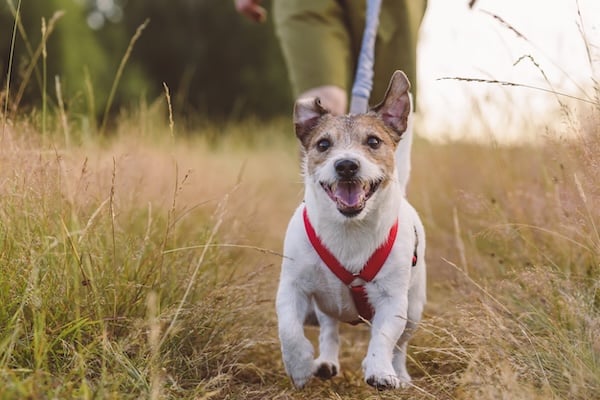
alexei_tm via iStock
What To Bring on a Hike
Before you hit the trail, take a few minutes to make sure you have everything you need.
Consider packing:
- A planned hiking route. Choose a dog-friendly trail and check for leash rules before you go. Consider printing your route in case you don’t have service or phone battery.
- A well-fitting harness and sturdy leash. Harnesses offer extra security on the trails. Consider using a standard leash instead of a retractable one, so you’ll have more control.
- Plenty of fresh water and a collapsible bowl. Hiking is thirsty work! Bring more water than you think you’ll need, and don’t let a dog drink from streams or lakes, as they may contain harmful bacteria, parasites, or algae.
- High-value treats (and food for longer hikes). Treats are great for rewarding good trail manners, practicing recall, or keeping a dog’s attention around distractions. For longer adventures, pack a meal or a heftier snack to help replenish their energy.
- Poop bags—and a way to carry them out. Leave every trail cleaner than you found it, since dog poop can be hazardous for plants and other animals. A small waste bag holder or odor-proof poop container makes packing out waste much more pleasant.
- A pet first aid kit. Include basics like gauze, tweezers, bandages, antiseptic wipes, and anything else you might need to handle minor scrapes until you can get veterinary care.
- Dog booties (if needed). Hot pavement, rocky trails, snow, or rough terrain can be tough on sensitive paws. If your Rover pup is used to wearing booties, consider bringing them along or packing paw wax like Musher’s Secret.
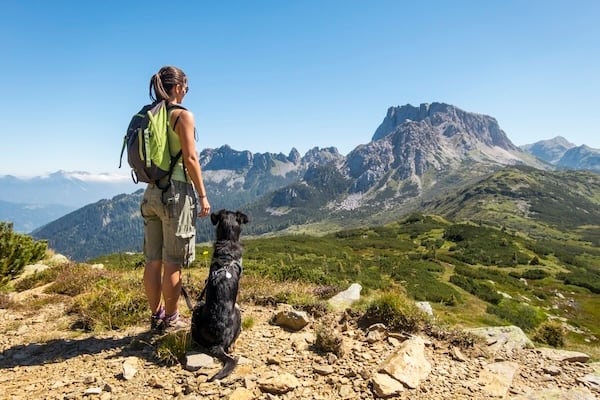
tommasolizzul via iStock
Trail Safety Tips
The trail is full of exciting sights, smells, and adventures, but it also comes with a few potential hazards. Keep these tips in mind to make sure every hike is as safe as it is fun.
- Take plenty of water breaks. Hiking is hard work. Offer water often, especially on warm days.
- Dress for the weather. Hot temperatures can lead to heat exhaustion, while cold, wet conditions can be uncomfortable for dogs or even lead to hypothermia. If the weather looks questionable, consider saving your hike for another day.
- Pace yourself. Stop for sniff breaks and a little rest along the way. Pay attention to signs that a dog is getting tired, such as excessive panting, slowing down, or lagging behind.
- Watch for wildlife and insects. Keep an eye out for snakes, ticks, bees, and other critters that could pose a risk. Staying on marked trails can help reduce unexpected encounters.
- Check those paws. Rocky trails, hot surfaces, thorns, and sharp sticks can all take a toll on paw pads. Give paws a once-over during and after your hike to catch any cuts or debris.
- Choose safe swimming spots. If your Rover pup is approved for swimming, make sure it’s safe before letting them take a dip. Avoid water with algae blooms, strong currents, and fast-moving water.
- Keep dogs leashed. Even dogs with excellent recall can get distracted by wildlife or unfamiliar sights and sounds. Keeping them leashed helps protect them, other hikers, and the surrounding wildlife.
Trail Etiquette
You and your Rover pup probably won’t have the trail all to yourselves. These simple tips will help you be a courteous trail user wherever your adventures take you.
- Skip on-trail greetings. Not every dog or other hiker wants to say hello, and that’s okay. Give others plenty of space and only allow interactions if everyone is comfortable.
- Stay on marked trails. It helps protect local plants and wildlife, reduces erosion, and lowers the chance of getting lost.
- Yield to others. Step off to the side when appropriate to let faster hikers pass, and be prepared to give extra room to runners, cyclists, or horseback riders.
- Pack it in, pack it out. Always pick up after the dogs in your care, and carry waste with you until you find a trash can. Leaving a poop bag on the side of the trail “for later” is easy to forget, and it’s not fun for other hikers to stumble across it.
- Respect wildlife. Admiring animals from a distance is part of the fun. Keep dogs from chasing birds, squirrels, or other wildlife so everyone can safely enjoy the outdoors.