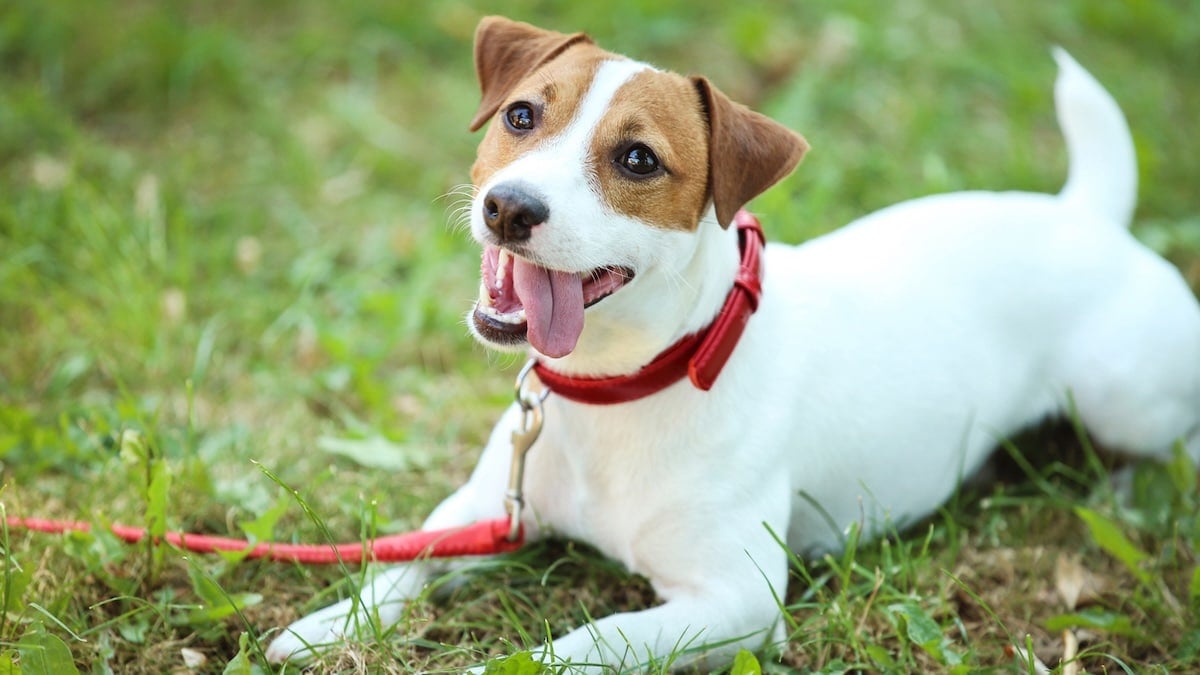
A Sitter’s Guide to Supervising Dog Play
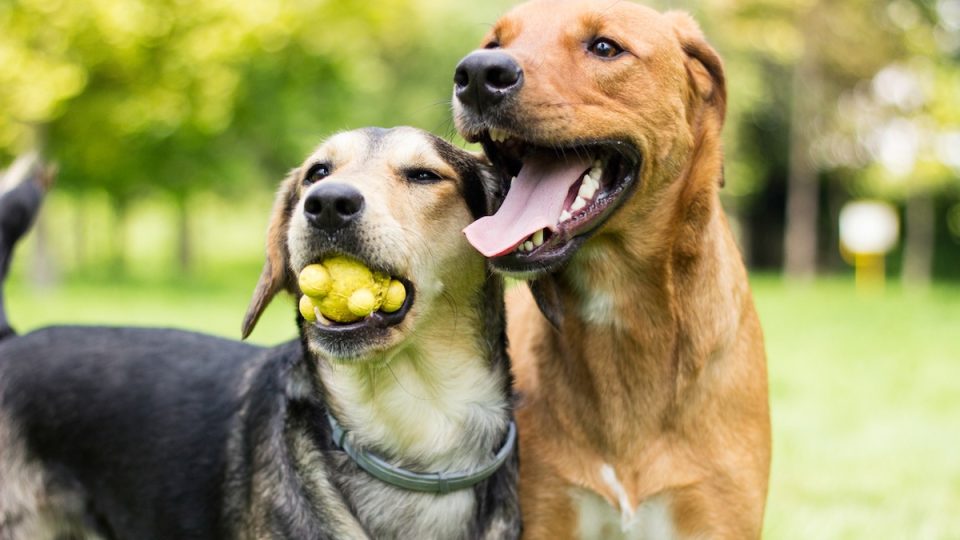
There’s nothing quite as joyful as watching dogs play with each other. But as a sitter, you already know that a lot can happen fast when two dogs get together, especially if they’ve never met before. Knowing what to look for—and when to step in—makes all the difference in keeping everyone safe and having fun.
This guide will walk you through the key things to consider before letting dogs play together, how to read their body language, and what to do if things start to go sideways. We’ll also cover something that’s easy to overlook: how to help dogs wind down, so they end play on a calm, positive note. Think of it as your go-to playbook for dog play!
Questions To Ask Before Play
Before two dogs ever share the same space, a quick conversation with the owner can save you a lot of stress.
Every dog is different, so the more you know going in, the better equipped you’ll be to set yourself up for success or recognize when dogs might not be the right fit to hang out with each other. When in doubt, it’s always okay to hold off on letting dogs play until you feel confident that they will get along without a hitch.
Here are some helpful questions you can ask the owner ahead of time:
- What is your dog’s play style? Some dogs love to play, and some are more observers than participants. Knowing this helps you anticipate how they’ll interact with another dog.
- Are there any types of dogs they don’t usually like playing with? For example, a dog who prefers gentle play may not do well with a high-energy pup, or a small dog might feel more nervous around large breeds.
- Does your dog have any behavioral concerns that I should be aware of? This includes things like resource guarding, reactivity, or a history of snapping. This gives you a much clearer picture of what to expect.
- How well does your dog respect another dog’s body language? Some dogs ignore another dog’s signals that they need space. In that case, it might be best to keep the dogs separated.
- Does your dog respond well to their name or a recall cue? Good recall is especially important, so you can redirect or separate dogs quickly if needed.
- How does your dog do with being separated by a gate or crate? If play gets too rough, you’ll want to have a management plan ready.
- How well does your dog self-regulate and relax on their own? Some dogs naturally take breaks during play; others may not know when to stop. A dog who can’t pump the brakes may need more active supervision and shorter play times.
- Has your dog had any negative experiences with other dogs? A previous bad encounter, such as being attacked by another dog, might make a dog fearful around other dogs, even if they previously played well with others.
- What helps your dog decompress after play? Some dogs need a quiet space and a nap; others need a short walk to come down from the excitement.
- What should I watch out for when supervising play? Owners may be able to flag specific triggers (e.g., a particular toy their dog is possessive over, or a tendency to get overstimulated) to keep play safe.
- If something goes wrong, what emergency plan would you like me to follow for your dog? Having clear guidance and emergency contacts documented in advance means you won’t be scrambling for information in a stressful moment.
yhelfman via iStock
Supervising Play
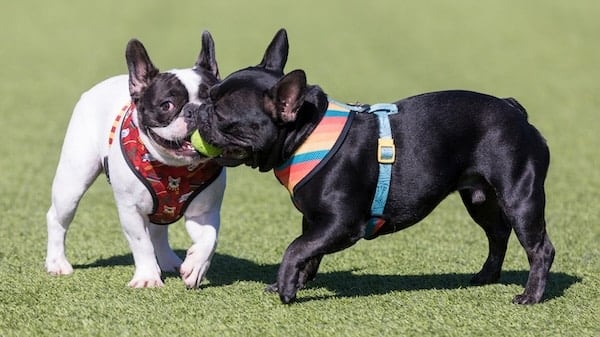
The first few minutes of a dog play session can tell you a lot. If two dogs are having fun playing together, they’re probably taking turns chasing and being chased and showing signs of relaxed body language (loose, wiggly movements). But if one dog is already trying to disengage or hide, it could be a sign they’re uncomfortable.
Signs of healthy play
- Play bowing. It’s a classic sign of a happy dog. Front legs stretched forward, chest low to the ground, rear end up in the air. This posture signals excitement and an open invitation to play.
- Loose, bouncy body language. Happy pups won’t look stiff.
- Adjusting play styles. If one dog is voluntarily lowering their play intensity for their playmate, it’s a good sign they’re getting along. A fast dog might slow down for a less energetic dog, or a large dog might make himself smaller for his shorter friend.
- Trading places. One dog chases, then they swap.
- Happy faces. A relaxed dog has a slightly open mouth with a loose tongue—signals that communicate joy and confidence.
- Shaking off and resetting. If a dog shakes when they’re not wet or dirty, it’s a way for them to release tension. Think of it as a little reset button between rounds of play.
- Natural pauses. Brief pauses during play (a water break, a moment to sniff around) means the dog is self-regulated.
- Play sneezing. Yep, it’s a thing! Dogs sneeze during play to signal to the other dog that everything is in good fun and there’s no need for alarm.
Signs to take a break
These signals don’t necessarily mean trouble, but they’re your cue to pump the brakes before things escalate.
- No pauses after a couple of minutes. If there are no shake-offs or brief breaks, keep a close eye.
- Arousal/overstimulation spiking. Watch for tighter faces, rougher play, faster movement, or more forceful body contact.
- One-sided play. If one dog is always the chaser, it can build tension.
- Ignoring body language. A dog bent on the game might start missing or ignoring the other dog’s requests for space.
- Mounting. Mounting during play can create tension fast. Try to redirect the dog if you can.
- Spatulate tongue. When a dog’s tongue is hanging out and the tip is flaring out, widening, or curling upward into a spoon shape while panting, it’s often a signal of stress.
Signs to stop play
These are your red flags. If you see any of the following, it’s time to separate the dogs calmly and give them space.
- Raised hackles. The fur standing up along a dog’s back signals that something has shifted and they might feel threatened.
- Growling. Play growls are typically paired with relaxed signals like wagging tails and happy bounces. But a low, sustained growl without those signals can be a sign of aggression or fear.
- Whale eye. Whale eye is a body language signal where the white part of the dog’s eye is visible, indicating that the dog is stressed, fearful, uncomfortable, or anxious. It occurs when a dog turns its head away but keeps its eyes fixed on a threat.
- Air snapping. A snap at the air near another dog is a clear warning that a dog has hit their social limit and needs some downtime.
- Stiff freeze. If a dog abruptly stops playing and doesn’t move, they may be scared, guarding something, or feeling cornered.
- Snarling or showing teeth. Teeth showing is a serious warning sign that a dog has had enough, and it’s time to intervene.
- Hard stare. A direct, fixed stare without any of the loose, playful body language that normally accompanies play is a sign to step in.
- One dog actively trying to escape. Yelping, hiding, or running away is a clear sign that a dog is no longer enjoying the interaction.
melissabrock1 via iStock
Interrupting Play
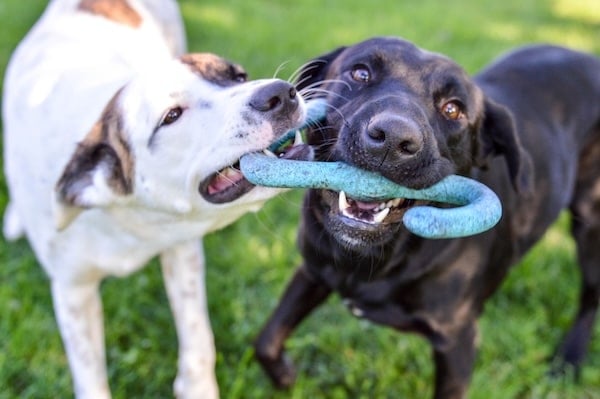
Whether you’re pumping the brakes on a play session that’s getting a little too rowdy or stopping play altogether, it’s important to intervene in a way that keeps you and the dogs safe. The goal is always to de-escalate calmly, not add more energy to the situation.
Here are some practical ways to break up dogs playing with each other:
- Call their name. Start by happily calling one dog away by using their name. Practice this before play sessions so dogs associate your call with good things coming their way.
- Use a positive interrupter. Another way to interrupt play is by making positive sounds—a kissy noise, a whistle, a clap, a finger snap—that will distract the dogs from what they’re doing and encourage them to pay attention to you.
- Body split. If it’s safe, walk calmly and confidently between the two dogs to break their focus. There’s no need to yell or rush. This works especially well for redirecting dogs who are too locked in to respond to a verbal cue in the moment.
- Use a visual block. You can use a baby gate, a pillow, or a piece of cardboard to block the dogs’ line of sight. If they can’t see each other, they’ll likely become interested in something else.
- Scatter treats. Toss a small handful of treats in opposite directions to send each dog off on their own little sniff-and-scavenge mission. It redirects their attention, creates distance, and gives both dogs a moment to decompress.
After Play
Whether the play session is over or you’re just hitting pause during a time-out, helping the dogs wind down after playing can be just as important as the play date itself.
Sniffing, licking, and chewing are all naturally calming activities that release feel-good chemicals like serotonin, dopamine, and endorphins in a dog’s brain. Leaning into those instincts is one of the easiest ways to help dogs cool off.
Here’s how to help the pups wind down:
- Separate the dogs into their own spaces. Even if everyone got along great, time apart after play helps dogs fully relax. Baby gates, crates, or separate rooms all work well.
- Offer something to chew on. Spreading a little dog-safe peanut butter (or other owner-approved treat) on a lick mat or in a KONG toy provides a soothing enrichment activity that keeps dogs engaged while their nervous systems settle.
- Make sure everyone has fresh water. Play is exercise! Remember to have water bowls ready as soon as the play session wraps up.
- Create a calm, quiet environment. Close the blinds, dim the lights, and turn on some calming music or background sounds to encourage nap time.
- Consider a slow sniff walk. If a dog seems too wound up to settle, a quiet, unhurried walk where they’re free to stop and sniff at their own pace can help release stress before they head back inside to rest.