- Not a substitute for professional veterinary help.
Every holiday with a new puppy brings new joys and challenges, but Halloween might just take the cake. Costumes, trick-or-treaters, and boisterous neighborhood celebrations can be a lot for a new puppy to process. Some might find it exciting and overwhelming, while others might be spooked and worried.
The good news is that all of this newness presents a key training opportunity. How you manage a puppy’s first experience with Halloween can help them navigate all the unexpected sights, sounds, and experiences of not only future holidays, but daily life as well.

“Halloween can be wonderful for socialization if we approach it thoughtfully,” says fear-free dog trainer Michelle Thomas of Ready, Pup, Go! “The goal is to help puppies feel safe, curious, and in control while they learn that spooky sights and sounds predict good things.” Trainer Alexandra Bassett of DogSavvy agrees and emphasizes a careful approach—what you don’t want is to overexpose a puppy or flood them, since that can backfire and build negative associations.
Here’s how to use the run-up to a puppy’s first Halloween as an opportunity for training, socialization, and—most importantly—fun.
1. Practice the Doorbell
The loud ring of a doorbell is a trigger for many pups, and the non-stop ringing of trick-or-treaters can be especially overwhelming. Socializing your puppy to the doorbell can make a big difference, and Halloween is a great opportunity to practice.
“Start early with doorbell practice,” advises Thomas. “Pair the sound of a knock or chime with a handful of treats tossed on the floor before opening the door.”
Break the process into steps, repeating each one for several days in the run-up to Halloween:
- Have someone knock or ring the bell. Immediately toss treats on the floor near the door.
- Repeat, but hold the treats. Reward your puppy when they look at you instead of at the door.
- Leash your puppy and open the door after a knock or ring, rewarding your puppy when they sit or greet your “visitor” calmly.
With repetition, the doorbell will become a signal of good things to come—and your puppy will be looking to you for snacks instead of barking or panicking when the trick-or-treaters start rolling in.
For extra safety on Halloween, consider keeping your pup on a leash or using a dog gate when answering the door, even if your pup is well-trained.
Sviatlana Barchan via iStock
2. Warm Up to People in Costumes
Halloween costumes can be hard on dogs. “Dogs rely on familiar silhouettes, scents, and movement,” explains Thomas. “A person wearing a mask or cape changes all of those at once.”
The unfamiliarity can cause a puppy to become scared—and dogs tend to remember what’s scary and what they’ve had bad experiences with. “A fear response from a mask, for example, could result in other articles of clothing triggering fear such as hats, glasses, medical masks, and jackets,” Thomas cautions.
That’s why a puppy’s first Halloween offers a good opportunity to build positive associations—not scary ones—early on, during a period when puppies are especially receptive.
To get your puppy used to costumes, start before the Halloween festivities begin:
- “Lay the costume on the floor with treats scattered nearby. Allow your pup to approach, sniff, and explore on their own terms,” Thomas advises.
- If your pup is showing discomfort or fear, Thomas recommends encouraging your pup to create some distance by tossing treats away from the costume.
- If they seem comfortable or even excited about the costume, you can start to move the pieces around or put them on.
- Offer treats as your pup approaches the items, ensuring a positive association with each costume piece.
- If you start to put them on, put on one piece at a time, slowly building up individual positive associations as your costume comes together.
“It is very important not to rush this process,” says Thomas. “Go at the puppy’s comfort pace.”
Be sure to also keep up your enthusiasm—and treats—on Halloween night, when the number of costumes and unfamiliar shapes can be overwhelming. Your calm response can help your puppy feel confident and calm too.
3. Get Comfortable with Yard Decorations
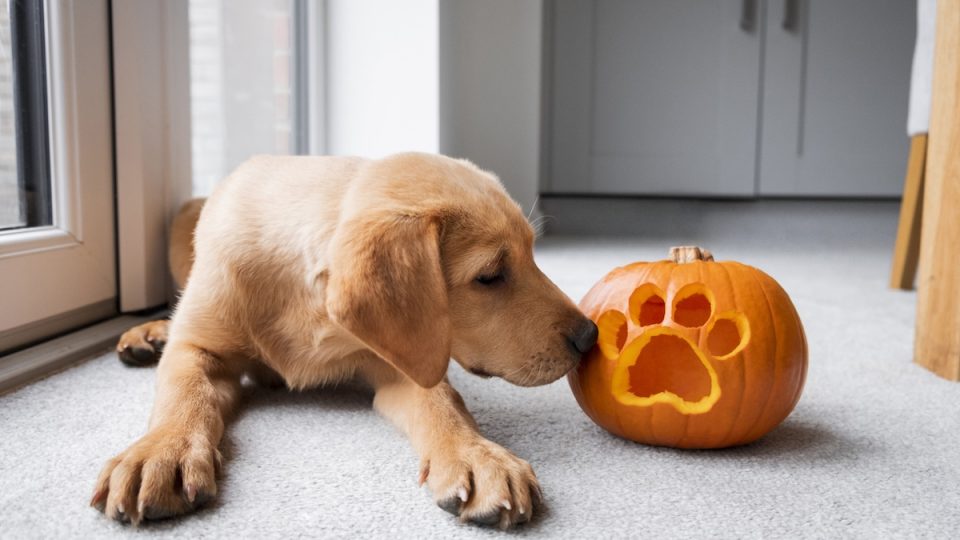
Around Halloween, it’s not just the people who change shape. A puppy’s whole environment may start to look different as spooky decorations fill yards and homes.
“Shy, cautious, or fearful puppies may feel threatened by things like creepy yard decorations,” says Bassett. A display is bad enough, but if those displays start to move or make noise, it’s no surprise that a puppy gets scared. She recommends taking your puppy out for short exposure sessions with plenty of positive rewards.
“You might do short, reward-based training sessions near a skeleton decoration or play a game of ‘find it’ around a spooky display,” she recommends. “Allowing puppies to encounter these items and overcome their initial fear by checking them out can also be helpful. Sometimes approaching something your puppy is afraid of and touching it can help them see it’s nothing to be afraid of.”
4. Practice “Leave It”
As many new things as there are for your puppy to experience on Halloween, there are also some key things to leave alone. Halloween sees a huge spike in the number of calls to pet poison control lines from dogs eating Halloween candy, wrappers, and decorations like webs and glow sticks.
That makes this a great season to practice the “leave it” cue. The best way to train is to hide something your puppy really wants, like a treat, under the toe of your shoe. When they “leave it,” they are rewarded—usually with an even better treat from your hand.
Even if your puppy has “leave it” and “drop it” down cold, it’s still important to puppy-proof for the holiday and to remind your household that human treats aren’t safe for dogs—so keep those stashes locked up tight. Consider making your puppy their own special dog-safe treats, like DIY pumpkin spice dog treats, peanut butter softies, or homemade apple pie bites.
melissabrock1 via iStock
5. Practice Puppy Costume Safety
Practicing wearing clothing is a great skill for a puppy—especially smaller or thin-coated dogs who might benefit from extra warmth. Dog costumes are one way to practice—but it takes a lot of care, supervision, and planning to do it safely. If you opt for a costume, it’s especially important to:
- Choose wisely. Just about anything can become a choking hazard to a teething puppy, so avoid anything with pieces that can be pulled or chewed off.
- Make sure the fit is good. Measure your puppy carefully so that they won’t have their movement restricted or get tangled.
- Supervise constantly. Any time your puppy is in their costume, somebody should be supervising.
- Watch for signs of discomfort. Chewing, scratching, and rolling are signs it’s time to remove the gear.
You might find that getting your puppy into their costume, especially the first time, is no small feat. As with most kinds of training and socialization, slow is the way to go.
Here are some steps to practice and make the experience positive:
- Set your puppy’s outfit on the floor and shower them with praise and treats when they approach it.
- Move the pieces around, rewarding your pup as they approach.
- Go slow as you start to put the costume on your pup. If your dog’s costume has multiple pieces, put on one piece at a time, rewarding with treats and watching their body language to know when it’s time to stop.
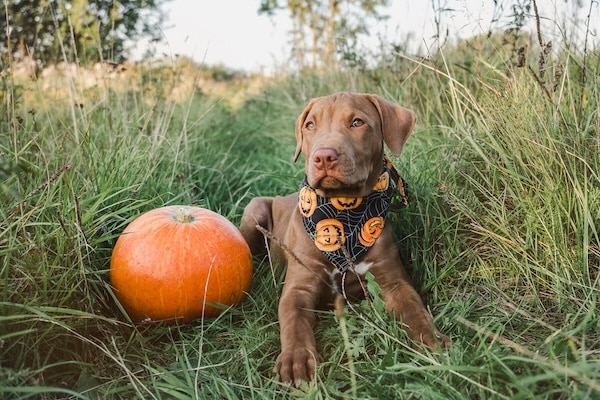
Not all pups like wearing clothing, and not just because they’re not used to it. If your puppy really isn’t having it, skip the costume and opt for a fun bandana or a cheery bow tie instead.
6. Create a Safe Space to Retreat
Even if you’ve done all the right things to prepare your puppy for Halloween, the holiday might still be overwhelming. A young dog simply may not be up for a full-length Halloween party or long evening of bell-ringing. Even if you don’t welcome trick-or-treaters to your door, Halloween tends to be a noisy night in the neighborhood, which can be startling to a pup.
“Know your puppy’s limits,” says Bassett. “Understand what your puppy can handle and remove them from situations before they become overstimulated or scared.”
Get plenty of exercise before the festivities begin, then create a cozy safe space for your puppy to spend the evening. That might have:
- A bed, crate, or blanket in a quiet corner
- A white noise machine or soft music to muffle the noise of the festivities
- Chews and lick mats for distraction
With the space and the right preparation, your puppy can enjoy Halloween as much as you do—both now and for years to come.