- Not a substitute for professional veterinary help.
Cats are creatures of habit who love their routines, especially when it comes to their litter box. But there may be times when you need to disrupt their schedule due to travel, an emergency, or a move to a new home. In these instances when your cat doesn’t have direct access to a litter box for an extended period, it’s helpful to know how long they can safely hold their pee.
While younger kittens and senior cats may need to use the bathroom more, an adult cat can typically hold their pee for 8 to 12 hours. This amount of time, however, will depend on your particular cat. Knowing this baseline can help you keep them comfortable during travel.

For expert advice on the matter, we spoke with Dr. Jo Myers, a veterinarian at Vetster, and Dr. Nathaniel Rakestraw, a veterinarian for TelaVets. Read on to learn more about a cat’s peeing habits and how to plan for potty breaks when traveling.
How Long Can a Cat Go Without Using the Bathroom?
Typically, cats pee between two and four times a day and poop once or twice. While most healthy adult cats pee every 8 to 12 hours, Dr. Rakestraw says in unusual situations, some cats may hold their urine for up to 24 hours, though this is not ideal and should not become a habit.
Dr. Meyers agrees, saying it’s best to try to mitigate how long your cat has go without using the bathroom. “As with anything stressful or uncomfortable, it’s always better to minimize the amount of time your cat must go without the things it needs,” she adds.
Not only does going too long without a bathroom break add stress to your cat, but it’s also bad for their health. Holding pee for too long can cause urinary tract irritation and bladder discomfort. For male cats, Dr. Rakestraw notes it can lead to a life-threatening urinary obstruction. If your cat hasn’t urinated in over 24 hours, it’s important to see a vet.
How To Plan for Cat Bathroom Breaks During Travel
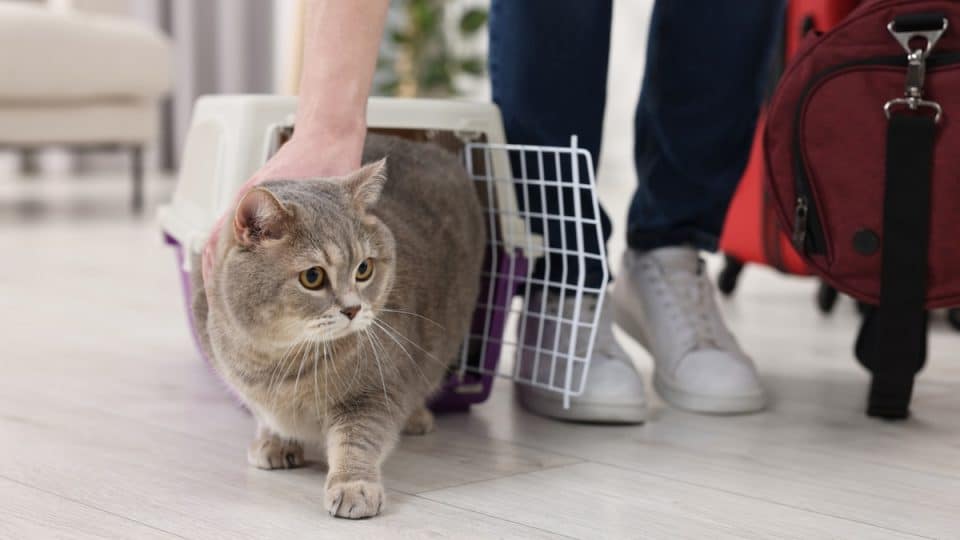
Planning bathroom breaks for your cat before setting out on your adventure can help ensure a smoother trip.
When traveling by car, try to give your cat access to a travel litter box or disposable litter tray every 2 to 3 hours.
If flying with your cat, look up the closest pet relief spots near your gate and terminal to give your cat a chance to use the bathroom. It’s also a good idea to line your cat’s carrier with absorbent pads in case of accidents.
While it may seem counterintuitive, avoid limiting your cat’s access to water. Drinking regularly while traveling can help create a sense of routine, reduce stress, and prevent dehydration. If your cat has a history of urinary issues or other health concerns, Dr. Myers recommends working with your vet to create a tailored travel plan based on your cat’s needs.
Bringing along a favorite toy or bedding can add a sense of familiarity to the chaos of travel, while pheromone diffusers and collars, white noise machines, or calming music can create a soothing setting in a new setting. “Keeping the environment calm and familiar helps reduce stress-related urine retention,” says Dr. Rakestraw. That way, your cat stays safe, healthy, and comfortable between transitions.
Factors That Affect How Long a Cat Can Hold Their Pee
Variables like age, gender, and diet affect how often a cat needs to pee. Cats in the below groups are especially likely to need more frequent bathroom breaks when you’re traveling.
Kittens and senior cats
Very young and very old cats are less likely to be able to hold their bladders for very long. Kittens need to pee more often due to their fast metabolisms and small bladders, while senior cats may need to urinate more often due to a weakened bladder or medical conditions.
Cats with health issues
A cat’s physical health may prevent them from holding their pee for longer periods. Obesity can put extra pressure on the bladder, leading a cat to pee more often. Conditions like UTIs, inflammation, diabetes, and kidney disease can also make a cat feel like they have to go to the bathroom constantly.
Male cats
Male and female cats typically pee the same amount daily. Both sexes also pee to mark their territory, which can also affect how often they use their litter box.
However, male cats have a slightly longer, narrower urethra, which makes them more susceptible to urinary obstructions. An obstruction will cause them to pee less and requires immediate attention.
Cats who eat wet food
What your cat eats plays a part, too. “Wet food is often associated with increased water intake and urine volume,” says Dr. Myers. Thus, a cat who eats wet food may need more bathroom breaks during travel than cats on a dry food diet.
Stress-prone cats
Cats are highly sensitive to change. Traveling, moving, and visiting a new place can all affect a cat’s peeing habits—but if you and your cat haven’t traveled together before, it can be hard to predict how.
For instance, being in a carrier for prolonged periods or taking a noisy car ride can trigger a stress response, making your cat feel they have to hold their pee at all costs. Conversely, stress can also inflame the bladder, causing a cat to pee more frequently.
Cats on medication
If your cat is on medications, such as steroids or diuretics, they may need to use the bathroom more often. Anxiety medications given to keep cats calm during travel are also known to cause more frequent urination.