- This post contains affiliate links. Read more here.
- Not a substitute for professional veterinary help.
If you’re in the throes of training a dog, take heart! Your hard work will pay off. It just may take some time—and a whole lot of patience—to see the results. These dog training tips can help.
Whether you’re brand-new to positive-reinforcement training or a veteran cookie slinger, sometimes it’s helpful to take a step back and reassess your approach. From dog training tips for beginners to helpful reminders, we’ve outlined some pointers with the help of certified animal trainer and pet lifestyle expert Nicole Ellis. Read on for top training tips, straight from the expert.

How To Train a Dog Effectively: Top Tips
Training a dog is one thing, but training a dog effectively is a whole other (tennis) ball game. If you’re feeling a bit lost or overwhelmed in your approach, these seven dog training tips can help point you in the right direction.
1. Learn canine body language
While dogs can’t talk to us directly, they’re always communicating with us. Knowing the ins and outs of canine body language, even the most subtle signs, can help you better understand how your dog is feeling in various training situations.
For example, Ellis explains that behaviors like lip licking, turning away, or yawning can indicate feelings of stress. “Reading these signals allows you to adjust training so your dog stays comfortable and able to learn,” she says. “While it may seem silly to stop when your dog is licking their lips, when we have a dog stressed out at the end behavior, it’s a lot more work to try to fix that stress.”
Need some help? Read up on:
2. Start in distraction-free zones
If your dog is struggling to learn a new behavior or isn’t engaging with you, take a look around. Are you in an environment with lots of exciting noises, sounds, smells, people, and other animals vying for your pup’s attention? You might be trying to level up too quickly.
“Early training should happen in environments where your dog can succeed,” says Ellis, advising pet parents to start in a quiet room inside their home. Once your dog is consistently performing the behavior in that room, gradually increase the distractions—moving to a busier room, the backyard, in front of the house, and so on.
3. Keep sessions short and successful
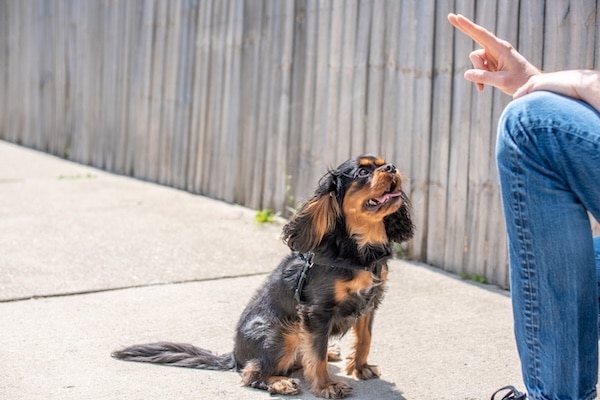
“Dogs learn best in short bursts,” says Ellis, recommending keeping sessions to three to five minutes to prevent fatigue and frustration. This is especially crucial for training puppies, who have shorter attention spans.
While it may be tempting to keep pushing forward when training is going well, try to stop while you’re ahead. “By ending on a win, when your dog performs the behavior correctly, it helps build confidence and leaves them eager to train again next time,” says Ellis. Not to mention, it boosts your morale, too.
Page Light Studios via iStock
4. Incorporate training into your daily life
Training may seem like an endless task that you have to carve time for out of your busy da. But really, it just requires some reframing. The whole point of dog training is to make it easier for your dog to exist safely, happily, and comfortably in your day-to-day.
Look at your own routines and see if there are ways to incorporate your dog’s training within them. For instance, have your dog practice settling on a mat while you cook or make coffee. Work on recall when you’re out in the backyard with your kids and make it a family event.
5. Make sure everyone is on the same page
Speaking of which, if your partner, kids, or other family or house members are also helping train your dog, make sure everyone is on the same page. “Dogs learn through patterns,” says Ellis. “When cues, rewards, and expectations change from day to day, it becomes confusing for them.”
To ensure everyone is consistent, hold a family/house meeting and go over the training plan—this way, your dog is clear about the expectations around their behavior.
6. Match the reward to the ask
“When you reinforce behaviors you like, such as sitting calmly or walking nicely on leash, your dog learns that those choices lead to good outcomes, which makes them more likely to repeat them,” says Ellis.
But what if you’ve been training for a while and you’re not seeing progress? Then it’s time to examine whether your ask matches your reward—and if your dog even finds it reinforcing. For instance, jumping on a guest and getting instant contact is likely way more reinforcing for excitable dogs than sitting politely for a dry biscuit.
Take some time to find out what your dog loves most. For many dogs, this is tasty, novel treats, but for others, it can be toys, praise, or a combination of all three. Once you know what your dog thinks is the highest value, use that reward for big requests.
7. Make training fun
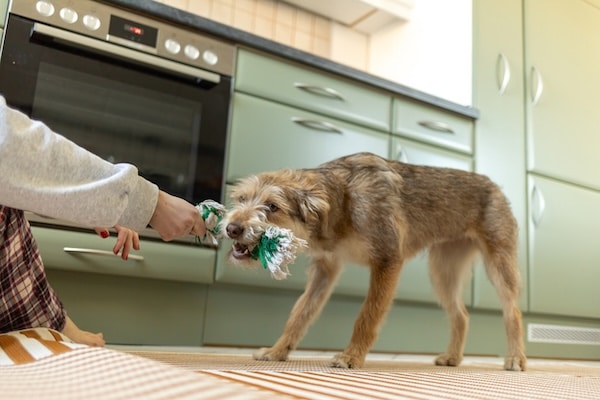
An often overlooked dog training tip is that training should be fun! Ellis says it should feel like a game for your dog. They should be amped when you get out your treat pouch, and it’s time to learn. Challenge yourself to find new ways to make training entertaining and incorporate play where you can—like using tug and fetch toys to teach essential cues like “drop it,” “leave it,” and “come.”
Kateryna Muzhevska via iStock
Common Dog Training Mistakes To Avoid
Although having a good idea of what to do is important, it’s also crucial to know what not to do. Here are a few things to avoid so as not to negatively affect your dog’s progress.
Don’t use punishment
Plain and simple: punishment may work to stop a behavior, but the risk of fallout isn’t worth it. “Punishment can create fear, anxiety, or avoidance rather than teaching a dog what you want them to do,” says Ellis. She adds that when your dog is stressed during training, they’re not likely to absorb and retain what you’re trying to teach them.
Avoid training when frustrated
There will be times when training feels frustrating, but it’s important to put sessions on pause if you reach this point. After all, you don’t want your reaction to prevent progress or negatively affect your relationship with your dog.
If a training session isn’t going as planned, cut things short, give your dog a puzzle toy, and take some space for you both to decompress. Review the tips above and see if there’s anything you need to change before you train again.
Don’t be stingy with rewards
You wouldn’t want to work without getting paid, and neither does your dog! Don’t be afraid to reward generously, especially in high-stakes situations, like training around triggers or distractions.
In these instances, you’ll also need a high rate of reinforcement. If you’re worried about calories, use small soft treats that you can break down even more for extra mileage. Remember: Behaviors that are reinforced are repeated, so reinforce generously.
Avoid repeating cues
Repeating cues is a common mistake, says Ellis. “It teaches dogs that the cue doesn’t matter until it’s said multiple times,” she adds.
Give your dog time to use their brain and respond after you’ve said the cue once. If they’re unable to complete your ask, it may be a sign that there are too many distractions or you still need more practice in building a particular skill. “Simply go back to the beginning, say it once, and be patient. And if they don’t offer it, go back to teaching it again from the basics,” Ellis notes.
Don’t be afraid to ask for help
“If you feel stuck, frustrated, or are dealing with behaviors like aggression, severe anxiety, separation anxiety, or reactivity, it’s a good time to consult a qualified trainer or behavior professional,” advises Ellis. “Getting guidance early can prevent issues from becoming more ingrained and helps ensure you’re using effective, humane training methods.”
Remember that the training journey is challenging, but worthwhile, and you don’t have to face it all on your own. On the other side, you’ll find a more positive and rewarding relationship with your best furry friend.