- Not a substitute for professional veterinary help.
Dogs are great at having winter fun—but it’s important to keep an eye on how much time your pup is spending out in the cold. One winter safety concern for dogs who love to frolic is frostbite.
The good news is that frostbite in dogs doesn’t happen often. “Dogs are well adapted to the cold and have differences in their vascular system as compared to people to protect them from this injury,” explains Dr. Kelsea Studer, Emergency and Critical Care Veterinarian and Assistant Clinical Professor at Cummings School of Veterinary Medicine, Tufts University.

But it’s still possible, especially in older and more vulnerable dogs—and if you see the signs, it’s important to get to a vet right away. Here’s what to know about how dogs get frostbite, what to symptoms to look out for, and how it can be prevented and treated.
How Do Dogs Get Frostbite?
“Frostbite is freezing, or the effect of freezing, of part of the body due to exposure of cold temperatures,” says Dr. Studer. “It occurs due to water crystallization within your body’s cells and can result in injury not only during the cold exposure but also when the tissues are re-warmed.”
For dogs, just like people, it’s their extremities which are most susceptible. Dog body parts that are most vulnerable to frostbite are:
- Paws
- Tail
- Scrotum
- Ear tips
- Nose
According to Dr. Studer, the conditions which most commonly lead to frostbite in dogs paws and other parts of the body can occur when out and about in below freezing temperatures (32ºF) and can be worsened by the following:
- Moist or windy conditions
- Contact with cold materials, such as metal
- Certain diseases that decrease perfusion to the extremities, such as heart disease, hypothyroidism, and diabetes mellitus
Certain dogs may also be more predisposed to cold injuries, including very young or very old pets, breeds with smaller body size, and those with short hair. “Some dogs, such as Huskies, are more adapt to cold temperatures, making cold injuries less likely, but not impossible,” says Dr. Studer.
Tungalag Balzhirova via iStock
Symptoms of Frostbite in Dogs
Frostbite can progress over several days. And while frostbite in people is much more visible on our skin, you may be wondering what to look for with a dog that is covered in fur.
If you suspect your dog has frostbite, Dr. Studer says the following are some symptoms to watch for:
- Skin discoloration (pale/white, grey, blue)
- Cold-to-the-touch extremities, stiff skin
- Pain, swelling, or licking/chewing of the affected area
If frostbite progresses, it can look like:
- Blisters
- Ulcerations
- Blackened, dead skin
- Swelling
- Limp tail
- Limping (unable to put weight on an affected limb)
- In cases of hypothermia, there may also be signs of mental dullness and uncoordinated movements
Dr. Studer explains that secondary infections, which can present as yellow or green discharge with a foul odor, can also occur, especially with licking.
If your dog displays any symptoms of frostbite or hypothermia, get them to a veterinarian immediately.
How To Avoid Frostbite
“The best way to prevent frostbite is to limit your pet’s exposure to the cold, particularly if the temperature is below zero,” says Dr. Studer. Here’s what you can do to minimize the risks.
Limit time outdoors
How much time outside is too much depends on the dog. But if it’s below freezing, err on the side of caution. “Depending on the dog, temperature, and environmental conditions, this will likely be less than 15-30 minutes,” says Dr. Studer, stressing the importance of supervision during this time.
Use protective gear
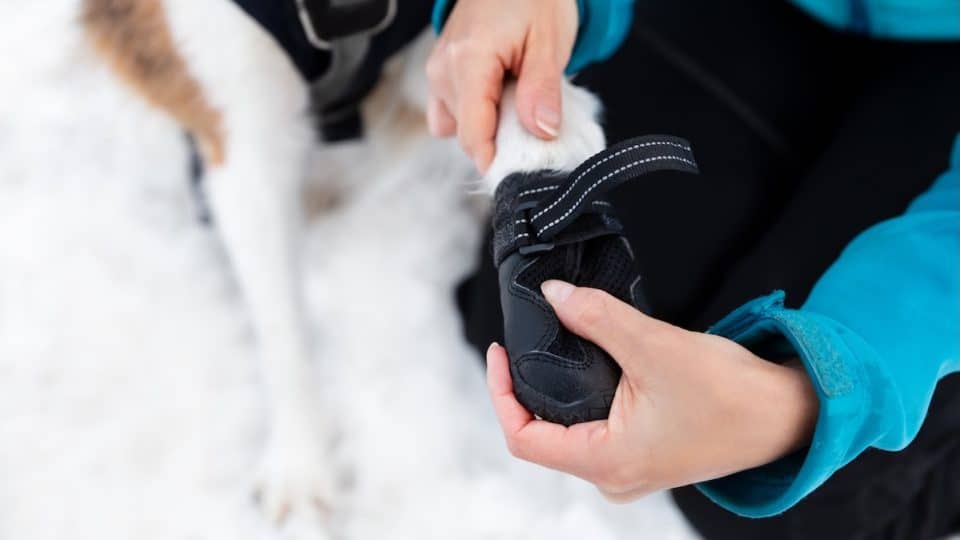
Dogs do have to go outdoors, whether to potty or get daily exercise. For these excursions, consider dog booties or paw wax to help protect their feet on these necessary outings.
Dry paws and fur carefully
After a chilly outing, gently wrap your dog in a warm dry towel and make sure to remove any ice crusted in their fur, especially the paw pads.
Avoid metal surfaces on walks
Metal has high thermal conductivity, meaning it pulls heat out of the body fast when it comes in contact—so avoid having your dog stand or wait on metal grates and covers.
Never leave a dog in a cold car
It’s dangerous to leave a dog in a hot car, but the same can be true for cold cars. Keep a close eye on the temperature if your dog will be in the car for any length of time.

helivideo via iStock
Treating Frostbite in Dogs
Immediate veterinary care is the number one thing to do if you suspect your dog has frostbite or hypothermia. Here’s what to do—and what not to do—on your way to the vet.
What to do if you suspect your dog has frostbite
- Contact your veterinarian immediately and get your dog to a veterinary medical facility.
- Gently wrap your pet in dry, warm towels.
- Place a warm water bottle near (not on) the core of their body.
- Keep your pet dry and out of wind chill.
What NOT to do if you suspect your dog has frostbite
- Do not apply dry heat to the affected areas (e.g., no hair dryers or heating pads).
- Do not massage or rub the affected area.
- Don’t delay—an immediate vet visit is critical.
Veterinary treatments and prognosis
Here’s what Dr. Studer says you can expect once you reach your veterinarian:
- Carefully controlled rewarming.
- Supportive treatment, including pain medications.
- Supportive care, such as hospitalization, IV fluids, and wound management.
- Depending on severity, topical medications and bandages.
“Some cases may eventually need surgery to debride the area or, in severe cases, amputation,” says Dr. Studer. It’s important to remember that, should your dog need any type of medical treatment for frostbite, they should not be allowed to lick the affected area afterward, as this may worsen the injury and cause infection.
Takeaways
Frostbite in dogs is thankfully rare, but it is a possibility in cold winter temperatures. Luckily, it can be prevented by limiting time outside in the cold, using paw protection, and avoiding metal surfaces.
Most importantly, if you suspect or see any symptoms of frostbite or hypothermia, take your pet to the vet immediately.
Winter is a wonderful time to spend outdoors with your dog, and with a few common-sense precautions, it can be a safe and fun experience for you both.