Feeling the ups and downs of life is a normal occurrence, but clinical depression is a medical illness that causes a persistent feeling of intense sadness and loss of interest in daily activities for an extended period of time.
Depression is frequently linked with anxiety disorders, which cause intense and uncontrollable feelings of fear, worry, and/or panic.
A welcome tool helping the mental health of those living in more than 46 million households in the U.S. with a feline might just be the family cat.
We spoke with veterinarians, researchers, and other pet professionals to examine some of the many ways our pet cats have a positive impact on our mental health.

iStock/M_a_y_a
Cats Lower Rates of Depression and Make Us Laugh
According to a Human Animal Bond Research Institute (HABRI) survey, 76% of pet owners report that their personal health has improved as a result of having a pet.
“Cats are important in people’s lives,” said Lindsey Braun, HABRI Vice President, Research & Operations. “Research shows us that cats can serve as important sources of social and emotional support, helping people cope with loneliness and isolation.”
Studies suggest cats can help buffer responses to stress through lowering the heart rate and blood pressure. They may even help people manage a long-term mental health illness.
Cat ownership is associated with lower levels of depressive symptoms and improved mood. In addition, cat owners have been found to laugh more frequently and spontaneously than non-owners, particularly in response to something their cat has done.
86% of responders to a poll by the American Psychiatric Association reported that their cats had a positive impact on their mental health, providing a calming presence and helping reduce stress and anxiety.
“I think in many ways, [cats] are providing a lifeline in terms of emotional mental health for people,” said Dr. Howard Liu, Chair of the American Psychiatric Association’s Council on Communications.
Prompted by the APA study results, the organization and the American Veterinary Medical Association teamed up to call attention to the positive mental health benefits of having a pet at home with their #Paws4MentalHealth challenge on social media.
Moyo Studio/iStock
Cats Provide Companionship and Prevent Loneliness
An increasing number of Americans are lonely, and there’s also an increasing amount of anxiety, Liu said.
“People are living alone right across generations, so I think more and more people have smaller circles of friends and loved ones that they’re in contact with, or they might have moved across the country, and oftentimes a pet can be a lifeline for them and a source of comfort after a difficult day,” he said.
A study that examined the effects pets have on adults who live alone found that pet owners were 36% less likely than non-pet owners to report loneliness.
Since the pandemic, many people are working from home, and that may contribute to isolation and those feelings of loneliness.
“It’s good in many ways to have some of that hybrid where you maybe have some more comfort, less commute and so on, but it can be isolating and lonely to be in that situation. And so really having somebody that can be a really positive, loving companion for you is key,” said Liu.

iStock/Adene Sanchez
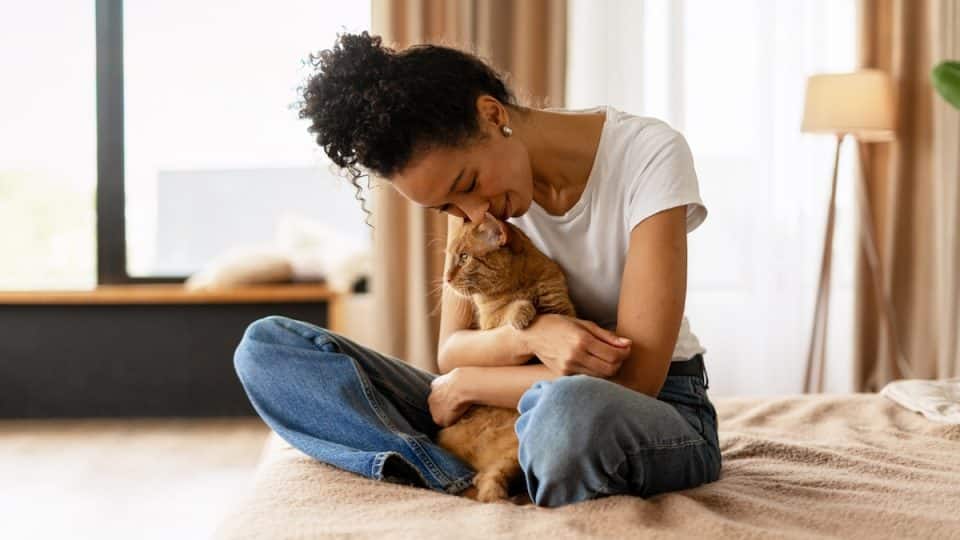
Liu noted that during the pandemic, hugging, shaking hands and other contact between people stopped, and cats help provide the physical comfort that went missing.
“I think just being able to hug a cat, stroking the cat, or just having them asleep in your lap, I think that proximity and some of that physical connection is really soothing for a lot of people,” he said.
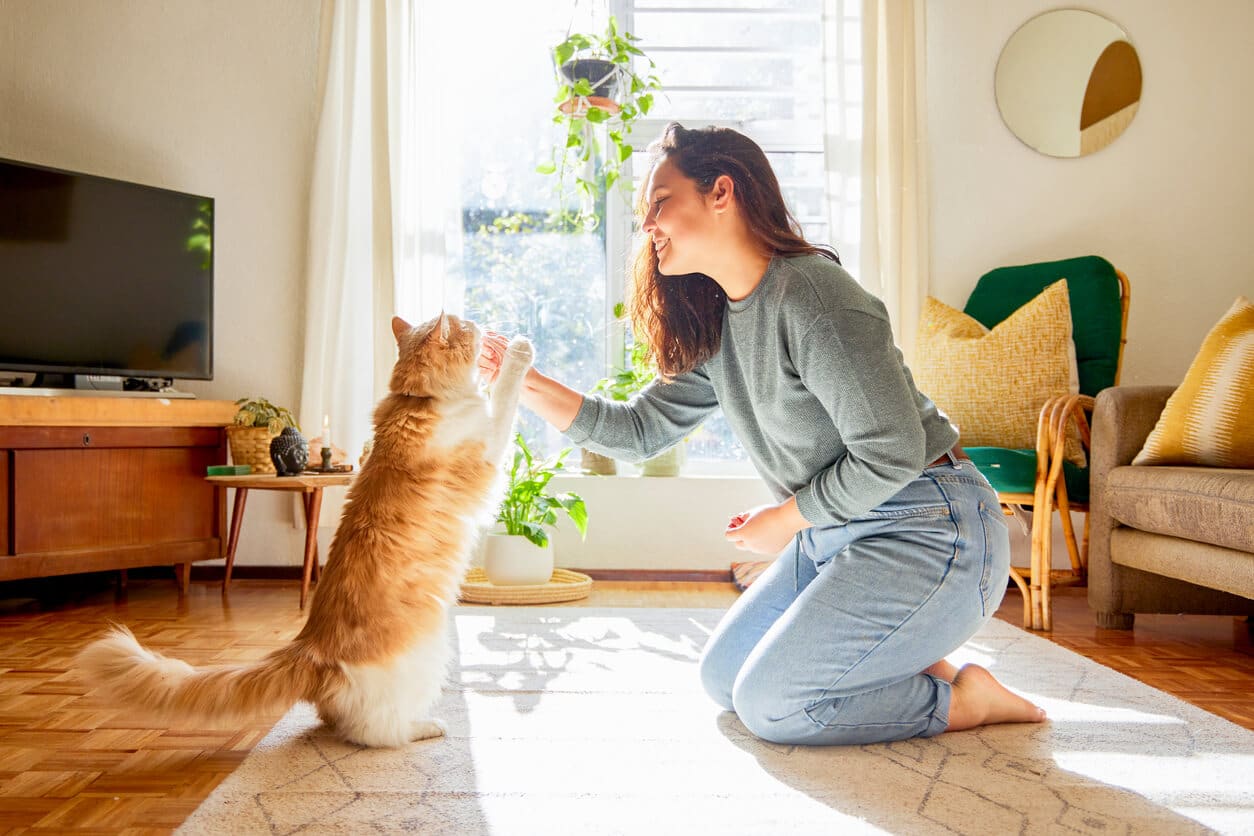
Interacting with a cat, whether it’s giving them a treat, playing with them, or simply watching them sleep, can be comforting.
“It’s reliable companionship,” said Liu.
Dr. Liu’s sister is a veterinarian. She agrees that companionship is significant.
“We bond with our pets as caregivers, ensuring their basic needs and medical needs are met,” said Dr. Julie Liu. “We bond with them emotionally, talking to them—who doesn’t have a baby name for their cat?—petting them to help calm our anxieties and fears, and taking comfort from their presence and purring if we’re having a rough day.”

iStock/NiseriN
Cats Soothe Us By Being Cute, and Purring!
Cat owners frequently refer to their pets as “fur babies” and speak to them using “baby talk.” There is a scientific theory as to why we are drawn to care for all things adorable, including kittens and cats.
Austrian biologist Konrad Lorenz came up with the term “baby schema” (“Kindchenschema) to describe physical characteristics that we consider cute. This includes large eyes, a round face and a small nose and mouth. Cute animals share these same traits, which elicit our nurturing and protective instincts. This helps explain why a roly-poly cat is sure to prompt an aww response.
The cat’s baby schema, combined with their size (similar to a human baby), makes them ideal for cuddling, which studies show is beneficial for human health and wellbeing.
Holding a contented, purring cat is one of life’s little pleasures. A study reported by the Journal of the Acoustical Society of America stated that the frequency of a cat’s purr, somewhere between 25 and 150 Hertz, falls within the same range as vibrational and electrical frequencies used in therapeutic or clinical settings to treat pain, swelling, wounds, and other injuries.
It’s believed that cats purr to calm and soothe themselves, and that calming effect can be passed along to humans.
A HABRI study suggests that tactile connections with a cat reduces stress and anxiety and activate oxytocin, the so-called “love hormone.”
View this post on Instagram
Cats Make Great Therapy Animals
While cats are not “service” animals because they aren’t trained to perform specific tasks, they do provide comfort and care to many individuals as emotional support or therapy animals.
“All therapy animals have an effect on people simply through their presence, the nonjudgmental attention, the capacity to touch and pet the animal and interact with the animal,” said Elisabeth Van Every, spokesperson for Pet Partners, a leader in animal-assisted therapy.
The nationwide program has 10,000 volunteers that take their certified therapy pets to visit people in hospitals, assisted living facilities, schools and more.
Van Every said there’s a sense of surprise in all therapy animal visits, but particularly with animals other than dogs and because there’s a general sense that cats are picky or exclusive, if a cat chooses to give you their affection, it’s a special thing.
“A lot of people do find that when they get the opportunity to interact with a therapy cat, they consider that they’ve been chosen and that the cat is giving them very special attention,” she said.
“We’ve often found that when people have the opportunity to sit with a with a therapy cat on their lap or a therapy cat lies on their hospital bed, and if the cat’s comfortable, the cat will go ahead and fall asleep. That again plays into that idea of the cat has chosen me, the cat is comfortable enough with me to lie down with me and sleep, and people get calming effects from that sense of being chosen and think, ‘Yes, this cat is sleeping and I find this adorable, sweet, and calming.’ All of those impacts can have positive effects for people.“
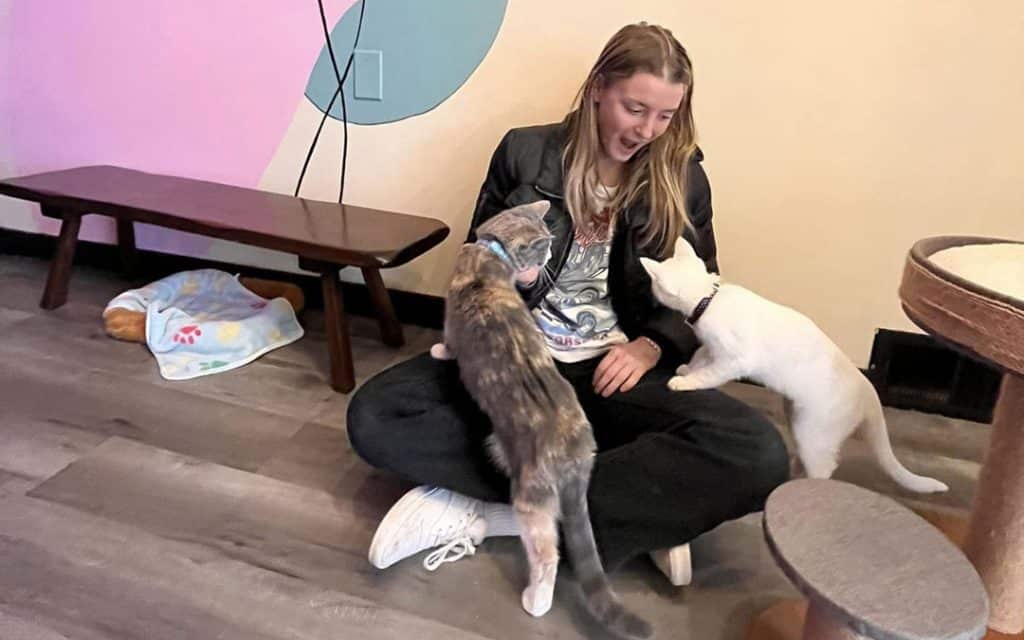
Enjoying some cuddle time at Barista Cats Cafe. Photo courtesy of Natalie Serna
Cats Offer Opportunities for Socialization and Stress Relief
A Washington State University study found that petting or cuddling with a cat for just 10 minutes can relieve stress and improve students’ moods.
While dogs are most often used as therapy animals in schools, the study found that some students are more drawn to cats.
A mom from the midwest decided to open a cat café for the students who attend the University of Wisconsin, Whitewater, after her own daughter struggled with her mental health in college.
“It’s hard being a kid these days, adding the responsibilities of college and COVID and everything else intertwined,” said Natalie Serna, founder of Barista Cats Cafe. “The college town has plenty of bars. There’s just not enough other places to have positive coping mechanisms for them.”
Serna said the response to the cafe has been amazing. Students come in to destress with a cup of coffee and a cuddly cat.
“They love it here. It’s a very relaxing environment,” said Serna. “It’s important to them. It gives them a safe space, and it gives them the comfort of knowing that they can come here, and everybody is welcome here, no matter what. When they come in and their shoulders are tight and they had a really rough day, they walk out and they feel good. They feel relaxed and they feel more able to deal with problems.”
Serna has a partnership with the Humane Society of Southern Wisconsin.
“They provide us with all the kitties, and we’re just that bridge for their home,” she said. “We adopt them out and 100% of their fee goes back to the Humane Society.”
Bonus: Watching Cat Videos Might Actually Be Productive
There are millions of cute and funny cat videos on social media and the number of “pet influencers” is ever-expanding. A cat named Puff has 33 million followers on TikTok and has racked up 785 million likes.
It’s easy to go down the rabbit hole of cat videos, but if and when you do, go ahead and give yourself a break because those videos may be helping improve your mental health.
A Pennsylvania State University professor who studies media’s effects on emotions and health decided to take a look at the phenomenon of cat videos.
“I noticed that cat videos were everywhere on social media,” said Professor Jessica Gall Myrick. “I am allergic to cats and, at the time, had a Pug dog, so I was curious about why people were watching so many cat videos and what the effects of watching this content might be.”
Myrick surveyed 7,000 people, asking them how cat videos affect their moods.
Participants reported that after watching cat videos they felt more energetic and more positive, and experienced fewer negative emotions, such as anxiety, annoyance, and sadness.
Participants also said the enjoyment they got from watching cat videos helped to counteract the guilt they felt using cat videos as a form of procrastination.
“Watching cat videos was associated with positive emotions and more energy,” said Myrick. “It doesn’t mean it’s a cure-all, but it might at least provide a temporary emotional boost.”
While people may watch videos alone, they may experience a sense of community with fellow account followers or by engaging with a particular cat influencer.
Myrick says humans have been enjoying the positive impacts of observing cats and other pets for centuries.
“Go to any major art museum in the world and you’ll see pets beside royalty and deities. So, it’s not surprising that with every new form of media, including TikTok, we see pet content,” said Myrick.
Final Thoughts
From their healing purrs and adorable antics, to their cuddly companionship and calming presence, cats support human mental health in a myriad of ways. While it’s nice to get the official confirmation from the experts, it’s safe to say that most cat people probably already know.
If you’re interested in what’s going on inside your cat’s mind and want to learn more about your cat’s mental health, read our article, “The Secret (Mental Health) Lives of Pets: What Pets Really Think and Feel.”