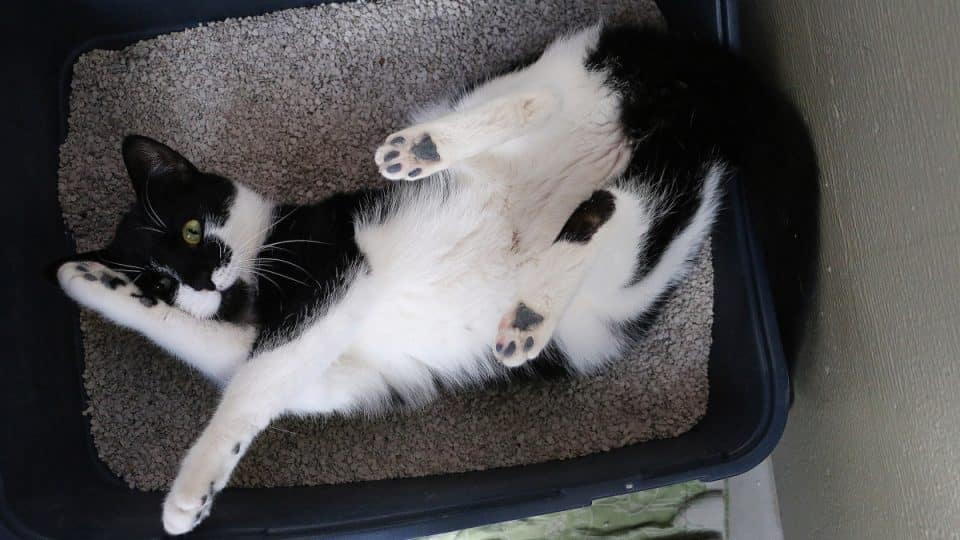
- Not a substitute for professional veterinary help.
If you’re a cat parent, you’ve probably seen your pet do strange things from time to time. One of these puzzling cat behaviors is when your cat lies down in their litter box. Are they just being quirky? Or is your cat trying to signal that there’s something wrong?
Lying down in a clean litter box isn’t harmful to a cat, but regularly resting in it may indicate that there’s a medical or behavioral issue. If a litter box is unclean, lying in urine and feces can also increase the risk of urinary tract infections, skin irritations, and exposure to harmful bacteria.

According to Dr. Preston Turano, a licensed veterinarian and advisor at ASCPA Pet Health Insurance, cats lie down in their litter box for a variety of reasons. Along with medical reasons, the most common causes are stress or anxiety, territorial disputes, and changes in the household. Your cat also might just like how the litter box makes them feel safe, secure, and comfy.
Why Your Cat Is Laying in the Litter Box
Here are the most common non-medical reasons a cat might lie down in their litter box.
- Comfort. Cats like to have a space of their own to escape to, especially in a busy household with multiple pets or young children. Your cat might be seeking out their litter box as a safe space, especially if it’s in a quiet, out-of-the-way spot in your home.
- Security. The high sides of a litter box may provide a sense of security that their bed doesn’t provide. Plus, the box is filled with your cat’s own scent. This olfactory boundary can help them feel protected.
- Temperature and texture. Many litter materials, including clay and wood types, tend to trap heat due to their natural insulating properties, making the litter box an appealing, warm spot during colder months. Some types of litter, like paper, also have an appealingly soft, flexible texture.
- Nesting during pregnancy. A pregnant cat may see the litter box as a “nest” or “den” that’s quiet and clean—a safe space to rest and prepare for birth. The semi-enclosed space may help her feel like she’s hiding herself and her kittens from predators.
Medical Reasons
Medical conditions can drive cats to lie in their litter box. Here are some of the most common conditions to watch for.
- Urinary issues. Urinary tract infections, bladder inflammation, or a blockage may cause your cat to urinate more, compelling them to stay close to or inside the litter box.
- Gastrointestinal problems. Similarly, diarrhea or other GI issues can make a cat hide out in their litter box, just as a person might camp out in the bathroom during episodes of GI distress.
- Mobility issues. If arthritis or mobility issues make it challenging for a cat to climb in or out of the litter box, they may decide it’s easier and less painful to stay in the litter box.
- Cognitive decline. Older cats may also begin to lie down or sleep in their litter box out of confusion. They may have forgotten their usual routine or where their resting spot is.
Behavioral Factors
Stress or other psychological factors could also cause a cat to lie down in an unusual spot, such as the litter box.
- Territorial disputes. Disputes between cats or other pets in the home can make a cat feel threatened and drive them to lie defensively in their litter box to claim it as theirs.
- Stress and anxiety. A stressed or anxious cat may behave out of the norm, hiding or lying down in their litter box to regain a sense of comfort and control.
- Boredom. A lack of mental and physical stimulation can cause a cat to exhibit strange behaviors, such as lying in their litter box for entertainment.
- Acclimation. A newly adopted cat may hide away in their litter box while they get used to their new surroundings.
How To Stop Your Cat from Laying in the Litter Box
The first step is to contact your vet for an evaluation to rule out any medical concerns, says Dr. Turano. This is especially important if your cat is also exhibiting changes in their eating, grooming, or litter box routine. Once medical causes have been ruled out, you can begin addressing environmental or behavioral factors.
Possible solutions include:
- Creating a “cozy box” with calming pheromone blankets
- Offering safe places to hide, including vertical places
- Providing a variety of comfy cat beds to give your cat more agency over where to sleep
- Moving the litter box to a quieter or more secluded location
- Giving your cat enrichment items, including puzzle feeders, stimulating toys, and scratching posts
- Ensuring each cat in your multi-cat homes has their own separate litter box, plus one more
- Moving your senior cat’s bed and litter box to a more accessible location (if you suspect mobility or arthritis issues)
- Working with a vet behaviorist or certified cat trainer to address any underlying behavioral issues, like anxiety
Cat Parents’ Most Frequently Asked Questions
Why is my cat sleeping in the litter box?
Typically, the most common reasons cats sleep in their litter boxes are urinary discomfort (think: UTIs, bladder inflammation, blockages, etc.), and gastrointestinal issues such as diarrhea or constipation, says Dr. Jessica Apted, DVM, Regional Medical Director and Lead Veterinarian at Sploot Veterinary Care. She adds that stress, anxiety, and mobility issues are also common causes.
Why do kittens lie in their litter boxes?
A litter box with closed sides can make kittens feel secure. “But more importantly, the litter box carries a really strong personal scent. These smells can be very comforting to an anxious kitten,” says Dr. Matthew Murdoch, veterinarian and founder of Ferndale Kennels and Travel Pet Relocation Services.
Why is my cat hiding in the litter box?
“Hiding could indicate your cat is feeling unwell, is in pain, or is overwhelmed or fearful. If the litter box is enclosed or tucked away in a quiet spot, it’s likely that your cat feels like this is the safest place available,” says Dr. Apted.