- Not a substitute for professional veterinary help.
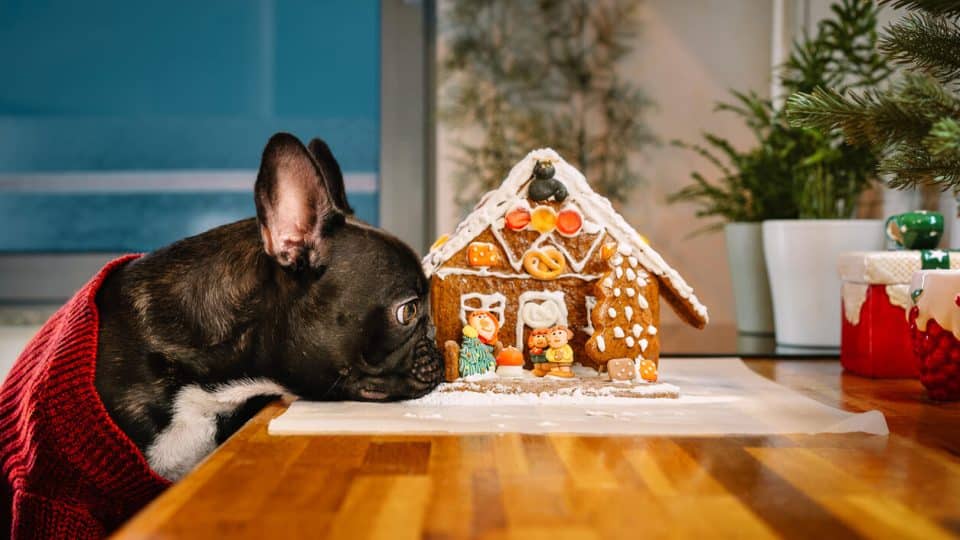
Gingerbread might be a tasty festive treat for humans, but it’s not safe for dogs to eat. Even a small amount of gingerbread can upset your dog’s stomach or cause more serious health concerns.

Eating gingerbread or a gingerbread house can be an emergency for some dogs, says Dr. Lindsey Murphy, veterinarian at Pilchuck Veterinary Hospital, a Thrive Pet Healthcare partner.
Gingerbread is often made with spices like nutmeg and cloves, which contain a compound called eugenol. When consumed in large amounts, eugenol can upset your dog’s stomach and harm the liver.
Decorations on gingerbread houses, like frosting or candy, can also be dangerous for dogs because of xylitol, chocolate, or high-fat ingredients. While smaller dogs are more at risk, any dog can get sick from too much fat or sugar, Dr. Murphy says.
Read on to learn more about why dogs can’t eat gingerbread and how to keep your dog safe during the holidays.
Why Gingerbread Isn’t Good for Dogs
The biggest concern with gingerbread is its ingredients, Dr. Murphy explains. Some are toxic in small amounts, while others are simply unhealthy and can upset a dog’s stomach—especially a smaller dog.
Due to these risks, it’s best to keep gingerbread completely out of reach.
Toxic or harmful ingredients in gingerbread include:
- Xylitol: This sugar-free sweetener is an ingredient in some frostings and candies. Even a tiny amount can cause a dangerous drop in blood sugar or liver failure.
- Nutmeg, cloves, and allspice: A compound in these spices called eugenol can cause vomiting, lethargy, and liver damage. Most gingerbread doesn’t contain enough of these spices to cause poisoning, but it can still irritate your dog’s stomach.
- Chocolate: Any amount of chocolate is dangerous for dogs. It can cause vomiting, tremors, or more severe reactions, including death, especially if there’s a large amount.
Unhealthy ingredients in gingerbread include:
- Butter and oil: These high-fat ingredients can cause vomiting or diarrhea. In some dogs, especially smaller breeds, excessive fat can lead to pancreatitis, a painful inflammation of the pancreas that may require veterinary care.
- Sugar: This ingredient can cause an upset stomach, hyperactivity, and contribute to long-term weight gain or dental problems.
Are All Types of Gingerbread Dangerous?
According to Dr. Murphy, all types of gingerbread carry similar risks. Gingerbread houses, gingerbread cookies, and gingersnaps all contain the same spices, fats, and potentially toxic additives.
Dr. Murphy suggests the following to keep any kind of gingerbread out of your dog’s reach:
- Store gingerbread securely: Keep all human food out of reach and trash cans tightly closed.
- Avoid temptation: Don’t leave baked goods on countertops or tables.
- Watch children: Be mindful of kids who may drop or share food during celebrations.
- Offer safe alternatives: Give your dog raw vegetables like green beans, broccoli, or celery. You can also share healthy dog biscuits as festive treats.
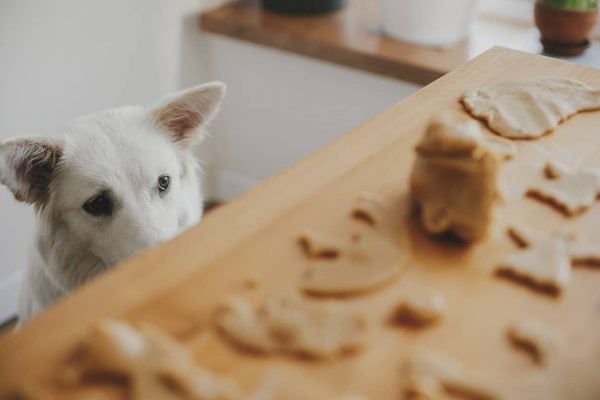
Bogdan Kurylo via iStock
When To Contact a Vet
If your dog eats any amount of gingerbread, pay close attention for any health symptoms.
Signs of illness or poisoning include:
- Lethargy or unusual tiredness
- Loss of appetite
- Vomiting or diarrhea
- Yellowing of the skin, gums, or eyes (jaundice)
- Bloody stools
Contact your veterinarian or the Animal Poison Control Center if you’re unsure what your dog ate or how much. They can help you determine whether it’s safe to monitor your dog at home or if they need to go to the emergency vet.
Festive Treats To Share with Dogs
Your dog might love joining in on holiday fun, but many holiday treats aren’t safe for dogs to eat. Avoid sharing candies, baked goods, and leftovers that may contain harmful or unhealthy ingredients.
If you want to include your dog in festivities, treat them to safe seasonal snacks instead. Some good options include pumpkin and turkey without spices or butter. You can also bake homemade pumpkin or gingerbread treats with simple, safe ingredients to share with your dog.