- Not a substitute for professional veterinary help.
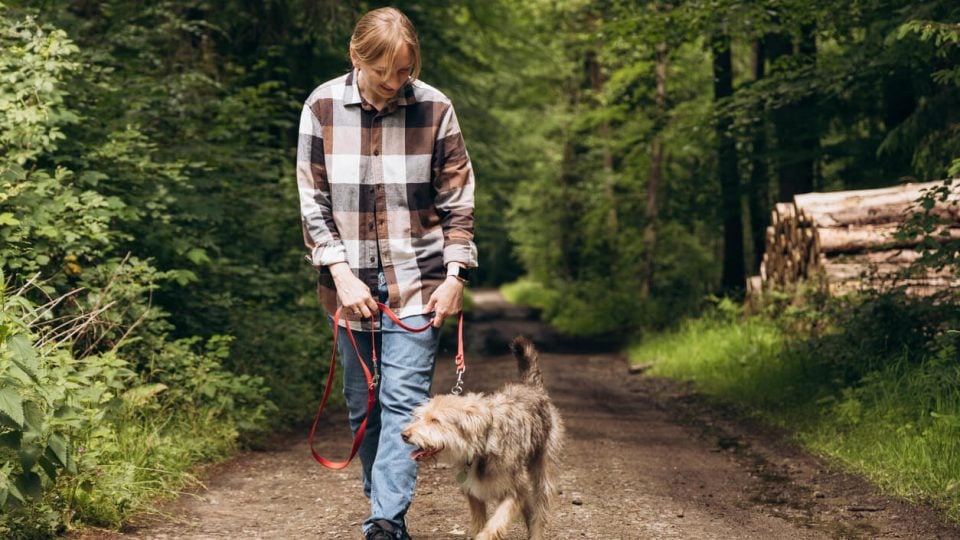
Taking your dog for a walk does a lot more than give them a bathroom break. Regular walks have several benefits for you and your pup, including improved physical and emotional well-being. For instance, walking can lower stress and improve heart health for both people and dogs!

Different dogs will need longer or shorter walks, depending on their age, breed, and health needs. Some dogs may need more frequent, shorter walks, while others also need additional intense exercise along with daily walks.
Read on to learn more about the benefits of dog walking and how to choose the best walking routine for your dog, with insights from a dog trainer and veterinarian.
Benefits of Walking Your Dog
Here’s a quick overview of the benefits of walking, for your dog and for you:
| Benefit | Your dog | You |
| Burning calories | ✓ | ✓ |
| Building muscle | ✓ | |
| Promoting joint health | ✓ | ✓ |
| Promoting heart health | ✓ | ✓ |
| Improving your relationship | ✓ | ✓ |
| Engaging the senses | ✓ | ✓ |
| Burning energy | ✓ | ✓ |
| Reducing stress | ✓ | ✓ |
| Promoting good sleep | ✓ | ✓ |
| Providing a bathroom break | ✓ |
Benefits for your dog
Here are some important benefits of walking for dogs, according to Chris Edge, force-free dog trainer and founder of K9Edge Dog Training, and Dr. Susanne Heartsill, U.S. Director of Companion Animal Veterinary Services at Ceva Animal Health:
- Weight control: Walking helps dogs burn calories and build lean muscle, which supports a healthy weight. Exercise alone isn’t always enough for weight loss, though. Dogs also need the right diet, and dogs with certain medical conditions may need adjusted activity levels.
- Joint mobility: Low-impact walking keeps joints moving and muscles strong. Dogs with arthritis, an injury, or another mobility issue may need shorter walks or a modified plan from a vet.
- Heart health: Routine walks give your dog’s heart and lungs a workout, which helps keep their cardiovascular system healthy. Dogs with certain heart or respiratory conditions may need a lighter routine, based on guidance from your vet.
- Bathroom routine: Walks provide dogs with a more natural routine than a quick outdoor trip, along with enough time to fully relieve themselves.
- Mental enrichment: Walking engages your dog’s senses, especially their sense of smell. Exploring and investigating their environment can be deeply rewarding and help them feel more relaxed when it’s time to settle down inside.
- Mood management: Walks help burn off a dog’s excess energy and lower their stress levels. The time you spend together also strengthens your bond and can help your dog feel more confident around new people, animals, and experiences.
- Exposure and training practice: Regular walks introduce dogs to new sights and sounds at a comfortable pace, building positive associations over time. Walks can also double as training sessions since they reinforce skills like recall, impulse control, and attention.
Dogs who seem anxious during walks can still benefit, but it’s important to recognize stress signals and respond quickly. You can make walks more manageable for your dog by choosing easier routes, avoiding known triggers, and using distance or redirection tactics as needed.
If your dog has a hard time walking in public spaces, a Rover walker can also provide indoor play, training games, and enrichment at home. This helps make sure your dog still gets mental stimulation without the added stress.
Benefits for you
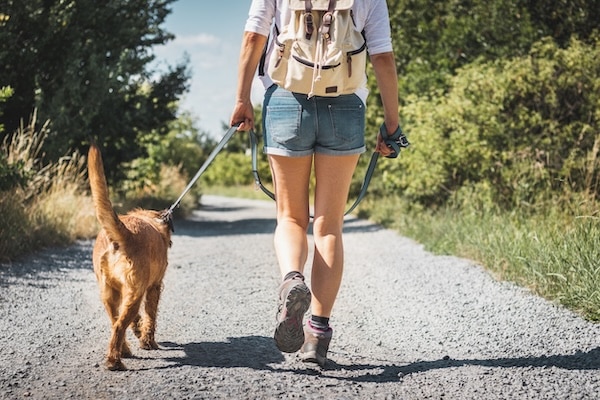
Taking your dog for a walk is also great for you. In fact, researchers have found that pet parents who walk their dogs regularly tend to have fewer chronic health conditions.
Here’s how a regular walking routine can support your health:
- Cardio activity: If your pace keeps your heart rate up, your walk counts as moderate exercise.
- Heart health: Consistent walking can help maintain healthy blood pressure and cholesterol, supporting your cardiovascular health over time.
- Stress relief: Walking and getting fresh air can lower stress, improve your mood, and help you sleep better at night.
- Routine and motivation: A regular walking schedule can help create consistency within your day. Plus, knowing your dog is waiting for a walk can help you stay motivated to get outside.
How Far and Long Do You Need To Walk Your Dog for Benefits?
Every walk supports your dog’s body and mind, but the right amount of exercise depends on their individual health and needs.
For many dogs, Edge recommends a starting point of 20 to 30 minutes daily at a comfortable pace. The exact distance can vary depending on how much time goes toward sniffing, greeting other dogs, and exploring. Even a short 5-minute walk can have benefits, Edge says.
To find the best amount of walking for your dog, Edge suggests considering:
- Age and life stage: Puppies and senior dogs typically need shorter, gentler walks than healthy adult dogs.
- Health and body condition: Dogs recovering from illness or injury or managing a chronic condition may need a lighter routine.
- Physical characteristics: Short-nosed breeds, small dogs, and dogs with shorter legs often tire faster than larger, athletic breeds.
- Energy and activity level: A naturally high-energy dog may need a longer walking time and a higher intensity walk—or jog!
- Breed tendencies: Working and sporting breeds were bred for endurance and generally need more exercise. Companion breeds may not need quite as much activity.
Signs you’re walking too long
Dr. Heartsill says your walk may be too long or too strenuous for your dog if you notice:
- Excessive panting
- Slowing down or lagging behind
- Reluctance to keep going
- Limping or stiffness
- Difficulty recovering after the walk
- Seeking shade or rest
Heartsill also recommends watching for changes after the walk ends, like added soreness or fatigue later in the day. If you notice these signs, adjust your dog’s routine and check in with your vet if the issue continues.
On the other hand, if your dog seems restless, has trouble sleeping, or is still very ready to play and move after your walk, they can probably handle a longer outing.
Tracking your dog’s progress
An activity tracker made for dogs can help you monitor pace, distance, and activity level over time. You can use this tracker to learn whether your dog’s walks meet their needs.
If a single long walk doesn’t fit your schedule, breaking up exercise into two or three shorter walks throughout the day can offer similar benefits. This may work especially well for puppies, senior dogs, or dogs who do better with frequent breaks.
Frequently Asked Questions About the Benefits of Walking Your Dog
Are dogs happier after a walk?
Post-walk behavior usually tells you if your dog is happy. Edge says to pay attention to signs like your dog relaxing and resting soon after the walk, sleeping well, and showing fewer boredom-related behaviors.
What if your dogs need different amounts of exercise?
Multi-dog households can sometimes have difficulty finding a single walk to meet the needs of different dogs. A senior dog may only need a few short 10-minute walks a day, while a younger, more active dog might need an hour of walking time.
Walking them separately, at a pace that fits each dog, is usually best. If your schedule doesn’t allow for two separate walks, booking a Rover dog walker for one dog while you walk the other can help you meet both their needs.
Does walking a dog at night have benefits?
According to Edge, a walk before bedtime can lead to better sleep for your dog and a calmer, more rested start to the next morning. It can also help minimize triggers for more reactive dogs. However, daytime sights and sounds can be beneficial, so consider alternating between day and night walks or fitting in both when you can.
When does walking your dog count as exercise?
Not every walk gives your dog a real workout. Research shows on-leash dog walking usually falls between light and moderate intensity, depending on your pace and how often you stop. A slow, sniff-heavy stroll is great for enrichment, but a brisk, steady pace does more to raise their heart rate.
What happens when you don’t walk a dog?
Dr. Heartsill says a lack of regular exercise can lead to weight gain, reduced muscle tone, and decreased mobility over time. Dogs may also become bored or frustrated, which can show up as excessive barking, chewing, or restlessness.
Temporary reductions in walking are sometimes necessary after surgery, injury, or illness. Dr. Heartsill recommends indoor games, food puzzles, and training exercises to meet your dog’s needs during recovery. Once your vet clears your dog for exercise, it’s important to begin walking again. Indoor activity can’t fully replace the physical and sensory benefits of a walk.
If a consistent walking schedule doesn’t fit your life right now, try booking a Rover dog walker to make sure your dog gets all the exercise they need.