
Is your new cat a little standoffish? Don’t feel bad—cats are sensitive creatures, and winning them over can take time and dedication. The good news is that cats are capable of affection and forming deep bonds with their humans. You just need lots of patience, respect, and a stockpile of treats and toys.
The first few months with your new cat are essential for setting the stage for a loving relationship built on trust. We’ve asked two veterinary professionals for advice on how to get a cat or kitten to like you during this crucial period.

We spoke to experts for tips on getting your cat to like you more.
How Long Will It Take for My Cat To Like Me?
When it comes to helping a cat settle into their new home, many experts stand by what’s called the 3-3-3 rule. In a nutshell, this guideline suggests giving your cat:
- Three days to decompress
- Three weeks to learn your routine
- Three months to start feeling at home
The key to helping a new pet adjust? Patience, patience, patience. You’ll have greater success if you don’t rush the process.
Every cat is also unique and will settle at their own pace. Some cats will be at ease within hours, while others may take several months before they’re fully acclimated.
1. Be the Source of Calm and Quiet
In the first few days, your new cat may be feeling anxious or unsure about their environment. According to Dr. Neus Torrent Ample, DVM, a veterinarian with Outdoor Bengal, it’s crucial to prioritise creating a calm and peaceful atmosphere at this early stage. You may need to avoid making loud noises and sudden movements.
For shy cats, dial back the enthusiasm and avoid rushing to be their favourite person. After all, everything is new to them: new smells, new routines, and new housemates. They may try to hide or even test boundaries by attempting to escape.
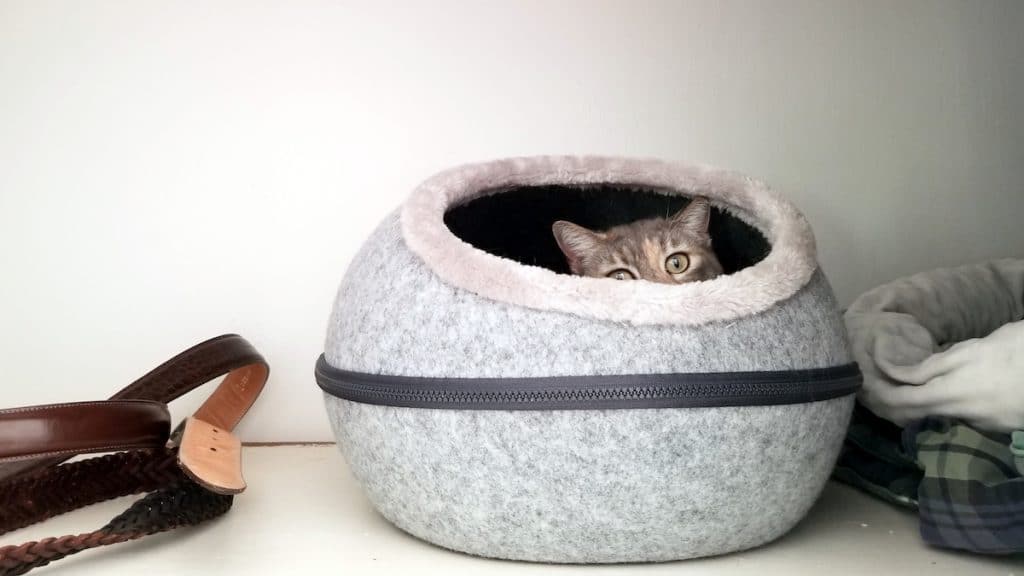
Heather Broccard-Bell via iSto
2. Make Them Feel Safe
A designated safe space for your cat to retreat to will help them feel secure at home. Dr. Torrent Ample recommends using the quietest room and filling it with the essentials your cat needs. This may include a cat bed, scratching post or pad, food & water bowls, and a litter box.
Don’t force your cat to interact with you if they’re in this space. Keep curious housemates out and cordon off the area with a baby or dog gate until your new cat is ready to be introduced.
Stephen Quandt, CFTBS, a certified feline training and behaviour specialist and founder of Stephen Quandt Feline Behavior Associates, LLC, recommends letting the cat be the one to decide when to leave their safe space.
“If they hide or refuse to approach the door, then they aren’t ready to explore—but if they actively want ‘out,’ then it’s time to let them explore,” he says.
3. Establish a Food & Play Routine
After a few weeks, most cats will begin settling in and realising this new place could be their home. They will usually feel more at ease by this point, and their true personality will emerge. This is a good time to start establishing routines.
Create a schedule that provides structure and promotes security and trust. “If we give [our cats] consistent times for meals, special play sessions, and sleep, their bodies will learn these times, and this is comforting and calming,” explains Quandt.
4. Create Positive Associations
Socialising your cat or kitten is also crucial in helping build your cat’s confidence in you and in unknown situations. This includes learning how your cat likes to be pet and slowly increasing their comfort level to more extended handling periods.
If you’re introducing two cats, Dr. Torrent Ample says now is the time to do it. Start with short, supervised interactions and gradually increase visiting time as they become more comfortable with each other. And don’t forget to reward them with treats!
5. Tailor Play Time to Their Personality
As you learn more about your cat’s unique personality, you can engage in activities tailored to their preferences. For instance, a high-energy cat may enjoy an interactive electronic toy that keeps them on their toes. A more sedate cat who relishes their solitude may appreciate the privacy afforded by a cat tunnel or cat tree.
“Play helps build trust, relieves stress, and strengthens the bond between you and your cat,” says Dr. Torrent Ample. She recommends using feather wands, interactive treat dispensers, or puzzle feeders.

Drazen via iStock
6. Use Treats — And Training
After several weeks, you can give your cat full access to the house and encourage them to explore. You’ll still want to maintain reliable routines and limit chaos in your home. But by now, you’ll have a better handle on your cat’s personality and comfort level.
Both of our experts suggest clicker training at this stage. Dr. Torrent Ample emphasises the importance of continually providing positive reinforcement through treats and affection to strengthen the bond between you and your cat.
“Cats are trainable creatures, and teaching them tricks or behaviours through positive reinforcement training can be a rewarding bonding experience,” points out Dr. Torrent Ample. You can teach your cat simple cues like “sit,” “stay,” or “come.” You can even teach them to give high-fives, stand on their hind legs, and ring a bell.
7. Take Your Cat On (Supervised) Adventures Outside
Depending on your cat’s temperament, taking them on supervised outings may be another mutually enjoyable outlet. “Exploring new places together can be an enriching experience for both you and your cat, strengthening your bond through shared adventures,” says Dr. Torrent Ample. You can let a cat backpack do the work for you—or maybe give lead-training a try.
The bonding process will look different from cat to cat, depending on their personality and your household dynamic. Here’s how to handle several common scenarios.
8. Respect Their Boundaries
Even as your cat grows to like you, respecting your cat’s boundaries and signals is crucial. A cat can easily change their mind if you insist on ignoring their body language or encroaching in their safe space.
“If they indicate that they need space or don’t want to be handled, give them the space they need and avoid forcing interaction,” reminds Dr. Torrent Ample.
You can still interact with your cat from afar, letting them know you love them. Speak to them in a soft voice without touching them. Slow blink to communicate that you’re happy with them. You might even need to engage in reverse psychology: Ignore your cat and wait for them to initiate play or cuddles.
Will My Cat Cuddle With Me?
Both Dr. Torrent Ample and Quandt remind us that a cat’s proclivity for affection or cuddles is closely related to their individual personality. Some cats are lap cats by nature, while others need their own space. You may be able to encourage physical affection with treats and play.
However, Dr. Torrent Ample recommends against forcing a cuddle, as this can backfire and create distrust. “Ultimately, we should strive to love and accept our cats for who they are, respecting their unique personalities and allowing them to express affection in their own way and time,” she explains.
There are many ways to show your cat how much you love and appreciate them. As you become more familiar with their individual quirks and preferences, you can choose bonding activities that appeal to their unique personality.
Further Reading