
You’re going away for a few days, and your dog can’t come with you. Now comes the tough part: choosing the best care option while you’re away. Is dog boarding in a kennel environment better, or would your dog be more comfortable in a home-like environment with pet sitters? What about a luxury pet hotel?

In this article, we’ll break down the differences between in-home boarding, kennel boarding, and luxury boarding. We’ll explain what each typically involves, compare costs, and give tips on how to determine which setup is best for your dog’s personality and needs, as well as your own peace of mind.
Comparing Traditional Kennels, In-Home & Luxury Boarding
Dogs have different personalities, energy levels, and needs, and it’s important to consider them all when you’re deciding on boarding. For example, dogs that do best with a steady routine or get stressed in new places often feel more comfortable with in-home boarding with a pet sitter. Social, high-energy dogs may enjoy traditional or luxury boarding.
This quick comparison table can help you weigh the pros and cons of each option.
| Kennel Boarding | In-Home Boarding | Luxury Dog Boarding | |
| Best for | Social, adaptable, healthy dogs | Anxious, routine-loving, special-needs dogs | Social, adaptable dogs who enjoy more structured activities |
| Considerations | Can be overstimulating; ask about noise levels, staff-to-dog ratios, and how much 1:1 attention your dog will receive | To find a good fit, ask how often the sitter leaves the home and how many pets they’ll be caring for during your dog’s stay | May be more expensive—ask what “luxury” includes (private suites, supervised play, extra enrichment time, etc.) |
| Environment | Commercial boarding kennels | Sitter’s home | In-home or resort-style environment with private or semi-private suites |
| Socialization | High (with other dogs/people) | Minimal (unless sitter has pets or other clients) | Structured, supervised socialization in smaller groups |
| Supervision | Rotating staff | Usually one sitter (and maybe their family members) | More hands-on, personalized supervision |
| Cost | Affordable, mid-range costs | Most affordable option out of the three | Often the most expensive option |
| Attention | Group care, less individual attention | One-on-one | More frequent |
| Vaccination | Always required | Not always required | Often required |
Kennel Dog Boarding
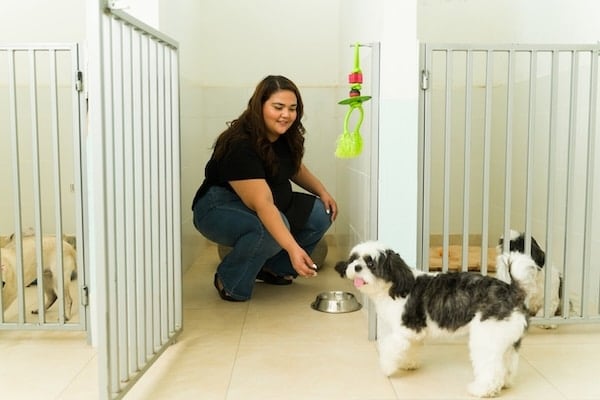
Traditional kennel boarding means your dog stays in a facility designed to care for multiple pets. Dogs typically have their own sleeping area and follow a daily schedule that includes meals, toilet breaks, and playtime.
Many kennels offer add-ons like group play, one-on-one walks, training sessions, or webcams so you can check in while you’re away. There are usually several staff members on-site.
Costs
Kennel boarding is often affordable, usually falling right in the middle of costs—it’s a bit more than in-home sitting but less than luxury boarding. The typical price is £30 to £50 per night, depending on location and amenities. Additional services like one-on-one walks, administering medication, or grooming are often available for an extra fee.
Kennel considerations for your dog
Before boarding your dog at a kennel, think about what your dog actually enjoys day to day, and how well they’ll handle a change in routine. Factors to consider include:
- Dog age: Younger adult dogs often adapt more easily to new places, while senior dogs may find the environment tiring or stressful.
- Dog personality: Social, confident, and outgoing dogs who are also crate-trained often adjust well to kennel life.
- Environment needs: Kennels can be loud and busy, which may overstimulate noise-sensitive, shy, or anxious dogs. Additionally, larger dogs might need more space, and more active dogs may need more exercise.
- Frequency: Dogs who go to day care may do better at boarding in the same environment because they’re familiar with the care providers and other dogs.
- Care routine: Dogs typically follow the kennel’s schedule, though some facilities may be more flexible in accommodating your dog’s typical routine.
- What to ask: What vaccinations are mandatory, how much one-on-one attention each dog receives outside of feeding and toilet breaks, and what their star rating is under the Animal Welfare Regulations 2018 (which shows their standard of care and ability to keep up with regulations)
Legally, dogs will need to have current vaccinations to protect them from the following before a kennel can accept them:
- canine parvovirus
- canine distemper
- infectious canine hepatitis (adenovirus)
- leptospirosis
A kennel may also require vaccination against kennel cough.
Antonio_Diaz via iStock
In-Home Dog Boarding
In-home dog boarding means your dog stays in a professional pet sitter’s private home, which may or may not include other pets. Depending on the sitter, your dog may be crate-free and welcome to lounge in common living areas, just like at home.
Costs
It may come as a surprise that overnight boarding at a pet sitter’s home is roughly the same as boarding at a kennel, with much more one-on-one attention. Rates vary depending on the sitter’s experience and the number of other furry guests in the house. Costs include all the extra care and attention, and you’ll typically only need to pay extra for services like pick-up or drop-off.
In-home boarding considerations for your dog
Before sending your dog to stay at someone else’s home, consider how they’ll handle a new environment and a daily routine with a new person.
- Dog age: Puppies and senior dogs often benefit from closer supervision and a quieter home setting.
- Dog personality: Dogs who prefer more time with humans tend to do well with in-home boarding. It’s also usually a better fit for special-needs dogs with specific medical or dietary requirements, or for dogs with behavioral issues, such as reactivity or separation anxiety.
- Environment needs: If your dog hates being in a crate or confined to smaller spaces, they might prefer in-home boarding, where sitters typically offer access to large portions of the home.
- Frequency: Pet parents who travel frequently may want to look for in-home boarding or house sitting so dogs can maintain a regular routine.
- Care routine: Care is typically more flexible and customized than in a boarding kennel. However, your dog will also have to adjust to the sitter’s own household routine, which may also include other dogs or pets.
- Ask about: Will other dogs be present? What’s the sitter’s routine, and how long will your dog be home alone? Can you see their Animal Welfare Regulations license, and what star rating do they have?
Luxury Dog Boarding
Luxury dog boarding is a step up from both traditional kennel boarding and in-home boarding. Also known as pet hotels, this type of care can be in a home or at a kennel but is characterized by special treatment and upgraded facilities. You’ll typically see high-end, personalized care for dogs, including private rooms, close supervision, enrichment routines, and grooming services.
What makes dog boarding “luxury”?
Nearly every part of the luxury boarding experience is upgraded or personalized. Some of the upgrades may include:
- Accommodations often have private or semi-private suites, upgraded bedding, quieter sleeping areas, and, in some cases, in-room cameras.
- Personalized care and services include more one-on-one time with staff or with a sitter.
- Enrichment and socialization feature structured playgroups and activities for mental and physical stimulation.
- Grooming and pampering include services like on-site grooming, baths, nail trims, and spa-style add-ons.
- Purpose-built environments are facilities or homes designed specifically for dog boarding, featuring controlled noise levels, extra safety features such as non-slip floors, and staff always nearby.
Luxury boarding considerations for your dog
Before booking a luxury stay, consider if the experience actually matches your dog’s needs, such as:
- Dog age: Because luxury boarding offers a more tailored experience, it’s often comfortable for dogs of all ages, even seniors or puppies who may need additional care.
- Dog personality: Confident, adaptable dogs will enjoy the extra features of luxury boarding. However, dogs who are anxious, reactive, or have separation anxiety may find it overwhelming.
- Environment needs: Luxury boarding usually means your dog will be given more room and more mental and physical exercise.
- Frequency: Dogs that board regularly usually settle in quicker and know the routine, but the extra amenities that come with luxury boarding make it a solid option for first-time boarders as well.
- Care routine: Care is more customized than traditional boarding.
- What to ask: What “luxury” features are offered, and how much extra care each dog will receive outside of feeding and toilet breaks.
Finding Dog Boarding on Rover
Looking for boarding in a pet sitter’s home on Rover? Search for sitters in your area, filtering for your needs—whether that’s a sitter who will make your pup their only client, constant care around the clock, or a secure garden for mid-day romps. Then send a message and schedule a meet-and-greet so you can make sure you’ve found the best fit for your and your pup’s needs.