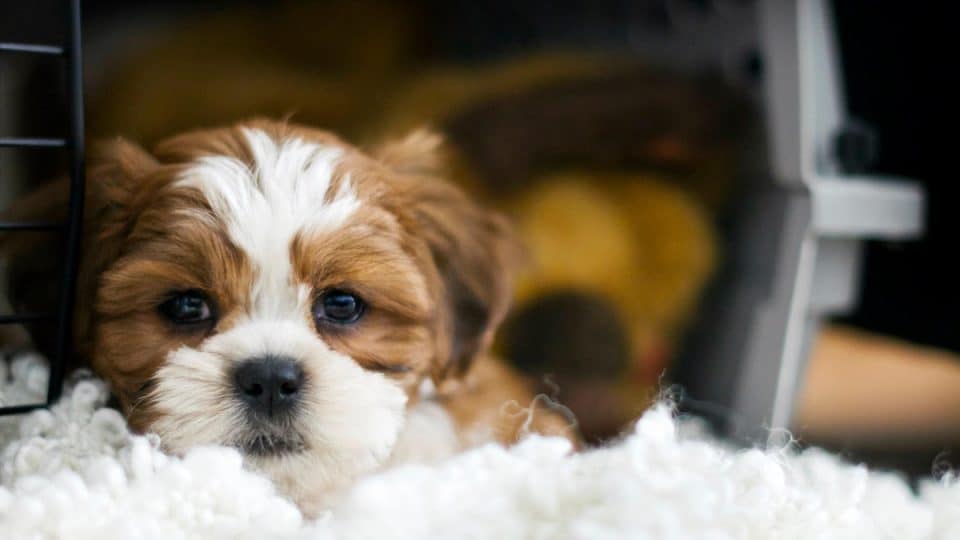
Crate training a puppy can make house training easier, help puppies adjust to being alone, and give them a safe place to retreat when they need downtime. It also gives pet parents peace of mind that their puppy isn’t going to get into mischief. But teaching a puppy to enjoy a crate can be overwhelming, especially for first-time pet parents.
Most experts recommend crate training your puppy as soon as you bring them home (usually around eight weeks), and training will generally be easier if you start before your puppy is 12 weeks old.

“If you start the crate training process the first night, this has significant benefits,” says Christine Young, certified dog trainer and founder of The Puppy Care Company. But no rule says crate training a dog must begin at this point, she adds. The main takeaway? Start when you can!
If you’ve got questions, we’ve got answers. With the help of our expert, we break down the process into manageable steps. We also offer solutions for common obstacles and share what to do when you’ve hit a roadblock.
The Basics of Crate Training
When it comes to crate training your puppy, patience is key. “Your sweet new puppy needs time to bond, build trust, and learn new routines,” says Young.
The challenge is getting your puppy to understand that their crate is a safe space. Some pups catch on to this quickly, but others need convincing. Aim for short sessions (slow is fast!), and consider these tips for the best chance of success.
Don’t use a crate for punishment
Putting your puppy in a crate after they’ve done something “bad” can create negative associations and lead to your pup feeling stressed or anxious while in the crate. Try to redirect unwanted behaviour until your puppy learns what you’d prefer they do instead.
Don’t leave your puppy in the crate for too long
When you’re just starting out, keep crate time short. Once your puppy is comfortable, you can start leaving your pup alone in the crate for longer periods. The general rule is one hour of crate time per month of age—though no longer than 3 or 4 hours for puppies.
Make the crate comfortable
When choosing a puppy crate, ensure it’s big enough for your pup to stand up and turn around. You can add crate items, like a bed or blanket, to make it comfy. (Old towels work if your pup is going through a destructive stage.) Adding a heartbeat toy can also be comforting to young pups recently separated from their mother and siblings.
Puppies shouldn’t pee or poo in the crate
While you want the crate to be large enough for your growing pup, you also don’t want excess space that could encourage them to go to the toilet inside it. Crates with dividers can remedy this issue—just be sure you’re taking your pup out for plenty of toilet breaks, too!
9 Steps To Crate Training
How long crate training takes varies from dog to dog. “It can take days, weeks, or months depending on age, temperament, and past experiences,” Young explains.
In general, you should start to see your pet become comfortable with their crate after a few days of two to three training sessions per day. These nine steps can also help you avoid mistakes and put you and your pup on the right path.
1. Choose a crate that’s easy to use
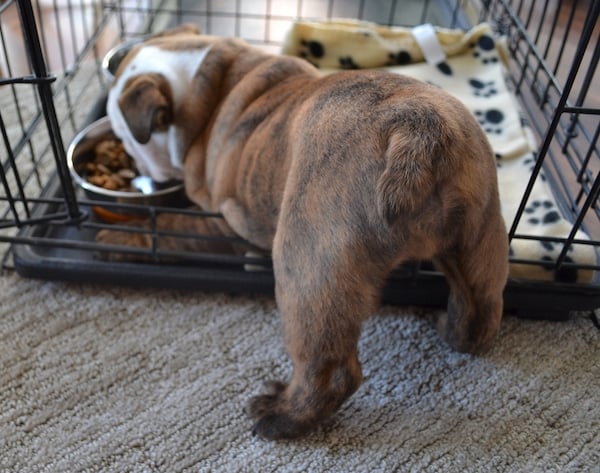
The best crates for puppies are durable enough to withstand rowdy antics and easy to clean, since accidents and messes are inevitable. The MidWest Metal Dog Crate is one of the most popular options, with its sturdy metal frame and removable plastic tray that slides out for quick cleanup. It also has a divider so you can adjust the crate to your growing puppy and eliminate any extra space that might tempt them to pee or poo inside.
2. Introduce the crate as a fun and safe space
After setting up the crate, help create positive associations right from the start by:
- Allowing your puppy to sniff and explore the crate freely
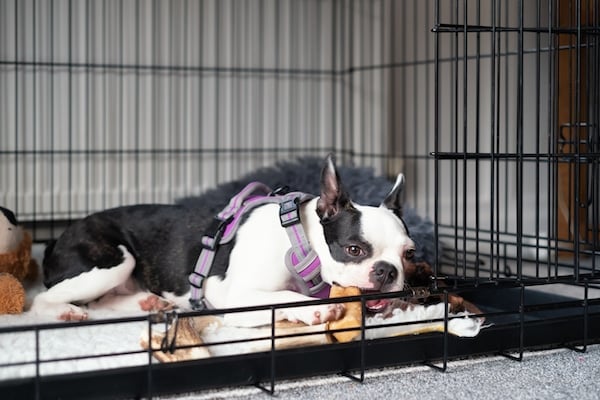
- Tossing in their favourite chew or toy
- Giving them a lick mat or stuffed puzzle to work with inside
- Feeding meals inside the crate
Keep the crate door open and encourage your puppy to go inside using these different methods. “Let this be a fun game where they can choose to go in and out on their own time,” Young advises.
3. Treat your pup whenever they go into the crate
Once your puppy has gotten familiar with the crate, it’s time for active training to begin. Here are some general guidelines:
- Use a variety of high-value treats.
- Toss a treat inside the crate.
- Allow your dog to get the treat.
- Click or mark any interaction with the crate. This could look like one paw inside, two paws inside, all four paws inside, etc.
- Toss a treat outside of the crate after your pup has been inside for a while. This break allows them to reset and keep things fun.
CarlyDybka via iStock
4. Increase duration with the door open
Once your pup has gotten used to placing all four paws inside, mark and toss a treat for any choice they make to stay longer. This could look like:
- Turning around
- Sniffing inside the crate
- Standing and pausing
- Sitting
- Lying down
- Showing any calming signals like grooming, looking away, taking a deep breath, etc.
As your puppy becomes more comfortable, incrementally build up their time in the crate. Young tells us that multiple short training sessions throughout the day are the best way to accomplish this. Start with two minutes, then gradually extend the time for each training session by a couple of minutes.
5. Increase distance with the door open
“Once your puppy is getting comfortable in the crate, gradually increase your distance from it while still keeping an eye on them,” says Young. She recommends doing this with the door open to avoid barrier frustration and feeling trapped.
To introduce distance:
- Add movement slowly, moving to the right and left of the crate, then back and forth.
- Click when you’re at your desired position.
- Toss the treat in the crate or go back and drop in the treat after you’ve marked your position. (A treat dispenser can be helpful here.)
6. Practise closing the door for short periods
Once your puppy has become more comfortable with duration and distance with the door open, you can start closing it during repetitions. At least twice a day, do the following:
- Add a bunch of fun things to the crate (toys, puzzles, treats, novelty items, etc.) but keep the door closed.
- Let your pup check things out from the outside.
- After a few moments, let them inside the crate to eat, snuffle, and explore.
- Once they’re finished, let them outside of the crate.
- Keep the whole thing short and sweet!
7. Break things down if needed
If your puppy is having a hard time with the crate door closed, you may need to simplify and slow down each step, repeating as many times as necessary before advancing. For instance:
- Treat as soon as you move your hand toward the crate door.
- Treat when your hand touches the door.
- Treat when you move the door.
- Treat when you shut the door.
- Treat as you take a step away.
- Treat as you build duration and distance.
Ideally, you want to be one step ahead, rewarding and giving a treat before any whining or barking begins.
8. Practise leaving while your dog is in the crate
When your puppy has mastered staying calm in the crate for 30 minutes, begin leaving the house for brief periods. You may need to practise opening and closing the front door without leaving before actually stepping out. This can look like:
- Putting on your shoes and sitting on the sofa
- Taking off your shoes and opening the door but not leaving
- Leaving with the door wide open
- Leaving and immediately returning
With each of these steps, wait five minutes before letting your puppy out.
9. Create a cue for going into the crate
Once your dog has become familiar and comfortable with being in the crate, you can create a cue for it. Here’s how:
- First, choose your cue and keep it simple, such as “kennel up” or “go to crate/bed.”
- As your dog enters the crate (either on their own or with a lure), say the cue.
- Mark and reward with a treat.
- If using a lure, slowly phase it out until you’re only using the cue.
Signs Your Puppy Is Adapting vs. Struggling
You’ll be able to tell if your puppy is adjusting to crate training if your pup is doing the following:
- Showing positive body language: loose, wiggly posture, wagging tail, and soft eyes
- Readily accepting treats and toys inside the crate
- Remaining calm and relaxed while in the crate
- Being comfortable with the door closed
- Staying in the crate for increasing periods without distress
- Going into the crate voluntarily, especially outside of training sessions
On the other hand, there are clear clues your pup is having a difficult time with crate training, such as:
- Whining, barking, and crying inside the crate
- Scratching, digging, and biting the crate to try to escape
- Showing signs of panic like panting, drooling, and shaking
- Refusing to enter the crate even with treats, toys, and other rewards
- Having frequent accidents inside the crate because of distress
The important thing is not to rush your puppy. “Just like learning a TikTok dance or a new language, training takes practice and patience to become fluent,” Young points out. “Whatever your new puppy is struggling with the most, it’s important for you to slow down and learn how to help them succeed.”
CBCK-Christine via iStock
Crate Training FAQs
Crate training isn’t always a walk in the park. “It’s important to understand that crate training can be challenging for a young dog who has experienced a rapid change in their environment,” says Young. To help you out, here are some common crate-training hurdles—and the tools and tricks to overcome them.
What to do if your puppy is whining?
Some amount of whining and crying in the crate for the first few days is normal and to be expected. If your puppy is whining, assess the situation to see if the behaviour is subsiding or escalating. From there, you can determine if you can ignore the behaviour, redirect, or reset.
What if my puppy has separation anxiety?
Separation anxiety is an emotional distress response to being left alone or separated from a puppy’s humans. If you suspect your puppy is showing signs of separation anxiety, it’s crucial to seek help (ideally from an experienced and certified professional) and take action as soon as possible.
Why does my puppy act differently with crating at night?
Puppies need a lot of sleep, but that doesn’t mean they’ll snooze easily through the night. Unlike humans, who sleep in one big chunk, dogs sleep in short bursts throughout the day, meaning your puppy will likely be waking up multiple times throughout the night.
Young puppies also have smaller bladders and will need toilet breaks until they reach about 16 weeks old and can sleep through the night. Other pups may have a lot of pent-up energy or excitement and are ready to rumble in their crate at night.
What happens if my puppy pees or poops in their crate?
Accidents are a part of puppyhood, but you can minimise them by using the right-sized crate. A crate that’s too large allows for separate toilet time and sleeping areas. Eliminate this option by choosing a crate that’s just large enough to let your puppy stand, turn around, and lie down comfortably. Metal dividers are handy for customising a crate’s size as your puppy grows.
Additionally, make sure to let your puppy go to the toilet before putting them in the crate. And don’t punish them if they do happen to pee or poop in their crate. That’s what pup-safe cleaners are for!

A heartbeat toy can comfort your puppy during crate training, especially at night.
What To Do If Crate Training Just Isn’t Working
While many dogs can be crate trained, it doesn’t always work for every dog. Whether it’s due to a medical issue, severe crate anxiety, or past trauma, some dogs simply cannot adjust to being in a crate. In these cases, it’s best to consult a professional trainer or a behaviourist for support.
Other alternatives also exist, such as:
- Setting up a puppy-proof space in your home, using an appropriately sized X-pen or dog gate to cordon off a dog-safe room.
- Hiring a pet sitter to stay at your house or boarding your dog with a trusted caretaker when you’ll be gone for longer periods.
- Enlisting the help of a friend, neighbour, or dog walker to care for your pup while you’re away.