Dogs and walks go hand in hand. If you struggle to keep up with your dog’s walking needs, hiring a dog walker is a smart way to keep your pup happy and healthy. Fortunately, plenty of options are available today, from app-based dog walking services to professional off-lead walkers. Generally, the best way to prepare your dog for a walk includes prioritising socialisation, investing in basic training, and getting properly fitting equipment.
However, not every type of dog walker is right for every dog. In this guide, we’ll look at the different types of dog walking services available to help you choose one that suits your pup’s personality and level of training. We’ll also discuss how to prepare your dog for their dog walker to ensure a positive experience for everyone.

1. Train Your Dog for a Walker Beforehand
No matter what type of dog walker you hire, they’ll appreciate a well-mannered pup with some basic training under their belt. Here are some skills to work on.
Practise basic cues
“Before hiring a dog walker, your dog should have strong recall skills and foundational cues such as ‘sit’ and ‘leave it,’ which will help prepare your dog for on-lead walking,” says Darris Cooper, CPDT-KA, FFCP, National Dog Training Manager at Petco. If you’re stuck, a virtual training app can offer dog training tips to get your dog walk-ready. Focus on the following cues.
- Come. Mastering proper recall is crucial for safety. If your dog accidentally gets loose, it can prevent them from running towards potential dangers like traffic or another dog.
- Sit. Understanding “sit” is helpful when waiting to cross the street. Keeping dogs still and calm while greeting other walkers is also practical.
- Stay. This cue builds impulse control and prevents dogs from dashing into the street if they get off the lead.
- Touch and leave it. The cues “touch” and “leave it” can bring your dog back to you when they’ve wandered too far away. “Touch” brings your dog’s nose—and their body along with it—to touch your hand, and “leave” has your dog move away from a scent or other attention-grabber.
Play the red-light-green-light game
This game is a great way to curb pulling and practise loose-lead walking. However, experts say it works best with puppies—not adult dogs who are already pulling.
When your puppy pulls on the lead, stop moving and wait for them to stop. When they are loose on the lead, start walking again.

2. Buy & Familiarise Your Dog With the Correct Walking Gear
Generally, avoid breaking out brand-new gear on your dog’s first outing with a walker. “Dogs should always be properly acclimatised to equipment before using them for a walk,” says Brett Reynolds, a certified Fear-Free dog trainer and owner of The Dog Stop. This will make your dog more comfortable and ensure a proper fit.
As Cooper explains, different dogs will require different gear depending on their breed and temperament. Some of this gear includes:
- Lead. A 4-to-6-foot lead offers control and communication between the walker and the dog. Reynolds recommends a fixed-length lead (not retractable) for safety. Material-wise, nylon and leather are two durable options that hold up well to strong pullers.
- Harness. Both of our experts recommend a harness to make walks more manageable. “Front-clip harnesses such as the Easy Walk or Freedom No-Pull harness can reduce pulling without being aversive to the dog,” Reynolds says. If your dog bolts, an escape-proof harness with multiple adjustment points, sturdy materials, and extra straps can keep them safe.
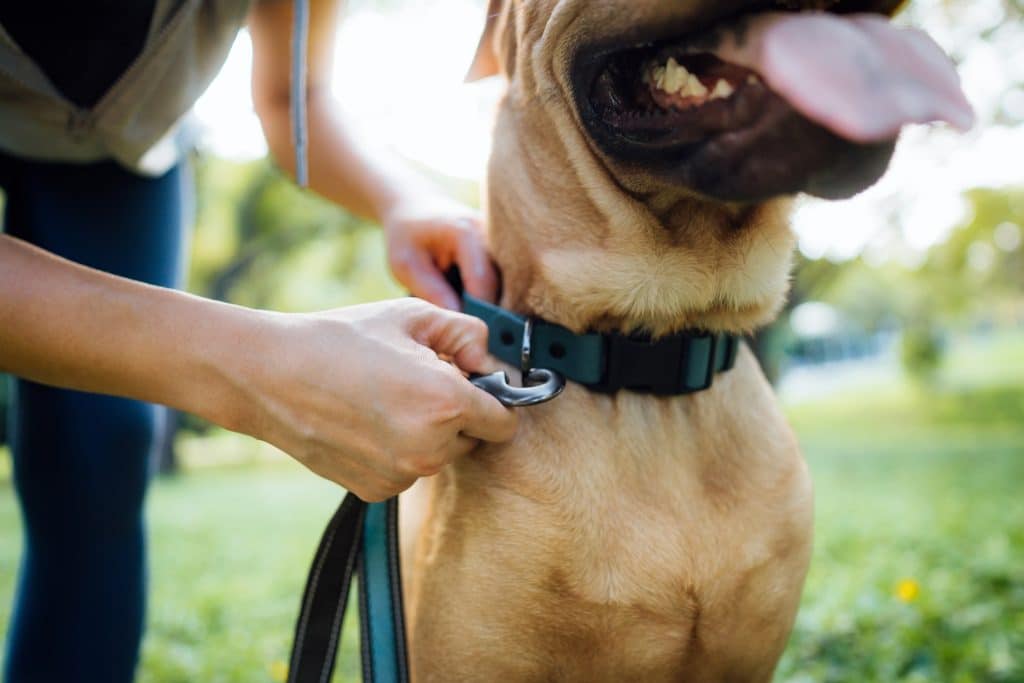
- Collar. Even if they wear a harness, your dog is legally required to wear a collar that holds their ID tags. Standard nylon collars will work for most dogs. Consider a martingale collar if your dog slips out of a traditional collar.
- Head collar. Haltis and Gentle Leaders give handlers better control—but they come with a learning curve and require a period of acclimatisation.
- Poo bags. Don’t leave your walker stranded without a way to dispose of your dog’s “treasures.” A poo bag holder ensures bags are at the ready whenever nature calls.
- Training treats. Cooper and Reynolds say these are helpful for rewarding and reinforcing good behaviour on walks. A treat pouch will come in handy.
- Dog water bottle. If your dog goes on long walks, Cooper recommends a travel water bottle to stay hydrated on the go.
3. Choose the Right Dog Walker
With the rise of online and app-based services, dog walkers are more accessible than ever. Today, there are four main types of dog walkers to choose from, and some will work better for your dog than others. Here’s how you can prepare your dog for every type of walker.
Online dog walker
Apps and sites like Rover virtually connect pet parents with walkers and sitters. You can browse the profiles of dog walkers in your area and book them in advance for regular and occasional outings.
To help you find the perfect walker for your needs, Rover lets you review their qualifications and reviews before making a selection. Look for esteemed accreditation such as the iPET Network Level 3 Award in Dog Walking and Pet Sitting for Professionals or the City & Guilds Level 2 Certificate of Technical Competence in Dog Walking.
These show your walker has put time and effort into maintaining the best service possible for your dog’s comfort, fun, and safety and is prepared for any eventuality. (This goes for online sitters, such as those on Rover, as well as those you find through the avenues below.)
You can also schedule an advance meeting to introduce your pup and ensure the walker is comfortable with them. Scheduling a meet-and-greet is a great first step, especially if your dog is fearful, reactive, or extra-large.
Most dogs will be more at ease meeting a new walker for the first time with their guardian present. Note how the walker and your dog interact. A good walker will be attentive, warm, and patient with excitable behaviour. Your dog should also appear content and comfortable in their presence.
Lastly, if your schedule allows, try walking your dog at the same time as your potential new walker. Or have them over for a drop-in visit to see how they interact with your pup.
On-demand dog walker
These days, just about everything is available on-demand—walks for your dog are no exception. Just like ride-sharing apps, an on-demand dog walking service will send over the closest available walker to take your pup out.
The best candidates for on-demand walking will be confident, easy-going dogs comfortable with everyone. However, if your dog is anxious or reactive, it’s probably best to use a professional dog-walking service.
- Make sure your dog is easily accessible. Give your walker a spare key, or leave it in a lockbox. Ensure the keys are easy to use—you don’t want your walker to become distracted when struggling with a fiddly door.
- Leave everything your walker needs in one easy-to-find spot. This includes your pup’s lead, poo bags, and treats.
- Provide detailed instructions. Most apps let you leave information about parking, how to access your home, and pertinent details about allergies, medical conditions, or behaviour issues that walkers should know.
Professional dog walking service
A professional dog walking service is worth considering if you’re looking for a more permanent solution. You can find local pros through a quick internet search or via referrals from friends or your vet. In most cases, these companies will be insured and bonded, and walkers will often be trained in CPR and dog first aid.
Professional on-lead dog walkers may offer group walks, solo walks, or walks with only one or two other individuals. If your dog doesn’t do well in large groups of dogs, talk about this with the service provider in advance.
Professional off-lead dog walker
Professional dog walkers typically offer two kinds of off-lead walks: those who take their pack of four to ten dogs to an open off-lead space and those who take them to an enclosed dog park.
For safety and legal reasons (and local PSPO restrictions), our experts caution against off-lead walks. “If pet parents want their pup to be off-lead, it’s important to do so in an enclosed, safe environment such as a fenced-off garden or dog park,” Cooper explains. This helps them stay on the good side of the Countryside Code (more on this below) if you’re walking in open rural areas.
Well-trained dogs with impeccable recall may do well with off-lead walking in an enclosed area. Should you go this route, your most important prep work will be sharpening up your dog’s ability to come when called.
Top tip: Use a long line—a 30-ft lead—with your dog in a park or fenced garden to practise recall. The best long leads will be made from durable materials and feature strong metal clasps to keep dogs secure.
Reynolds tells us that dog walkers who offer off-lead walks should be well-versed in strategies to recall loose dogs. “One should never chase a dog, but rather run backwards and call the dog in a cheerful, enthusiastic manner and reward generously with treats and praise when the dog returns,” he adds. If coming to you results in praise and a treat, they’ll be more likely to come to you in the future.
A note on dog walker regulations
For any type of walker, Public Spaces Protection Orders (PSPOs) often enforce a maximum number of dogs per walker (often four or six), so be sure to discuss the intended area in which your walker plans to exercise your dog, especially if you live near council or county borders. These often differ from council to council, and you don’t want to wind up in an awkward conversation about who should be paying any fines.
Likewise, the Countryside Code is extremely strict about protecting livestock, which includes keeping dogs under control, on a lead in certain rural contexts, and off private farmland completely. Any local walker you choose should be well-versed in these rules and focused on everyone’s best interests.
iStock/AsiaVision
4. Socialise Your Dog With Other Dogs & Strangers
Inviting a stranger into your home could stress your dog out. Before hiring a dog walker, ensure your pup feels at ease when new people enter the home or when they’re around strangers outside. For puppies, practising socialisation with people is a great solution. Adult dogs benefit from a slower process of exposure to new people—with plenty of treats.
Once your dog is comfortable with your walker, they can be a great resource to help your dog continue practising social skills and experience new things in a safe way. Make sure to tell your walker about your dog’s comfort level and your protocol when engaging with:
- Other dogs
- Passersby and children
- People, kids, and dogs who want to say hello
- Noises like traffic and construction
- Neighbourhood animals like squirrels, birds, and cats
If you give your walker a heads-up, they can keep up your socialisation efforts and continue to positively reinforce encounters with new or stressful things.
The Bottom Line: You Know Your Dog Best
You’ll find the most success by matching your dog’s temperament and abilities to the appropriate type of walker. A bit of training and securing the right walking equipment are also important factors. The Rover app simplifies the entire process by letting you search for local dog walkers who meet your specific criteria. Happy walking!