- This post contains affiliate links. Read more here.
- This article has been reviewed by a pet health professional. It is not a substitute for professional veterinary advice.
The idea behind retractable leads is a good one. Why wouldn’t you want to give your dog more freedom to roam, sniff, and explore? While retractable leads allow your dog room to roam, they raise safety concerns, such as burns, cuts, and entanglement, says Dr Bethany Hsia, DVM, veterinarian and co-founder of CodaPet.
So why exactly are retractable dog leads bad? And are there ever any circumstances when they’re safe to use? To find out, we interviewed two certified dog trainers to uncover everything pet parents should know about retractable leads.

How Retractable Leads Work—and Why They’re Risky
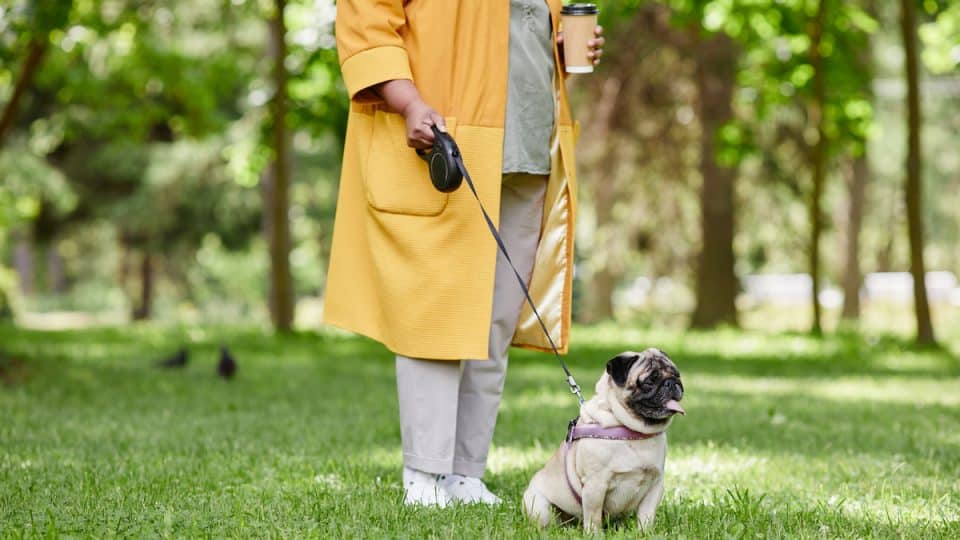
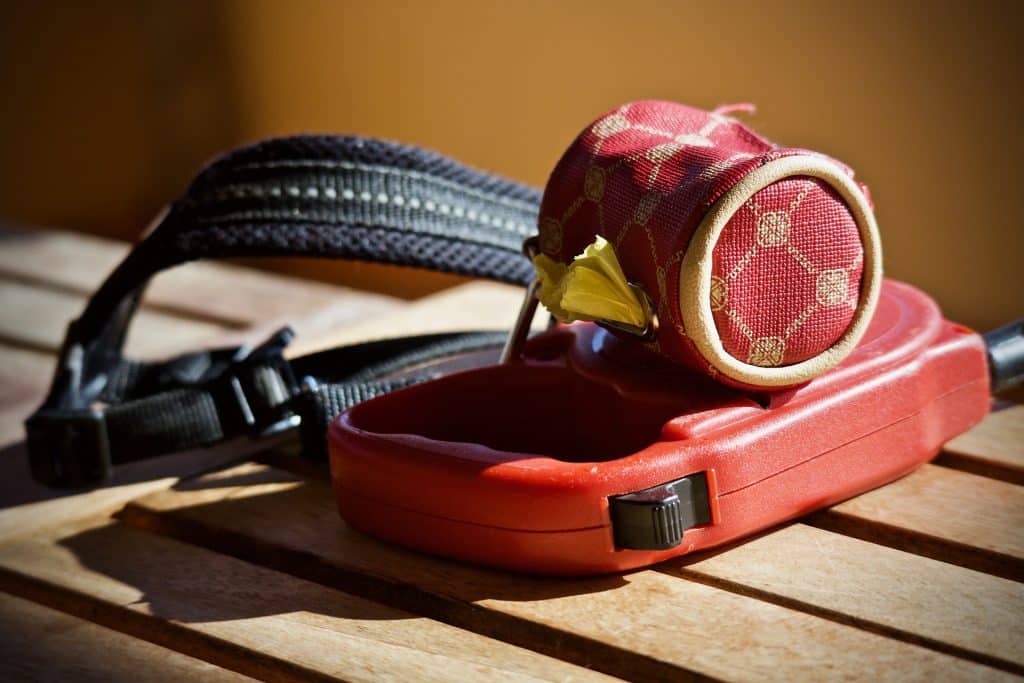
Retractable leads have a long, thin cord that’s wound up inside a plastic handle. When a dog pulls, the lead unspools and lengthens—allowing them to wander a little farther ahead. A pet parent can press a locking button on the handle at any time to stop the cord from unspooling, limiting a dog’s range of motion on the other end. When it’s time to wind up the cord, the lead has to be slack.
First coming onto the scene in the 1970s, the original retractable lead hailed from the German brand Flexi. These days, the company’s New Classic Flexi lead allows dogs to roam up to 26 feet and is designed to work with dogs up to 44 pounds.
While there are a few places where a retractable lead might make sense, experts are usually leery of them. “A retractable lead acts similarly to a fishing reel, in that it spins at a high rate and can be difficult to control—especially during higher stress situations, such as trying to get your dog away from something,” Joan Mayer, a certified dog trainer and founder of The Inquisitive Canine, tells Rover.
What’s more, the material and thin design of these leads make them difficult to grab, and they can actually cut into your hands.
Additional Dangers of Retractable Leads
- Finger and hand injuries. If the lead accidentally wraps around your index finger as your dog pulls forward, it can not only cut off your circulation but also slice or even sever your finger altogether, depending on your dog’s strength.
- Danger from unfriendly dogs. If your pup is 15 to 20 feet away from you and an unfriendly dog approaches, it’s extremely difficult to pull them back to safety. In the few seconds it takes to reel in your pup, both dogs could be facing serious injury if a quick-moving fight occurs.
- A dropped handle can cause a dog to bolt. The big plastic lead handle can make a lot of noise when it hits the ground, which is scary, especially if it’s sliding toward your pup at high speed. This could startle your dog and cause them to bolt, particularly if you have a noise-sensitive or anxious dog.
- The locks can malfunction. Locks on retractable leads are far from foolproof. If they get stuck at the wrong time (or you simply forget to lock the lead), you may be putting your dog, or someone else, at risk.
- Cuts and friction burns. If your dog suddenly runs toward something interesting and the lead cord is resting against your skin or theirs, it can cause a painful burn.
- Your dog can suffer whiplash—and you can fall. A retractable lead offers a dog a lot of space to get up to speed. If your dog is running when they suddenly hits the end of the lead, they could be yanked backwards. If your dog is big, it’s also possible that you can be yanked forward and off your feet.
- Long leads can get tangled. The length of a retractable lead could pose a tripping or choking hazard if it becomes entangled.
- It can snap back at the person holding the handle. A strong dog could snap the lead, flinging it back toward their handler (and possibly hitting them in the face).
- It’s harder to supervise dogs when they’re not close. While they’re exploring out front, your dog may encounter something toxic or get into trouble. Retractable leads make it harder to get up to your pup and help them out.
Pixabay
All of these dangers aside, many experts avoid retractable leads because they tend to reinforce bad habits. Essentially, retractable leads can teach dogs to keep their distance from their human on walks. And, because the retractable lead never slackens, it encourages them to pull.
“If you’re struggling with your dog pulling while you’re trying to walk them and you’re using a retractable lead, it could be contributing to this behaviour,” says certified trainer and founder of R+Dogs Renee Rhoades. “Retractable leads don’t offer a consistent amount of space. There can also be a lot of tension from your end, causing your dog to feel the pull and also become desensitised to there being tension on the lead,” she explains.
Mayer echoes this sentiment. “The dog pulls or gets into something the pet parent doesn’t like or want the dog doing, so they retract the dog away,” she says. “But sometimes guardians don’t remember to reinforce the dog for making good choices.” This, she tells us, can result in dogs developing a negative conditioned response.
Can a retractable lead ever be safe?
While experts generally regard retractable leads as more of a hazard than anything, there are times when one can come in handy. For example, if you’re in an open field without any other animals or people around, an extended lead can be a safe way to let your dog freely sniff around. Retractable leads can also be good for letting dogs take a quick potty break in an unfenced garden.
For dog parents who’d like to use a retractable lead in these kinds of scenarios, it’s important to take some precautions, says Mayer.
“If a pet parent chooses to use this type of equipment, it’s smart to perform lots of dress rehearsals in and around your own home before venturing out in public. It takes some skill to use a retractable lead,” Mayer remarks. “Also, it’s best to use them when no other people or dogs are around,” she adds.
Final Verdict: There Are Safer Ways to Give Your Dog Freedom
Unless you’re walking in an open, unpopulated space or your own back garden, a retractable lead usually poses more risks than rewards. But there are safer alternatives for dog parents who want to offer their pets a bit more freedom.
“My favourite alternative to retractable leads is a 10- to 15-foot biothane line. These allow the dog freedom of movement without the tension of a retractable,” Rhoades tells us.
A long line is a useful lead for giving dogs with limited recall the chance to safely sniff around a park or beach on their own. Long lines come in lengths between 20 feet and 50 feet, and while that extra material can be unwieldy, they’re generally safer than retractable leads.
“The human will need to actively engage with the long line rather than relying on pushing a button to lock or unlock it—and that does take a little bit of practice,” Rhoades admits. “But once you get the hang of it, it becomes second nature.”