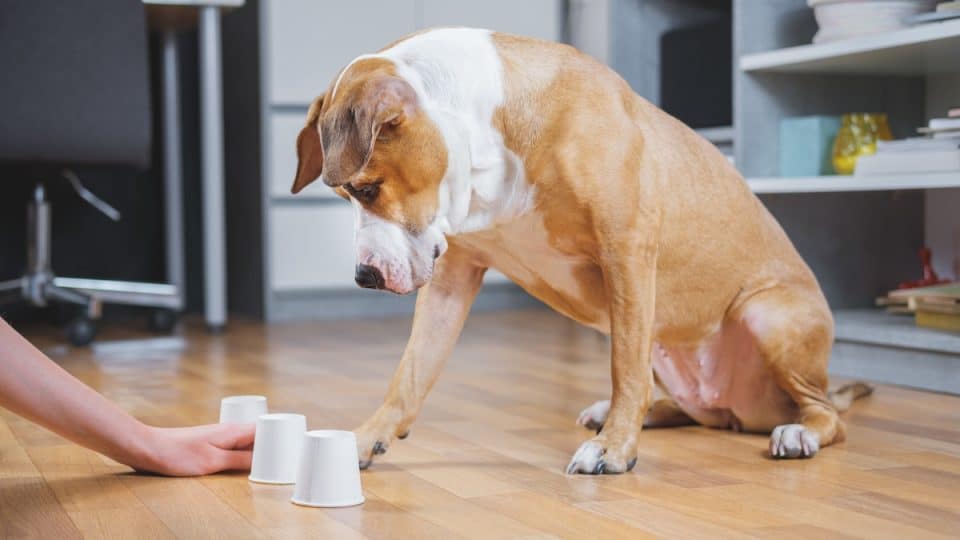
There’s a lot of talk about keeping your dog mentally stimulated. It’s an important part of a dog’s health and wellbeing, and it’s often offered up as an answer to pups who struggle with destructive behaviour or anxiety. But what does mental stimulation for dogs really look like?
Board Certified Veterinary Surgeon and Founder of Dr. Cuddles, Dr Mathieu Glassman, says mental stimulation is any activity that gets your dog thinking—whether that’s a training session, exploring new surroundings, or even a chat with you. And while it may be getting a lot of press, the idea of enriching your dog’s mind isn’t new. From taking dogs on sniff walks to letting them solve puzzle feeders, mental stimulation has always been an important part of keeping a dog happy and healthy.

In this article, we’ll share simple, effective ways to offer mental stimulation and keep your dog’s brain engaged.
Benefits of Mental Stimulation
Providing mental exercise for your dog isn’t just a nice extra—it’s important for their well-being and quality of life. In fact, research suggests that 5-8 minutes of mental stimulation, three times a day can make a world of difference for your dog.
Mental stimulation can:
- Improve your dog’s mood. A mentally engaged dog is a happier, more content dog.
- Boost their confidence. Stimulating activities can help fearful or shy dogs build more confidence in themselves and you.
- Reduce destructive behaviour. Keeping their minds busy leaves less room for chewing up your shoes.
- Ease stress and boredom. Mental stimulation can help calm anxious dogs and reduce boredom.
- Strengthen your bond. Working on activities together creates trust and connection.
How quickly will you see these benefits? According to Dr Glassman, you’ll notice the benefits more quickly if there was some sort of adverse behaviour to begin with.
“If you’re not consistent, you might not see the changes,” he adds. “But if you challenge them for weeks, you might potentially help them develop new patterns.”
For bored dogs, mental stimulation can be a game-changer. Many destructive behaviours, like chewing, digging, or barking, are signs of boredom. By keeping your dog’s mind occupied, you can redirect that energy into healthier outlets.
Which types of dogs need more mental stimulation?
Some dogs thrive on mental challenges more than others, and it often depends on their breed, personality, and age.
For example, breeds that were designed for high-energy jobs that require lots of thinking and problem-solving, like herding or hunting breeds, tend to benefit the most from mental stimulation. That includes:
- Australian Shepherd
- Australian Cattle Dog
- Belgian Malinois
- Border Collie
- Boxer
- Dalmatian
- German Shepherd
- Siberian Husky
- Terriers
- Labrador and Golden Retriever
- Vizsla
Mental stimulation can also be especially beneficial for rescue dogs, who sometimes come with emotional baggage or higher levels of stress because of the rescue centre’s kennel environment. Dog enrichment activities can help them overcome their fears and improve their quality of life.
Life stage matters, too.
“Puppies, like children, have short attention spans and would benefit more from mental stimulation like training, socialising, etc., followed by nap time and breaks,” says Dr Glassman.
As for senior dogs, it’s equally important to keep their minds sharp. In fact, mental stimulation can help slow cognitive decline in senior dogs. Studies show that engaging older dogs in visual enrichment activities like dog-computer interactions can improve their quality of life and slow the ageing process.
Brain Games for Dogs
Looking for fun ways to challenge your pup’s mind? These activities are a great way to keep your pup sharp and tire them out mentally.
Clicker training
Clicker training is a fantastic way to teach your dog new skills while keeping their brain engaged.
“With clicker training, you’re using a clicker to associate a reward with the sound of the click,” explains Dr Glassman. “Clicker training lets you relay to a dog that they’re doing the right thing, and you don’t have to interrupt the activity.”
How to play:
- Grab a clicker and some tasty treats.
- Start by using the clicker and immediately reward your dog with a treat. Repeat this a few times until they associate the sound with something positive.
- Choose a simple behaviour to teach, like “touch.” Hold your hand out, and when your dog sniffs or touches it, click and reward.
- Gradually build up to more advanced cues like “sit” or “spin” as your dog gets the hang of it.
Best for: Puppies and adults alike, as it’s great for teaching your dog to focus on you.

Veronika Vackova via iStock
Teach a new trick
Learning tricks is a go-to mental workout that’s rewarding for dogs of all ages and can help reduce their stress levels.
How to play:
- Pick a trick to teach, like “sit,” “come,” or “shake.”
- Use a treat to encourage your dog to get into the desired position. For example, move a treat over their head to encourage a “sit.”
- Once they perform the action, reward them immediately and add a verbal cue, like “sit.”
- Practise for a few minutes a day until they master the trick.
Best for: Puppies who are just learning basic cues and adults who need a new challenge. It’s also great for seniors (yes, old dogs can learn new tricks!), but avoid cues that are physically challenging, like “roll over.”
Hide and seek
Hide and seek is for dogs, too. You can turn your home or garden into a playground with this classic game.
How to play:
- Grab a favourite toy or treat and hide it somewhere your dog can find (but not too easily).
- Encourage them to “find it” by pointing or giving them verbal cues.
- Celebrate big when they locate the hidden treasure!
- For extra fun, you can hide yourself and let your dog track you down. It’s a great way to activate their sense of smell.
Best for: Dogs of all ages. Puppies love the thrill of discovery, and seniors will appreciate a game that doesn’t require much physical exertion.
Puzzle Toys and Treat Games for Dogs
Some dogs love a good challenge, and puzzle toys are an easy way to turn playtime into a brain-boosting activity. Plus, they can help reduce boredom, lower stress, and improve your dog’s problem-solving skills.
Here are some puzzle toy and treat game options, along with some tips on how to choose the right puzzle for your furry friend.
Treat dispenser toys
Interactive treat dispensers, like the popular KONG Classic, encourage your dog to figure out how to get tasty rewards from inside. Fill the toy with treats, dog-safe peanut butter, or kibble, and let your dog work their way to the prize.
- Difficulty level: Beginner to intermediate, depending on how challenging it is for your dog to dispense the treats from the toy.
- Best for: Dogs and puppies new to puzzle toys.
- Why it works: These toys tap into sensory enrichment for your dog, offering a rewarding, scent-focused mental workout.
- Recommended products: Try West Paw’s Qwizl for chews, Starmark’s Bob-a Lot for dry food, and a sturdy Toppl or KONG black for wet treats.
Sliding puzzle toys
Sliding puzzles challenge your dog to uncover hidden compartments to find treats. These toys often feature multiple difficulty levels, making them a versatile option for dogs of all life stages.
- Difficulty level: Adjustable—ideal for beginner, intermediate, and advanced puzzle-solvers.
- Best for: Adult dogs who thrive on problem-solving and senior dogs who enjoy lower-impact mental exercises.
- Why it works: Sliding puzzle toys encourage logical thinking and natural behaviours like sniffing and pawing as dogs figure out how to slide and lift pieces to access the treats.
- Recommended products: Try the popular OurPets Sushi toy for small breeds, the Tornado for larger pups, and the MultiPuzzle Dog Toy for dextrous experts.
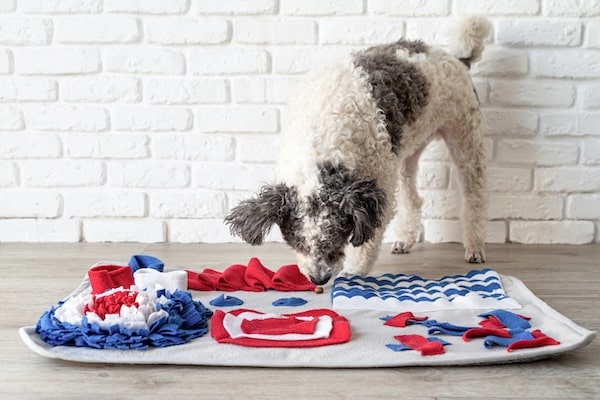
Snuffle mats
Snuffle mats are a fantastic way to turn mealtime or snack time into a mental exercise for dogs. These mats have fabric layers where you can hide kibble or treats, encouraging your dog to sniff and forage.
- Difficulty level: Beginner to intermediate, based on how well the treats are hidden.
- Best for: Puppies who need help slowing down as they eat, adults who love being engaged by their nose, and senior dogs who prefer a low-impact exercise outlet.
- Why it works: They tap into your dog’s natural sniffing and tracking instincts, engaging both their brain and nose.
- Recommended products: PAW5’s Wooly is a very sturdy classic, though it runs a little pricey. AWOOF’s mats are nice and big, though a little vulnerable to power chewers, while Outward Hound’s mats are charming and simple.
Ilona Shorokhova via iStock
Indoor and Outdoor Activities for Dogs
Dogs need a balance of physical exercise and mental stimulation, and these activities deliver both! Here are some fun ways to engage your pup’s body and mind.
Socialising with other dogs
Social time with other dogs helps your pup learn new social cues, build confidence, and burn off physical and mental energy. It’s important to note that some dogs are perfectly comfortable with being put into new situations, while others prefer not to be. Even if your dog isn’t a fan of other dogs, they can still thrive with quality time spent with you or any other person or pet they like.
How to do it:
- Start with a neutral environment like a dog park or dog-friendly area, or set up a doggy playdate with someone you know.
- Choose playmates that match your dog’s size and energy level.
- Let them approach each other calmly, sniffing and exploring at their own pace.
- Watch for signs of stress, like cowering or excessive barking.
- Gradually increase the time and complexity of their interactions as they grow more comfortable.
Best for: Puppies who need socialisation, active breeds that love play, and adults with lots of energy. Senior dogs may enjoy more sedate meetups as well.
Taking walks in new places
Walks in a new location provide a mix of physical activity and mental enrichment. New sights, smells, and sounds will keep your dog curious and engaged.
How to do it:
- Research dog-friendly locations like trails, parks, or neighbourhoods you haven’t explored.
- Pack essentials: water, treats, poo bags, and a lead—maybe a long line.
- Walk at your dog’s pace, letting them stop to sniff and investigate their new surroundings.
- Encourage exploration, but avoid overwhelming environments with loud noises or too much activity.
Best for: All dogs! Puppies and rescues will especially benefit from exposure to new environments.
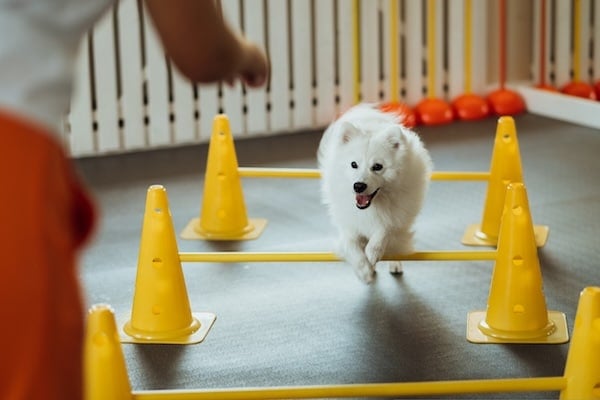
Indoor obstacle courses
Rainy day? Set up an obstacle course inside as a stimulating indoor activity for your dog. Use everyday items like chairs, cushions, and blankets to create a fun and safe course.
How to do it:
- Arrange furniture and objects to form tunnels, jumps, or weaving paths, or set up an indoor agility kit.
- Use treats or toys to guide your dog through the course.
- Reward them for completing each section to keep them motivated.
Best for: Puppies who need enrichment games to burn energy and adults who enjoy challenges.
Lightven via iStock
Does Your Dog Need New Routines?
Dogs love their routines—they know when it’s time to eat, walk, or go to bed. But some dogs thrive on a little variety. Adding new experiences or mixing up their enrichment can help them stay curious.
“Dogs are such creatures of habit. It’s comforting for them to anticipate what the next activity is,” says Dr Glassman. “Deviating from their normal routine is fine if you’re trying to find other cool things to add to their schedule.”
So how can you tell if your dog wants to shake things up? Look for these signs:
- They lose interest in a once-favourite toy or activity.
- They seem restless or bored, even after playtime.
- They develop behaviours like excessive chewing, digging, or barking.
- They appear less excited when it’s time for their usual game or walk.
Keeping things interesting doesn’t have to be a big production. Rotate their toys, play a brand-new game, or explore a park you’ve never visited before. Even small changes—like teaching them a new trick or hiding treats in unexpected spots—can make a big difference.
Does Mental Stimulation Replace Exercise?
Mental stimulation and physical exercise are both essential for your dog’s overall well-being, and they serve distinct purposes. Mental stimulation works your dog’s brain, giving them problems to solve, while physical exercise engages a dog’s body through movement.
Some activities focus more on one than the other. A high-energy game of fetch is great physical exercise, but it doesn’t engage your dog’s brain much. On the flip side, solving a puzzle toy is excellent mental stimulation but may not tire them out physically. Some activities, like agility training or scent games, check both boxes, combining movement with thinking.
Dr Glassman says balance is key. “The positive effects of mental stimulation and exercise are similar, but just like any food, too much of one thing and not enough of another is not good,” he says.