- This review contains affiliate links. Read more here.
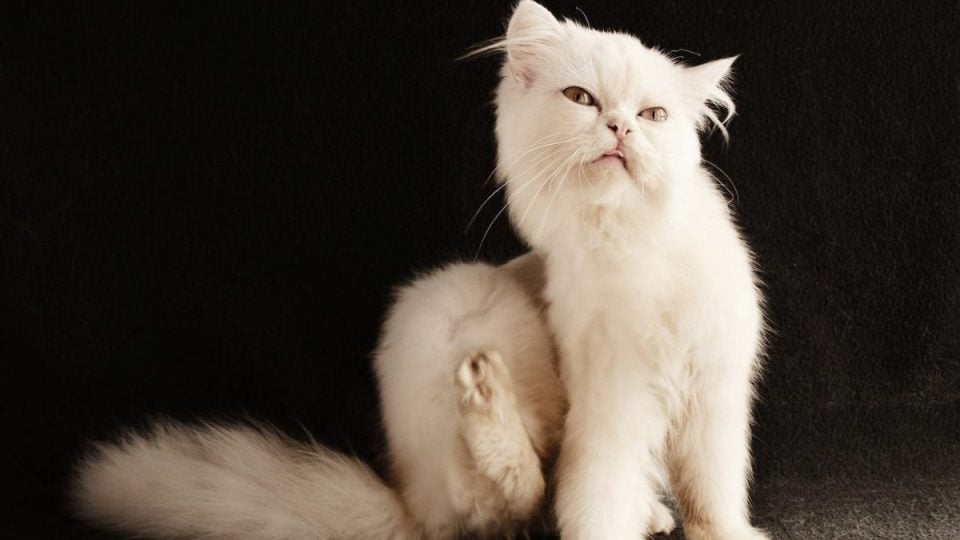
There are few things more frustrating than trying to help your cat when they’re suffering from some sort of allergy. The cat is itching and scratching and obviously uncomfortable. Pretty soon you’re on a quest to find the best food for cats with allergies so your cat’s life—and yours—can go back to normal. But before you lug home several bags of new cat food, let’s talk a bit more about cat allergies and how you can make sure food is really the culprit.
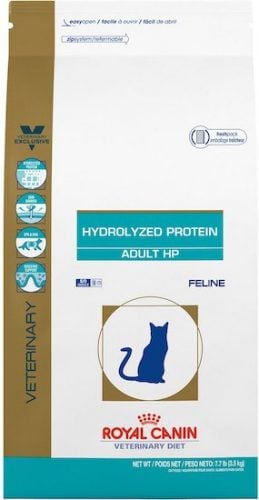
Royal Canin Veterinary Diet Hydrolyzed Protein Dry Cat Food
This dry food is specially designed for adult cats with skin and gastrointestinal sensitivities.
What Causes Allergies in Cats?
According to a 2018 report from Banfield Pet Hospital, cats are vulnerable to three types of allergies: food, fleas, and environmental substances (such as pollen, dust, fabrics, cleaning solutions, and even cat litter). To complicate matters, some unfortunate cats may have multiple allergies at once.
Tracking down the source of your cat’s specific allergy can get tedious and expensive. To simplify, start with your vet. They can help you figure out exactly what is making your cat sick. (It may not even be an allergy. For example, bacterial or fungal infections can both cause skin irritation.) Once you know what’s causing the problem, you can get to work on your cat’s recovery.
The Banfield study found that allergic reactions to fleas and to chemicals in the environment are on the rise, while food allergies are stable—and relatively uncommon, affecting only about 0.1 percent of cats. The study, based on 500,000 cats seen at Banfield clinics in the previous year, concluded that “food allergies in our pets are uncommon, and other causes of certain skin conditions should be investigated before pursuing a food allergy diagnosis.”
We talked with Dr. Bruce Kornreich, Director of the Cornell Feline Health Center, who told us that when cats do have food allergies, it is most often an allergy to a protein. “We know that cats get food allergies, and in most cases, they are to the protein source,” Dr. Kornreich says. “The most common protein source is chicken. But the only way you can show that a cat has a food allergy is to selectively eliminate components of the diet and see how the cat does after a food trial.”
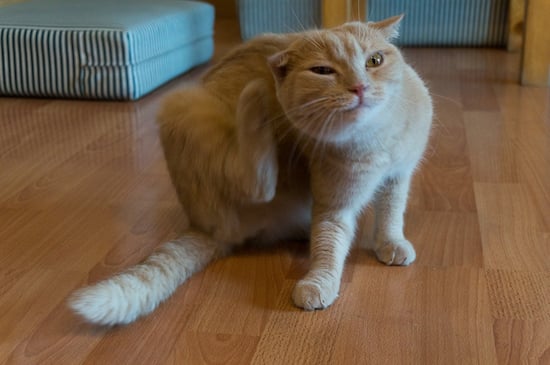
Checking for a Food Sensitivity
While you’ll see quick tests for cat food allergies advertised online, the Cummings Veterinary Center at Tufts states unequivocally that they don’t work. Talk with your vet instead.
If your vet suspects your cat has a food allergy, they might ask you to switch your cat completely to a special prescription diet, called a hypoallergenic diet, for up to three months. The hypoallergenic diet consists of cat food made up of hydrolyzed proteins—the proteins have been broken down so the cat’s immune system can’t detect any allergenic components. If the allergy symptoms disappear in the hypoallergenic diet but then return when the cat goes back to regular food, it’s pretty clear your cat has a food allergy.
At that point, your vet may ask you to go back and forth between the hypoallergenic diet and various limited-ingredient foods (see below) to try to figure out which protein was the culprit in the allergic reaction.
Food for Cats With Allergies
If your cat has food allergies, you’ll likely be trying an elimination diet to figure out what foods are causing your cat’s distress. This is where a limited ingredient diet (LID) comes in.
While many popular cat foods mix in multiple types of protein and fats (chicken and fish oil, beef and chicken, etc.), LID foods usually contain only one type of animal protein. Your vet may ask you to try a food that has beef but no chicken or fish, or one that has fish but no beef or chicken.
Sometimes your vet may suggest a solo “novel” protein—a less-common cat food ingredient, such as venison, duck, alligator, or rabbit. The idea is that your cat has probably not eaten those proteins and is unlikely to have developed an allergy to them. Whether you are testing your cat with limited-ingredient cat foods or limited-ingredient cat foods with novel proteins, it takes time and commitment.
“If you are testing your cat for a chicken allergy, that means absolutely no chicken—not [only] in foods, but no treats with any chicken during the food trial,” Kornreich says.
To help you out, we combed the market for hypoallergenic and limited ingredient diet foods for cats with food allergies and came up with both dry and wet foods from several well-regarded brands. We even found some treats. Note that for the hypoallergenic hydrolyzed protein formulas, you’ll need to provide a prescription or your veterinarian’s contact information to purchase.
Royal Canin Veterinary Diet Hydrolyzed Protein Dry Cat Food
Your vet may prescribe this food for adult cats with skin and gastrointestinal sensitivities. In addition to easily digestible hydrolyzed soy proteins, it includes omega-3 fatty acids, B vitamins, and a blend of fibers. Prescription required.
Royal Canin Veterinary Diet Hydrolyzed Protein Dry Cat Food
This dry food is specially designed for adult cats with skin and gastrointestinal sensitivities.
Natural Balance L.I.D. Green Pea and Venison Dry Cat Food
Venison is the unique animal protein in this dry food for cats with allergies and sensitivities. Natural Balance also offers a similar venison-based formula as canned wet food. As with other novel proteins, venison is a good alternative to meats that your cat may otherwise be reacting to.
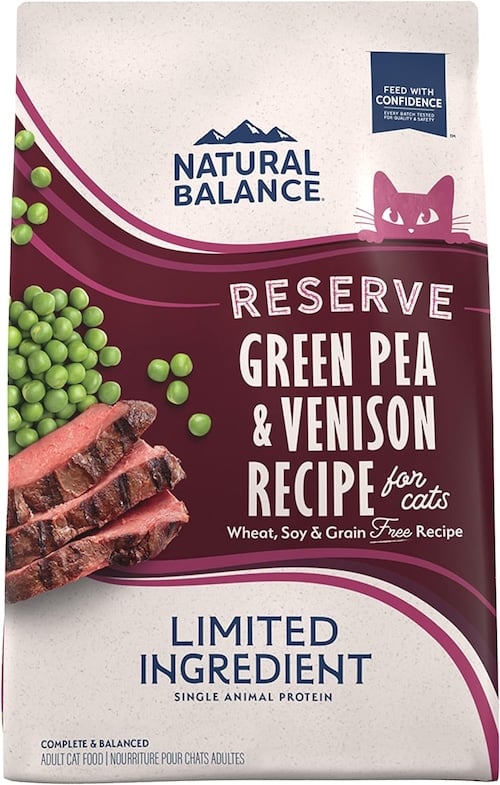
Natural Balance L.I.D. Green Pea and Venison Dry Cat Food
Venison is the only animal protein in this grain-free dry food recipe.rn
Blue Buffalo Basics L.I.D. Duck and Potato Recipe
If you want to see how your cat does with a diet free of triggering proteins, this limited-ingredient diet food offers a duck-and-potato alternative. It has no chicken, beef, dairy, eggs, grain, gluten, corn, wheat, soy, artificial flavors, or preservatives.
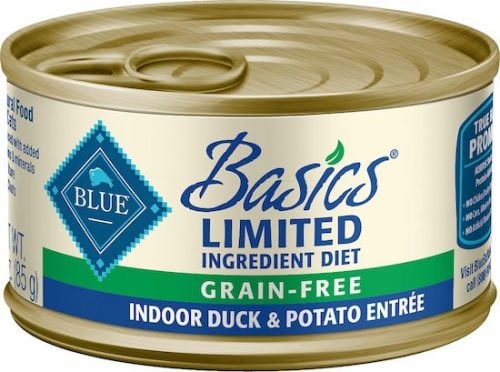
Blue Buffalo Basics L.I.D. Duck and Potato Recipe
This duck-based food is free of chicken, beef, and dairy.
Instinct L.I.D. Grain-Free Rabbit Recipe Canned Food
For cats who love the texture of pâté and need to try a limited-ingredient diet free of poultry, beef, and fish, this novel protein—farm-raised rabbit—could be the answer. This recipe is also made without dairy, eggs, grain, potato, corn, wheat, or soy. Available In 3-ounce and 5.5-ounce cans.
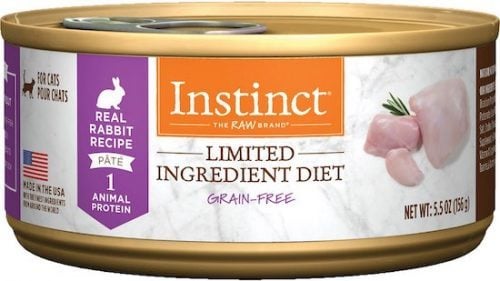
Instinct L.I.D. Grain-Free Rabbit Recipe Canned Food
This limited-ingredient food is rabbit with an appealing pâté texture.
Purina Beyond Simply Salmon and Whole Brown Rice Recipe
You can feel good about dishing up your kitty some of this nutrient-packed cat food from Purina. Made with limited ingredients, this wholesome option features real salmon, cranberries, brown rice, and egg. It’s a solid option for both sensitive and regular felines.
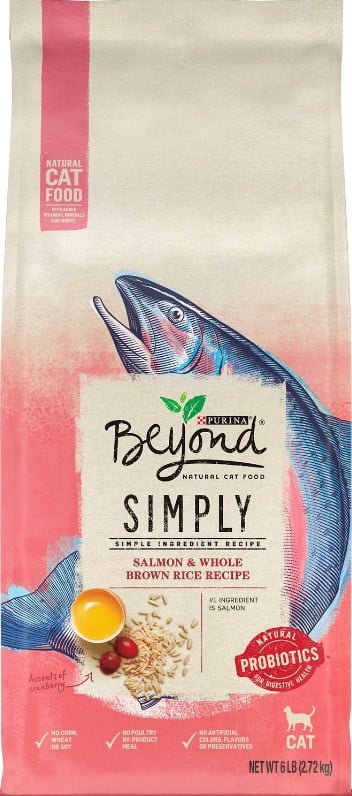
Purina Beyond Simply Salmon & Whole Brown Rice Recipe
Limited ingredients make this formula a winner with sensitive felines.
Blue Buffalo Basics L.I.D. Fish and Potato Dry Cat Food
This limited-ingredient food for indoor cats is rich in protein from fish, with easy-to-digest carbs from potatoes. It includes LifeSource Bits—the company’s combination of selected antioxidants, minerals, and vitamins necessary for feline health.
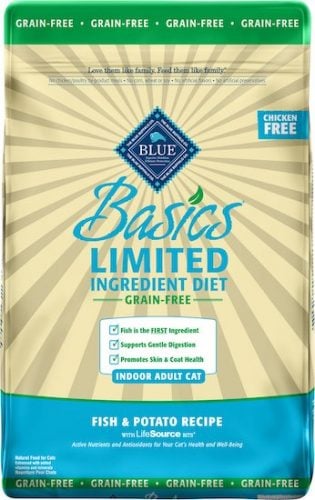
Blue Buffalo Basics L.I.D. Fish and Potato Dry Cat Food
A limited-ingredient fish-based recipe with easy-to-digest potatoes.
Hill’s Prescription Diet Skin/Food Sensitivities Dry Cat Food
The chicken proteins in this prescription diet food for cats with allergies are hydrolyzed to prevent your cat’s immune system from reacting to them. This formula contains the amino acids, minerals, and supplements required for your cat’s health. Prescription required.
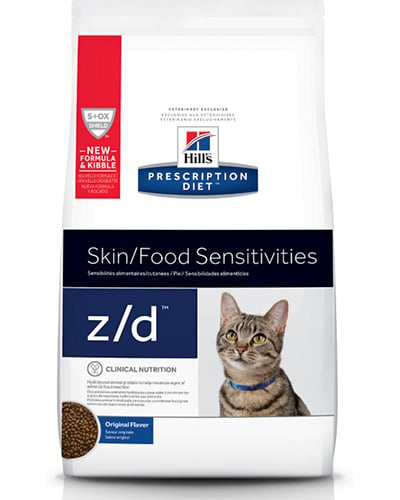
Hill's Prescription Diet Skin/Food Sensitivities Dry Cat Food
This prescription food for cats is formulated with highly digestible proteins to minimize any digestive reaction.
Purina Pro Plan Veterinary Diets Hydrolyzed Dry Cat Food
You’ll need a prescription from your vet for this hydrolyzed protein diet suitable for adult cats and growing kittens. Low in allergens, it’s designed for cats that have food-allergic gastroenteritis or dermatitis, food intolerance, inflammatory bowel disease, or pancreatitis.
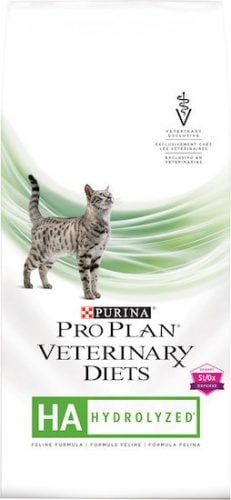
Purina Pro Plan Veterinary Diets Hydrolyzed Dry Cat Food
The prescription food minimizes allergens to reduce skin or digestive problems.
Fancy Feast Savory Cravings Limited Ingredient Cat Treats
Fancy Feast now has a line of cat treats with limited-ingredient recipes. You can purchase beef, beef and crab, and salmon. This beef flavor treat formula includes liver flavor, beef fat, and brewers yeast.
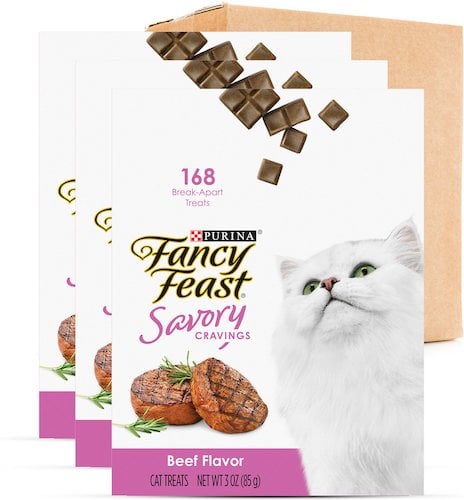
Fancy Feast Savory Cravings Limited Ingredient Cat Treats
Treats for your cat on a limited-ingredient beef diet.
Royal Canin Veterinary Diet Hydrolyzed Protein Cat Treats
If your cat is on a hydrolyzed protein food trial or a restricted diet, it does not necessarily mean they have to forgo treats. Available with your veterinarian’s authorization, these treats from Royal Canin get rave reviews from people with cats on special diets. Prescription required.
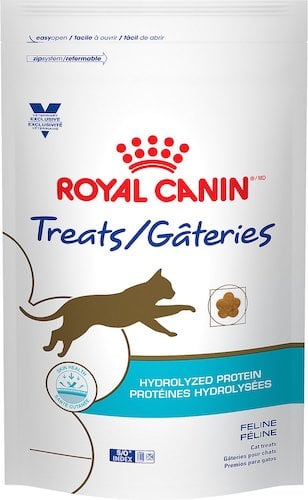
Royal Canin Veterinary Diet Hydrolyzed Protein Cat Treats
The hydrolyzed-protein treats are safe for many cats on restricted diets.