- Not a substitute for professional veterinary help.
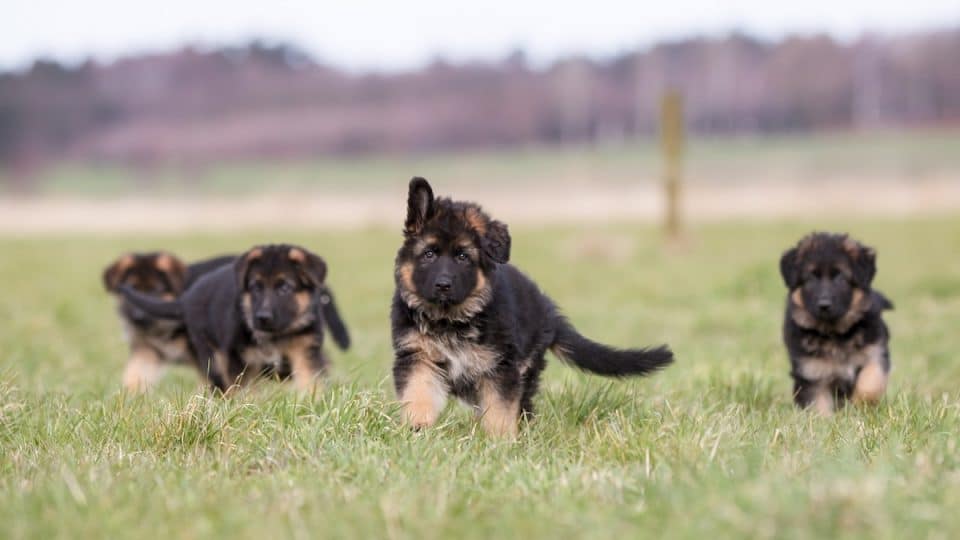
The German Shepherd Dog (GSD) is one of the most popular breeds in the US—and it’s not hard to see why. German Shepherd puppies start out small and fluffy, but they grow quickly into large, powerful dogs who take loyalty to a whole new level. Oversized ears, thick fuzz, and clumsy energy give way to a mature black-and-tan or sable coat, a lean and muscular frame, and graceful athleticism.
But raising a German Shepherd puppy into a confident, well-adjusted adult is no easy job. Proper care, training, and socialization are critical to produce the intelligent, calm, and highly capable dogs the GSD breed is famous for. Since this is a high-energy, high-drive breed, structure, attention, and regular mental and physical stimulation are key.

It’s also a good idea for prospective pet parents to consider the financial investment of bringing home one of these powerful puppies. Many GSD parents pay upwards of $1,500 for a purebred German Shepherd puppy from a reputable breeder. Dogs from strong working or show bloodlines can cost much more.
Think a German Shepherd puppy might be right for you? Here’s how to adopt, plus what to know about the care and feeding of these lovable pups to help them grow up strong, confident, and calm.
Key German Shepherd Puppy Facts
- Litter size: A German Shepherd litter includes five to nine puppies on average.
- Puppy weight: At around 8 to 10 weeks old—the typical age puppies go to their new homes—German Shepherd puppies usually weigh between 12 and 20 pounds. That’s a fraction of their adult size: a full-grown GSD weighs 50 to 90 pounds.
- Puppy temperament: German Shepherd puppies are smart and inquisitive. Many love training, which is good, since there’s a lot of it to do. As a herding breed, they may instinctively nip at heels. They’re also famous for chewing, digging, and “mouthiness” during teething stages.
- Energy levels: German Shepherd puppies are high-energy dogs, thanks in large part to a working history that prioritizes endurance. Exercise and mental stimulation are the keys to a tired puppy.
- Maturity: Most German Shepherds begin to show signs of maturity and a more settled temperament between 18 months and 3 years of age, although they remain active and energetic well into adulthood.
- Unique traits: German Shepherd puppies often carry themselves with confidence and awareness, even from a young age. Their protective nature can make them skeptical of strangers, so early socialization is key to help them grow into tolerant adults.
- Bonding likelihood: German Shepherds often form strong attachments to one person in the household, usually the person who feeds, trains, and spends the most time with them. However, with consistent interaction, they can be deeply loyal to the entire family.
Where To Find German Shepherd Puppies
German Shepherds are one of the most popular dog breeds in the United States and around the world. Since their introduction as an official breed in late 1800s Germany, their intelligence, trainability, and loyalty have made GSDs a favorite for militaries, police forces, and families alike.
This popularity means that the wait time for a purebred GSD puppy can be several months to a year, especially for puppies from working lines or show lines and for reputable breeders who prioritize health testing, socialization, and responsible placement.
The American Kennel Club (AKC) offers resources for finding a reputable breeder, with fairly strict guidelines on who they let participate, as well as an excellent list of German Shepherd rescues.
Rescue groups
By most estimates, approximately 10-15% of GSDs will be re-homed in their lifetime, particularly in the extra-challenging “teen” phase between six months and two years of age. New dog parents sometimes underestimate the needs of the breed, especially when the media tends to show well-trained GSDs without showing the intense training behind their behavior. This means that GSDs are common in shelters and rescues.
AKC-approved German Shepherd rescues include national organizations like the German Shepherd Dog Club of America and the German Shepherd Resource and Rescue Center, as well as regional rescue organizations across the country. The American German Shepherd Rescue Association also publishes an online list of affiliated rescues.
Show breeders
German Shepherds bred for show have specific temperaments and physical characteristics, which often overlap with dogs bred for companionship but separate them from dogs intended for working roles. National breed clubs such as The German Shepherd Dog Club of America are a good starting point for finding show breeders.
Facebook breed groups can often serve as helpful resources to connect with breeders as well—just be sure to do your due diligence to ensure that the breeder is reputable to avoid supporting puppy mills or falling prey to online scams.
Online marketplaces
Online marketplaces such as the AKC and Good Dog connect prospective adopters to certified breeders. Unlike general adoption sites like PetFinder, which can be great for a mixed-breed rescue, these marketplaces focus on purebred German Shepherd Dogs. As with show breeders, it’s critical to vet your GSD breeder thoroughly. Puppy mills and online scams are prevalent throughout Craigslist, Facebook marketplace, and smaller, lesser-known online sites. Watch out for breeders that can’t be verified, unusually high or low prices, and high-pressure sales tactics.
Whether to adopt a rescue or go through a breeder for your new German Shepherd puppy is a personal choice. A rescue organization may not have an 8-week-old puppy or all the paperwork and medical history that a breeder can provide. At the same time, adopting a rescue GSD typically costs far less upfront and can require a much shorter wait than going through a breeder.
Recommended health tests
German Shepherd Dogs are uniquely vulnerable to several genetic conditions that can negatively impact their quality of life and require costly treatment. These conditions include:
- Degenerative Myelopathy (DM): A chronic disorder of the spinal cord, DM causes progressive weakness and instability in a dog’s hind quarters.
- Von Willebrand Disease (vWD): vWD is a bleeding disorder that can cause bruising and abnormal bleeding, even from relatively minor wounds.
- Hip Dysplasia and Elbow Dysplasia: Caused by developmental defects in the hip, hip and elbow dysplasia can lead to severe pain and mobility loss in GSDs.
DNA testing on a puppy or its parents can identify genetic markers related to these conditions, helping to understand a dog’s future health challenges. For hip and elbow dysplasia, a physical evaluation of the dog’s hips and elbows can also help to predict later issues.
It’s important to note that while none of these issues are curable, they are manageable with treatment. Even if you adopt a puppy who is genetically predisposed to any of these conditions, knowing the risks early can help you improve your puppy’s quality of life over the long run.
Bigandt_Photography via iStock
German Shepherd Puppy Physical Characteristics
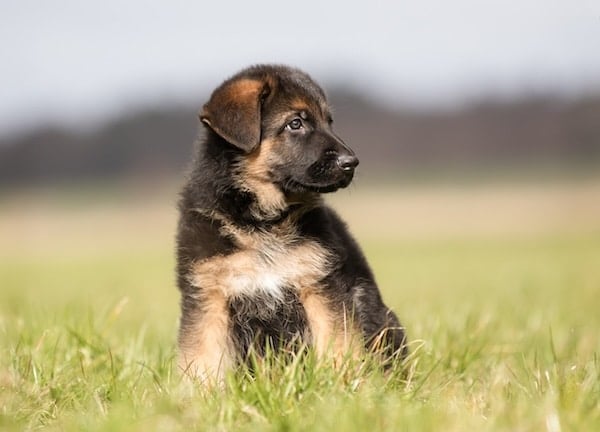
While fully-grown GSDs are typically angular and muscular, their puppies tend to be more rounded and soft, from their coat to their muzzle and their ears. For GSDs with a black-and-tan or black-and-red coat, the hair often starts quite dark, changing in color, texture, and pattern as they grow.
Upright, triangular ears are an iconic German Shepherd feature, but it often takes time for them to stand up on their own. For most GSD puppies, the ears begin to stand up around the end of their teething phase, typically between 16 and 20 weeks. The ears may rise and fall in turn, either together or one at a time, until the cartilage in the ears hardens enough for them to stay up permanently. While rare, some German Shepherds’ ears never stand up at all.
German Shepherds are large dogs, typically growing up to be 50 to 90 pounds and 22 to 26 inches tall at the shoulder. As puppies, these dogs grow quickly through their first year before reaching reaching their full adult height and weight between two and three years of age.
| Age | Approx. Height | Approx. Weight | Tips |
| 8 weeks | 7-9″ | 12-20 lbs | At 8 weeks, a puppy can be adopted. Color changes typically start around 8 weeks, lasting up to their second birthday. |
| 12 weeks/3 months | 9-11″ | 18-30 lbs | Three months marks the beginning of teething and the final stage of a puppy’s socialization window. |
| 16 weeks/4 months | 11-14″ | 30-40 lbs | Most GSDs reach the halfway point in their growth between 4 and 5 months. They’re also likely to be big enough to get into new things—like your kitchen counters. |
| 20 weeks/5 months | 14-16″ | 35-50 lbs | Around five months, GSDs usually finish teething and start to better grow into their awkward bodies. |
| 24 weeks/6 months | 16-18″ | 45-60 lbs | The adolescent or “teen” phase in a GSD’s growth starts around 6 months; they’re 2/3 of the way to their adult height, and many experience a training regression. |
| 12 months/1 year | 22-24″ | 65-80 lbs | Most GSDs still have growing to do at the one-year mark, but it should be slowing down as they get closer to their full size. |
| 2 years | 23-26″ | 70-85 lbs | Most GSDs have reached their full height at this point, but they may continue to fill out, gaining muscle and weight for another year. |
| 3 years | 24-26″ | 70-90 lbs | By age three, your GSD should have reached their full adult height and weight, marking the official move from puppy to adult dog. |
Raising a Well-Adjusted German Shepherd Puppy
German Shepherds are big dogs with big personalities, which makes it extra essential to start their training early, when they’re small. Socialization, plenty of exercise, and lots of mental stimulation are key to help these high-energy puppies grow up to be the friendly, well-trained dogs that most GSD parents are looking for.
Breed-specific training needs
Thanks to their working heritage, German Shepherd puppies come with energy to burn. They thrive on mental stimulation and adapt quickly to training challenges.
When it comes to puppy training, consider graduating from typical obedience classes and moving on to more advanced skills, either in a class setting or through one-on-one training. Prioritize recall and “settle” cues that return your GSD to your side and encourage calm behavior, even in the face of distractions. For especially high-energy puppies, consider trying Karen Overall’s Relaxation Protocol.
Socialization
Developed to herd and protect their flocks, German Shepherds tend to be naturally skeptical of unfamiliar people and animals. This means that GSDs can grow up to be extremely overprotective without the proper socialization.
Intentionally creating short, positive experiences with other humans, dogs, and environments will help you raise a well-adjusted dog who isn’t upset by new people or experiences. Consider following a socialization checklist and fit as much in as you can during your puppy’s critical socialization period: their first three months of life.
Potty training
German Shepherds are quick learners, and many catch onto potty training very quickly. Even the smartest puppies can’t hold their bladders like adult dogs can, so the key is taking them out consistently and regularly, plus watching for your new dog’s cues to understand when they have to go out (even if they don’t fully understand yet).
Young German Shepherd puppies are especially prone to stool eating, or coprophagia—which makes it important to clean up after them right away.
Crate training
Despite how aloof they might act around strangers, GSDs often become extremely attached and loyal to their humans. Sometimes that manifests as separation anxiety. Crate training your puppy is one way to help them build confidence on their own, especially if their crate becomes a safe and cozy spot to rest.
The important thing is to make crate experiences positive and avoid correlating it with departures in your young pup’s mind. Make sure your puppy’s entrance into their crate isn’t always the cue for you to depart.
Lifestyle exercise & activities
German Shepherd puppies tend to be high-energy and curious, requiring age-appropriate activities to exercise their minds and bodies. The rule of thumb is five minutes of exercise per month of age, twice a day. So an eight-week-old puppy would need 10 minutes of exercise twice a day. Here’s some additional guidance to keep your puppy happy and safe:
- Before 12 weeks of age, you’ll want to keep all play gentle; your puppy is still developing, and jumping or hard running can be harmful to their growth.
- For puppies between three and six months of age, training is the name of the game. This is a great time to introduce everything from basic commands to scent work—and an even better time to socialize your puppy.
- At six months to a year, your puppy can advance to longer exercise sessions and more intense mental games—both will help to keep your adolescent puppy from getting bored (and in trouble). The key is to monitor their play at all times; your big puppy is still growing, and they may need you to to help them stop.
- While one year is “adult” age for most puppies, your GSD may grow up to three years. Your vet can help you decide the right time to introduce high-impact activities like jogging together or jumping.
Grooming Routine for German Shepherd Puppies
With a soft single coat, German Shepherd puppies don’t need a ton of grooming—at first. As they grow into adulthood, however, most German Shepherds gain a thick double coat that requires weekly brushing. Twice a year, GSDs tend to “blow their coat,” shedding large amounts of hair in a short period of time.
So even though your puppy’s grooming needs are minimal now, it’s important to get them comfortable with the tools they’ll meet later on, like deshedding brushes and blow dryers.
Due to a German Shepherd’s size, other grooming tasks like trimming their nails or brushing their teeth can be challenging. It’s best to socialize your puppy to these and other grooming activities early. Handle their mouths and paws and mime the action (and sound) of nail clippers so that they’re comfortable with the process when the need arises.
Health Considerations
German Shepherds are prone to several potential health issues that should be considered even while they’re a puppy. For dogs with a high risk of hip dysplasia, it’s important to engage in age-appropriate activities that don’t risk creating more problems in the long run. Running or jogging with a German Shepherd, for example, should be avoided until the dog’s growth plates have fully developed, usually at 1.5 to 2 years.
German Shepherds are also prone to allergies, both environmental and food. Managing a dog’s allergies may require some trial and error. Consider trying your puppy on a small bag of food before committing, and monitor their response to the food closely.
German Shepherd puppies’ powerful teeth and need for stimulation can also lead to heavy chewing—and sometimes swallowing things they shouldn’t. For this reason, and for the possibility of issues later in life, many GSD parents opt for pet insurance to help manage the potential costs of veterinary care.
Essential German Shepherd Puppy Checklist
Planning to bring home a German Shepherd Puppy soon? Here are some of the essentials to have on hand before you pick up your pup.
- Leash. Your puppy is going to grow—and grow fast—so choose a sturdy leash that will keep up with their increasing size and strength.
- Collar & ID tags. When choosing a collar for your German Shepherd puppy, consider one that’s comfortable, adjustable, and strong to keep up with both their changing size and their strong teeth. Make sure you outfit your pup with an ID tag right away too.
- Harness. A harness is a great tool to help manage your growing pup’s strength and excitement, especially while they’re still in training. Choose a harness that’s well-made and will hold up to your German Shepherd’s enthusiasm.
- Puppy food. Big dogs need big dog food, even when they’re little. Choose a puppy food that’s formulated to meet your GSD‘s growth needs. Just make sure you don’t buy too much—some puppies are picky eaters, and you may need to try a few before you find the one they like.
- Crate. Puppies need a cozy space. The best crates for German Shepherd puppies are made to grow as they do, with dividers that allow you to expand the space as needed.
- Toys. For GSD puppies’ sharp teeth, you’ll want toys designed for power chewers. While puppy toys are great as a starting point, you may find that your GSD outgrows them quickly. For this smart breed, puzzle toys are also a good choice to aid in mental stimulation.
- Dog brushes and deshedding tools. Even if your puppy doesn’t yet have their double coat, familiarizing them with all the tools needed to maintain a German Shepherd’s coat is key.
- Veterinarian. Puppies will visit the veterinarian several times in their first year of life to make sure that they get all of their shots at the right time and that they’re growing up healthy. Choose a veterinarian you trust and who has experience with German Shepherds.
- Trainer and training tools. Whether you choose to attend puppy classes, use online resources, or hire a professional trainer, your puppy’s learning should start on day one.
With all the right tools, patience, and the readiness to meet all of your German Shepherd puppy’s needs, your new puppy will grow up to be a wonderful companion for you and your family.