
Fostering Innovation
Since 2020, Rover has been celebrating Maker Days, the upcoming one marking its 16th edition. The event starts with a session where anyone can propose an idea to work on. Everyone then joins a team and for a week we work on making that idea a reality.
Each Maker Days has a theme to guide us into what to focus on. Nevertheless, ideas are broad and there is always a project that you can get behind. The project could be about creating new internal tools like a browser extension to see the state of deployments, adding a mini game on load screens, creating an AI chatbot to improve searching for sitters or creating dashboards for TV screens.
Great ideas have come out of these hackathons, but even better product MVPs have been conceived. After the project is finished (or more accurately, when Maker Days ends) every team presents their proof of concept and a vote takes place to crown a winner. While it’s easy to hack something together quickly, it’s much harder to push this idea over the finish line and make it part of our main product.
Inception
Within the Trust & Safety team (our focus is on ensuring the safety and well-being of Rover’s sitters, pet owners, and pets) we saw a big opportunity in the data we gathered when a sitter takes care of a pet. We knew the time that the sitter spent with the pet, the amount of food given as well as the amount of times the pet had peed or pooped. Recognizing the humorous aspect of the data we knew we could generate great personalized content which would work great as an end of year recap resembling Spotify Wrapped. This would also facilitate sitters’ ability to promote themselves.
During our August 2023 Maker Days, we decided to tackle this. With some help from other team members as well as a designer we aimed to create something shareable for sitters to actively promote themselves through personalized shout-outs. These would take the form of compelling images, created by transforming these data points into stories that featured their statistics for the year and hopefully generate some sitter conversations and funny comparisons.
Hey, how many poops did you scoop this year?A SITTER, probably
The project was initially named “Poop Scoop” referencing one of the data points that would be used for the images. However “Poop Scoop” ended up being the Maker Days team’s internal name and the feature was then rebranded as “Rover Treats” (in line with our pet-focused terminology), centered on creating “treats” that would be personalized images that Sitters would share through social media to connect with pet parents and their broader community, generating awareness about their job and about the Rover brand.
The key focus areas for the project were:
- Establishing a robust framework for content sharing across both iOS and Android platforms.
- Developing the capability to capture specific React Native components as screenshots using the viewshot library.
- Utilizing existing data to generate personalized and engaging funny images.
At the end of Maker Days we achieved implementing the animations as well as being able to share those on both iOS and Android. Even though the data shown on our demos was from a mocked user, it was being fetched through the existing API using React Query (at the time we were transitioning to using React Query for frontend data fetching).
However the project was missing properly sliding between the slides (they were transitioning by disappearing and appearing in place) and also an entry point into Rover Treats that would take the user to these slides. Other missing pieces to make the project complete would have been creating a push notification and having multiple versions with varying aspect ratios that would tailor to specific social network channels.
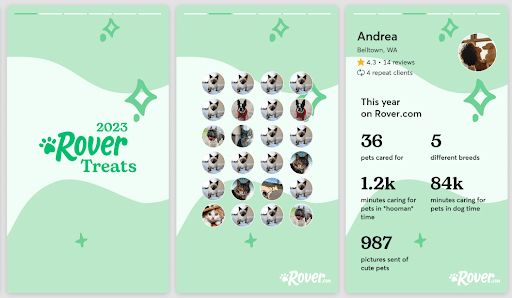
Rover Treats: Final Design
The project was a success and we leveraged the existing established process to bring these ideas into the product roadmap. This involved making a “continuation proposal” and presenting it to the team who owns the domain.
We knew we had a great idea in our hands however due to some shifting priorities from the owning team it was hard to prioritize or make it fit within our team’s roadmap so the project stayed on the back burner, until…
Reviving the Idea
After an organizational change in mid 2025, our team’s mission shifted to focus more on growth — and sitter self-promotion aligned perfectly with “Rover Treats.” The idea was picked back up with the goal to release it before the end of the year.
After exploring various options, including video generation, the team ultimately returned to the original Maker Days concept of making image slides. However with the requirement of also having to be available on the website we moved away from the previous approach of the viewshot library and moved towards generating static image assets on our python backend leveraging existing experience. Experience that we had gathered from a previous project: Physical Artifacts, that enabled sitters to have a flyer that they could print out to be hung on public places for self promotion.
For the image generation we used Python’s Pillow library as we were already using it in our codebase and it had support for our needs like being able to use our awesome fonts.
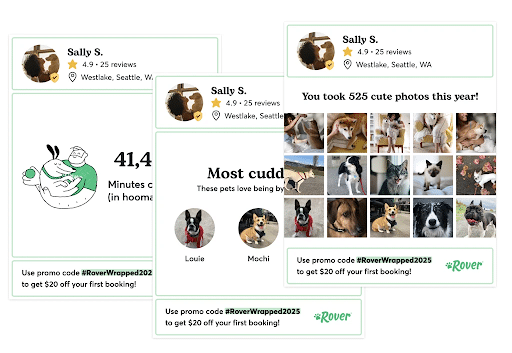
From the early designs it’s clear how we also focused on showcasing pet parents’ second favorite thing, right after their furry friends, which is pictures of those furry friends!
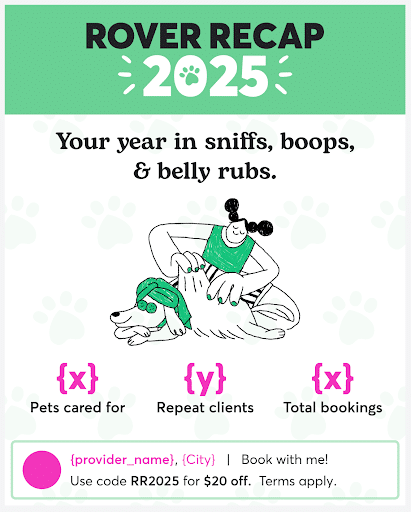
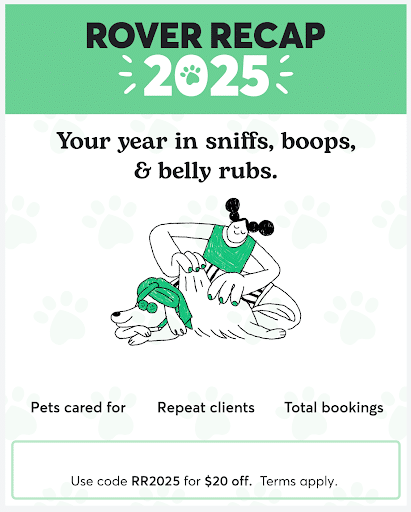
First we split the design into 3 separate layers: first an example of the final content, second a version indicating the content that would be dynamic, and the final would just have all the static content that would always be present. This last one was used as a background to reduce elements drawn on the image.
 |
 |
 |
We obtained the necessary coordinates for all the dynamic content. But after some testing we noticed that sometimes text would not align as desired due to always using the top and left coordinates to position the elements. This happens when trying to center text of variable length as well as when drawing a phrase in multiple text chunks with different character heights (specially noticeable with accents or capitalizations).
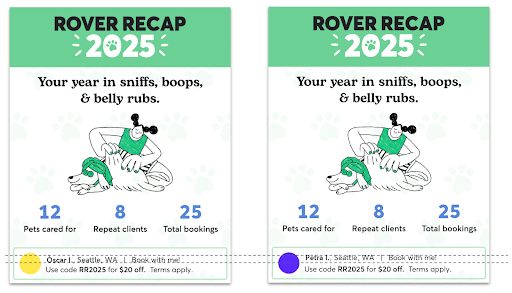
Luckily, Pillow supports anchoring text to multiple locations within the content. We used middle anchoring for centering text horizontally and baseline anchoring for vertical alignment.
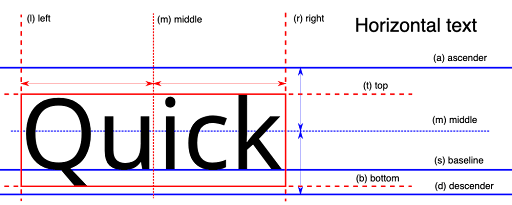
Pillow text anchors
One of the drawbacks of going with Python and Pillow for image generation was having to manually handle text overflowing through measuring word length in pixels and either breaking into new lines or dynamically contracting the text shown.
Image generation at this scale was a new territory for us, so we took the cautious approach of pregenerating the images and storing them in a cache. Furthermore the project was set up as an experiment only exposed to a limited number of users with staged rollouts to be on the safe side.
The Results
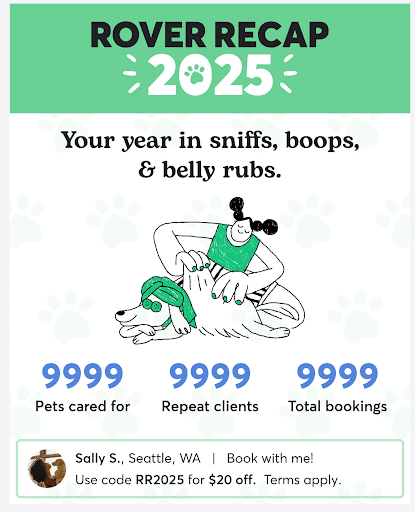
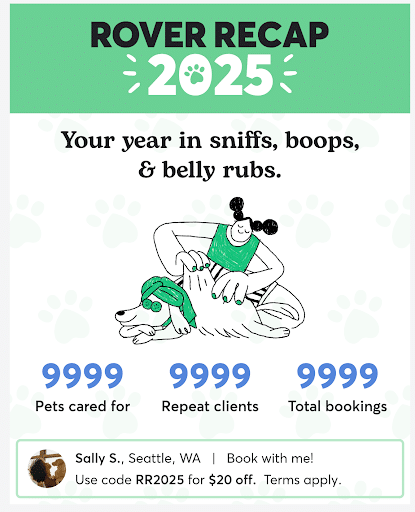
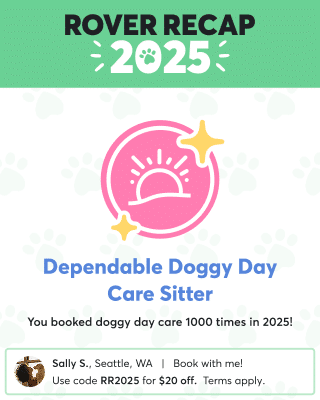
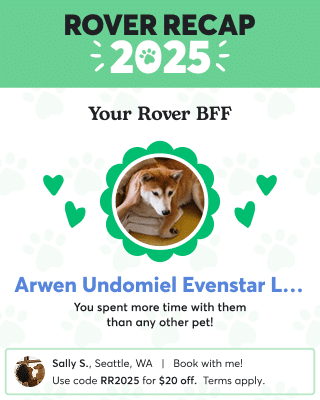
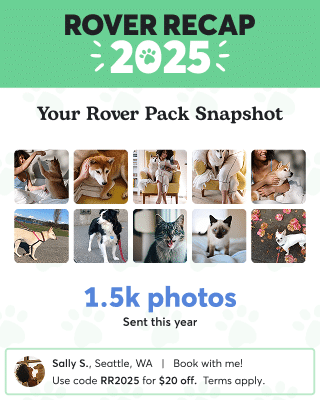
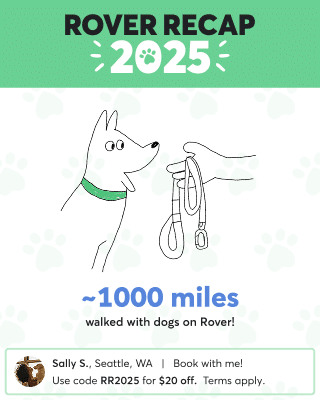
All the images ended up looking amazing and we saw great reception from the Sitters that interacted with Rover Recap. The images were the following:
 |
 |
 |
 |
 |
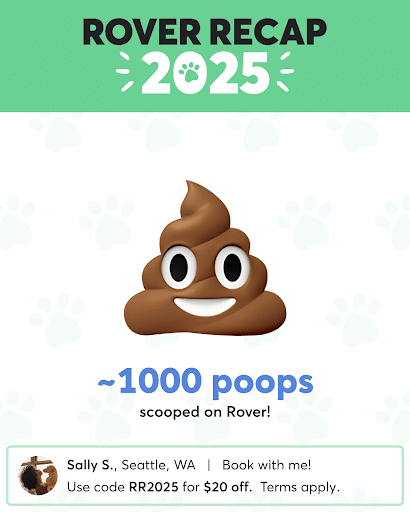 |
In the end the most shared images ended up being the first with general stats for the sitter and also our favourite the image with “poops scooped” metric, confirming what the original Poop Scoop team from Maker Days believed, Sitters want to share how much poop they have scooped.
Rover Treats and Rover Recap are one of the multiple examples of how ideas from engineers are fostered during Maker Days and brought to life afterwards into our platform. Not every Maker Days project gets this far but this is a great example of how an idea about sharing poops made it all the way.
If you’re interested in working with us at Rover to further our mission to make it easier for people to have pet love in their lives, check out our Engineering Careers page.