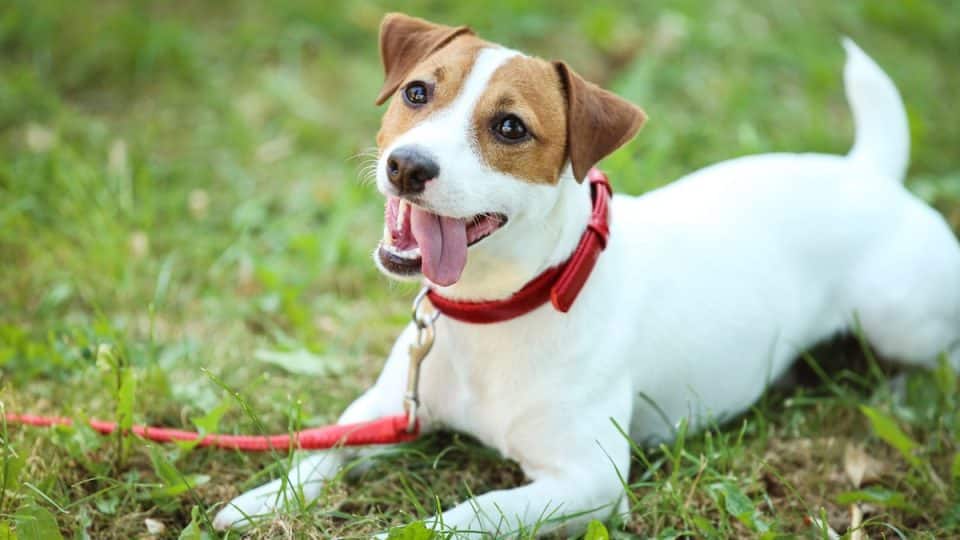
- Not a substitute for professional veterinary help.
Walking your dog is almost always a good thing, but there are times when a long stroll puts too much strain on a pup. If your dog is lagging behind, dragging their feet, or unenthusiastic about the leash, it might be a sign that it’s time for a checkup and modifications to your dog’s exercise schedule.
Sometimes dogs need shorter walks for temporary reasons, like seasonal extreme heat or cold, injury, or illness. Other times, a dog may slow down as a result of age or other long-term health concerns. In those cases, your pup may need more permanent adjustments.

But how do you know if your dog is good tired or too tired? We asked Dr. Kelly Yeo, a veterinarian and founder of The Canine Longevity Academy, how to tell and what to do about it.
10 Signs Your Dog Is Tired During Walks
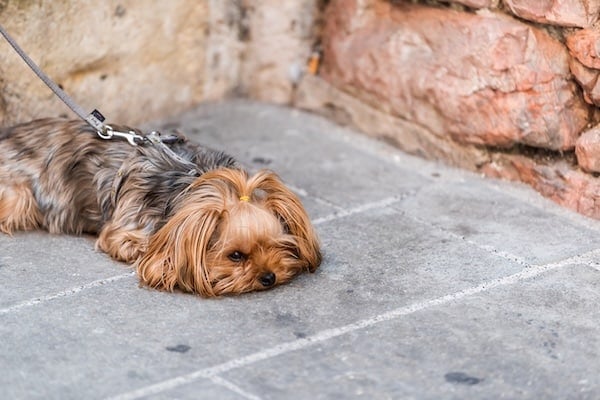
“A dog who is tiring may start walking more slowly, fall behind, stop repeatedly, sit or lie down, turn towards home, or resist continuing,” explains Dr. Yeo.
Exhaustion can also look like:
- Slowing down significantly
- Struggling to keep up at a normal pace
- Stopping repeatedly
- Sitting or lying down
- Heavy panting
- A short, stiff, or uneven gait
- Stumbling or limping
- Scuffing the paws on the ground
- A lower head or tail position
- Lack of interest in their surroundings
The more severe the signs of tiredness are—especially if you notice limping or stumbling—the more important it is to stop and give your dog time to rest, or even opt for a ride home.
When to see a vet
In some cases, you may want to consider heading straight to the vet. “Collapse, fainting, difficulty breathing, pale or blue gums, confusion, poor coordination, an inability to stand or signs of heat stroke require urgent veterinary care,” says Dr. Yeo. The same goes for a dog who can’t place weight on a limb.
Even if it’s not an emergency, signs of tiredness on a formerly easy walk are a good reason to schedule a checkup. A vet can help you identify any underlying medical causes that could be contributing to your dog’s tiredness.
krblokhin via iStock
Pre-Walk Indicators
Some of the signs that your dog isn’t up for a long walk start early—before you even head out the door.
Dr. Yeo explains what to watch for:
- Less enthusiasm when the leash appears
- Slowness to rise
- Stiffness after resting
- Reluctance to leave the house
You’ll also want to watch for any limping or sore paws, which can indicate your dog hasn’t recovered from the last outing.
Consider shortening your outing to a potty break and opting for mental enrichment, like scent work, puzzle toys, and snuffle mats.
Post-Walk Indicators
Many dogs hide their discomfort during a walk, or they don’t experience it until later. That means symptoms of strain and tiredness may not appear until you’re home. That’s why it’s important to evaluate a pup throughout the day, not just during your outing. Dr. Yeo notes that delayed symptoms are particularly common in dogs with joint and spinal concerns.
Watch for signs of tiredness like:
- Panting that’s slow to stop, even in a cool environment
- Exhaustion or lethargy
- Weakness
- Difficulty getting up
- Limping or stiffness
- Paw or joint licking
- Hesitation on stairs
- Reluctance to go out again
Kitty Bird via iStock
How To Tell Your Dog Walker Your Pup Needs Shorter Walks
If you’re seeing signs of tiredness in your dog, it’s important to communicate that to all the people who care for them—including dog walkers and pet sitters.
The clearer you are in your instructions, the better. “‘Give him a shorter walk’ is too open to interpretation,” says Dr. Yeo. “Instructions should be specific and preferably written down.”
Here’s what to make sure you tell dog walkers and pet sitters:
- Behaviors to watch for before and during the walk. Offer specific examples, like lagging behind or panting heavily. Dogs express tiredness in different ways, so specifics can help your dog walker spot problems.
- Establish clear signs to stop the walk. For example, if the dog sits down twice, ask your walker to head home and switch to an indoor play session.
- Clearly explain what you want walks to look like. A 30-minute walk may not need to include continuous walking. Your pup may want occasional breaks to lie in the shade or sniff through the grass. Make sure your walker knows what’s acceptable.
- Ask for more detailed post-walk reports in the Rover app. This helps you determine your next steps, whether that’s requesting shorter walks for your pup or trying alternative exercise.
- Ask for alternatives such as gentle play sessions, puzzle toys, and more. Sometimes a “dog walking” session requires no walking at all.
- Provide instructions for what to do in an emergency. Include contact details for your dog’s vet and how to get ahold of you.
If your pup typically walks with a pack, you may also want to find a walker who will take your dog out one-on-one. That allows them to better monitor your individual pup.
A script you can use
Not sure how to communicate what you need? Try something like this:
“Bella is slowing down in her old age, and her walks need to be adjusted. Please walk her for no more than 20 minutes on flat ground at a slow pace. Allow her to stop and sniff and to set the pace. If she lies down, allow her to rest for at least three minutes or until she gets back up herself. Please turn back if you notice her dragging her paws or limping.”
You can also call out things like:
- A dog who needs to wear booties for paw protection
- Alternative activities to do inside the house instead of a walk
- Requests for help monitoring
- Requests for an update after the walk
As Dr. Yeo noted, the key is to be specific, explaining your pup’s unique needs and behaviors so that they get the most out of each dog walking session.