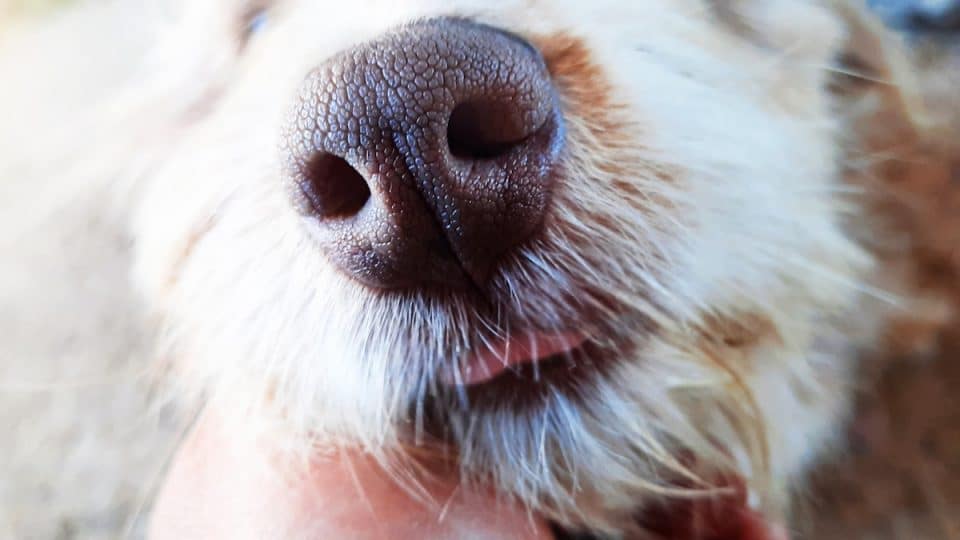
It’s well-known that dogs love to lick their favourite people, but did you know that some pets also enjoy nibbling their humans, too? Sometimes, dogs will gently gnaw on their guardians’ hands, legs, clothing, or hair. This behaviour is also known as “cobbing,” as it’s similar to how people eat corn kernels off a corncob.
It might seem odd, but nibbling isn’t usually cause for alarm. In most cases, nibbling mimics a natural grooming behaviour between littermates and is common during playtime. A pet who does this is likely expressing affection or is self-soothing. Alternatively, nibbling can be a form of communication—your dog may be trying to get your attention.
To find out more about this behaviour, we reached out to Dr. Gary Dattner, veterinarian, Cornell University College of Veterinary Medicine, and CVO of Tandem Vet Care. We also spoke with Nell Ostermeier, veterinarian and spokesperson for Figo Pet Insurance.
What It Means When Your Dog Nibbles You
Dogs nibble on people for a variety of reasons. The most common? To show affection and “groom” their humans, just like they would with another dog they feel close to. “Gentle nibbling is usually an expression of comfort and love, in a similar way to how dogs tend to rub up against one another in a pack to associate and bond,” explains Dr. Dattner.
While some dogs nibble to show contentment, it can also indicate negative emotions. “The dog may be trying to get your attention, the dog may be feeling super content and happy, or the dog may be anxious,” adds Dr. Ostermeier. To determine if a dog is nibbling from anxiety, look for body language signs like a tucked tail or wide eyes.
Cobbing may also be a sign that your dog is overstimulated and needs some space. “Other times, dogs will nibble their toys, blankets, or even their own bodies when they are self-soothing or keeping themselves busy,” notes Dr. Dattner.
And the simplest reason? “In some cases, it may be that the dog likes the salty flavour of your skin,” says Dr. Ostermeier.
Dogs Most Likely To Nibble
Although dogs of any breed or age can nibble, certain dogs are more inclined to this behaviour, including teething puppies, social breeds, and stressed pups.
Teething puppies
Since puppies have a natural tendency to explore their world via their mouths, nibbling is a common behaviour during this development stage. Teething puppies, in particular, are likely to gnaw on their humans to help relieve the pain from their sore gums. To prevent this behaviour, redirect your pup to a long-lasting chew or a frozen toy.
Breeds prone to nibbling
“Naturally social breeds, such as Retrievers or Spaniels, are more likely to have a greater tendency towards cobbing your body or items closely associated with you,” says Dr. Dattner. These dogs were also bred to retrieve and carry hunting game and may still carry with them some mouthy instincts.
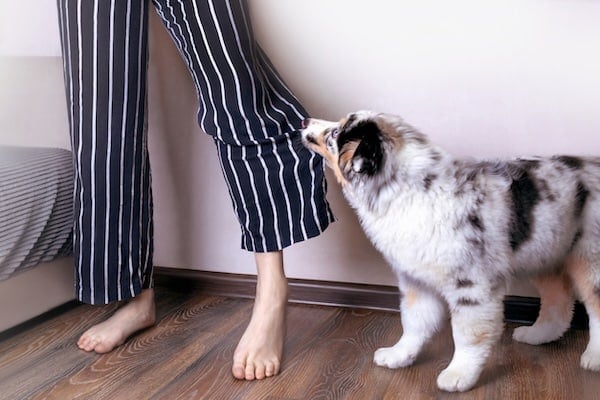
Herding dogs, such as Australian Shepherds and Australian Cattle Dogs, were also bred to move sheep and cattle along by nipping their heels and may still exhibit this behaviour toward their humans.
Stress response
Dogs who are anxious or easily over-aroused may also nibble to relieve stress or tension. If you think this may be the reason for your dog’s nibbling, closely observe when the cobbing happens. Is it during a frightening event like a thunderstorm? Or is it when your pup is in a high-arousal state, like when playing tug?
Ekaterina Ilchenko via iStock
Nibbling Vs Biting
There are two significant differences between nibbling and biting: the amount of pressure a dog uses and the intent behind the behaviour.
“Understanding these subtle, or not-so-subtle, differences can help owners respond to and engage with their dogs positively,” says Dr. Dattner.
With nibbling, a dog applies little to no pressure and gently uses their front teeth to gnaw. It’s typically a calm behaviour that doesn’t cause pain. A dog who is nibbling will also exhibit body language that’s relaxed or anxious, not aggressive.
Biting, on the other hand, usually involves more force on the dog’s part. They may use their back teeth to chomp down on a body part. The most common reason dogs bite is to warn another animal or person or to defend themselves from a real or imagined threat. Unlike nibbling, biting typically accompanies fearful or aggressive body language, such as growling, stiff posture, or pinning back the ears.
Nibbling is also different from mouthing, when a dog uses their teeth to touch or grasp, but without biting down hard. Mouthing is especially common in puppies as they learn about bite inhibition.
Should You Stop Nibbling Behaviour?
According to our experts, if your pet’s nibbling isn’t excessive or painful, there is no specific need to stop it. Plus, a teething puppy who nibbles may eventually grow out of it. However, if you don’t like the behaviour or it’s closer to a bite than a nibble, it may be worth addressing.
According to Dr. Dattner, the best way to stop dog nibbling is to:
- Redirect your dog’s attention to a chew toy or appropriate activity every time they nibble.
- Give them verbal praise after redirecting them away from nibbling you. “Each time your dog is nice and calm, praise them consistently, so they know what you are hoping for,” says Dr. Dattner.
- Teach your dog alternate behaviours, reinforce them with your dog’s favourite rewards, and attach a cue to them. “It will also be helpful to teach some basic commands, such as ‘leave it’ or ‘gentle,’ as these have the purpose of helping your dog control their mouths,” Dr. Dattner adds.
- Stay calm as you work on changing your dog’s behaviour. Responding negatively or angrily could cause a dog to become more anxious and increase the nibbling behaviour.
Dog nibbling doesn’t have to be a big deal, though. If it’s not a problem for you, then it’s not a problem, and you can keep on enjoying your dog’s nibbles of affection!