Travelling is a fact of life. And sometimes, we need to travel without our dogs. For pet parents who are preparing for a sitter, some simple steps can help ensure a positive experience and reduce anxiety—yours and your pup’s.
To help you prep and write the best pet sitter instructions, we’ve interviewed veterinarian Dr Nell Ostermeier. Here’s a checklist for communication, getting your dog ready, and prepping your home. Boarding your pup? No worries—we’ve got a checklist for you too.

Preparing Your Dog for Their Sitter
When preparing your dog for the sitter, it’s best to tailor your approach to your dog’s needs. Dr Ostermeier recommends that pet parents try to stay calm before leaving and while packing. Your dog will pick up on the extra activity, and if they sense you are nervous, this could heighten their own anxiety.
Some of your pre-trip activities could include:
- Exercise your dog
- Preparing your dog’s space (if anything will be different)
- Getting out any favourite toys
- Making sure to have enough food on hand, plus extra for emergencies
- Refilling prescriptions
- Spend quality time with your dog before you go
- Be sure your dog sees you and your sitter interact in a positive way and that your dog gets to interact with the sitter (consider scheduling a meet and greet ahead of time)
How To Write Dog Care Instructions for a Pet Sitter
Even for experienced dog sitters, a checklist can be the most helpful tool for facilitating a good experience that meets everyone’s expectations. A checklist provides basic instructions for a dog sitter in a clear, concise format. According to Dr Ostermeier, a good dog sitter checklist includes the following information:
- Feeding instructions, including how much to feed and your pup’s meal schedule
- Instructions for walks, including how long, how far, and how often you usually walk
- Instructions for playtime, with notes about what toys and chews they like
- Emergency contact information
- Instructions specific to your dog, like any medications, behavioural issues, or preferences

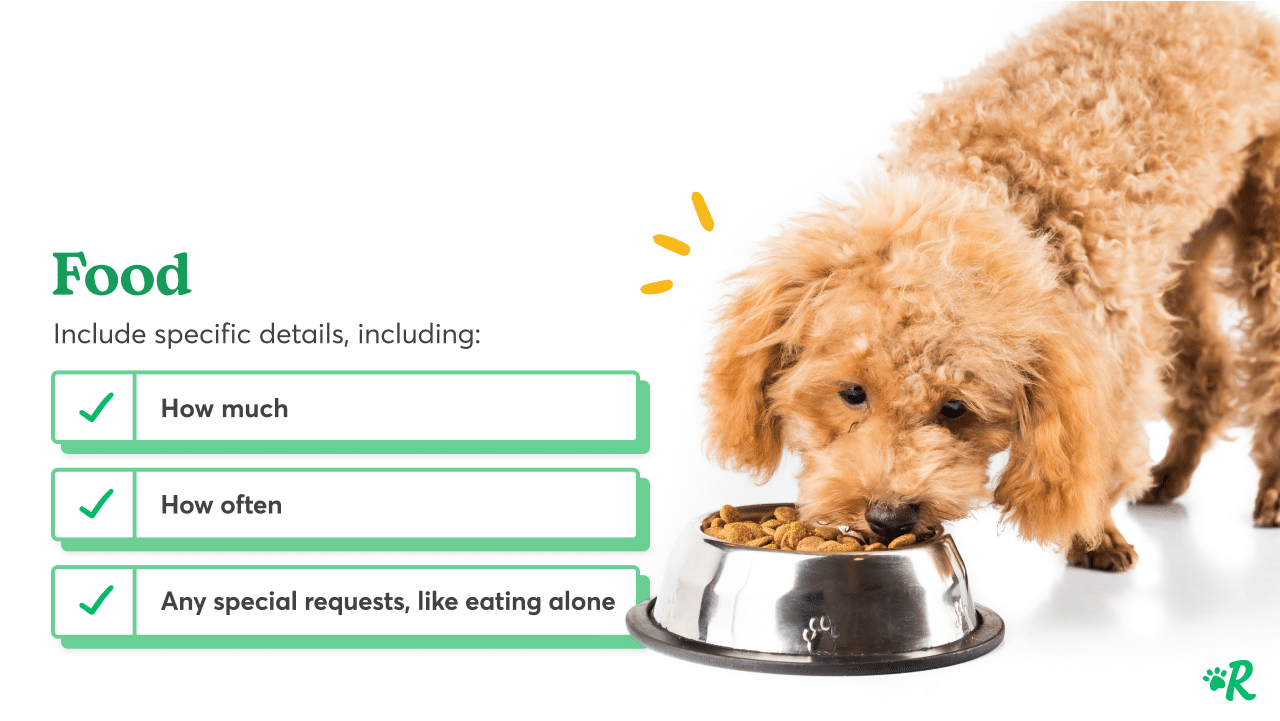
1. Include feeding schedule and instructions
Feeding information is one of the most important things to provide your sitter. Dogs can be extraordinarily sensitive, and keeping their feeding on its regular schedule can reduce their anxiety about you being gone.
In addition to the basics like how much and when, tell your sitter:
- If your dog has any allergies or food sensitivities
- What dog treats they can have and how often
- Anything your pup is prone to eating or getting into that they shouldn’t
If you have multiple dogs who eat different foods, make sure the containers are labelled and instructions are specific.
2. Write down your dog’s exercise and playtime routines
Maintaining a semblance of your dog’s regular schedule can be a big help in the transition to life with your sitter. According to Dr Ostermeier, explicit instructions about walks and playtime are a key part of that. Make sure to write instructions that cover:
- When and how long your dog typically walks
- Your dog’s lead skills and their temperament with other people and dogs
- What play spots your dog typically visits, like dog parks or day cares
- Instructions for driving with your dog
- Your dog’s favourite toys, activities, and games
The latter is especially important, since it helps your sitter not only keep your pup happy but also start to create their own bond.

3. Highlight emergency contact information and use cases
Consider whether there will be times when you may not be available during your trip, including due to poor phone signal. Designate a local alternate—and let them know their role—so your sitter always has someone to reach out to.
Also include:
- Your regular vet
- Your regular groomer (for long stays)
- A local 24/7 emergency vet you trust (for home stays)
Dr Ostermeier says it’s also a good idea to reach out to your vet ahead of time to let them know what types of decisions your sitter is authorised to make in your absence, should an emergency arise. Some vets (and all insurers) will require a letter of authorisation granting them advance permission to submit your dog for care in your absence.
4. Describe your dog’s unique quirks and needs
Use this section to relay specific instructions unique to your dog’s care. These could include:
- Ongoing health treatments
- Specific behaviour quirks or reactivity
- Your dog’s sleeping arrangements
Whatever your situation, err on the side of “too much” instead of “not enough.” To help your sitter navigate the list, structure it so headings and key details are easy to spot.

5. Inform the sitter about ongoing training and socialisation
If you’re working with your dog on certain behaviours or in the process of training or socialisation, tell your sitter about them. That way, they can help maintain boundaries, reinforce good behaviours, and practise getting out and about. You could include:
- Boundaries you’re working to teach your dog, like staying off the sofa
- Cues you’re in the middle of teaching, like stay, touch, or down
- Where you are in your puppy’s socialisation checklist
Do care instructions differ when you are boarding your dog?
If you’re getting ready to board your dog either at a sitter’s house or in boarding kennels, Dr Ostermeier recommends creating your own checklist that helps you determine what to pack.
If you’re going to a boarding facility, be aware of any restrictions on what your pup can bring. Take into account supplies for any extra activities you’re paying for, like playtime, pool time, or nighttime walks. Plus, consider needs specific to your dog if they’re reactive, anxious, a puppy, or a senior.
You’ll also need to be aware of the vaccinations they need. If you have a young pup, be aware that they legally cannot stay in a boarding kennel unless they’ve had their DHPP vaccinations for longer than two weeks. Many will also request recent proof of deworming and jabs for kennel cough.
Tips on Preparing the House for a Pet Sitter
As you prep your house for the sitter, a checklist can help you stay organised. In general, you should think about the following things:
- Have a clean space for your sitter to stay, with clean sheets for overnight sitters
- Be sure the fridge and cupboards have the necessary items
- Set the temperature to a reasonable level and offer instructions to modify it
- Take care of necessary maintenance (taking out the rubbish, repairs, watering houseplants, etc.)
- Leave written pet sitter instructions in an easy-to-find place
- Have your dog’s toys, bedding, and food available and ready
How To Write House Care Instructions for a Pet Sitter
If you’ve opted to have a sitter stay in your home, they’ll also be responsible for looking after your house while you’re away. Having a checklist that your sitter finds reasonable and agrees to in advance is important for setting clear expectations. This checklist will likely include:
- General household tasks
- House safety
- Emergency contacts and procedures
- Extra items (that may warrant additional compensation)
Remember, if you’re going to ask your sitter to do extras—vet or grooming appointments, or playdates that are above and beyond, for example—be sure to communicate this clearly as you negotiate compensation with your house sitter.

redonion1515 via iStock
Sitter Communication
Good communication is paramount to success before, during, and even after your dog’s stay with a sitter. Ideally, you are starting a long-term relationship with someone who will care for your pet over the years.
- Prior to the stay, your sitter should have clear expectations and instructions. You don’t want to surprise them with extra responsibilities. If possible, schedule a time to meet the sitter and your dog to help them get acquainted and to have a one-on-one discussion about the sitter’s role. Lay out expectations and hear any concerns or requirements they have. Begin to prepare your checklists with your sitter’s input.
- Let your sitter know how you want to communicate while you are away. If you want to check in daily, let them know. Similarly, let them know the situations that would warrant a phone call or text from them. If anything changes with your schedule, be sure to communicate that clearly so that you and your sitter can make additional arrangements.
- After your stay, let your sitter know how much you appreciate them! A grateful message and glowing review can go a long way to establishing a good relationship. The more your sitter comes to stay, the more comfortable your dog will become having them in the house. A strong bond will help to reduce both your and your pup’s anxiety about your travel.
Further Reading
- Dos and Don’ts of Hiring a House Sitter for Your Pets
- When Is the Best Time To Book a Holiday Pet Sitter?
- Green Flags: 7 Signs To Look for in a Good Pet Sitter