For centuries, dogs have been more than just loving companions. Their intelligence, strength, and keen senses have allowed them to assist humans in many ways—from saving lives during war to protecting livestock to providing therapy.
The term “working dog” refers to canines assigned to specific tasks to aid humans. Over time, particular breeds have become known as “working dogs,” with instincts and personality traits that allow them to excel in their roles.

“Working breeds range from the Australian Shepherd to the Siberian Husky,” says GoodVets Medical Director Dr Jordan Beauchamp. “You’ll find different personalities across the board with working dogs, so it can be helpful to understand their traits to see if your lifestyle matches.”
Whether you’re considering a service dog or looking to adopt a working breed as a household pet, this guide explores what to expect from these incredible canines.
15 Most Popular Working Breeds
Though working breeds range in shape and size, they all share impressive intelligence, loyalty, energy, and trainability. Certain breeds, such as the Belgian Malinois, prefer some independence while fulfilling their task. Others, like the Border Collie, prefer their human or handler to be with them at all times.
Popular working breeds include the following.
1. German Shepherd (a.k.a. Alsatians)
This working dog breed wears many hats! From assisting law enforcement to herding animals to aiding individuals as a service dog, the German Shepherd is a strong, intelligent, and loyal companion.
These obedient and cooperative dogs love to please their owner, responding well to training and challenges. Well-socialised German Shepherds are friendly with children and benefit from having plenty of space to run and roam.
Breed Overview:
- Coat type: Medium-length, double coat
- Colours: Black, grey, sables, white, liver, blue, or a combination of black and cream, red, silver, or tan
- Height: 60-66 cm (24-26 inches) male, 56-60 cm (22-24 inches) female
- Weight: 30-40 kg (65-90 pounds) male, 23-32 kg (50-70 pounds) female
- Trainability: Highly trainable
- Best for: Experienced, active individuals and families with older children and plenty of free time and flexibility
2. Labrador Retriever
There’s a reason that Labs are such a sought-after companion! With their playful, loyal, and easygoing natures, they make for great family dogs. As a hunting breed, you might notice that your Labrador Retriever enjoys chasing toys and bringing them back to you. Get ready for lots of fetch!
This breed is more than just a fun furry friend, as demonstrated by Billy and Vinnie, two amazing Labradors who helped to sniff out potential explosives after the 7/7 London bombings.
Breed Overview
- Coat type: Thick, double coat
- Colours: Black, chocolate, yellow
- Height: 57-62 cm (22.5-24.5 inches) male, 55-60 cm (21.5-23.5 inches) female
- Weight: 29-36 kg (65-80 pounds) male, 25-32 kg (55-70 pounds) female
- Trainability: Highly trainable
- Best for: Active families with time to exercise and engage their lab
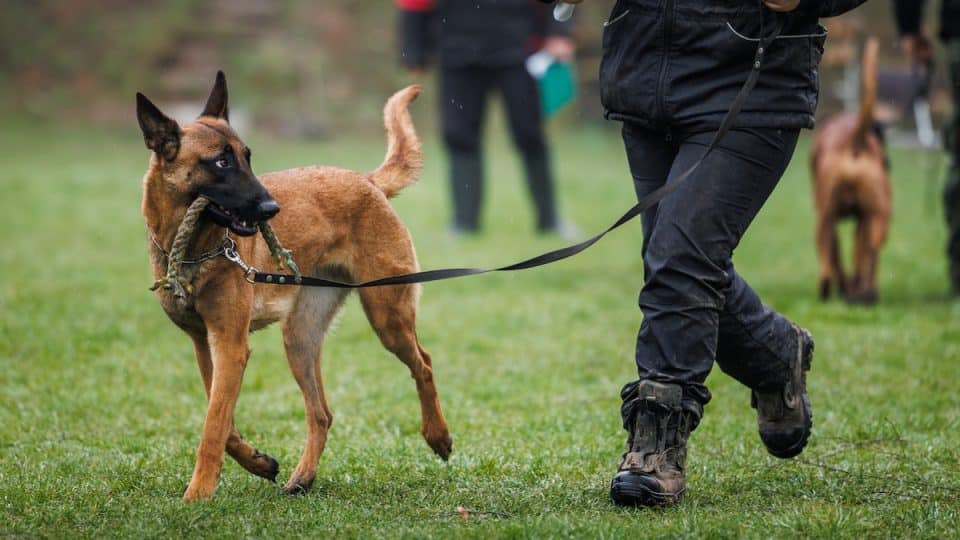
3. Belgian Malinois
The Belgian Malinois is a common breed in police and military work. Though very independent, these clever canines can respond well to training that starts early. They look to their favourite human for leadership and can be protective of those in their household. Their knack for herding and detecting means they also require plenty of exercise.
Several Belgian Malinois have won the Honorary PDSA Dickin Medal — essentially the Victoria Cross for animals and the highest award an animal can win during military conflict. For example, a Belgian Malinois called Kuno won the medal in 2019 for “tireless bravery and devotion to duty” during a special British Army military operation in Afghanistan.
Breed Overview
- Coat type: Short, straight double coat
- Colours: Fawn, mahogany
- Height: 61-66 cm (24-26 inches) male, 56-61 cm (22-24 inches) female
- Weight: 27-36 kg (60-80 pounds) male, 18-27 kg (40-60 pounds) female
- Trainability: Highly trainable but requires constant stimulation
- Best for: Experienced handlers with the time, energy, and focus to deal with a dog who wants to work 24/7 and needs 2 hours of daily exercise in all weathers
4. Golden Retriever
Often deemed “man’s best friend,” the popular Golden Retriever is gentle, kind, people-pleasing, and loyal. Their hunting nature means they thrive with plenty of play sessions, and they’ll adore extra pets and praise when they bring their favourite ball to you.
Golden retrievers are popular as therapy and assistance dogs due to their affectionate, intelligent, trainable, and easy-going nature.
Breed Overview
- Coat type: Thick, double coat
- Colours: Black, chocolate, yellow
- Height: 58-61 cm (23-24 inches) male, 55-57 cm (21.5-22.5 inches) female
- Weight: 29-34 kg (65-75 pounds) male, 25-29 kg (55-65 pounds) female
- Trainability: Highly trainable
- Best for: Families with kids (although younger kids need supervision) who are around a lot of the time to ward off separation anxiety
5. Border Collie

Bigandt_Photography via iStock
These high-energy herding dogs will bring life to your household! They are known for being a cooperative dog breed (eager to please their humans) and are happiest getting lots of exercise.
Border Collies enjoy having a job and can become excessive barkers if they don’t have enough to keep them busy. They’re ideal for active hobbyists seeking a teammate rather than a pet.
Breed Overview
- Coat type: Thick, double coat
- Colours: A wide range, including black, blue, sable, red, lilac, gold, brindle, and different merle combinations
- Height: 48-56 cm (19-22 inches) male, 46-53 cm (18-21 inches) female
- Weight: 14-25 kg (30-55 pounds)
- Trainability: Highly trainable, especially for dog sports
- Best for: Active families with older or dog-experienced children, ample time for training, structure, and enrichment, and plenty of space to run around
6. Doberman Pinscher
Doberman Pinschers work well with humans, as seen by their frequent work as military and police dogs. They prefer an active lifestyle and a human who will give them plenty of attention. This cooperative breed is vigilant, watchful, and protective, but also desires plenty of pets, praise, and belly rubs.
The Allied forces used Dobermans regularly during World War 2, and the police or military still train them for work today.
Breed Overview
- Coat type: Short, smooth, shiny coat
- Colours: Rust and black, fawn, red, or blue, as well as white
- Height: 66-71 cm (26-28 inches) male, 61-66 cm (24-26 inches) female
- Weight: 34-45 kg (75-100 pounds) male, 27-41 kg (60-90 pounds) female
- Trainability: Highly trainable
- Best for: Families who want home protection but have plenty of time for cuddles, exercise, and enrichment. An absence of other dogs is a plus, especially if they’re the same sex – male Dobermans can experience aggression towards other males.
7. Great Pyrenees
Regal and independent, the Great Pyrenees is a gentle giant. Historically used for herding sheep and other livestock, these dogs are used to being around smaller creatures, making them fantastic pets in homes with small children. They are known for being observant, relaxed, and calm.
Breed Overview
- Coat type: Thick, weather-resistant double coat
- Colours: White
- Height: 69-81 cm (27-32 inches) male, 64-74 cm (25-29 inches) female
- Weight: 45 kg plus (100 pounds plus) male, 36 kg plus (80 pounds plus) female
- Trainability: Independent, slow to respond, and finds basic training boring, but great at working and protecting with limited guidance.
- Best for: Pet parents with plenty of room and a large, securely fenced back garden. Great Pyrenees are good family dogs, seeing smaller pets and children as the flock they’re protecting.
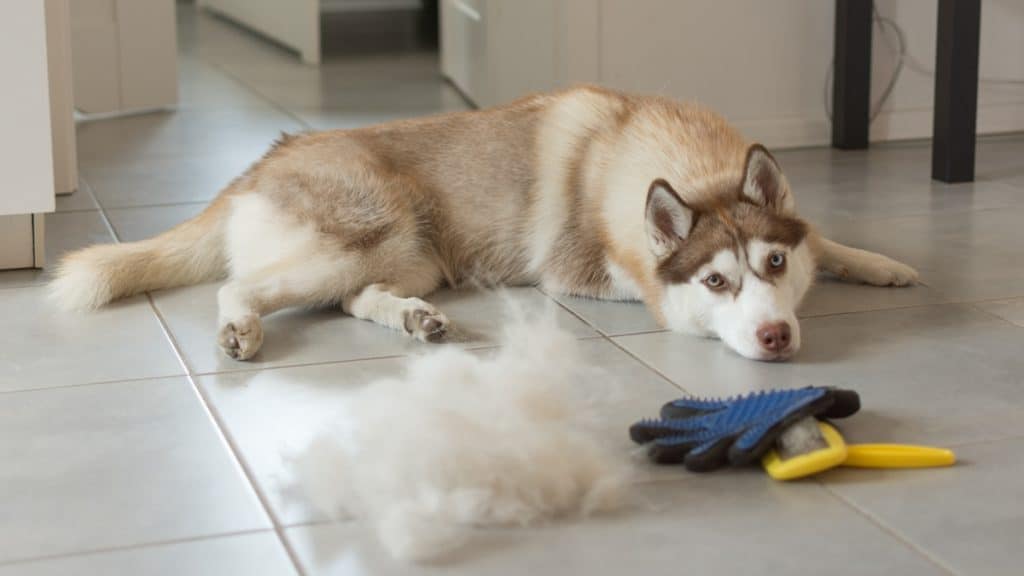
8. Siberian Husky
Inna Dodor via iStock
Bred as a sled dog, the Siberian Husky thrives on exercise and socialisation. They are the perfect blend of independent and cooperative, as they don’t mind a bit of alone time, but also enjoy the company of humans and pets.
Since their sled-dog background makes them quick and agile, the Husky can become quite the escape artist without the right safety supplies, such as a reliable harness and fencing.
Breed Overview
- Coat type: Two main types: medium-length double coats or longer, thicker woolly coats
- Colours: White and agouti, black, grey, red, sable, brown, and black, or purely white or black
- Height: 53-60 cm (21-23.5 inches) male, 51-56 cm (20-22 inches) female
- Weight: 20-27 kg (45-60 pounds) male, 16-23 kg (35-50 pounds) female
- Trainability: Highly trainable for specific tasks, but training in harness for sledding tasks needs hours of dedicated training
- Best for: Runners, cyclists, or experienced hikers who can burn off the husky’s near limitless energy daily. People with large gardens, other dogs (for socialisation), and secure fencing can make successful husky parents, as well as those who are around lots during the day.
9. Bloodhound
No one can sniff out a scent like a Bloodhound! Often used in search-and-rescue missions or other detective work, this incredible canine tracks with its nose. As a household pet, the Bloodhound can be affectionate and loving, as well as stubborn and independent.
Disney lovers might recognise this dog in animated form as Bruno from “Cinderella” and Trusty from “Lady and the Tramp.”
Breed Overview
- Coat type: Short, dense, smooth coat
- Colours: Black and tan, liver and tan, red
- Height: 64-69 cm (25-27 inches) male, 58-64 cm (23-25 inches) female
- Weight: 41-50 kg (90-110 pounds) male, 36-45 kg (80-100 pounds) female
- Trainability: Quite trainable, although bloodhounds can be independent and stubborn
- Best for: People who enjoy hiking and those with the time and patience for sniff walks, as well as those who don’t have immediate neighbours (so, keeping a bloodhound in a flat is a no-go – they have a powerful, baying vocalisations)
10. Akita Inu
Fiercely loyal, the Akita Inu is a common service and therapy dog. Like other therapy pets, these dogs visit hospitals, schools, and retirement homes to help relieve stress and bring happiness to the community.
One of the most famous Akita Inus is Hachiko, who waited around the same train station for nine years, hoping to reunite with his human.
Breed Overview
- Coat type: Dense double coat
- Colours: A wide variety, including black, fawn, red, white, brown brindle, and white, as well as sometimes having a black overlay or different colored undercoats
- Height: 66-71 cm (26-28 inches) male, 61-66 cm (24-26 inches) female
- Weight: 20-27 kg (45-60 pounds) male, 16-23 kg (35-50 pounds) female
- Trainability: Highly intelligent but very stubborn
- Best for: Dog-experienced households with no other dogs and pet parents. Homeowners will likely have an easier time housing an Akita than renters, as they often pop up on lists of breeds that are banned by some insurers and managed properties due to their bite strength and guarding tendencies.
11. Rottweiler
Though Rottweilers often appear menacing in TV and movies, this misunderstood dog can be a loving addition to the family. Rottweilers are highly protective due to their innate guard dog instincts but can be gentle when socialised with people and other dogs.
This intelligent breed also aids police officers and is highly receptive to training.
Breed Overview
- Coat type: Short, coarse, dense, flat topcoat
- Colours: Black and rust, black and mahogany, or black and tan
- Height: 61-69 cm (24-27 inches) male, 56-63 cm (22-25 inches) female
- Weight: 43-61 kg (95-135 pounds) male, 36-45 kg (80-100 pounds) female
- Trainability: Highly trainable, but some can be stubborn and require assertive leadership. Avoid roughhousing to discourage aggression.
- Best for: Dog-experienced families with structure who aren’t easily intimidated by large dogs. They’re ideal for those outside of very hot climates, as they don’t do well with heat, and for those who own property outright (they’re on many “banned breed” lists for insurers and landlords).
12. Anatolian Shepherd
Traditionally taught to protect livestock on the farm, the Anatolian Shepherd is a strong, loyal, and independent dog. Their stubborn streak may make training a difficult task, but with time and patience, an Anatolian Shepherd will come to trust and love their human.
Breed Overview
- Coat type: Thick, weather-resistant double coat
- Colours: Various shades of fawn, liver, white, brindle, and biscuit and white
- Height: 74 cm (29 inches) male, 69 cm (27 inches) female
- Weight: 50-68 kg (110-150 pounds) male, 36-54 kg (80-120 pounds) female
- Trainability: Anatolian Shepherds are bred for independent decision-making to protect the flock, making it challenging for them to follow cues.
- Best for: People with livestock. Some people have them as pets, but farmers, ranchers, or individuals with many acres of livestock to protect will likely be the best-suited pet parents for an Anatolian Shepherd. Secure fencing is a must. They’ll work best in homes without much foot traffic, as they are naturally suspicious of strangers.
13. Australian Cattle Dog
Bred to herd cattle, this stunning canine is best known for its high energy, sharp mind, and love of herding—even humans!
They require lots of physical and mental exercise, so it’s important to give them plenty of space to roam, as well as plenty of time to play. When in the right home, the Australian Cattle Dog is a devoted companion.
Breed Overview
- Coat type: Short, dense, weather-resistant double coat
- Colours: Blue or red mottled or speckled
- Height: 46-51 cm (18-20 inches) male, 43-48 cm (17-19 inches) female
- Weight: 16-23 kg (35-50 pounds)
- Trainability: They’re highly intelligent but are only really happy when working. This means they need constant engagement or can become bored and destructive.
- Best for: Outdoor adventurers who love mountain biking, trail running, or hikes in unforgiving terrain. This is a particularly good dog for experienced, solo pet parents, as they tend to pick a favourite person. They’re generally better for kid-free households, as they have a strong urge to herd running children.
14. Australian Shepherd

iStock/Eudyptula
Like the Australian Cattle Dog, the Australian Shepherd is a herder through and through. They also require lots of exercise and mental stimulation but are eager to please their human through training.
Breed Overview
- Coat type: Weather-resistant double coat with a dense, soft undercoat and moderate-length, straight-to-wavy topcoat
- Colours: Black, blue merles, red, or red merle
- Height: 51-58 cm (20-23 inches) male, 46-53 cm (18-21 inches) female
- Weight: 23-29 kg (50-65 pounds) male, 18-25 kg (40-55 pounds) female
- Trainability: Highly loyal, intelligent, and trainable. Training is necessary to channel their high energy and keep them occupied.
- Best for: Active families who enjoy outdoor activities can engage Aussie Shepherds through agility, hiking, and Frisbee. Households with older kids who can participate in training and play without being overwhelmed by the Aussie Shepherd’s herding instincts are most suitable. Having a garden can also nourish the Aussie Shepherd with ample opportunities for outdoor exercise.
15. Cane Corso
The Cane Corso (also known as the Italian Mastiff) is a wise and faithful companion. Though they boast a muscular appearance that can be seen as intimidating, these dogs are affectionate and devoted. With experience ranging from farm dog to military dog, this breed loves physical activity!
Breed Overview
- Coat type: Short, smooth, dense, double-layered coat
- Colours: Black, blue merles, red, or red merle
- Height: 58-70 cm (23-27.5 inches) male, 60-66 cm (23.5-26 inches) female
- Weight: 40-50 kg (90-110 pounds)
- Trainability: Intelligent and eager to please, making them highly trainable
- Best for: As a pet, the Cane Corso will be living their best life with an active family who will go for runs and walks aplenty.
Other popular working dogs
Great Danes, Newfoundlands, Schnauzers, and Bernese Mountain Dogs are other breeds commonly used in working dog roles.
But purebred dogs aren’t the only canines with talent to spare. Mixed breeds often share traits with their purebred counterparts and can excel as service, therapy, and search-and-rescue dogs.
While a shelter or rescue may not know your mixed breed’s lineage, a doggy DNA kit can shed insight into intrinsic traits and needs based on breed.
Common Jobs for Working Breeds
The jobs occupied by working breeds say a lot about their temperament and instincts. “Herding breeds, for example, are headstrong, loyal, and intelligent,” says Dr Beauchamp. “Guard breeds are protective, energetic, and may need extra practice with socialisation as they have less tolerance for things they don’t like.”
Over the years, common jobs for working breeds have included the following.
Service
According to the Equality Act 2010 in England, Wales, and Scotland, Northern Ireland’s Disability Discrimination Act 1995, and the entire UK’s Dangerous Dogs Act, a service animal is a pet that aids in a disabled person’s daily life and can attend any establishment open to the public with a disabled person.
This includes assisting the visually impaired, hearing impaired, those with PTSD, and those who experience seizures. Breeds like Golden Retrievers, Labrador Retrievers, and German Shepherds are popular service dogs.
Herding
Border Collies, Australian Cattle Dogs, Australian Shepherds, and other herding dogs were bred to herd livestock. Strong, agile, and quick-witted, these canines can display herding behaviours, such as chasing, staring, and barking. They are often wonderful family pets, though they require a lot of mental stimulation and exercise.
Detection or search and rescue
Bloodhounds, Beagles, and other hounds have an incredible sense of smell. These canines have a knack for detecting specific scents and odours, whether to help with the search for a missing person or to detect harmful substances with airport security.
Police & military
If you’ve ever seen breeds like the German Shepherd or Belgian Malinois working with law enforcement, they are likely on the clock as police dogs. These obedient canines are well-trained, loyal, and protective, and can assist police officers and military personnel. These dogs also have scent-detection abilities similar to those of search-and-rescue breeds.
-

niuniu via iStock

Hunting
Golden Retrievers and Labrador Retrievers were originally bred to locate, track, and retrieve game for hunters. As family pets, you may notice that these hunting breeds enjoy chasing things and bringing toys (or, unfortunately, prey) back to their humans.
Guard
Breeds such as the Rottweiler, Doberman Pinscher, Cane Corso, and Great Pyrenees are known as guard dogs, given their keen ability to detect danger. Their size can make them particularly intimidating to a home intruder, for example, but these loyal and protective breeds can be gentle giants among their families.
Sled
The Akita Inu, Siberian Husky, and other sled dogs are built with strength and determination. These breeds were once known for pulling sleds to transport people, supplies, and other goods. They hail from cold climates and are known for their energy, endurance, and speed.
-

24K-Production via iStock

Pros & Cons of Raising a Working Dog
Though working breeds share a history of close partnership with humans, their personalities can vary dramatically.
Dr Beauchamp offers the example of her beloved Border Collie. “We would run together daily, do training for mental stimulation, and work on sign language since she was deaf,” she shares. “Even with this enrichment, there were moments when I was in vet school where she would get restless and display OCD tendencies. Now, I have a Bernese Mountain Dog, another working breed, who is relaxed and chill. These breeds have very different needs.”
Adopting a former working dog, like a retired police dog, also comes with some challenges—and some big rewards.
Pros
“With strong working dogs, such as the German Shepherd or Belgian Malinois, comes a fierce sense of loyalty,” says Dr Beauchamp. “All dogs can love you, but there is an individualised affection with breeds that guard or protect. These pets connect with you at a deeper level.”
You might also enjoy:
- High trainability, especially for pet parents looking to try agility training, nosework, or dock diving competitions
- High energy, which can be a plus for pet parents looking for a workout partner
- A powerful bond, especially for guard breeds
- The satisfaction of giving a retired pup a good home, if you’re looking to adopt a retired working dog
Cons
“When raising one of these dogs, you will challenge them, but they’ll also challenge you,” Dr Beauchamp says. “It’s not always an easy thing for first-time pet parents. I would recommend having experience with dogs before adopting a working dog. Many breeds need extra work on socialisation, as they are extremely protective. Desensitisation training is also crucial if certain things from their job trigger them.”
You’ll want to carefully consider that a working breed might also mean:
- Mandatory training and socialisation, as a working breed without a strong training and social foundation can quickly become destructive
- Getting help from an experienced positive reinforcement trainer, who can work with you on any triggers or sensitivities an adult working dog may have developed from their job
- Maintaining an active lifestyle, with lots of time for regular exercise and enrichment
Companion Vs. Working Dog
While a working dog is trained for a specific role, a companion dog is your standard household pet (supplying you with emotional support and love aplenty!). If you’re adopting a working breed dog who is solely a companion, it’s still important to understand the breed’s traits to ensure your lifestyle is a match.
“Herding breeds, for example, are high-energy and very intelligent. If you live in the city and don’t have much time to spend on mental stimulation, or much space to let them roam, they can develop OCD tendencies,” says Dr Beauchamp.
“Your lifestyle and living situation should fit the needs of the dog to avoid these stressors,” she adds. “If it doesn’t, be prepared to make accommodations to provide them with the happiest and healthiest life they can lead.”
Rising to the Challenge of a Working Dog
Working dogs can thrive in the right household with a pet parent who is dedicated to training, staying active, and socialization.
“If you’re adopting a high-energy breed, taking them on a walk twice a day may not be enough. They may fare well with a family who takes them on runs and hikes too,” says Dr. Beauchamp. “They might also enjoy swimming, agility courses, and other activities that burn energy and allow for problem-solving play.”
Working breeds benefit from the following:
- Rigorous and advanced training (more challenging cues than “sit” and “stay”)
- Puzzle games and toys
- Hide-and-seek games
- Memory games
- Button training
- Mock herding events
- Agility courses
- Frisbee and fetch
- Swimming
- Daycare and other socialisation activities (though this can be a challenge for less social breeds)
“I also recommend looking into local breed-oriented organisations that might put on fun activities,” suggests Dr Beauchamp. “For example, some cities have events for Huskies, Bernese Mountain Dogs, and Alaskan Malamutes to pull sleds through the city. You would be surprised at the amazing events available if you look for them!”