Snow is rare in the UK, with only around 13 days a year according to the Met Office — significantly less than in many other places. But during February and March, it can come down pretty heavily. During blizzards and heavy snow, knowing how to keep your dog protected can be a lifesaver. Thick snow can hide potential dangers, dogs can fall through icy ponds, streams, or lakes, and they can wander into snow drifts that are too deep for them.
Plus, many dogs thrive in cold weather, but older, smaller, or thinner dogs may have a hard time, risking hypothermia and frostbite.

From practical matters like pet emergency preparedness in snow to indoor games that can keep your dog entertained without exposing them to the storm outside, here’s what you need to know about getting through a cold snap with your dog.
When Is It Too Cold to Walk Your Dog?
As every breed has a different cold tolerance, no single temperature is too cold for all dogs. However, hypothermia (a very low body temperature) and frostbite are very real risks in extremely cold or snowy weather. Dogs should maintain a normal body temperature of 37.7-39°C to avoid hypothermia. A dog will let you know they feel too cold with the following behaviours:
- Shivering, especially in short-haired or smaller breeds
- Being reluctant to head outdoors
- Seeking warm corners of the house, like on blankets, by the radiator, or in the sunlight
- Eating more and drinking less, which can lead to dehydration
- Increased self-grooming
While not all dogs have the same sensitivity to the cold, smaller, much younger, or older dogs may face a higher risk from freezing weather. Some breeds, such as flat-faced or short-coated breeds, may also have a significantly higher temperature limit than those with long, thick coats designed for chilly outdoor work, like Huskies.
Snow can pose a risk for body temperature, hazards, and visibility, but other aspects of cold weather can also lead to health problems. Heavy wind and rain can lead to hypothermia. Speak to a vet about the safest temperature range for your dog. If they have a health problem, such as arthritis or heart disease, extreme cold can worsen their symptoms. They may not be able to tolerate the cold for long, if at all.
How to Dress Your Dog for Cold Weather

iStock/Photoboyko
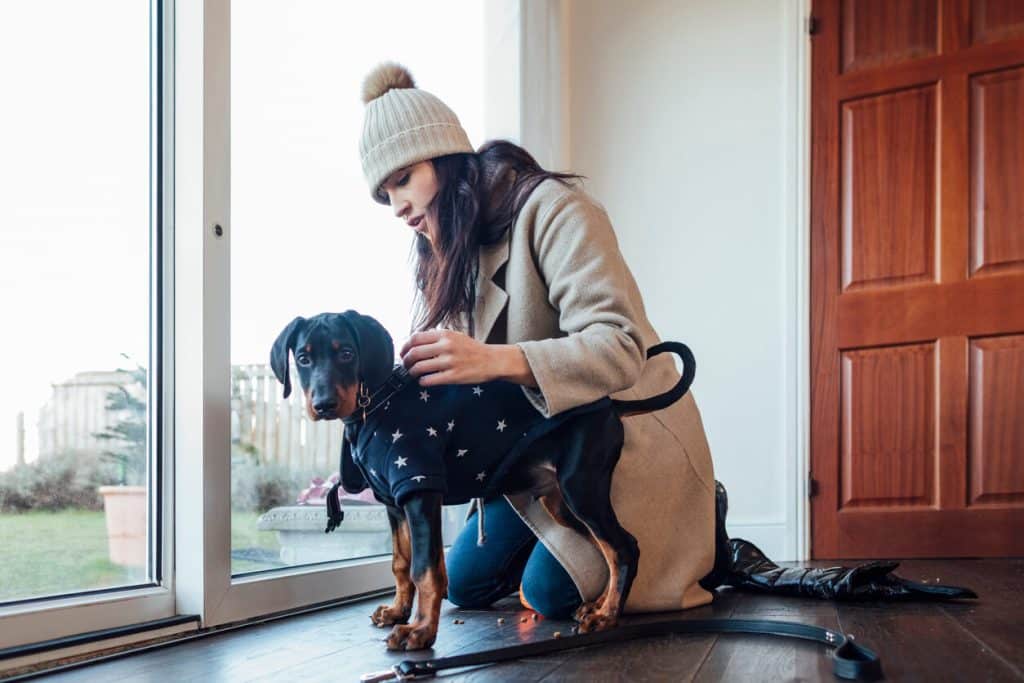
Some dogs are built for snowy weather, but if your dog has a short natural coat, not much body fat, or is older, they’ll need an extra layer during a snowstorm. This can help them stay active and stimulated while reducing the risk of getting too cold.
Here are a few basic necessities of snowstorm gear for dogs:
- Water-resistant coat to protect from cold and wet
- Booties or paw protectors
- Dog goggles
 to protect sensitive eyes from sun glare off the snow
From there, you can get as creative as you’d like (and as your dog will allow)! If your dog likes to dress up, you can have a lot of fun with winter fashion for dogs. If they’re not quite so fashion-forward, simply keeping them warm and safe is the order of the day.
Make Toilet Time Easy
iStock/SolStock
It’s a fact of life: dogs have to poo. But after a severe Met Office weather warning, you won’t want them to spend too much time outdoors. During the heaviest snowfall, plan on quick, in-and-out toilet breaks with your dog.
In addition to preparing your dog to go outside, you can prepare the outside for your dog:
- Shovel steps and walkways, and use a pet-safe grit or de-icer.
- Clear a patch of grass for your dog to poo and wee on. You may need to keep clearing as the snow continues to fall.
- If your pet is sensitive to snowfall, construct a temporary shelter over a section of the garden. Even a sheet of plywood leaning against the shed can offer enough space for your dog to do their business and keep their head dry.
The easier it is for your dog to find a place to wee or poo, the quicker your trips outside will be.
Walk Smart in Winter
Prepping for quick potty breaks is a great idea, but what if your dog still needs a longer walk? Dogs still need stimulation and exercise, even if there’s snow on the ground!
Before the walk
- Bundle up if necessary. You and your dog should be protected from the elements.
- Secure the lead! If you slip and fall, you don’t want to lose track of your dog. Consider using a hands-free running lead as a backup to your regular lead.
- Clip on a collar light or LED collar for your dog and a headlamp for yourself to stay visible while the snow falls.
- Use a hi-vis lead and coat to improve visibility.
During the walk
- Avoid frozen-over puddles and ponds. As much as possible, stick to cleared pavements, packed snow, or parks and fields where you know the terrain.
- If it’s actively snowing, periodically brush snow from your dog’s face and coat.
- Carry a rag to clear snow, salt, and sand from between your dog’s toes.
After the walk
- Use a damp rag to wipe down your dog’s feet, legs, and tummy. This will remove hitchhiking snow and ice, as well as salt, grit, and chemical de-icers used by council gritting trucks during snowstorms.
- Dry off your dog completely.
- Cuddle up under a warm blanket straight off the radiator or from the tumble dryer for extra warmth after a walk.
Winter Emergency Preparedness & First Aid
Nobody likes to think about accidents or injuries involving their pets, but preparing in advance will protect your dog in case of a winter emergency. Make a pet emergency kit now to be ready for any potential disaster.
Your basic pet emergency kit should include:
- Food and water supplies for at least five days
- Extra leash and collar set
- Medications and medical records stored in a waterproof wallet
- A pet first-aid kit and guide
- Up-to-date vaccination records, recent photographs, and vet contact information, laminated or stored in a waterproof bag
- A laminated copy of written information about your dog’s feeding schedule, medical needs, and behavioural issues in case you get separated during an emergency. This will help caretakers look after your pet until you can be reunited.
For winter emergencies, your kit may also include an extra dog coat, disposable booties, microfiber pet towels , paw and nose balm
 , and a hot water bottle.
Stay Warm and Have Fun Indoors
If it’s too cold for you out there, it’s probably too cold for your dog. Enjoy some romps in the snow, but remember to build in plenty of indoor time. There’s loads of stuff you can do indoors to entertain your dog:
- Work on obedience training
- Play indoor games like “hide the treat” and tug-of-war
- Use puzzle feeders and toys to make meal time more engaging
- Build an indoor obstacle or agility course
Of course, some dogs love to play outside in the snow, and a blizzard won’t slow them down! There’s nothing wrong with walking in a winter wonderland, so long as you make sure your dog is safe, warm, and tolerates cold well. If you notice her shivering, whining, or acting uncomfortable, head indoors right away.
With some cold-weather preparation and a positive outlook, you and your dog can make the most of heavy snow. Spring will be here before you know it, but for now, enjoy the snow with your best friend.