Cat eye discharge can show up in different ways: thin and watery, sticky and thick, or even crusty. You may notice secretions that are clear or cloudy, in a range of colours from yellowish to green or even brown.
The occasional bit of eye gunk isn’t cause for concern, but an ongoing watery or sticky eye warrants a call to the vet. “In general, there should be no discharge from either eye at any time,” says Dr Brad Holmberg, DVM, DACVO, a veterinary ophthalmologist at the Animal Eye Center of New Jersey. He says that mild, greyish discharge after waking is normal, but it shouldn’t persist throughout the day.

Dr Holmberg goes on to explain that eye discharge is a nonspecific symptom with links to various eye problems, including allergies, infections, blocked tear ducts, and debris trapped in the eye. Some of these conditions can get worse without treatment and may eventually cause discomfort or blindness.
The good news is that most feline eye conditions are treatable. Read on to learn more about common causes of cat eye discharge, their treatments, and when to call the vet.
Why Are Your Cat’s Eyes Watering?
While cats do have feelings, they don’t cry emotional tears like you do, says Dr Jessica Meekins, DVM, DACVO, a professor of veterinary ophthalmology at Kansas State University.
That means your cat’s eyes are watering for medical reasons, like one of the following conditions.
Conjunctivitis
According to Dr Holmberg, most cases of cat eye discharge happen due to conjunctivitis, an inflammation of the eye’s lining.
The main sign of conjunctivitis is red, swollen eyes. Dr Holmberg says rust-colored discharge is common, but this type of discharge can also happen with other eye problems, so it’s not a sure sign of conjunctivitis. This discharge can be either thin and watery or thick and mucousy.
Cats with conjunctivitis will also be sensitive to light, so you may notice a lot of squinting or blinking.
Many cases of conjunctivitis will improve without medication, but you’ll still want to take your cat to the vet. Your vet can rule out other conditions and prescribe antibiotic drops.
Blocked tear ducts
If you notice your cat has tear staining or tears flowing down their face, they may have a blocked tear duct. The tear ducts drain tears from your cat’s eyes to their nose and down the back of the throat. Obstruction of these ducts can lead to excessive watering of the eyes.
According to Dr Holmberg, a blocked tear duct may be an inherited condition in which a cat is born without one or both tear duct openings. More commonly, he says it’s caused by scarring from a past case of conjunctivitis. Occasionally, eye trauma or foreign material can also block the tear ducts.
Because of their facial anatomy, flat-faced cats like Persians and Himalayans are more likely to have blocked tear ducts.
Allergies
In rare cases, excessive tears and discharge may be due to allergies.
Cats with allergies will have some of the same symptoms you’d have with allergies, like sneezing, coughing, or a runny nose.
Dust mites, mould, pollen, cleaning products, and some medications may cause environmental allergies in cats.
If you suspect allergies, your vet can confirm a diagnosis and prescribe medications to make your cat more comfortable. To prevent allergy flare-ups, you can switch to pet-safe cleaning products and dust-free litter. Avoiding scented candles, incense, and perfumes that may irritate your cat can also help.
Foreign matter in the eye
If your cat has something stuck in their eye, you may notice significant squinting and redness. Dr Holmberg says discharge caused by foreign material in the eye is usually severe and pus-like, and it requires an emergency vet visit.
Upper respiratory infection
Eye discharge associated with an upper respiratory infection may be transparent or coloured. Additional signs include coughing, sneezing, nasal discharge, lethargy, and loss of appetite.
According to Dr Holmberg, feline herpesvirus and mycoplasma are the most common causes of upper respiratory infections. Both of these are highly contagious, so you’ll want to keep your cat away from other cats if you suspect they could have a respiratory infection.
It’s essential to contact a vet right away if you notice these symptoms. If untreated, these infections may progress to pneumonia, which can be life-threatening.
What About Eye Gunk?
Small amounts of dried crusty formations around the outer edges of your cat’s eyes are perfectly normal.
The colour of dried discharge can range from pale yellow to brownish or reddish-brown, depending on the presence of mucus, tears, dust, and other accumulated debris, says Dr Lauren Witter, DVM, a veterinarian at Small Door Veterinary.
Standard eye gunk
A cat’s tears contain water, oils, mucus, and antibodies—a combination that helps lubricate the eyes, flush out foreign particles, and prevent infections, Dr Witter explains. During sleep, these tears can collect in the corners of the eyes, forming gunk. Dr Witter adds that environmental irritants such as dust, pollen, and smoke may also stimulate tear production and increase eye gunk.
Generally, standard eye gunk is nothing to worry about.
“However, if the discharge is excessive, discoloured, foul-smelling, or accompanied by other symptoms such as redness, swelling, or squinting, it’s essential to consult a veterinarian for evaluation and appropriate treatment,” Dr Witter says.
Epiphora
Excessive tearing, or epiphora, is a symptom rather than a condition. You may notice dampness beneath your cat’s eyes or reddish-brown staining.
“This is most commonly seen with abnormal eyelid conformation, called entropion, where the eyelid rolls inward,” Dr Holmberg explains, adding that an abnormal tear duct can also cause epiphora.
Epiphora is more common in flat-faced breeds because their facial structure doesn’t allow for proper tear drainage. Typically, this doesn’t cause medical problems and is considered a cosmetic issue.
You can make your cat more comfortable by keeping the area clean and dry, and by wiping away tears and crusty deposits with a cotton pad dipped in water.

When To Ask A Vet About Cat Eye Discharge
While most cases of discharge are treatable, Dr Holmberg and Dr Meekins emphasise the importance of seeking veterinary care as soon as you notice an issue.
This is especially important if you notice other symptoms, like:
- Squinting
- Redness
- Cloudiness
- An increase in the amount of discharge
- Discharge that changes from clear to green or yellow
- Discharge that lasts for more than a few days
Bloody discharge is an emergency that requires immediate veterinary attention. It can be caused by trauma, a bleeding mass on the eye, or a systemic bleeding disorder, among other serious concerns, according to Dr Holmberg.
How To Manage Watery Cat Eyes At Home
According to Dr Witter, cat parents can gently remove eye crust at home with pet-specific eye wipes. “These wipes are made to be gentle and safe for use around a cat’s delicate eye area,” she explains.
When using wipes, Dr Witter recommends avoiding direct contact with the eyeball and using a separate wipe for each eye to prevent cross-contamination. If your cat becomes agitated, she recommends taking a break and trying again later.
If you have a particularly anxious cat who doesn’t like being handled, Dr Meekins advises against over-the-counter wipes or drops. She explains that many cats with watery eyes may be experiencing a flare-up of feline herpesvirus, which can worsen with stress.
“Most cats do not tolerate treatments with drops or wipes readily. Stressing them with non-prescriptive eye drops or wipes could make the symptoms worse or prolong them,” she says.
Most experts also advise avoiding over-the-counter drops, unless your vet recommends them.
How Do Vets Treat Cat Eye Discharge?
The treatment for cat eye discharge will depend on the cause. Some conditions will require vet-prescribed medications, such as antibiotic ointments, oral antibiotics, or decongestants.
Treating infections
It’s essential to get your cat’s care from a vet if it has symptoms of an infection, such as eye discharge.
Without treatment, eye infections can worsen. This doesn’t just make your cat uncomfortable—it can also cause complications, like corneal ulcers or vision loss, Dr Witter says.
If your cat has a bacterial infection, your vet may prescribe an antibiotic ointment. If your cat has a viral illness or a severe infection, they may need oral medication.
Dr Meekins emphasises that cats with conjunctivitis shouldn’t get topical steroid drops for inflammation. “The feline herpesvirus causes most conjunctivitis in cats, and steroids will make the viral flare-up worse,” she explains.
If you know or suspect your cat may have feline herpesvirus, tell your vet so they can recommend the most helpful treatment.
Treating allergies
You can manage discharge related to allergies by identifying the allergen and avoiding exposure. Dr Witter says this may involve allergy testing or a process of elimination.
To soothe irritation, your veterinarian may prescribe eye drops, ointments, or oral antihistamines or corticosteroids.
Dr Witter says your vet may suggest immunotherapy—or allergy shots—for severe or persistent allergies. “Immunotherapy involves administering small doses of the allergen over time to desensitise the cat’s immune system and reduce allergic reactions.”
Finally, you can make small environmental changes to reduce your cat’s exposure to allergens. “This may include using air purifiers, regularly cleaning bedding and surfaces, minimising outdoor exposure during peak allergy season, and avoiding known allergens as much as possible,” Dr Witter says.
Cleaning foreign materials from the eye
Sometimes, particles like dirt, dust, and sand can get trapped in your cat’s eye and cause discharge or tearing. You may also notice your cat squinting and pawing at their face.
If you notice debris in your cat’s eye, a vet can check for irritation, inflammation, or injury. They may apply a special dye that highlights any scratches, abrasions, or foreign objects on the cornea.
“If a foreign object is visible on the surface of the eye or trapped under the eyelid, the vet may use a sterile saline solution or another mild irrigating solution to flush out the object,” Dr Witter says.
They may need to use sedation or general anaesthesia to remove deeply embedded material. To prevent infection after removal, your vet may also prescribe oral or topical antibiotics.
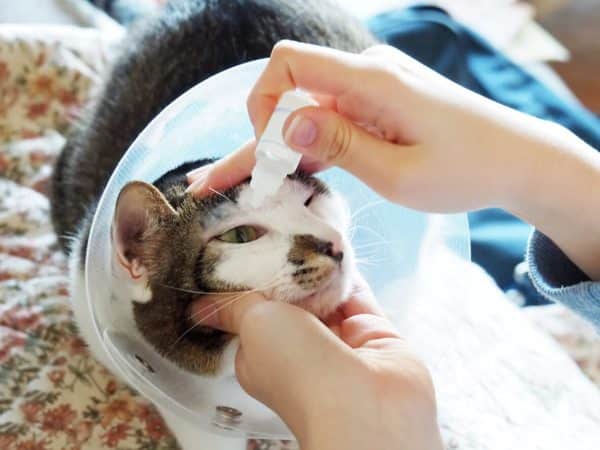
How to Give Eye Medications To A Wiggly Cat
Most cats have no interest in receiving eye drops or pills. But with patience and positive reinforcement, you may be able to get even resistant cats to cooperate.
Dr Witter offers the following tips for a smoother process:
- Stay calm and patient: Cats are sensitive and can easily pick up on your emotions. Dr Witter urges cat parents to avoid becoming frustrated, as this can heighten their cat’s stress levels.
- Minimise stressors: “Choose a comfortable and familiar location where your cat feels safe and secure,” Dr Witter says.
- Use gentle restraint: This may help prevent sudden movements. “You can use a towel or blanket to swaddle your cat, leaving only their head exposed for easier access to the eyes,” Dr Witter says.
- Use treats and positive reinforcement: This helps to create a positive association with the process. Dr Witter recommends offering treats and praise before, during, and after administering the medication.
- Ask for help: A wiggly cat is easier to manage if you have someone else who can hold them while you give the medication.
If you’re still having a tough time, Dr Witter recommends seeking help from a vet. “They can provide additional guidance and techniques to help make the process easier and less stressful for both you and your cat.”