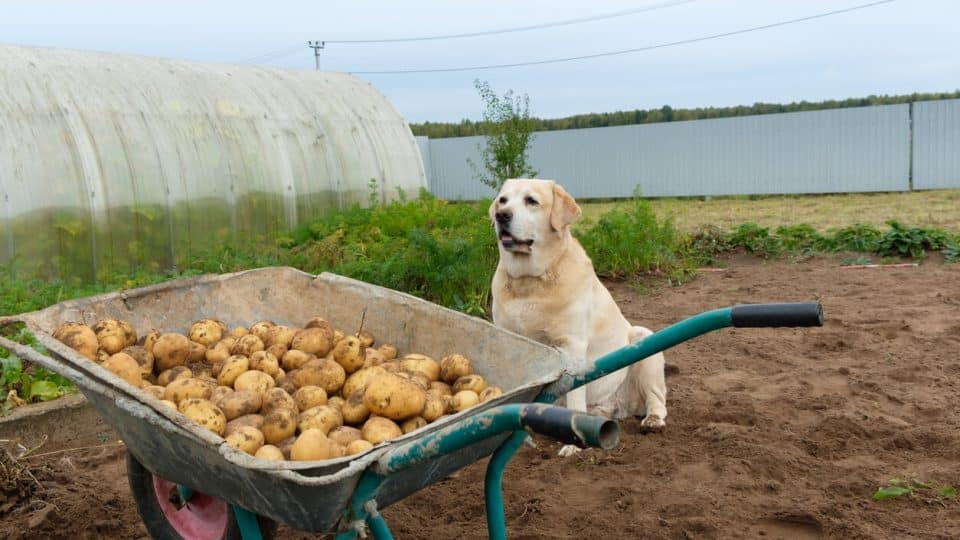
You’re enjoying your favourite mashed potatoes or chunky chips with your dog waiting nearby, eyes wide, tail wagging, clearly hoping for a bite. Should you share?

Potatoes are a common ingredient in many commercial dog foods and treats, and they’re safe for dogs to eat—but dogs shouldn’t eat all forms of potato.
Dogs should only eat potatoes in moderation, and the potatoes should always be cooked and unseasoned, according to Dr Bethany Hsia, veterinarian and co-founder of CodaPet.
Here’s what to keep in mind before offering your pup some of your spuds.
How To Safely Feed Your Dog Potatoes
If you want to give your dog some potato, here’s how to do it safely:
Make sure your dog is a good candidate
Potatoes have a high glycemic index, so they’re not a good food for dogs who are diabetic or overweight, says Dr Antje Joslin, veterinarian consultant at Dogtopia.
If your dog has any health issues, check with your veterinarian before offering potatoes as a treat.
Dr Hsia adds that even if your dog is healthy, it’s important to only offer potatoes as an occasional treat, not a daily staple. “A general guideline is that treats, including potatoes, should not make up more than 10% of a dog’s daily caloric intake,” she explains.
Choose a safe type and form of potato
Stick to small portions
When treating your dog to a piece of potato, follow these general serving suggestions:
- Toy dogs (5.4–9 kg or 12–20 lbs]): 1 teaspoon daily (approx. 5 ml)
- Small dogs (9.5–13.6 kg or 21–30 lbs]): 1–2 teaspoons daily (approx. 5–10 ml)
- Medium dogs (14–22.7 kg or 31–50 lbs]): 2–3 teaspoons daily (approx. 10–15 ml)
- Large dogs (23.1–40.8 kg or 51–90 lbs]): 1–2 tablespoons daily (approx. 15–30 ml)
- Giant (41+ kg or 91+ lbs): 3–4 tablespoons daily (approx. 45–60 ml)
Always mash the potato or cut it into pieces appropriate for your dog’s size to reduce the risk of choking.
Watch for any signs of intolerance
If you’ve never given your dog potato before, pay attention to any signs of vomiting, gas, bloating, or diarrhoea. These reactions suggest your dog doesn’t tolerate potatoes well.
If your dog appears unwell, contact your vet or an emergency vet for more guidance on what to do next.
Health Risks of Potatoes for Dogs
While plain, cooked potatoes can be an occasional treat, dogs shouldn’t eat all types of potatoes.
Dr Hsia says to avoid feeding your dog any of the following:
- Raw potatoes
- Green potatoes
- Fried potatoes
- Mashed potatoes with butter, garlic, onion, or milk
- Seasoned potatoes
- Crisps
- Chips/Fries
- Potato skins
- Any preparation with garlic or onion (raw or dried)
These types of potatoes can lead to a range of health issues, including:
- Choking hazards: Large potato chunks or tough skins can get stuck in your dog’s throat, especially if your dog is a small breed or eats quickly.
- Solanine toxicity: Raw or green potatoes contain solanine, a natural toxin that can cause severe gastrointestinal symptoms, lethargy, weakness, and confusion. Solanine is concentrated mainly in the potato’s skin and just beneath it. While solanine sometimes causes toxicity in dogs, they would need to eat a considerable amount to get sick. Still, it’s best to avoid giving dogs raw potatoes.
- Salt toxicity: Potatoes prepared with excessive salt can cause increased thirst, dehydration, and, in severe cases, salt poisoning.
- Digestive upset: Rich or greasy potato preparations, such as fried or buttered mashed potatoes, can trigger nausea, vomiting, or diarrhoea in some dogs, especially those with sensitive stomachs.
- Obesity: Fried potatoes or potatoes prepared with cream and butter have a lot of fat and calories, which can contribute to weight gain and increase the risk of obesity-related health issues over time. Even plain potatoes can add too many calories to your dog’s diet if you give them potatoes too often or in large amounts.
Can potatoes cause DCM?
Some pet parents worry about a possible link between potatoes in dog food and dilated cardiomyopathy (DCM). This concern stems from reports that grain-free dog foods, which often use potatoes or legumes as fillers, may be associated with DCM in certain dogs.
However, Dr Joslin says the exact link between grain-free diets and DCM in dogs remains unknown. If your dog’s food lists potatoes among the top ingredients and you have any concerns about DCM, Dr Joslin suggests asking your vet for more information.
What About Sweet Potatoes?
Dogs can eat sweet potatoes as long as they are thoroughly cooked and served plain. Like regular potatoes, sweet potatoes are another common ingredient in many commercial dog foods and treats.
Dr Joslin considers sweet potatoes to be healthier for dogs than white potatoes because they contain more fibre, have a lower glycemic index, and provide the added benefit of vitamin A.That said, only offer sweet potatoes as an occasional treat, and only after your vet gives their approval.