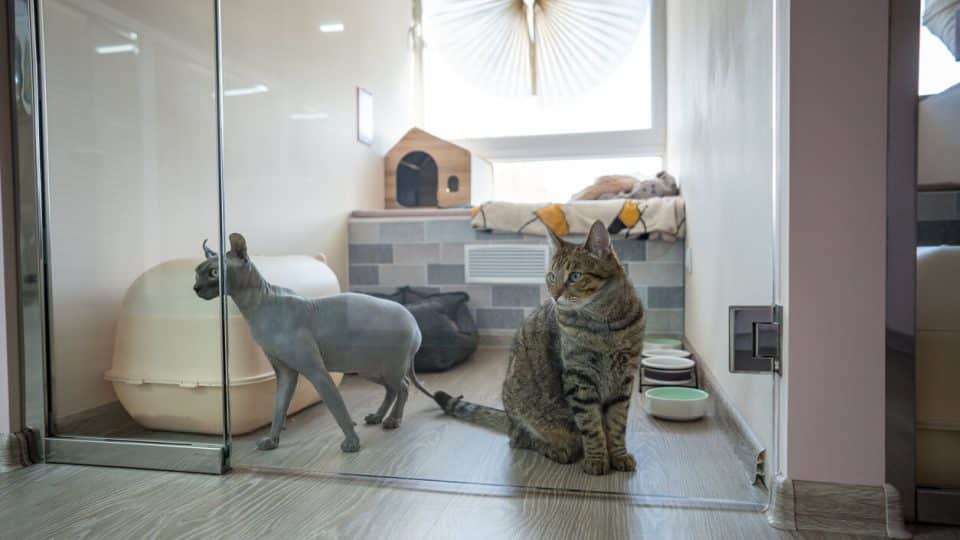
Deciding on the best care for your pet while you’re away isn’t always easy, especially when there are many options beyond kennels and vet clinics for boarding your cat or dog.

These days, many pet parents want tailored care that lets dogs enjoy home comforts and cats relax in a familiar routine. While commercial boarding kennels and luxury “pet hotels” still exist, home boarding (where your dog stays in a licensed sitter’s home) and house sitting (where a sitter stays in yours) have become the ideal choices for personalised pet care.
You may come across luxury kennels operating as “pet hotels,” framing themselves as an alternative to in-home pet care and kennel boarding. But are they the right fit for your pet? To help you decide, we cover the key differences between the two options. At the end of the day, the right care for your pet depends on their personality and unique needs.
Key Differences Between Pet Hotels vs. In-Home Pet Care
Cost is one of the main differences between luxury kennels, or pet hotels, and in-home pet care. That said, both options come in a range of price points, so the determining factor should be the level of trust and safety you feel.
| Aspects | Luxury kennels | House sitting | In-home dog boarding |
| Cost* | £17-£55 a night for cats £22-£75 a night for dogs (depending on amenities and “VIP” level of room) |
£31-£55 per night | £30-£50 per night |
| Supervision | On-site staff, but their attention may be divided among multiple pets | One-on-one care from a sitter staying overnight in your home | Overnight, long-term care in a sitter’s home |
| Socialization | Opportunities to socialise with other pets (may be an extra fee) | Primarily sitter interaction | Some sitters may be boarding other dogs or offering day care |
| Environment | New surroundings, typically designed for comfort | Comfort of your own home with familiar smells | A familiar home-like environment |
| Routine | Structured schedule based on facility operations | Your pet’s regular feeding, toilet, and play schedule | Personalised schedule based on your pet’s needs or sitter’s regular routine |
| Personalisation | Some customisation but generally follows facility-wide routines | Based on your instructions and your pet’s preferences | Some customisation, but there may be limitations based on the sitter’s location or other clients |
| Stress level | Some pets may experience stress from frequent sounds and unfamiliar smells | Pets who stay in a familiar environment may feel less stressed | Some pets may experience stress of being in a new environment |
| Ideal for | Social, adaptable dogs who enjoy new experiences and people | Shy or anxious dogs, senior dogs, dogs with complex routines or medications, and cats | Social, adaptable dogs who need more personalised attention |
| Less suitable for | Cats, dogs with separation anxiety, and dogs who don’t enjoy being around other animals | Dogs who have territorial aggression or struggle with new people in their space | Senior dogs who need a special set-up when boarded |
| Potential risks | Some pets may develop anxiety or illness during long-term stays | Often more expensive for extended stays, especially for live-in care | Harder to find long-term or with short notice |
*Costs do not include holiday prices. Many pet sitters on Rover charge less than £50 per night, but house sitting can get pricey when you’re trying to find a sitter in a big city or high-demand area, looking during the holiday season, or seeking a sitter for a pet who needs complex care. Some high-end sitters may charge as much as £200 per night.
Animal Activity Licences (AAL) for pet hotels and home boarders
When booking pet care in the UK, understanding the licence a place needs to operate can help you decide on both the type of accommodation you want for your pet and the particular service provider:
- Home boarders: Anyone boarding a pet in their home overnight as a professional service is legally required under the Animal Welfare Regulations to hold an AAL from their local council. Look for their licence number and star rating, which runs from 1 to 5 stars.
- Luxury kennels: All commercial kennels (yes, even the fancy ones) require an AAL and regular council inspections to ensure that your pet has adequate space and that hygiene and emergency procedures are on point.
- House sitters and dog walkers: These don’t require an AAL because care takes place in your own home. However, checking for insurance and up-to-date DBS checks can help you make sure a sitter or walker is reliable and protected in case of property damage, illness, or injury.
Do Pet Hotels or House Sitters Offer a Discount?
Both pet services may offer discounts for special circumstances, which can help you keep costs a bit lower for long-term stays. Luxury kennels might offer sibling or multi-night stay packages for a lower rate. Additionally, in-home sitters may offer a length-of-stay discount.
You usually won’t get a discount when booking services during the holiday season. In fact, you may even pay a little more.
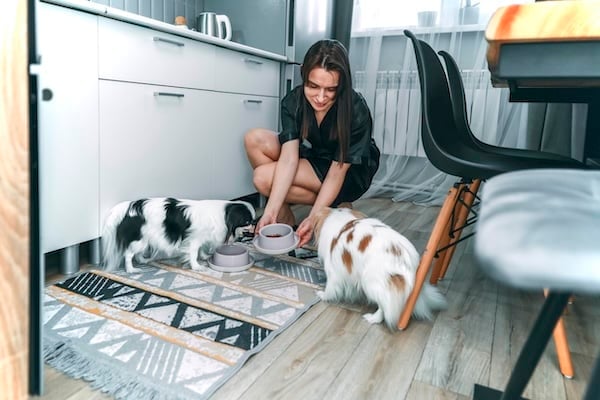
Which Service Is Better for Long-Term Pet Care?
If you have to leave home for more than a few weeks, consider how well your pet adjusts to different environments. Pets who adapt quickly may be okay in kennels, luxury or otherwise, for long-term care. However, most dogs tend to get stressed when left in a loud, kennel-like environment, which makes in-home boarding or house sitting a more comfortable option.
There is such a thing as “too long” in an unfamiliar environment. With Rover, you can stay local by finding pet sitters in your neighbourhood. Being close to familiar walking routes or preferred vet surgeries can be ideal for long-term stays.
Frequent travellers may also want to consider the impact of frequent stays in kennels on their pet. Cats and dogs need time to adjust to a new environment and to decompress upon returning. If your pet prefers routine and consistency, this may be a good reason to stick with in-home pet care.
Which Service Provides Better Personalised Attention for Pets?
In general, in-home pet sitters may provide more personalised attention because their business model is built on it. A sitter who stays in your home doesn’t have to pay attention to multiple animals, so they can just focus on your pet.
Pet hotels do offer personalised care, but you’ll pay extra for one-on-one time, as it’s typically not included in the hotel’s flat fee.
Benefits of personalised care include:
- Lower risk of stress & anxiety: Dogs who previously lived in shelters may experience less stress with in-home care than pet hotels.
- Familiar routines and environments: Some dogs—and most cats—may need to stick to familiar environments, routines, and people in order to feel relaxed. Regular routines and predictable environments, from consistent schedules to cuddle sessions, support the overall well-being of both dogs and cats.
- Alerts for subtle pet changes: Someone providing one-on-one attention is more likely to spot small shifts in behaviour or health, like hesitation on the stairs or a change in appetite. Early detection may give you the opportunity to get a diagnosis and treatment from your vet sooner.
- Presence as a deterrent: During long holidays, a pet sitter can help maintain the appearance of someone being in the house. A 2022 study found that increased occupancy during COVID-19 decreased attempted burglaries.
- Photo updates and report cards: Whether your pet stays with a sitter or at a well-staffed pet hotel, regular updates, photos, and check-ins help you stay connected. That reassurance lets you relax and focus on travel or life concerns, instead of worrying about your pet.
By now, you should have a gut feeling for the type of care and environment your pet prefers when you’re away. The next step is to search for and compare different pet sitters and providers to find the right match. As you explore your options, remember to keep green and red flags in mind.