• Skip to primary navigation
  • Skip to main content
  • Skip to primary sidebar

The Rover Blog

Just another The Dog People by Rover.com Sites site

  • The Rover Blog
  • Try Rover
  • Dogs
    • First Time Dog Parent
    • Behaviour
    • Training
    • Nutrition
    • Health & Wellness
    • Grooming
    • Gear
  • Dog Names
  • Dog Breeds
  • Cat
    • First Time Cat Parent
    • Behaviour
    • Nutrition
    • Health & Wellness
    • Grooming
    • Gear
  • Cat Breeds
  • Pet Videos
    • België
    • Canada (English)
    • Canada (Français)
    • Denmark
    • Deutschland
    • Die Schweiz
    • España
    • France
    • Ireland (English)
    • Italia
    • Nederland
    • Norge
    • Polska
    • Suomi
    • Sverige
    • United States
    • Österreich
    • Sitter Resources
  • Follow Rover on FacebookFollow Rover on InstagramFollow Rover on LinkedInSubscribe to Rover's YouTube ChannelFollow Rover on TikTok

How To Treat Dog Hot Spots at Home

How To Treat Dog Hot Spots at Home

Dog > Health
By Katie Koschalk

Share This Article

Table of Contents

  1. Signs
  2. Causes
  3. Prevention
  4. Other Skin Issues

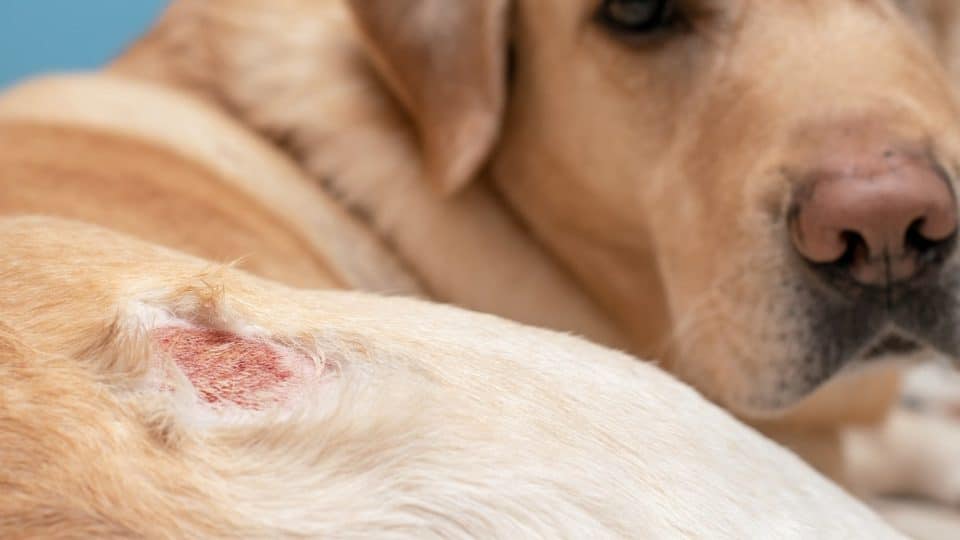
If you’ve noticed your dog frequently licking or chewing one area of their skin, they may have a hot spot. A hot spot can show up anywhere but will most commonly appear on a dog’s head, neck, limbs, and hips.

Advertisement

Hot spots, or moist dermatitis, are wounds that develop when a dog obsessively licks, chews, or scratches an area in response to pain or itchiness. Licking the irritated skin stimulates the nerve endings, which intensifies the itching and leads to more licking and scratching.

The lick-itch-lick cycle can quickly turn a small red spot into a large, raw, and painful lesion—and these inflamed sores often become infected, says Dr. Antje Joslin, a veterinary consultant with Dogtopia.

Read on to learn all about hot spots, including how to recognise them, what causes them, and how to treat and prevent them.

Signs and Symptoms of Hot Spots

A hot spot can develop in a matter of hours and worsen quickly with continued licking and chewing. They’re usually fairly noticeable on short-haired dogs, but they may go unnoticed under long or thick hair—and hot spots are more common in dogs with longer, thicker coats.

Here’s what to look for:

  • Red, inflamed skin
  • Oozing or pus from the affected area
  • Hair loss around the lesion
  • Matted, wet hair on a certain area
  • Foul odor
  • Intense itching, licking, or chewing at one area
  • Pain or sensitivity around the area

Common Causes of Hot Spots in Dogs

Hot spots are typically triggered by something that irritates your dog’s skin. In an attempt to get relief from itchiness, your dog may scratch, lick, or chew the area excessively.

This breaks down the skin’s protective barrier and creates a painful sore, explains Dr. Rachel Cocchiaro, veterinarian and partner at Bahama Road Veterinary. Once the skin is damaged, bacteria can easily enter and cause an infection.

Common causes of skin irritation that can lead to hot spots include:

  • Allergies: Allergies to food, environmental triggers, or fleas can all lead to intense itching, Dr. Cocchiaro explains.
  • Insect bites: Bites from fleas, mites, ticks, and other insects like bees and mosquitoes can cause intense skin irritation.
  • Infections: Skin or ear infections caused by bacteria or yeast can make your dog extremely itchy, Dr. Cocchiaro says. In response, a dog may scratch behind the ears, along the neck, or other parts of their body.
  • Moisture or humidity: Hair that gets wet from swimming, rain, or drool and doesn’t dry properly can trap moisture against your dog’s skin, creating the ideal environment for irritation and infection.
  • Irritants: Harsh shampoos, topical products, or contact with substances like lawn treatments or household cleaners can irritate skin and cause discomfort.
  • Poor grooming or matted fur: Tangles and mats can hold in dirt, moisture, and debris, irritating your dog’s skin and increasing the risk of infection.
  • Butt irritation: Blocked or infected anal glands can inflame the skin around your dog’s hindquarters and cause significant discomfort.
  • Boredom or anxiety: Dogs dealing with stress, anxiety, or lack of stimulation may lick or chew themselves excessively as a coping mechanism.
  • Arthritis or joint pain: Dogs with arthritis or other joint discomfort often lick or chew their hips, knees, and other painful areas, which can damage the skin over time.
  • Other skin conditions: Skin conditions such as dry skin or seborrhea can lead to itching and irritation that trigger hot spots.

Note: Puppies under 6 months old and senior dogs have weaker immune systems, which may make it more likely they’ll get hot spots and infections.
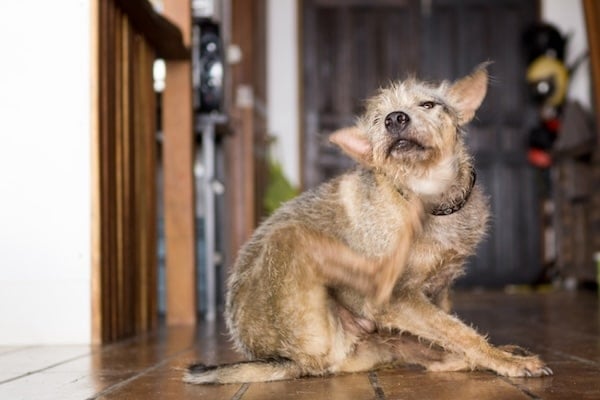

Dog sits in doorway scratching neck

Placebo365 via iStock

How to Treat Hot Spots at Home

You can often treat mild and moderate hot spots on dogs at home, especially if you catch them early. Here’s how to help:

Trim the surrounding area

“Hot spots heal fastest when the hair over the spot is shaved so the area can be thoroughly cleaned,” Dr. Cocchiaro says.

Removing the hair around the area also helps prevent matting and trapped moisture, which can make the irritation worse.

  • What to do: Using high-quality electric clippers, carefully trim the fur around the sore, leaving a full inch of clear skin around the spot as a margin, Dr. Joslin advises. Do not clip the hot spot itself, as that would cause significant pain.
  • How often? Trim the hair as soon as you notice the hot spot. This will typically be a one-time step, but you may need to do it again if your dog’s hair grows back before the spot heals. 

Gently clean the area

Cleaning the lesion helps remove debris and bacteria, lowering the risk of infection and preparing the skin for topical treatment.

  • What to do: Apply a pet-safe antiseptic solution like chlorhexidine to a gauze pad and gently dab (not wipe) the hot spot. Do not use alcohol or hydrogen peroxide, which can sting or delay healing.
  • How often? Continue cleaning your dog’s skin daily before each topical treatment until the lesion appears dry, scabbed over, and free of inflammation. This will usually take about a week to 10 days. 

Apply a topical ointment or spray

Dr. Cocchiaro recommends applying a topical treatment after you clean the area and let it dry completely. For mild or moderate, non-infected hot spots, you can use a 1% hydrocortisone cream meant for people.

If the area is oozing pus or smells foul, it’s likely infected. In that case, Dr. Cocchiaro says your vet will need to prescribe a medicated cream that combines a corticosteroid like hydrocortisone with an antibiotic. She says prescription oral antibiotics may also be required for more severe hot spots.

  • What to do: Apply the topical treatment to the hot spot once or twice a day.
  • How long? Continue the treatment until the area heals. Many dogs will start improving within a few days.

Use an e-collar to prevent licking or chewing

Preventing further irritation is key to recovery. If your dog keeps licking, chewing, or scratching the spot, it will get worse.

  • What to do: Fit your dog with an e-collar (Elizabethan collar).
  • How long? Keep the collar on your dog at all times until the hot spot heals completely.

Note: If you have more than one dog, you may need to separate them during the healing process, Dr. Cocchiaro says, since dogs will sometimes lick each other’s hot spots.

Modify behaviour through training and enrichment

If you suspect your dog is licking or chewing due to stress or boredom, behavioural modifications and training can help reduce the risk of future hot spots.

  • What to do: Increase playtime, mental stimulation, and daily exercise. You can also give your dog puzzle toys, schedule more walks, or introduce new tricks. If needed, work with a trainer or behaviourist to address fears like certain noises or being left alone.
  • How long? Behaviour changes take time, but some dogs show improvement within a few days to a few weeks.

Try a hypoallergenic diet

Switching your dog to a hypoallergenic diet can help you figure out if a specific ingredient is contributing to their symptoms.

  • What to do: Talk to your vet about switching your dog to a limited-ingredient diet that features a protein your dog hasn’t eaten before, such as duck, venison, or salmon. Avoid foods with common allergens, such as chicken, beef, dairy, soy, wheat, and corn.
  • How long? Feed your dog only the new food—no treats, table scraps, or chews—for 8-12 weeks. Keep a log of any changes in your dog’s skin. If your dog’s skin improves during this time, you may have identified a food allergy. Reintroducing old ingredients one at a time will help you pinpoint the specific trigger.

Ask your vet about allergy medications

If your dog’s hot spot doesn’t clear up with at-home measures, talk to your vet about trying an allergy medication.

  • What to do: Your vet may recommend antihistamines, prescription medications like Apoquel or Cytopoint, or allergy desensitisation therapy (immunotherapy).
  • How long? Antihistamine medications typically work within two hours. Medications like Apoquel or Cytopoint can provide relief within days. Immunotherapy may take several months to show full effect.
Drying dog after bath

Sonja Rachbauer via iStock

How To Prevent Dog Hot Spots

If your dog develops a hot spot, they may get another one if you don’t address the underlying cause. But you can take several steps to lower the chances of future flare-ups.

  • Set a grooming schedule: Dogs with long coats need regular brushing, while dogs with floppy ears need regular ear cleanings to prevent infection and spots.
  • Use a gentle, dog-safe shampoo: Bathe your dog with a shampoo formulated for their skin type. Avoid harsh or heavily fragranced products, which can dry out or irritate the skin.
  • Keep them dry: After a bath, swim, or walk in the rain, dry your dog well, especially around the ears. You might need a blow dryer for long-haired dogs.
  • Use flea/tick preventatives: Keep your dog up-to-date on their flea and tick medications, even during the off-season in winter.
  • Provide more activities: If your dog scratches out of boredom, enrichment activities can provide a good distraction. Try giving them more attention, adding more walks, or offering interactive toys and a snuffle mat.
  • Express anal glands: If your dog’s hot spot is related to a blocked anal gland, your vet can express the gland to relieve the buildup and reduce irritation.
  • Address underlying health issues: Work with your vet to manage underlying health issues, such as arthritis, infections, or allergies.
  • Work to reduce anxiety: If your dog chews their paws or skin due to anxiety, consider working with a certified dog trainer or behaviourist to address the root cause.
  • Schedule regular vet checkups: Routine vet visits are important for your dog’s health. Your vet can help detect early signs of skin issues or other underlying conditions.

Other Common Dog Skin Conditions

If your dog’s symptoms don’t quite match those of hot spots, they could have a different skin condition, such as:

  • Acne
  • Fungal infections
  • Dermatitis
  • Lyme disease
  • Rashes

All the pet care tips you need, straight to your inbox

Receive the latest adorable pet photos, care tips, training advice, product recommendations and more.

Please enter a valid email
Something went wrong. Please try again.
By providing my email address, I consent to receive marketing communications from Rover.com and its affiliates and confirm that I am 18 years of age or older. I can unsubscribe at any time. Privacy Statement
Subscribed!
Dog and cat looking at a laptop
Share This Article

sidebar

By Katie Koschalk
Share This Article

Learn More

  • About Rover.com
  • Sitter Resources
  • Terms of Service
  • User Terms
  • Privacy Statement
  • Cookie Policy
  • Affiliate Disclosure
  • Download the App
  • In The Press
  • Advertise With Us

Need Help?

  • Help Center
Advertisement
Your privacy choices
Follow Rover on FacebookFollow Rover on InstagramFollow Rover on LinkedInSubscribe to Rover's YouTube ChannelFollow Rover on TikTok
© 2026 Rover.com. All Rights Reserved.