
Your dog’s beautiful coat starts with their skin. So, when something irritates their skin, they can experience uncomfortable symptoms like itching, redness, or even hair loss. Luckily, many common dog skin conditions, from allergies to acne, are highly treatable. If you’re worried about your dog’s skin, make sure to consult your vet.
So, if you want to help your pup’s skin and fur thrive, you’re in the right place. Below, discover 15 common skin conditions in dogs and how vets diagnose and treat them.

1. Allergies
“Skin that appears red, inflamed, or irritated could signal an allergic reaction or infection,” says Nicole Savageau, a veterinarian with The Vets.
Many dogs experience food allergies to common proteins, such as chicken, beef, lamb, or eggs. Other dogs may be allergic to irritants around the house or yard, like pesticides, certain grasses, or even materials such as wool or synthetics.
Diagnosis
Dr. Savageau says allergy tests, such as skin prick tests or blood tests, help diagnose allergies.
Additionally, if your vet suspects a food allergy, they may have your dog follow an elimination diet until they find the potential culprit.
Treatment
Not every allergy responds well to medications. But after identifying your dog’s triggers, you can try to remove or minimize them from their life and hopefully eliminate their reactions.
For instance, if your dog doesn’t handle chicken well, your vet might have you switch to a chicken-free food. If your dog is allergic to their wool bed, swapping it with a synthetic fleece blanket could solve the issue.
2. Dermatitis
Atopic dermatitis is another common allergic reaction, affecting 10 to 15% of dogs. The main symptom is intense itchiness, which may cause your dog to scratch, lick, and chew the affected areas. This eventually leads to red and irritated skin.
Diagnosis
There isn’t a single diagnostic test for atopic dermatitis. So, your vet may diagnose it by looking for symptoms and eliminating other possible causes, such as parasites.
Additionally, they may also look at the timing. Most dogs begin to show signs of dermatitis between six months and three of age.
Treatment
Many dogs benefit from a combination treatment approach, which could include baths in medicated shampoo, anti-inflammatory medication, or antibody injections. Your vet will help you find the right path for your pup’s skin.
3. Acne
Acne isn’t limited to humans. Dogs can get pimples on their lips and muzzles. While we don’t know why some dogs get acne, we do know some dogs, like Great Danes, Rottweilers, Mastiffs, and Weimaraners, are more likely to develop it than others.
Diagnosis
Typically, your vet can diagnose your dog’s acne visually, but they may also take a skin biopsy to rule out other possible causes, like skin cancer.
Treatment
Your vet may prescribe a medication to clean out your dog’s pores, like a topical benzoyl peroxide product. They may also suggest an oral steroid to soothe inflammation.
4. Infections
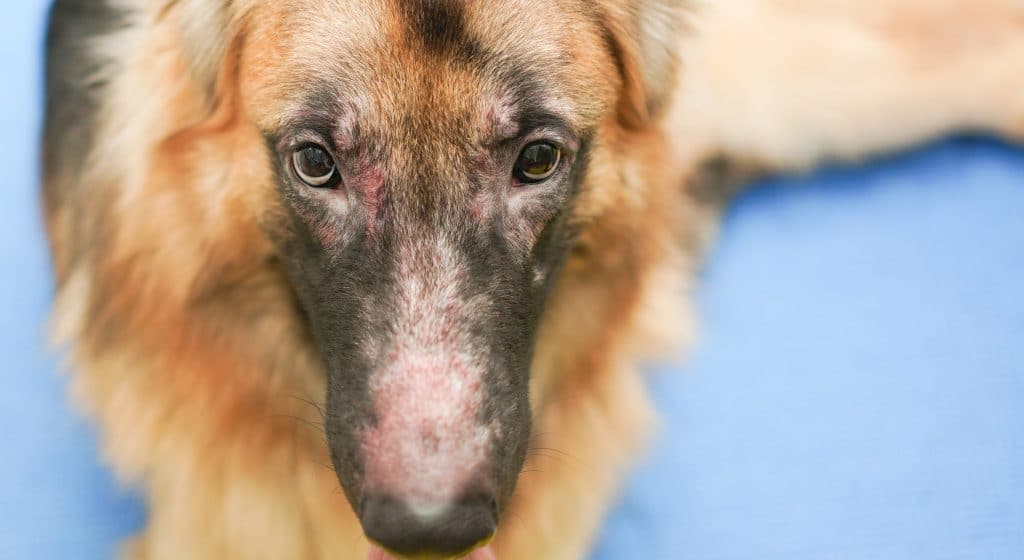
Of course, acne isn’t always the culprit for suspicious bumps on your dog’s skin. Bacterial infections can cause red, pus-filled bumps to crop up in other spots of your dog’s body, such as their armpits. Dogs with bacterial skin infections may also have dry or crusty skin and may even begin losing their fur.
Diagnosis
Typically, your vet will diagnose a bacterial infection based on your dog’s clinical signs. But they may also run blood tests to ensure your dog’s hair loss isn’t related to an internal condition.
Treatment
Your vet will likely prescribe antibiotics for three to four weeks. They may also suggest doggie spa sessions with antifungal shampoo baths.
iStock/VacharapongW
5. Parasites
Dr. Savageau says parasites like fleas, ticks, and lice can cause intense itching, skin irritation, and hair loss. Some dogs can even experience allergic reactions to these annoying critters, which can inflame their skin even more.
Diagnosis
Your vet can diagnose parasites if a physical exam reveals unwanted invaders. But sometimes, parasites aren’t visible. So, your vet may also diagnose based on your dog’s symptoms.
Treatment
Your vet can prescribe flea medications or suggest a medicated bath to remedy the issue. Remember: fleas and lice are also highly contagious. So, your dog may need to go into puppy quarantine until your vet gives the all-clear.
6. Mange
Did you know that mange is technically a parasite, too? It’s caused by microscopic mites that make your dog’s skin crusty, itchy, and inflamed. Your dog may also lose hair from intense scratching.
Diagnosis
“Microscopic examination of skin scrapings can identify mites or their eggs, indicating mange,” Dr. Savageau explains. Your vet can diagnose mange via blood tests.
Treatment
You can soothe a dog’s irritated skin with a bath in medicated shampoo and an anti-mite dip. Like many other parasites, mange is contagious. So, your dog will need to take a rain check on playdates until their mange clears up.
7. Alopecia
Some dogs may lose their hair from alopecia, a condition that causes hair loss in dogs, people, and other animals. Your dog may inherit it genetically or develop it later in life. Alopecia can also be inflammatory or non-inflammatory – but inflammatory is the most common type in dogs.
Diagnosis
Dr. Savageau explains that your vet may take a skin biopsy to analyze under a microscope. This can help them diagnose alopecia or detect other potential causes.
Treatment
The treatment will depend on whether your dog’s alopecia is inflammatory or non-inflammatory. In some cases, medications like melatonin could stimulate your pup’s hair growth. Only use melatonin with your vet’s approval. Your pup will need melatonin that’s safe for pets, not what you might use before bed!
8. Lupus
Autoimmune conditions like lupus can cause your dog’s immune system to attack their skin tissue, leading to redness, ulcers, thinning hair, or hair loss. Beyond impacting your dog’s skin health, lupus can cause symptoms like lethargy, decreased appetite, pain, and atrophy.
Diagnosis
A blood test can help your vet diagnose lupus.
Treatment
Your vet may try to curb lupus by prescribing anti-inflammatory medications or immunosuppressants. Sunlight’s UV rays can trigger lupus flares, so you may want to keep your dog indoors on particularly bright days.

iStock/gollykim
9. Tumours/Cancer
Skin tumours can crop up on nearly any part of your dog’s body. You may notice a small lump or bump beneath their skin, but they might also appear as a rash or a bald patch.
Around 60 to 80 per cent of skin tumours in dogs are benign. However, take your dog to the vet if you suspect a tumour for a definitive diagnosis.
Diagnosis
Your vet can diagnose a tumour with a skin biopsy and determine if it’s cancerous or benign.
Treatment
Vets can remove benign and cancerous tumours with surgery. But if the tumour is cancerous, your vet may also suggest a round of chemotherapy.
10. Dandruff (Seborrhea)
Does your dog look like they just ran through a fake snow factory? If so, they may have a case of dandruff. Conditions like seborrhea can cause your dog’s skin to produce more oil than usual, leading to dandruff flakes, dry skin, inflammation, and other issues.
Seborrhea can occur by itself, or along with other conditions, like hormonal imbalances.
Diagnosis
Your vet will likely diagnose seborrhea by looking for underlying causes and eliminating other possible issues, like parasites and bacterial infections.
Treatment
There isn’t any definitive treatment for dandruff in dogs. But your vet may suggest anti-inflammatory medications, supplements, or baths in special dandruff dog shampoo.
11. Hot Spots (Moist dermatitis)
If you notice a large, raw, or pus-filled sore on your dog’s body, they may have a hot spot, or moist dermatitis.
Hot spots are named because they’re hot to the touch due to inflammation. Dogs are more likely to develop them during warmer months, and they’re most common in breeds with long coats, like Golden Retrievers or German Shepherds.
Diagnosis
Your vet can typically diagnose a hot spot based on a visual and physical exam. Many dogs with hot spots may have an additional underlying skin condition, like an infection, so seeing a vet is essential.
Treatment
If the hot spot isn’t infected, you can care for it at home by washing it with mild soap and applying a pet-safe hydrocortisone cream. If the hot spot is infected, you may need a prescription from the vet, like an antibiotic medicine or cream.
Your pup may also need to wear a cone of shame or an alternative to prevent them from licking their wounds.
12. Folliculitis
Your dog can also get a bacterial infection in more specific parts of their body, like their hair follicles. This infection is called bacterial folliculitis, and it can cause red and irritated skin, pustules, fur loss, and more.
Diagnosis
Your vet can typically diagnose folliculitis based on your dog’s symptoms and by testing a sample of their skin for bacteria.
Treatment
You can treat the infection topically with antibacterial creams, shampoos, or wipes. Your dog may also need oral medication from the vet.

iStock/Przemysław Iciak
13. Fungal Infections
Beyond bacteria, your dog can also get fungal infections on their skin. Common skin fungal infections in dogs include ringworm, which causes itchy red circles to appear on the skin, and yeast infections, which can cause dark and crusty skin.
Diagnosis
Vets can diagnose fungal infections by lab testing a skin sample.
Treatment
Your dog may be able to find relief with anti-fungal ointments, shampoos, or oral medication. However, Dr. Savageau says fungi like ringworm can be contagious to people, so be careful when touching the area.
14. Lyme Disease
Sometimes, an internal condition can start from your dog’s skin. For example, Lyme disease is transmitted via infected tick bites and can cause symptoms like fevers, swollen joints, and lethargy.
While you may not notice many skin symptoms, a small percentage of dogs will develop a circular rash around the bite area.
Diagnosis
Vets can diagnose Lyme disease by assessing your dog’s symptoms and performing a blood test to look for Lyme antibodies.
Treatment
The usual treatment for Lyme disease is a course of medication like doxycycline or amoxicillin. Some vets may prescribe these medications even without a diagnosis if a dog shows symptoms.
15. Chafing
If a collar or harness doesn’t sit right on your dog’s body, they may experience chafing. Chafing can make your dog’s skin look red and burned, or they may lose hair in the affected area.
Diagnosis
You can often identify chafing on your own since the irritation pattern should align with what your dog wore. But if you’re unsure, take your pup to the vet to ensure that a skin infection isn’t to blame.
Treatment
You can treat chafing by cleaning the area and applying soothing topical products, like witch hazel and coconut oil.
Takeaway
Consistent bad fur days can have several underlying causes, including allergies, dandruff, parasites, and more. If your dog is scratching and biting at the skin, losing their fur, or displaying any other unusual symptoms, Dr. Savageau suggests making a vet appointment.
Your vet can help you choose the best treatment for your pup so that they can return to fabulous fur days.