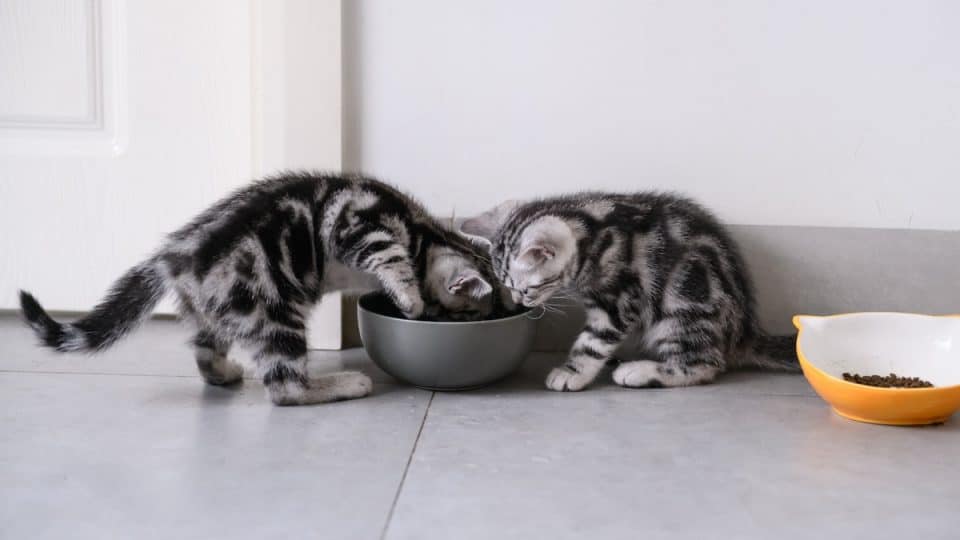
Between the excitement of play, enrichment, and kitten-proofing your home, new kitten parents have a lot to do. One of the most important parts of your job is figuring out what and how much to feed a kitten. Because as tiny as kittens are, they have big nutritional needs, and a kitten’s early months are also when they develop lifelong eating habits that can help them maintain a healthy weight.
Nursing or bottle-fed kittens can start eating solid foods, like canned wet food and softened kibble, around 3 to 4 weeks of age, and they’ll transition to only kitten food by 8 weeks, says Dr Liza Cahn, DVM, Veterinary Consultant for Embrace Pet Insurance.

It’s generally recommended to feed kittens three to four meals per day until they’re at least 4 months old. By the time they’re 6 months, Dr Cahn says their daily calories can be divided into the two meals per day recommended for adult cats.
With insights and guidance from Dr Cahn, here’s everything you need to know about how much and when to feed a kitten.
Kitten Feeding Charts
Nutritionally, kitten foods are higher in calories, protein, calcium, phosphorus, and fats, compared to adult cat food, Dr Cahn says. These support your kitten’s high activity levels and rapid growth, as well as their sensitive, developing digestive systems.
Not sure where to start? “The most accurate way to determine how much to feed your kitten is to look at the back of your food label and ask your vet,” Dr Cahn says.
The guidelines on your food label provide a baseline for determining how much to feed, based on your kitten’s age, weight, and sometimes expected size. Your vet can help you tailor those guidelines to your particular kitten’s activity level and needs.
Different food brands will calculate recommended feeding amounts a little differently, so you’re likely to encounter a few different kinds of feeding charts. Here’s how to read them.
Feeding by age and weight
A kitten’s nutritional needs can vary significantly not just by size, but by age and weight. The first year of life sees several growth stages, with the most nutritionally demanding being the first four to six months. Some feeding charts will take into account your kitten’s growth stage, like this one from Hill’s Science Diet.
| Product | Kitten Weight (kg) | Grams per day 1-3 Months | Grams per day 4-6 Months | Grams per day 7-12 Months |
| Hill’s Science Plan Kitten Dry Cat Food Chicken | 0.5 | 30 | – | – |
| 1 | 50 | 40 | – | |
| 1.5 | 65 | 55 | 45 | |
| 2 | 85 | 70 | 55 | |
| 2.5 | – | 80 | 65 | |
| 3 | – | 95 | 75 | |
| 3.5 | – | 105 | 85 | |
| 4 | – | – | 95 | |
| 4.5 | – | – | 100 | |
| 5 | – | – | 110 |
Feeding by expected adult weight
Other foods will factor in your kitten’s projected adult weight. James Wellbeloved’s kitten food often illustrates different feeding amounts for kittens expected to grow larger or smaller. For example, the table below recommends servings at different weights and ages for a kitten expected to grow to 4.5 kg as an adult cat.
They work this out by taking the mother’s weight as a rough estimate. However, they note that male kittens are likely to weigh 30% more than their female littermates. So if the mother is 3.5 kg, this may serve as a useful guide for a female kitten’s servings. However, a male kitten may be more than 4.5 kg. Ask your vet to help you estimate your kitten’s adult weight if their food label uses this as a guide.
| Product | Kitten Weight (kg) | Age (weeks) | Grams per day |
| James Wellbeloved Turkey and Rice Kitten Dry Food | 0.4 | 5 | 33 |
| 0.9 | 10 | 55 | |
| 2.1 | 20 | 73 | |
| 3.2 | 30 | 76 | |
| 4.2 | 40 | 75 | |
| 4.4 | 45 | 73 | |
| 4.5 | 50 | 71 |
Wet Vs Dry Kitten Food
A lot of pet parents wonder whether they should start their kitten on wet or dry food. “For a healthy older kitten, neither dry nor wet food is inherently better,” Dr Cahn explains. “In fact, kittenhood is the best time to expose your cat to eating a variety of flavours and textures of food.”
The major difference between wet and dry kitten food is the moisture content. Wet food has about 75% moisture versus the 6-10% in dry kibble. That means dry food has a lot more calories by volume—so if you decide to feed some of both, make sure you’re measuring them separately.
Because cats don’t have a high thirst drive, Dr Cahn says the biggest benefit to giving your kitten wet food is that it ensures that your kitten is adequately hydrated. This has far-reaching health benefits when it comes to your kitten’s kidney health and the prevention of urinary issues, like fatal bladder stones or blockages.
Wet food also tends to be more digestible, Dr Cahn says. Because it’s usually higher in protein and lower in calories and carbs than kibble, feeding your kitten a wet food diet can help your kitten reach and maintain a healthy body weight. It reduces their risks of becoming overweight and developing obesity-related illnesses like arthritis, diabetes, and heart disease.
Dry food, however, is more affordable, easier to store, and stays fresh longer than wet food. It’s also ideal for free-feeding. Some dry foods are also formulated with dental benefits and can target plaque and tartar on your kitten’s teeth. (They don’t replace yearly dental care though!)
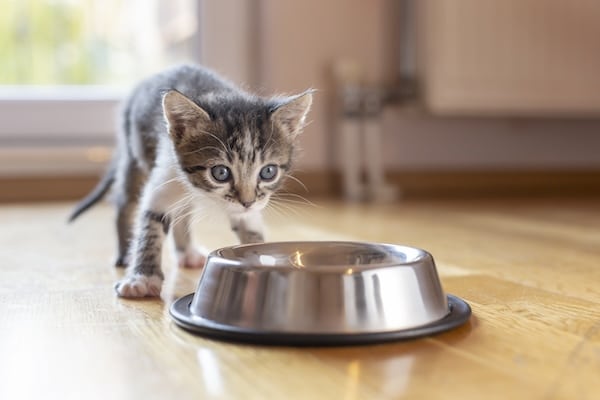
vladans via iStock
Factors that Affect How Much Kittens Should Eat
There are biological, behavioural, environmental, and nutritional factors that affect how much your kitten needs to eat.
Age and energy levels
Most feeding guidelines are for kittens with “average” activity level, Dr Cahn says.
Very rambunctious and active kittens who are always on the move burn more calories, so they’ll need a higher calorie intake. The same goes for outdoor kitties.
Less energetic kittens who aren’t as zealous about ambushing their toys (and human caregivers) likely will do well with the general feeding guidelines.
Food type
The energy density of the diet varies if you’re feeding your kitten wet or dry food, Dr Cahn says. Dry food is usually more calorie-dense than wet food, so if your kitten only eats dry food, you’ll likely feed a smaller amount by volume than you would if your kitten eats only wet food.
Calorie density will also vary from brand to brand and flavour to flavour, so always consult the specific feeding instructions on your kitten’s food.
Growth factors
Kittens go through incredible growth and development throughout their first year of life. Dr Cahn says the first six months are associated with the largest kitten growth spurt. Once they pass the six-month mark, their need for additional calories slows down.
When your kitten is spayed or neutered also makes a difference. Some kittens are spayed or neutered early at around 0.9 kg, while others wait until five or six months. Kittens who undergo the procedure later may be more prone to weight gain in the interim. Talk to your vet about how to adjust your particular kitten’s diet.
7 Feeding Tips for Kittens
Dr Cahn says the top priority when choosing foods is that your kitten is growing well, thriving, and maintaining a healthy weight and body condition. Here are some key considerations to help them get there.
1. Look for a “complete diet” nutrition statements on food packaging
Foods with a statement about nutritional completeness are fortified with the recommended levels of nutrients, vitamins, and minerals your kitten needs.
Compliance with European Pet Food Industry Federation (FEDIAF) nutritional guidelines and the enforcement of UK law by bodies like the Food Standards Agency (FSA) and the Department for Environment, Food & Rural Affairs (Defra) are the gold standard for assessing pet food quality in the UK.
Be cautious about buzzy “all-natural,” “holistic,” and “unprocessed” claims, because these endorsements aren’t regulated—and by themselves, they don’t really tell you whether a food is actually nutritionally adequate for kittens.
2. Follow feeding guidelines
The calories per serving (also known as energy density) in kitten food will vary wildly from brand to brand. Use the feeding guidelines and labels on the back of each individual kitten food as a starting point to figure out how much to feed your kitten. Then talk with your vet to see if you need to adjust anything based on your kitten’s specific needs.
3. Track your kitten’s weight closely
Your kitten will be weighed at each veterinary visit, but you can also monitor their growth at home. “As a general rule, young kittens gain approximately 0.45 kg (1 lb) per month. Growth will slow after 6 months of age, but continue until about 1 year,” Dr Cahn says.
You’ll also want to monitor their body condition. A healthy kitten’s ribs will be easy to feel beneath a slight fat covering, and you’ll be able to see a distinct waistline from above and a tummy tuck from the side.
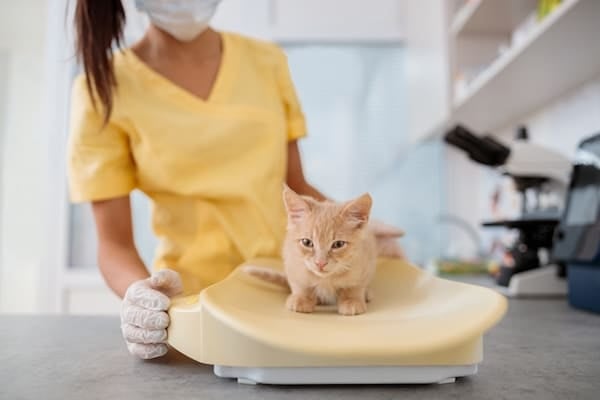
Creative Credit via iStock
4. Offer frequent smaller meals vs free feeding a large amount
“To help set your cat up to maintain a healthy weight throughout their life, it’s best to get them used to meal feeding as a kitten,” Dr Cahn says. “Free feeding may be convenient and work well for some cats, but it often results in overeating and weight gain.”
Kittens do best eating 3 to 4 meals per day until they’re 4 months old. When your kitten is 6 months old, they can switch to two meals a day, which is the recommended feeding schedule for healthy adult cats.
Timed meal feeding reduces the chances of your kitten overeating. It also allows you to notice any changes in your cat’s appetite or eating habits, which can often be an early indicator of illness, Dr Cahn adds.
5. Understand and follow portion sizes
Kittens have high energy and nutrient requirements—and they also have small stomachs. Avoid overfeeding a kitten at mealtimes, Dr Cahn warns, and watch for signs like a bloated abdomen, decreased appetite, and gastrointestinal problems.
If your kitten still seems hungry after they’ve had their daily 3 to 4 meals, Dr Cahn says it’s okay to offer them additional small portions of food throughout the day while monitoring their growth and body condition score.
6. Feed your kitten a variety of foods
Feeding your kitten both wet and dry foods can make your kitten a less fussy and more adventurous eater. It can also help in the future if your kitten needs to switch to a specialised or prescription diet for medical reasons.
7. Don’t forget about water!
Yes, canned wet foods have very high moisture content, but gobbling down a bowl of pâté doesn’t replace offering your kitten fresh water daily. If you’re having trouble encouraging drinking, consider switching to an automatic cat water fountain to pique your kitten’s interest.
When To Transition Kittens to Adult Cat Food
Once your kitten is one year old, it’s typically time to transition them to adult cat food. To make the switch, go slowly to avoid tummy troubles like diarrhoea, bloating, and food refusal, Dr Cahn says.
Begin by replacing 10-25% of your cat’s kitten food with the new adult food. Then, over the next 7-10 days, continue to increase the amount of new adult food and decrease the amount of old kitten food, until they have completely transitioned to their new diet.