If you’re a pet parent in the throes of potty training, you’re likely looking for some light at the end of the tunnel, like when to expect your puppy to hold their pee for longer than just a few hours at a time.
The reality? Pet parents with young puppies will need to be patient, as it typically takes dogs at least a year to be able to hold their pee during a nine-to-five workday. Sleeping through the night will come sooner, fortunately, as puppies start to hold their pee overnight at about four to six months.

Don’t sweat it, though, if your puppy doesn’t fit into a set timeline. While a pup’s size and age are indicators of how long they’ll be able to hold their pee, each dog is unique. As long as you’re consistent in your training, your pup will get there in time.
To learn more about the nuances of puppy bladder control, we spoke with two veterinarians: Dr. Lucy Miller at Step Ahead Veterinary Physiotherapy and Dr. Aimee Warner at Waggel.
Puppy Bladder Control Chart
Both Miller and Warner agree that a general rule of thumb to follow when estimating how long your puppy can hold their pee is to add one hour for every month of age.
Every puppy will be different, though, with factors like size, health, and temperament coming into play. That’s why flexibility is key. “Some puppies will vary in this rule, however, and might need more breaks, especially after playing, eating, or waking from a nap,” says Miller. “It’s always better to err on the side of potty break for accidents and for good habits.”
| Age | Hours | Bladder control expectations |
| 8 to 10 weeks | 1-2 | Very young puppies have limited control and may not be able to hold their pee for long. |
| 10 to 12 weeks | 2-3 | These young puppies have more control but will need frequent breaks during the day and one or two at night. |
| 3 to 4 months | 3-4 | Puppies at this age will have more control. Some puppies might be able to make it through the night without a potty break. |
| 4 to 6 months | 4-6 | These puppies should be able to follow a puppy potty training schedule with fewer breaks during the day. |
| 6 to 12 months | 6 | Most puppies at this age can hold their bladders for up to 6 hours (some up to 8) during the day. |
| +1 year old | 6-8 | Dogs at this age should exhibit more consistent bladder control, but this will vary depending on the breed and individual personality. |
How long can puppies hold their pee at night?
Puppies can usually hold their pee a bit longer at night because their metabolism slows down in the evening. They’re also not eating or drinking as much as they are during the day. Miller notes, however, that young puppies will still need nighttime potty breaks until they’re about four months old, with smaller breeds possibly needing support even longer.
Knowing your pup has more bladder control at night can help you come up with a potty training schedule for your particular puppy. For instance, puppies between two and three months will need bathroom breaks every two to three hours during the day. But during the night, they may be able to hold their pee for four to five hours at a time. Understanding this can help you plan your days and nights accordingly.
How often do puppies need to poop?
A puppy’s poop schedule tends to be a bit more predictable: they usually need to go to the bathroom soon after they eat. “A puppy would most likely need to poop about 5 to 30 minutes after a meal,” says Miller. “Typically, they would poop, on average, two to five times a day, depending on their age, diet, and level of activity.”
How Does Breed Size Impact Your Puppy’s Bladder?
While the “month plus one” rule gives an average estimate for how long a puppy can hold their pee, breed size can impact this amount of time. “The size of a puppy affects their bladder capacity because smaller breeds have both smaller bladders and faster metabolisms, which require more frequent bathroom breaks compared to larger breeds,” says Warner.
“[A puppy’s] ability to hold it develops in conjunction with the developing muscles, which can differ quite a lot from dog to dog,” adds Miller.
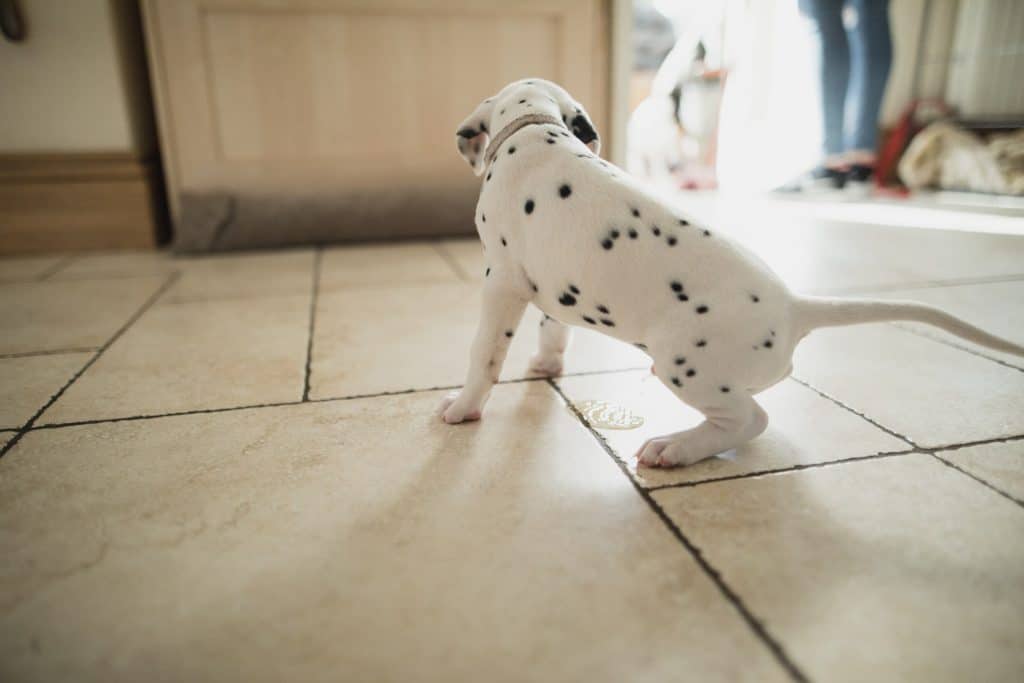
iStock/SolStock
Why Is My Puppy Peeing in the House?
Accidents are going to happen, but understanding the causes can help you prevent them in the future. Here are a few reasons why your puppy might be peeing in the house.
- You missed the signs your pup needs to go outside. “A puppy who has held their bladder for too long will display frantic behaviour before having unexpected accidents,” says Warner. They may show signs of being restless, circling in a specific area, intense ground sniffing, or whining near a familiar indoor bathroom spot. Or they may suddenly stop playing and sit and stare.”
- Your puppy experienced heightened emotions. Miller adds that small accidents and dribbles can occur when your puppy gets excited or scared, such as when they meet a new human friend for the first time or visit the vet. You can help your pup avoid this appeasement peeing by ensuring they’ve been outside before exciting events or by helping them through frightening situations by giving them space, praise, or tasty treats.
- There’s a medical condition at play. “Medical problems such as urinary tract infections (UTIs), bladder stones, diabetes, and congenital urinary tract abnormalities lead to frequent accidents,” says Warner. “A veterinary examination becomes necessary when a puppy displays unexplained changes in their bathroom habits.”
- There are issues with your potty training. Revisit your potty training plan and see if there’s anything that could be making your timeline go awry. Perhaps you’re not sticking clearly to a schedule, or you’re forgetting to take your pup out one last time before bed.
Keeping Your Puppy on a Lead
Sometimes, too much freedom, like giving your young puppy full access to your home from the start, can cause potty accidents. Instead, keep them in a specific area with baby gates or playpens until they’ve reached full bladder maturity, usually at four to six months. Putting them on a lead to drag around inside also helps you quickly redirect them if you see they’re about to have an accident.
As mentioned above, sticking to a potty schedule vigilantly will help you stay on track with your puppy’s potty training timeline. “The lack of consistent breaks will lead to inevitable accidents, which puts excessive stress on the puppy’s developing bladder system,” says Warner.
While it may seem like a lot of work while you’re in the thick of it, future you will thank you when you have a properly potty-trained pup.