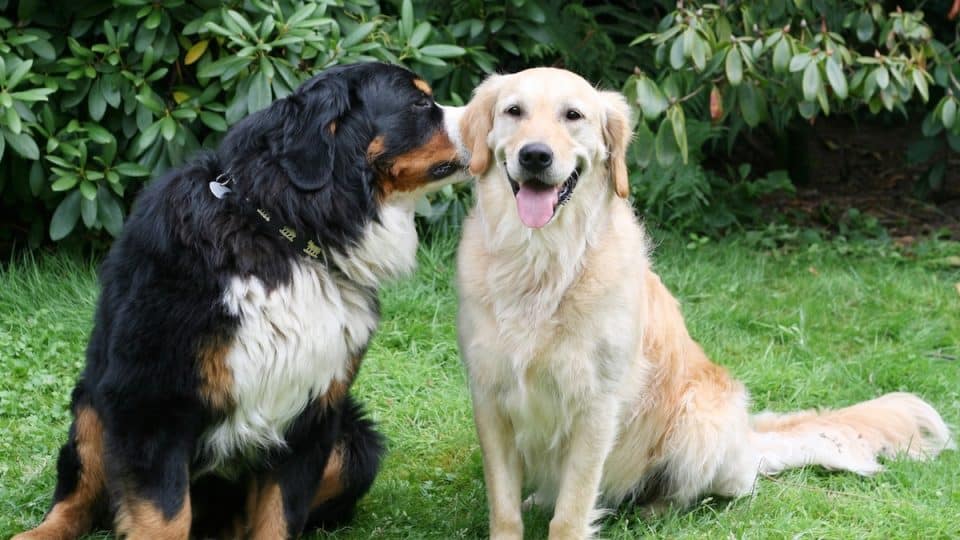
Dogs may not communicate with words, but they do have their own shared dog “language.” Communication between dogs involves a nuanced mix of visual cues, scents, touch, and, to a lesser extent, vocalisations. Dog-to-dog signals can be subtle and easily missed by humans—but paying attention offers a treasure trove of information about your pet.
The better you understand canine communication, the better you can advocate for your dog and prevent conflict. “It can mean the difference between setting your dog up for a great interaction and putting them in a situation that could escalate,” says Sarah Rutten, certified professional dog trainer, CPDT-KA, and best-selling author of The Canine Perspective: Using Force-Free Methods to Unleash Your Dog’s Pawtential.

To explore how dogs communicate with each other, we consulted two veterinarians and a fear-free trainer. Here’s your guide to decoding how dogs talk to each other, how to help keep the peace, and how to avoid communication breakdowns.
Visual Communication Between Dogs
Unlike humans, dog communication is mostly non-verbal, says Rutten. “They use body language first, like ear position, tail carriage, facial tension, and how they hold or move their bodies.” Dogs also use more subtle signals like slow blinking, turning their head away, or licking their lips.
Familiarising yourself with these visual cues can help you determine if your dog is comfortable around another dog—or if it’s time to step in.
Ear position
Ear position says a lot about how a dog is feeling. Relaxed, loose ears say “I’m calm, neutral, and open to interact,” while perked-up ears usually indicate alertness and curiosity. If you notice your dog flattening their ears against their head during a greeting, it usually means they’re feeling scared or anxious. Paired with other signs of fear, it’s your cue to move along.
Of course, dog ears come in all different shapes and sizes, and with certain breeds, like those with floppy ears, it won’t always be easy to detect these movements. When that’s the case, you’ll want to focus on other body language cues.
Tail position and speed
Humans often think that all tail wags are happy—but dogs know differently. “Tail wags can signal excitement, arousal, uncertainty, or even a warning,” says Rutten. “It is all about the speed, height, and stiffness of the wag.”
A loosely wagging tail held straight out usually means a dog is calm and ready to play. A high and stiff tail, on the other hand, means your dog is alert and may signal potential aggression.
Mouth and teeth
Dogs use their mouths and teeth to express emotions. An open mouth and a relaxed tongue typically indicate a happy, comfortable dog, especially during play. However, if a dog bares their teeth, it may indicate aggression, particularly if accompanied by other signals such as flattened ears and a stiff body.
Posture
A dog’s posture speaks volumes about their emotional state and can help you determine the difference between playful behaviour and a real fight. Whereas a relaxed, wiggly posture tends to signal an invitation to play, an upright and rigid posture with raised hackles could suggest that a dog is feeling threatened.
How Dogs Use Sound To Communicate With Each Other
When dogs bark at each other, it might sound like they’re having a conversation—but they’re not actually “talking” to one another in the human sense. Canine vocalisations can be very expressive and convey a lot of inter-dog meaning. Here are some specific sounds and what they may mean.
Barks
A bark can be a greeting, a warning, or a fear response. To decipher dog barking, consider the pitch, duration, and context. A high-pitched bark might indicate excitement or a friendly greeting, while a low, deep bark often serves as a warning to other dogs to “stay away.”
Whines
Dogs often whine when they feel anxious. They may also whine to seek attention. If your dog whines when they see other dogs, they could be expressing fear or excitement—or a combination of the two.
Growls
Some growls can be a warning to other dogs that they’re unhappy and likely to escalate their behaviour. But not all growls are threatening, says Dr Aimee Warner, resident veterinarian at Waggel. Dogs can also use an exaggerated growl during play. The context of the growl and your dog’s other signals can help you spot the difference.
Howls
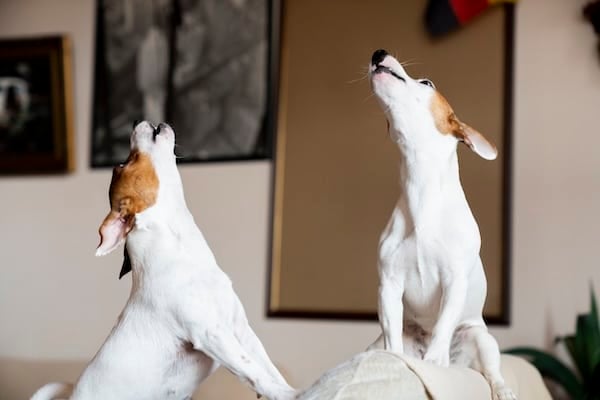
Dogs might howl to announce their presence or location to others. Howling can also serve as a territorial warning, letting other dogs know they’re not welcome. There is also “contagious howling,” where one dog’s howling prompts others to join in. This instinctive behaviour helps dogs feel connected.
Sneezes
Dogs have a charming habit of sneezing to express joy during play. These playful sneezes tell other dogs that they’re ready for more fun. Whereas sneezing due to allergies or illness is more frequent and may be accompanied by nasal discharge, playful sneezes are short and light, with relaxed body language.
Erdi Kahraman via iStock
How Dogs Communicate by Scent
Dogs have an incredible sense of smell that allows them to gather information about other dogs simply by sniffing. With their powerful noses, dogs can decipher a range of details about other dogs, including their:
- Gender
- Age
- Emotional state
- Health
- Reproductive status and whether a dog is ready to mate
Bum sniffing
While impolite to our human sensibilities, bum sniffing is how dogs say hello and learn about each other. “It’s their version of a handshake and a background check rolled into one,” says Dr Hyun Han, a veterinarian with Telavets.
When dogs sniff each other’s behinds, they’re picking up on pheromones that offer details about the other dog’s health, age, and feelings. So, it’s essential to give your pup plenty of time to sniff when meeting another dog.
Marking
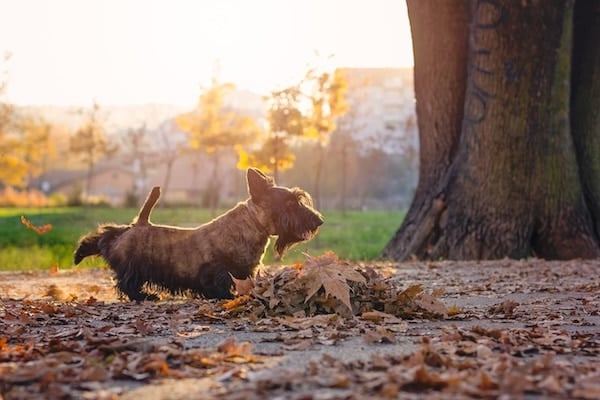
Dog urine contains pheromones, so dogs often engage in marking behaviour as a way to leave “wee-mail” for other dogs to read. By leaving small amounts of their scent behind, your dog is alerting other dogs that they were there. While it may be frustrating when your dog stops to sniff and wee every five seconds on a walk, have patience. They’re just getting through their inbox!
Foot scratching
Your dog’s paws have scent glands. When they scratch the ground, they leave traces of their scent behind. A recent study found that dogs can recognise these scents from other dogs. While the exact details of what these “pedal scents” communicate remain a mystery to researchers, it’s clear they convey some information.
FluxFactory via iStock
How Dogs Communicate by Touch
Dogs, like humans, use touch to connect and communicate. From gentle nuzzles to playful bumps, each type of physical contact carries its own meaning.
Proximity
When dogs rest close to or on top of each other, they’re not just seeking warmth. They’re reinforcing social bonds and trust. Deliberately choosing to be close with another dog communicates comfort and security.
Play fighting
Playful wrestling between dogs may appear aggressive, but it’s often innocent fun. Key signs that communicate it’s play, not fighting, include bouncy movements, exaggerated growling, and open-mouthed grins. If both dogs are engaged, you’ll notice them taking turns during these antics. This balance shows both dogs are enjoying themselves.
“If you see one dog trying to get away, freezing, or constantly rolling onto their back, that is not always an invitation for more play,” says Rutten. If this happens, you’ll want to step in and help the dogs create distance from each other.
Pawing
Putting a paw on another dog is usually a playful gesture used to get attention or initiate play. With puppies, it’s a way to express their eagerness for connection and play. Occasionally, pawing can be a mild assertion of status. Note that some dogs may not like having both paws on top of them, especially if they have back pain issues.
Mounting or humping
Humping is often misinterpreted as a sign of dominance or mating, but it usually stems from excitement or nervousness. Both male and female dogs, including those spayed or neutered, may engage in this behaviour during play or when meeting new friends. While typically harmless, watch for signs of discomfort in either dog and intervene if needed.
Nudging
Nudging is a common corrective gesture used by mother dogs to guide their puppies. Among adult dogs, a gentle poke can invite play, signal friendliness, or request attention.
Communication Breakdowns
Sometimes dogs fail to communicate clearly with one another. This can happen for several reasons.
Dr Warner says communication breakdowns often occur when one dog isn’t paying attention or picking up on the other dog’s subtle signals. Sometimes, a dog is just too revved up to read the room, adds Dr Han.
Different communication styles may also come into play, and sometimes poor socialisation is to blame. “Dogs who did not get to practise safe, positive interactions when they were young may not ‘speak dog’ fluently,” says Rutten.
Additionally, physical differences between breeds can lead to miscommunication. For example, Warner explains that a flat-faced Bulldog might struggle to communicate with a long-snouted Greyhound because their facial signals are different. Pain, fear, or anxiety can further muddle interactions.
By learning the fundamentals of dog-to-dog communication, pet parents can help minimise these miscommunications. When you can interpret what your dog is expressing, you’ll be better equipped to keep them safe and comfortable, whether on walks, at the dog park, or when you have other doggy guests in your home.