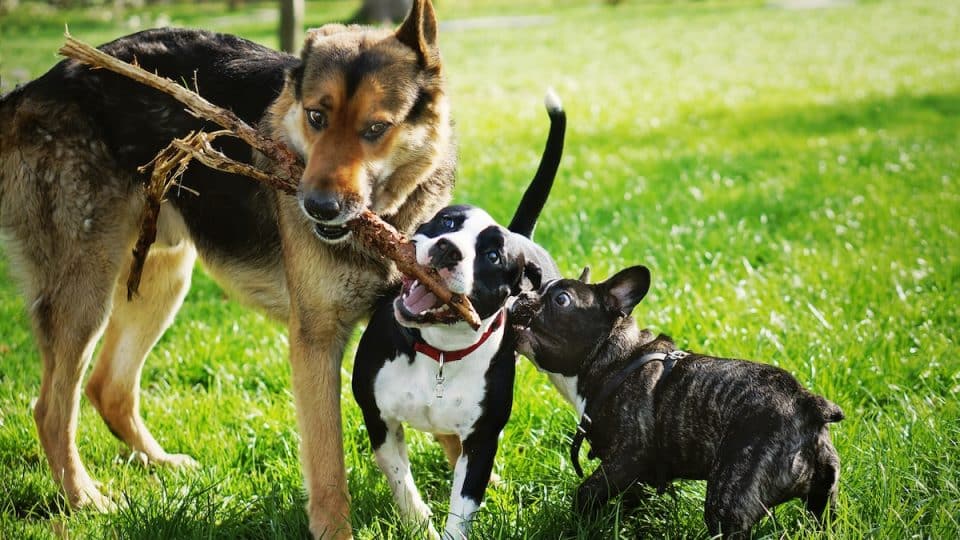
Dog day care can be a fantastic tool to socialise a pup. But it can also be overstimulating—especially for pups who are already struggling to get along with other dogs and humans. So how do you know if sending your dog to day care will build confidence and social skills or foster anxieties?

According to dog trainer and behaviour consultant Alexandra Bassett of DogSavvy, it’s all about how you use it. With her help, we review the benefits of dog day care for socialisation, how to choose a good one, and how to make sure your dog gets the most out of it, plus when to consider alternatives.
Does Dog Day Care Help With Socialisation?
“Dog day care can absolutely help socialise a dog at pretty much any life stage—puppies, adults, or even seniors—by providing structured, consistent exposure to people and other dogs,” says Bassett. “When done right, it helps them learn appropriate play manners, how to read social cues, and build confidence.”
But Bassett also cautions that not all dogs are ready for day care as a socialisation tool, and not all day cares are set up for socialisation success.
“Day care isn’t a one-size-fits-all situation,” she explains. Some day cares, for example, put large groups of dogs together and let them run and play relatively freely. This is great for active, friendly dogs, but it may not be ideal for scared or easily overwhelmed pups.
For dogs that are still working on their socialisation skills, Bassett recommends a smaller day care or a home-based day care and play-group hybrid.
Benefits of Dog Day Care
There are lots of socialisation benefits to placing a dog in day care, from learning appropriate play to getting used to a wide range of other dogs. Here’s what a dog can learn.
Learning to read dog body language
Once a pup leaves the litter, many don’t have the same opportunities to interact with other dogs. As such, they may lose out on learning how to read the body language of other dogs. At dog day care, they can interact with—and learn from—other dogs, including what a pup’s behaviour means and how to respond appropriately.
Practising appropriate play with other dogs
The best way for dogs to learn how to play together is by doing it—under supervision, of course. In group settings, dogs naturally set boundaries with each other. It’s normal for dogs to give gentle corrections when another dog’s play crosses the line, helping young pups to understand what’s okay and what isn’t.
Dog parks are less of a “thing” here than in the States
Dog day care and socialisation are more closely linked in the UK than in the US.
In the UK, dedicated enclosed ‘dog parks’ are less common than in the US. British dog owners rely more on open parks, footpaths, and public rights of way where dogs can run on or off lead. Since they aren’t allowed to run freely in public parks, dog parks in the States play a much more central role in providing safe, open space for dogs to run, exercise, and socialise.
This means that the UK’s day care facilities can be vital in giving dogs opportunities to socialise with many other dogs at once. Even though secure, gated parks are becoming more popular, day cares are still among the main ways for dogs to have dedicated friend time.
Getting used to other types of dogs
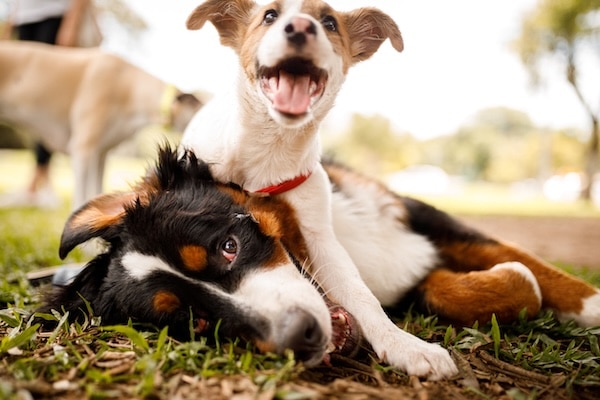
Dog day cares attract a wide range of pups, from tiny fluffballs to extra-large mixes, all with their own personalities and quirks. This diverse canine population allows your dog to interact with—and become comfortable with—pups of all sizes and shapes, as well as a variety of play styles.
Capuski via iStock
Supervised play
While the lively activity of a dog day care can be overwhelming at first, it’s (usually) controlled chaos. Good dog day cares have plenty of well-trained staff on hand to ensure that the pups are getting along and that everything is running smoothly.
Positive reinforcement
The key to good socialisation is creating positive experiences to help your dog feel comfortable, happy, and confident around other dogs. A well-run dog day care offers a controlled, happy setting where dogs can build positive associations with other dogs.
Mental and physical stimulation
For many dog parents, busy schedules and the demands of work and family can make it challenging to give their pup all the exercise they need. At dog day care, they can run, sniff, and frolic to their heart’s content, engaging both their body and mind.
How To Choose a Good Dog Day Care To Build Social Skills
Alongside their mandatory licence, good doggy day cares are insured, maintain strict vaccination policies, and have excellent reviews and references. Staff training is also important, especially when your pup is still learning social skills.
“I’d look for signs that staff are well-trained in dog body language and group dynamics,” she recommends. She suggests asking lots of questions, including:
- The size of playgroups
- How they introduce new dogs to the group
- How they integrate shy, reactive, or fearful dogs who may not be used to the day care environment
- What add-ons are available to make dogs feel more comfortable
It’s also helpful to learn the dogs’ daily routine, any training tools the day care uses, and how staff will communicate with you as needed. Visit the facilities in person, observe the dogs at play, and trust your gut—if you’re not comfortable, your dog probably won’t be either. Socialisation relies on creating positive experiences, so keep looking for the place that will provide the dog day care socialisation benefits you want.
Every dog day care will need an Animal Activities Licence from their local council. However, as part of licensing, they’ll get a star rating from one to five – five being an amazing facility that goes above and beyond to ensure your dog’s safety and comfort, and one being a day care that does the bare minimum to operate. You can use this star system to gauge their suitability for your dog.
How To Help Your Dog Benefit from Day Care
Many dogs have different socialisation needs, depending on their stage of life and temperament. Here are some of the most common concerns that dog day care can help with, and how you can help to maximise your unique pup’s dog day care socialisation benefits.
Puppies
“Positive and low-stress experiences with other dogs can really set the tone for healthy adult behaviour,” says Bassett. She says that day care is particularly good for puppies during the socialisation window between 3 and 12 weeks old.
Before diving into day care, Bassett recommends giving your young pup a socialisation warm-up. A few short sessions of time spent with gentle, well-socialised dogs can help to ease your puppy into group activity.
You’ll also want to make sure your puppy is up to date on their vaccinations and that a vet has approved them for day care. At a minimum, your puppy will need to have had their DHPP vaccines at least two weeks before entering day care. Many require recent deworming and kennel cough vaccines, too.
When you’re ready, look for day cares with good supervision and structured routines—you want your dog’s time at day care to reinforce the good behaviours and toilet training you’re working on at home.

chayakorn lotongkum via iStock
Fearful or shy dogs
Well-trained staff are key to helping a shy or fearful dog be comfortable at day care.
“If your dog is fearful or shy, you want a staff who help them build confidence without forcing interactions,” says Bassett. She also recommends small day cares for scared pups; large groups can be overwhelming to shy pups, which means that “they might spend the whole day tense or scared instead of getting the positive experience you’re hoping for.”
Reactive, excitable, or high-energy dogs
“For reactive or excitable dogs, the facility should have strategies in place to prevent meltdowns or overexcitement,” says Bassett. Look for separate spaces or opportunities for one-on-one play until your dog is ready for a larger group.
Private training sessions can also help guide your dog (and you) to feel more confident and comfortable before venturing into a group setting.
When Day Care Isn’t a Good Choice for Socialisation
While day care is a great socialisation tool for many dogs, it’s not the best approach for all pups.
“If you notice your dog is stressed every time they go, or they come home more worried than when they left, it might not be right for them,” says Bassett.
Thankfully, there are many alternatives to dog day care that offer some of the same opportunities for social interaction and exercise:
- Private dog walking
- Dog walking groups
- One-on-one doggy play dates
- Trainer-led socialisation groups specially tailored to shy or reactive dogs
In some cases, it’s not dog day care that’s the problem—it’s that a particular day care just isn’t the right fit for your pup. Don’t be afraid to try a few different day cares, especially looking for one with smaller play groups and more human attention.
The key to unlocking the socialisation benefits of dog day care is choosing the right day care and the right time. When you do that, you can help your pup build positive experiences so they enjoy (or at least tolerate) new dogs, people, and experiences.