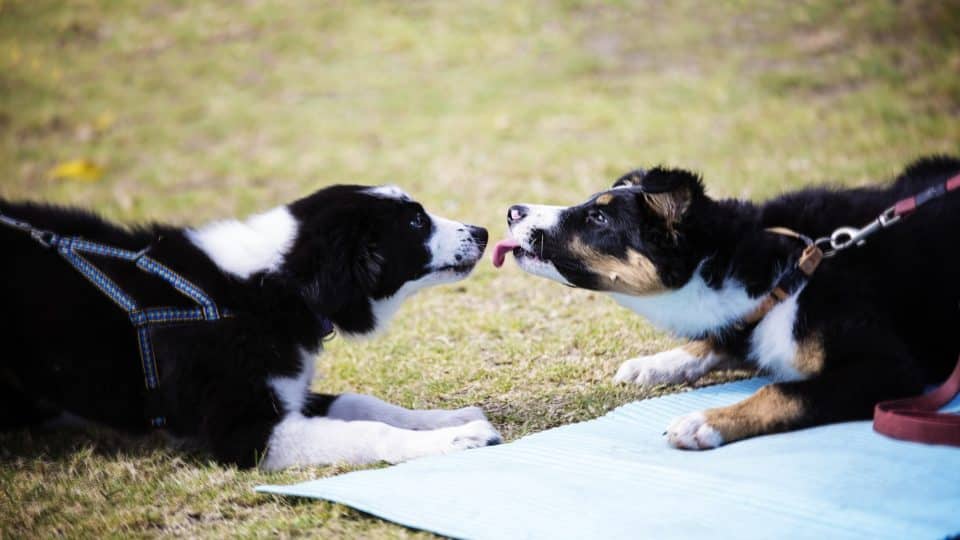
You and your pup are head over heels for each other. You live for your pup’s kisses, cuddles, and play sessions. But can dogs share the love with their fellow pups? Yes, dogs can fall in love, says Paige Adams, a veterinarian with Etowah Veterinary Hospital. While we can’t ask our pups to wax poetic about their feelings, we can turn to science for a clue into how their brains work.
A 2014 study found that dogs’ brains released oxytocin, AKA the “love hormone,” when they interacted positively with other dogs. Interestingly, though, researchers found that the dogs’ oxytocin levels didn’t rise when they initiated interactions—they rose when their fellow dogs reciprocated. In other words, your pup loves it when their friends love them back!

If you’re curious to learn more about puppy love, read on to discover signs that your dog loves their friends. Plus, discover tips on fostering loving relationships between dogs.
4 Signs Your Dog Loves Another Dog
“Dogs cannot communicate verbally, but they use body language and behaviour to express their emotions,” Dr Adams says.
She explains that a dog’s “love language” is similar to a human who has a preference for physical touch and acts of service. So, while you may prefer flowers and chocolates, your dog may like a good petting session followed by a hearty meal.
Additionally, Dr Adams says that if your dog loves another dog, they may engage in the following activities together.
- Tail-wagging. Does your dog’s tail move at a mile a minute when they’re with their friends? If so, it’s safe to assume they’re happy in their companion’s company.
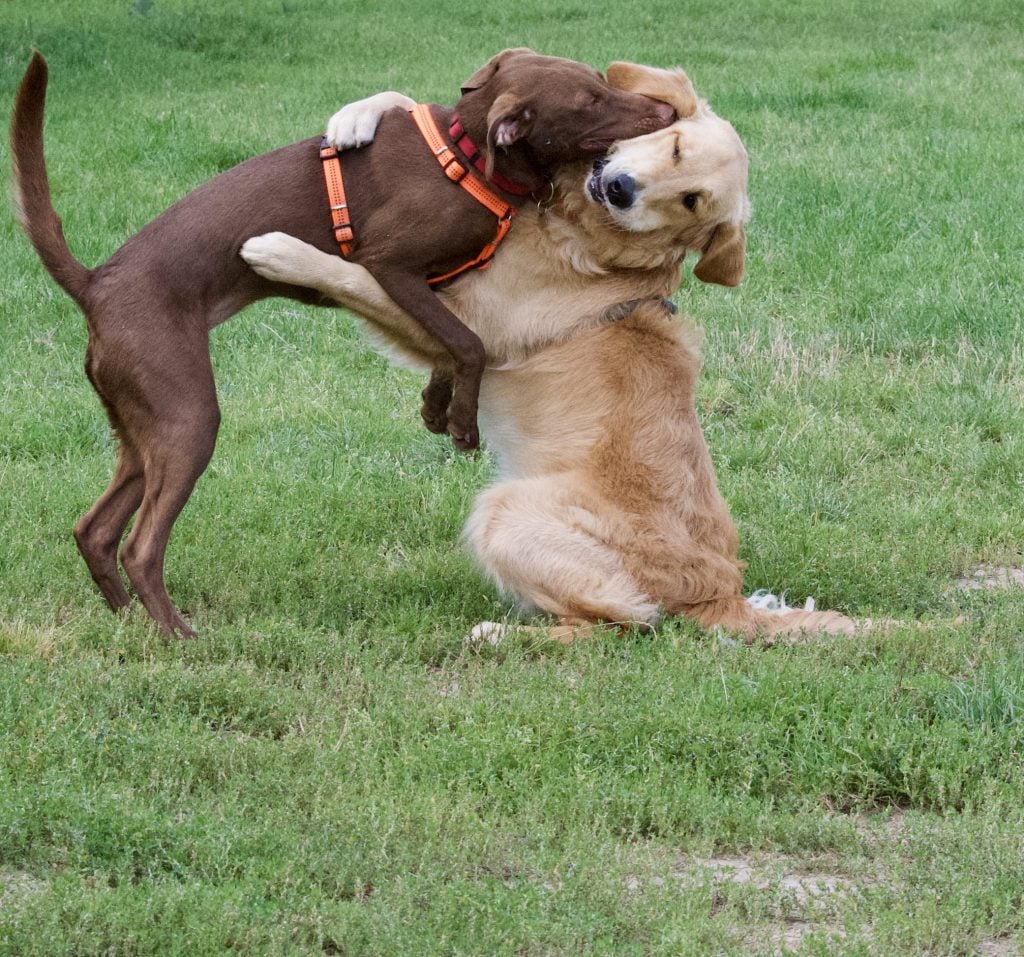
- Playing together. Your dogs may bond by playing games together, like tug of war or good old-fashioned rough and tumble.
- Physical touch. You might enjoy cuddling up on the couch with your sweetheart during an evening in. Dr Adams says that dogs enjoy cuddling with other dogs they love, too!
- Hanging out together. Sometimes, your dog wants to spend time with their fellow dogs at the dog park or on a private playdate. Think of it as going over to a friend’s house to spend time together.
How Do Dogs Fall In Love With Other Dogs?
Once you recognise the signs of puppy love, it’s time to figure out how it happens. But how does your dog choose the object of their affection?
Dr Adams says that dogs are more likely to bond with other dogs that have similar personalities, play styles, and energy levels. Similar-aged dogs may also be more likely to get along since a young puppy may not understand an older dog’s body language—especially their cues to knock it off.
In other words, opposites don’t attract in puppy love. Instead, Dr Adams explains that dogs who can understand their fellow pup’s wants and needs are more likely to grow closer.
Do dogs of the same breed fall in love more easily?
Yes! Dr Adams says that dogs of the same breed may have an easier time bonding because they may share similar play styles and body language. For instance, she says that her pet Border Collies sometimes have a hard time socialising with gundogs and Labrador Retrievers who love to play wild. Instead, her dogs naturally click with other Border Collies since they have similar personalities.
iStock/Nicolas Jooris-Ancion
Do Dogs Love Their Puppies?
If the amount of care and effort they put in is any indication, dogs love their puppies.
A female dog typically won’t leave her puppies for three weeks after their birth, except for eating and potty breaks. During that time, she feeds, cleans, and constantly monitors them. Licks and nuzzles trigger a flood of oxytocin, strengthening the bond.
Male dogs usually don’t have an automatic, loving bond with their pups the way female dogs do. But they can come to love their pups through play, and their interactions after the weaning period can form a strong bond.
Puppies are also likely to love their littermates, though memories don’t develop quite the same way in very young dogs. They may or may not recognise their brothers and sisters after several years of separation, but they’re very likely to recognise their moms.
And if your puppy grows up playing with their littermates, that bond is likely to be full of love, too.
How To Foster Healthy Relationships Between Dogs
What if your dog wants to share the love with another dog who doesn’t return the feeling, like a new puppy and a grumpy older dog? In this case, Dr Adams suggests a proper introduction to get them off to the right start.
Ways to initiate a successful dog introduction include:
- Meeting outside on neutral territory, like the park, instead of in the house or garden.
- Keeping both dogs on a lead for better control.
- Ensuring you have enough resources for both dogs, like food bowls, toys, and beds, so no one has to share.
- Supervising play sessions. If one dog wants to keep playing after the other taps out, Dr Adams suggests stepping in to redirect the more playful dog.
Additionally, Dr Adams says you can encourage affection between dogs by ensuring they always have positive experiences together.
For example, try taking them out together for an activity they’ll both enjoy, like bringing your water-loving breeds to the beach or giving your couch potato pups a ride in a shopping cart through the pet store. Arranging doggie dates like these can be a fantastic way to help your best friends get along and make memories with your pups.
Takeaway
Your dog won’t necessarily want to take a date out for spaghetti, like in Lady and The Tramp. But they can absolutely love their siblings, playmates, and other doggie friends. If your dog loves another dog, you may notice them initiating play, physical contact, or just hanging out and enjoying each other’s company.
Of course, your dog’s affection isn’t limited only to fellow dogs. Your dog can share love with you through their soft stares, tail wags, warm greetings, cuddles, and more. Make sure you return the favour and show your dog you love them right back!