
Broccoli might be a nutritional powerhouse for humans, but it’s less of a superfood for dogs. While dogs can eat broccoli both raw and cooked, too much of this vegetable can give your dog an upset stomach.
As omnivores, dogs benefit from eating a range of different fruits and vegetables for the same reasons humans do: these foods are low in fat and sugar and high in vitamins and fibre. Broccoli, for instance, contains plenty of vitamin C and healthy fibre.

“Broccoli is a great source of nutrients and can add some variety to your dog’s meals,” said veterinarian Dr Primrose Moss. That said, she recommends feeding it to your dog in moderation alongside a balanced diet. That’s because broccoli is also rich in isothiocyanate, and eating too much of this compound can cause stomach irritation in dogs.
Below, get all the details on safely adding broccoli to your dog’s diet, including how much they can eat and the best way to prepare it.
Is Broccoli Dangerous For Dogs?
Broccoli is packed with a compound called isothiocyanate, which certain plants produce as a defence against diseases. This compound gives cruciferous vegetables like broccoli, Brussels sprouts, and cauliflower their distinctive taste.
In dogs, isothiocyanate can also cause gastric irritation, from abdominal pain to digestive issues, according to Dr Moss. She adds, though, that most healthy dogs can eat a small amount of broccoli without any problems.
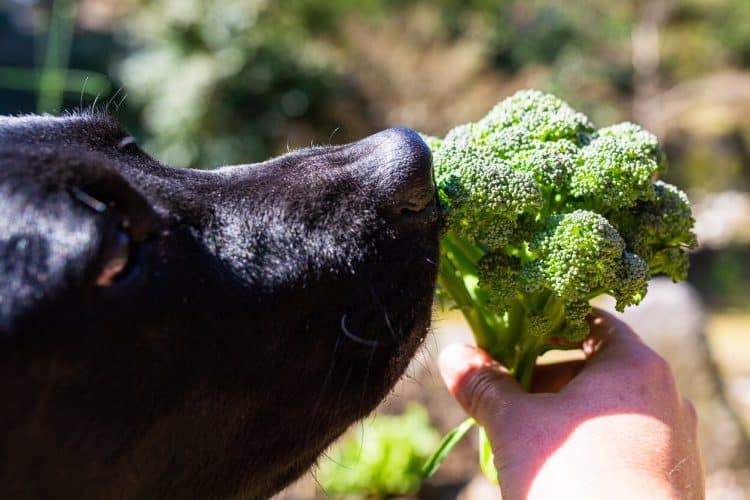
Just keep in mind that your dog may have difficulties digesting broccoli and other cruciferous vegetables, cautions Dr Lindsay Wendt, veterinarian and advisor to Badlands Ranch. Feeding your dog too much broccoli can lead to excessive gas production in the intestinal tract, Dr Wendt says.
How much broccoli is toxic for dogs?
Broccoli isn’t toxic to dogs. In fact, no scientific studies have shown that isothiocyanate causes toxicity in dogs, according to Dr Wendt.
Yet even though dogs can eat broccoli, you generally won’t want to give them very much—even if you chow down on broccoli all the time!
Human and dog digestive systems are different, so food that’s perfectly safe and healthy for you may not make the best meal for your dog.
In humans, isothiocyanate functions as an anti-inflammatory, so broccoli may have benefits for people living with arthritis and other inflammatory diseases. Researchers are also investigating isothiocyanate as a possible cancer drug.
On the other hand, dogs who eat a lot of broccoli can develop an upset stomach. You may also notice they pass more gas than usual or even have diarrhoea.
How Much Broccoli Can Dogs Eat?
“How much a dog can eat depends on the individual dog—but a rule of thumb is that broccoli should make up less than 10% of their daily calories,” Dr Moss says.
This 10% rule is a good rule of thumb when giving your dog any fruits, vegetables, or other treats. In line with this guideline, a portion for a small dog or puppy might only be one floret. A larger dog could eat more broccoli and still stay within this 10% limit.
Just keep in mind that you’ll want to start out slow when feeding your dog broccoli to make sure they can digest it well. Pay attention to any signs of stomach issues, like gas or diarrhoea.
Does Broccoli Have Any Benefits For Dogs?
Like many other fruits and vegetables, broccoli contains plenty of nourishing ingredients for dogs. It’s a source of dietary fibre that provides vitamins C and K, folate, antioxidants, and minerals like potassium and calcium, Dr Wendt says.
The chart below outlines some of broccoli’s benefits.
| Nutrient | Benefit for dogs |
| Vitamin K | This vitamin helps improve bone strength and density. |
| Vitamin C | An antioxidant that helps boost the immune system and lower inflammation. |
| Potassium | This essential electrolyte helps extract energy from food. |
| Calcium | This mineral helps build healthy bones, teeth, and muscles. |
| Fibre | This type of carbohydrate helps maintain a healthy digestive tract and regulate blood pressure. |
Can Dogs Eat The Whole Head of Broccoli?
When you eat broccoli, you may just eat the florets—and florets are the perfect way to introduce your dog to broccoli, since they’re a little softer than the stalk.
However, both you and your dog can eat all parts of broccoli, including the stalk! You’ll just want to take a little more care with the stalk, Dr Moss says, since it could potentially cause choking and is a little harder to digest.
Because of the risk of choking, you’ll want to give your dog pieces of broccoli in bite-size pieces, or pieces that are roughly the same size as the treats and food they usually eat.
Dr Wendt also recommends always supervising your dog the first time you give them any new food, just to make sure it’s safe.
The size of the broccoli pieces you give your dog will depend on their size, Dr Moss says. “Remember that many dogs are smaller than toddlers, so they could choke on similarly small pieces of food.”
You’ll also want to avoid tossing your dog a whole head of broccoli to munch on. This doesn’t just pose a choking risk, it would also give your dog too much fibre all at once, which could upset their stomach, Dr Wendt says.
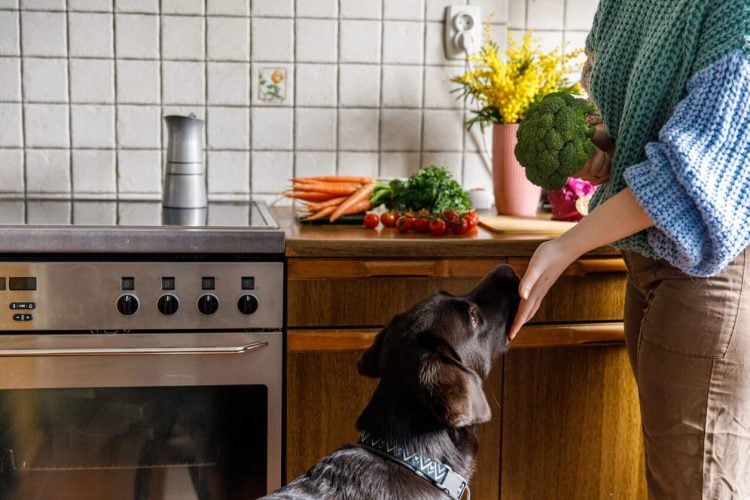
Which Broccoli Prep Methods Are Safe For Dogs?
The chart below outlines some common cooking methods for broccoli.
| Broccoli prep method | Safe for dogs? | Easily digestible? | Does it reduce nutritional content? |
| Raw | Yes | Medium | No |
| Stewed | Yes | Yes | Decreases levels of isothiocyanates |
| Boiled | Yes | Yes | Decreases levels of isothiocyanates |
| Chip-baking | Yes | Yes | Decreases levels of isothiocyanates |
| Dehydrating | No | Harder for some dogs to chew | No |
| Stir-frying | No | Not recommended | Increases levels of isothiocyanates |
| Steaming | Yes | Not recommended | Increases levels of isothiocyanates |
| Roasting | No | Not recommended | Yes |
4 Green Veggies To Give Your Dog Instead
If you’re hoping to increase your dog’s intake of nutritious green veggies, a few other options include:
Some of these veggies may be easier for your dog to digest—and they may even prefer them to broccoli.
For dogs with urinary issues, though, broccoli may be a better choice than spinach.
“Broccoli is low in oxalates, so this is a better option than spinach or other high-oxalate foods for dogs with a history of certain urinary stones, Dr Wendt says. She adds that it’s important to talk to your vet before making any dietary changes if your dog has a history of urinary issues.
At the end of the day, green veggies like broccoli make a great addition to your dog’s diet—as long as they stay a treat, not a main percentage of your dog’s diet.