Leaving your cat behind when you travel can be tough. Naturally, you want them to feel happy and comfortable while you’re away. But what’s the best way to ensure that? Is it better to board your cat at a cattery, or should you leave them at home with a sitter?

There isn’t a one-size-fits-all answer. Each option has its pros and cons, and every cat has their own needs and preferences. While some cats thrive in a social boarding environment, others may feel anxious and prefer to stay at home. Others still value their outside time and would do better in an environment where that’s still an option.
Disruption to their daily outdoor routine can be a major factor in choosing between a cattery and staying at home. Understanding your cat’s personality and behaviour can help you make an informed choice.
We spoke with Dr Berkcan Yanar, a veterinarian with PawsRank, about how to determine what’s best for your feline friend. With his insight, we’ll examine the various cat care options available and which types are best for different kinds of cats. We’ll also discuss how to ensure your kitty has a good experience while you’re away, whether you board them or leave them at home.
Cat Care Options
Choosing the right type of cat care depends on your cat’s personality, your budget, and the duration of your absence. Here’s a quick rundown of three popular options.
Drop-in visits
Ideal for short trips away, drop-in visits involve a pet sitter coming to your home to check on your cat. During this time, they’ll handle feeding, playtime, and litter tray cleaning. These check-ins typically last between 30 and 60 minutes and should be scheduled once or twice a day to ensure your cat is well cared for (though how long your kitty can be alone will depend on their unique set of needs).
Drop-in visits work well for cats who are relatively independent and comfortable at home. It’s generally more affordable than house-sitting, but your cat will be alone for longer periods.
House-sitting
In this option, a house sitter stays in your home for the duration of your trip, offering continuous care. This is ideal for cats who require extra attention or for those who become stressed when left alone. Typically, house sitting is the most expensive option, but it comes with bonuses, such as having someone collect your post and keep an eye on your home while you’re away.
Cattery
Catteries are excellent options for cats with special medical needs. Some facilities cater specifically to cats, offering a quieter, more relaxed experience with secure outdoor runs or balconies. Plus, a cattery can be less expensive than hiring a pet sitter. However, for most healthy cats, boarding is a stressful experience, especially if they’re used to being outside.
Before you settle on a cattery, check the star rating on their Animal Activities License (AAL). A five-star rating means they do everything possible to meet a cat’s needs and keep them safe, secure, and comfortable in line with regulations.
Is a Cattery a Good Fit for My Cat?
Whether or not it’s better to board a cat in a cattery or leave them at home will depend on, well, your cat. However, Cats Protection recommend a home sitter as the safest, least distressing option while you’re away. Here’s a quick look at which types of care work best for different types of cats.
| Boarding | Drop Ins | House Sitting | |
| Kittens | X | X | |
| Shy or reclusive cats | X | ||
| Anxious cats | X | X | |
| Sociable, outgoing cats | X | X | |
| Outdoor or free-roaming cats | X | X | |
| Cats with medical issues | X | X | |
| Senior cats (depending on health) | X | X | X |
| Short trips | X | ||
| Long trips | X | X |
Kittens
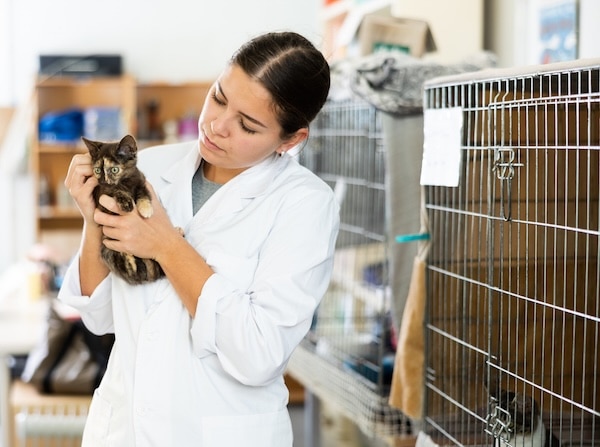
Kittens need more hands-on attention, and a good cattery will provide plenty of one-on-one time. And because kittens tend to be more flexible and curious, they generally adapt well to the change in scenery. Kittens are also good candidates for house-sitting because they’ll receive constant supervision and companionship.
Drop-in visits, however, may not be ideal for these playful little ones. Kittens need more interaction and supervision than a 30- or 60-minute visit can offer.
JackF via iStock
Seniors and cats with health issues
Many older cats do best in the comfort of their own homes. Senior cats tend to be creatures of habit, and changes in routine can really rattle them. Unless a senior cat requires extensive medical attention, Dr Yanar says keeping them at home with a qualified sitter is less stressful.
For cats with health issues that require regular monitoring—such as those needing daily medications or injections—a cattery may be a better choice. These facilities are equipped to address specific medical needs that a typical pet sitter may not be able to handle, as Dr Yanar points out.
“I also recommend catteries for cats with chronic medical conditions that need frequent attention, such as diabetic cats or those with kidney disease, because boarding staff can administer medications on a regular basis and alert a vet if there is something amiss,” he adds.
However, unless it’s attached to a vet clinic, many commercial catteries only accept cats who need medicines they can take by mouth or as a skin treatment. If a cat has more complex needs, such as regular insulin injections, you may need to approach vet-attached catteries.
Anxious cats
Introverted or fearful cats usually find boarding to be a stressful ordeal. For anxious cats, the new smells, unfamiliar surroundings, and car travel associated with boarding can be overwhelming. Yanar says these cats may hide the entire time or refuse to eat. Some may even develop stress-related problems, like urinary issues.
Outdoor or free-roaming cats
Traditional cattery boarding can feel too restrictive for cats accustomed to roaming outside. While high-standard catteries offer secure outdoor runs, indoor confinement may cause stress or trigger behavioural changes in habitual roamers. If your cat thrives on outdoor access, staying at home with a house sitter or drop-in visits is usually the smoother option. This means cat flap routines and curfews can be maintained.
Sociable cats
While cats are independent creatures, they still require companionship—some more than others. Highly social, outgoing, and adaptable cats tend to do well in boarding situations. For cats who get stressed when left alone for long periods, Yanar says a cattery with trained staff available 24/7 may offer a more comforting environment.
Short trips
For trips less than 72 hours, a drop-in cat sitter may suffice. Especially if the cat is independent and low-maintenance, adds Yanar. But again, consider your cat’s need for human attention: If they’re an affectionate Velcro cat, a house-sitter who stays at your place may be the best option.
Long trips
For longer trips (more than 72 hours), Yanar recommends boarding your cat in a cattery. The idea is to maintain consistency in your cat’s routine. A boarding facility with trained staff can ensure strict adherence to things like your cat’s feeding schedule, litter tray cleaning, and medication administration.
Do Cats Get Lonely When You’re Gone?
Cats can feel lonely when their humans are away for long periods, so it’s important to make their experience as comfortable as possible. “The key to keeping a cat content while you are away is familiarity,” says Yanar. For cats being boarded, he suggests bringing along some comfort items from home, like their favourite blanket or a piece of your clothing. Familiar smells can also be incredibly soothing.
If you go with a house sitter or schedule drop-ins, Yanar recommends choosing a cat sitter your cat already knows and trusts. Consistency is also crucial; ensure all sitters adhere to your cat’s feeding schedule, litter tray maintenance, cat flap timings (such as locking flaps before dusk), and playtime routine to help them feel more at home. Additionally, consider looking into the benefits of calming pheromone diffusers and sprays, such as Feliway.
Finally, if you need to transport your cat, prepare the carrier ahead of time by placing it out a couple of weeks before your trip. Include some of their toys or their blanket inside to make it a happy place.
Whether you board your cat, hire a house sitter, or schedule drop-ins, a bit of preparation ahead of time can ensure they stay happy while you’re away!