
- Not a substitute for professional veterinary help.
Plenty of people enjoy the excitement and spectacle of fireworks, but many dogs find the loud sounds extremely distressing.

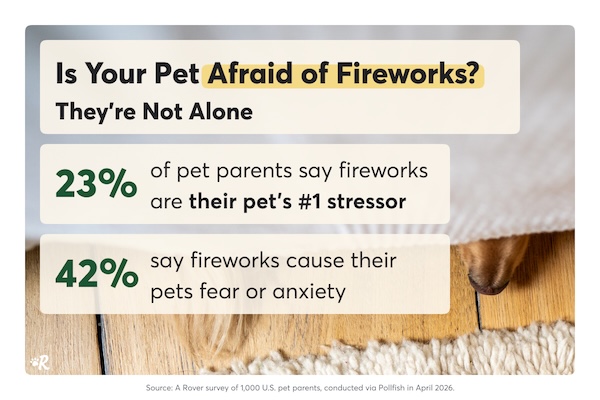
Dogs don’t understand that fireworks are harmless—so the bangs and flashes can seem very threatening. According to a 2026 Rover survey, 51% of pet parents say their dog or cat is afraid of fireworks, with 15% dubbing them the number-one stressor for their pet.
It’s so bad that 52% of pet parents say they would outlaw fireworks to spare pets from the fear and anxiety they can cause. And 74% of pet parents have skipped a fireworks show to stay home and provide comfort for their pet instead.
You may not be able to completely shelter your dog from fireworks, but the right preparation and training can help make these events far less overwhelming. Here’s what to know about fireworks fear and what you can to do help.
8 Reasons Dogs Are Scared of Fireworks
Fear of fireworks in dogs is a form of noise phobia, where loud sounds trigger an intense fear response. Here are the most common reasons behind this fear.
Perceived threat
Fireworks aren’t an everyday sound that dogs are familiar with. Since they can’t identify or understand the source of the noise, their brains interpret it as danger. This triggers their fight-or-flight response.
The sympathetic nervous system kicks in, flooding the body with stress hormones like cortisol and adrenaline, explains Dr. Bethany Hsia, veterinarian and co-founder of CodaPet. That’s what drives reactions like shaking, panting, and pacing.
It’s not surprising that when it comes to coping with fireworks, 66% of pet parents say their biggest concern is their pet’s level of stress or anxiety. Others worry that their frightened pet will run away (18%), be destructive (7%), or accidentally harm themselves (4%).
Sensory overload
“For many dogs, the fear isn’t just a reaction to sound, but a multi-sensory experience,” Dr. Hsia says. In addition to loud bangs, fireworks produce whistling sounds, bright flashes, and vibrations. This flood of sensory input can quickly overwhelm a dog’s senses and nervous system.
Unpredictability
Fireworks are random and irregular, which makes it harder for dogs to anticipate or mentally prepare for what’s coming next. This can increase fear.
Physical discomfort or pain
Fireworks are extremely loud—far louder than everyday sounds. Since dogs have much more sensitive hearing than people do, the booms can sometimes cause ear pain or a painful ear pressure sensation.
Lack of early exposure
Dogs who weren’t gently introduced to a variety of sounds during their critical socialisation window (before about 12 weeks of age) are more likely to develop noise sensitivities later on. Without that positive exposure early in life—and gradual desensitisation—sounds like fireworks can feel especially intense and frightening in adulthood.
Past negative experiences
A single bad experience, like being scared during a fireworks show or another loud event, can leave a lasting impression, causing your dog to associate loud noises with fear.
Learned behaviour from other dogs
Dogs can pick up on each other’s reactions. So if one dog in your home gets stressed or panics during fireworks, others in the household may follow suit.
Genetics and breed tendencies
Some dogs are simply more sensitive to sound than others, so they may have a harder time with fireworks than other dogs.
Signs of Fear in Dogs
Fireworks can push dogs into a heightened state of stress or panic. You might notice:
- Sudden alertness or hypervigilance: Your dog may seem on edge and react to every sound or movement.
- Ears pinned back: Ears flattened against the head are a common sign of fear or discomfort.
- Shaking or trembling: Full-body shaking is a classic stress response that may continue even after the noise stops.
- Tucked tail: A tail held low or tucked tightly between the legs is a common sign your dog is feeling scared or anxious.
- Panting or drooling: Heavy panting or excessive drool without physical activity can signal anxiety.
- Restlessness: Your dog may keep moving around the house or pacing.
- Hiding or attempting to escape: Many dogs will seek hiding spots or try to get out of the house.
- Refusing to go outside: Your dog may resist going out for potty breaks if they associate the outdoors with loud noises.
- Excessive vocalising: Some dogs respond by barking, whining, or howling more than usual.
- Clinginess or seeking constant reassurance: Your dog may follow you closely or look for extra comfort and attention.
- Whale eye: You may see the whites of your dog’s eyes as they turn their head away while keeping their gaze fixed. This is a common sign of fear or stress.
These symptoms can last beyond the fireworks themselves. According to Dr. Hsia, cortisol levels may take hours or even days to return to normal, depending on the dog.
Fear of fireworks generally doesn’t go away on its own, according to Hayley Kenner, a professional dog trainer and co-owner of Revival Dog Training. “Once that fear takes hold, it usually gets worse with every exposure unless you address it.”
Checklist for Reducing Fireworks Anxiety in Dogs
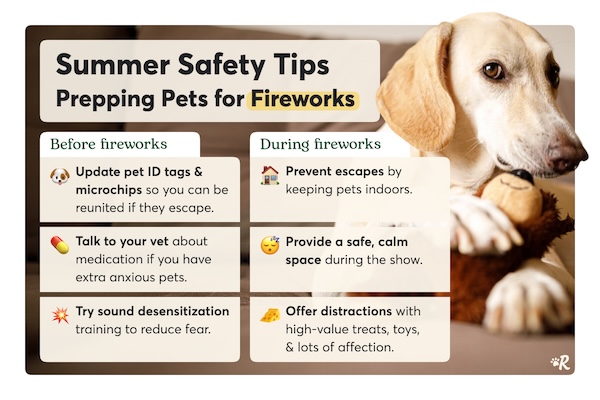
Before a known fireworks event, it’s important to plan ahead and set up an environment that helps reduce your dog’s firework anxiety. Start these steps days in advance—don’t wait until fireworks have started.
Here’s what to do:
- Have anxiety medication ready. Plan to ask your vet about anti-anxiety medication a week or so before the event. Trazodone and gabapentin are two of the most commonly prescribed options, given individually or together, says Dr. Ray Spragley, veterinarian and founder of Zen Dog Veterinary Care. He recommends doing a test dose on a calm day to find out how your dog responds.
- Ask your vet about Sileo. This sound-specific prescription medication helps treat anxiety triggered by loud noises, like fireworks and thunderstorms. A gel you apply to the dog’s gums, this medication targets the anxiety pathway without sedating your dog, Dr. Hsia explains. While it’s ideal to give it 30-60 minutes before a noise event, it works quickly and can still be given even if fireworks have already started. You can also give a second dose during prolonged events.
- Create a safe, quiet space indoors. During fireworks, stay with your dog in a calm indoor area set up with cosy bedding and favourite toys. Pull the blinds or close the curtains to block out flashes of light.
- Use white noise or calming music. These sounds help muffle the booms and create a more predictable sound environment.
- Put on a pressure wrap. Vest-like wraps, like the ThunderShirt, provide gentle, constant pressure that may help some dogs feel more secure.
- Try calming supplements or pheromones. While calming supplements like CBD and pheromones won’t work for all dogs, some pet parents find them helpful, especially when used consistently.
- Plan a “staycation” in a quieter area. If your dog is very reactive to fireworks, consider travelling somewhere where consumer fireworks are illegal, if possible.
Long-term strategies to reduce fear of fireworks in dogs
The strategies above can help, but they’re short-term fixes. For lasting change, reducing firework anxiety means addressing the fear at its source. Here’s what to try:
- Start sound desensitisation training. Gradually expose your dog to low-level recordings of fireworks, rewarding them generously when they stay calm or continue their normal activities. Over time, this helps build a more positive association. The process can take weeks to months, but it’s one of the most effective long-term solutions. (Download our sound desensitisation worksheet to get started!)
- Use counterconditioning. Pair real-life triggers (like distant pops) with something your dog loves, like high-value treats or a favourite game. This strategy can help shift their emotional response to the noise.
- Work with a professional trainer or behaviourist. This is especially important for dogs with severe or worsening fear of fireworks. A professional can guide you through a structured desensitisation plan.
FAQs About Preparing Your Dog for Fireworks
Should I stay with my dog during fireworks?
Kenner strongly encourages pet parents to stay home with their dogs when fireworks are expected. She explains that your presence can help them feel safer, but it’s important to remain calm, confident, and reassuring—not stressed or frantic. Dogs take cues from their humans. Staying relaxed helps show your dog there’s no danger.
While dogs aren’t diagnosed with PTSD in the same way humans are, Dr. Hsia says repeated exposure to frightening events can lead to increasingly severe and long-lasting fear responses. Without intervention, fear of fireworks will often get worse over time.
Which breeds are more likely to be afraid of fireworks?
There’s no universal rule, but some dog breeds tend to be more sensitive to noise than others. Herding breeds, for example, tend to react more strongly to loud sounds, while gun dogs can often tolerate these loud noises a little better than some other breeds. That said, your dog’s personality and past experiences usually matter more than their breed.
Should I still walk my dog if they’re afraid of fireworks?
It’s important to walk your dog anyway, but the timing matters. Plan your walk for earlier in the day, well before fireworks are likely to start. Avoid evening outings on known firework-heavy days, such as Canada Day or New Year’s Eve. Even distant pops can trigger fear and cause dogs to panic or try to escape.