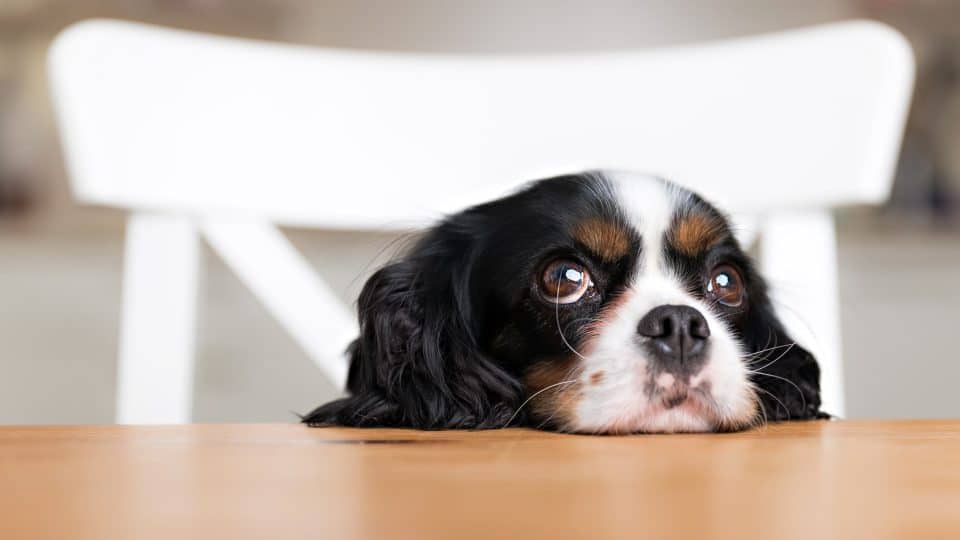
As the old saying goes, ‘The eyes have it.’ When it comes to our dogs, we’re suckers for their signature puppy dog eyes. This is why that ‘look’ often makes an appearance when they’re after an extra treat or have chewed up your clothing. Unable to talk, dogs use their eyes to communicate with humans and other dogs.
While particular looks may convey anger or humourous displeasure, puppy dog eyes are a sign of trust and can help establish a crucial emotional connection and bond with their pet parent. Below, discover why your dog loves flashing those adorable eyes at you and how to make your bond better with your dog through eye contact.

How Did Puppy Dog Eyes Evolve?
Experts believe that dogs’ ability—and tendency—to adopt that puppy dog gaze isn’t something they’ve always possessed. Instead, this developed during domestication, as dogs realised that humans prefer paedomorphic (childlike) characteristics. Adopting juvenile-like behaviours also makes them appear less aggressive and more appealing to potential parents.
Through domestication and selective breeding, dogs have physically evolved to adopt the puppy dog gaze. They’ve developed a particular muscle that allows them to lift their eyebrows to make their eyes appear larger. One study found that dogs are more likely to use these eyebrow muscles when their pet parent is looking at them. Meanwhile, researchers in a shelter noticed dogs who moved this facial muscle getting adopted faster.
Why People Love Puppy Dog Eyes
1. Humans prefer bigger eyes
Studies suggest humans have an innate preference for larger eyes; the more vulnerable appearance of the puppy dog gaze motivates feelings of caretaking within us. In a study where participants were shown images of dogs with slightly altered physical characteristics, they preferred dogs with larger, wider-set eyes.
2. They convey vulnerability
Puppy dog eyes involve large eyes with a soft stare that comprises a good dose of vulnerability. Despite being associated with dogs, this look is something humans—particularly children—have displayed for thousands of years, and we have the research to prove it.
3. They are more emotive
Eye contact is a vital form of communication between dogs and parents. Humans look into a dog’s eyes to help gauge their emotions. Meanwhile, dogs use visual cues to determine their pet parent’s readiness to communicate. While dogs look at various facial features to ‘read’ us, research reveals that the eyes are the most important element in helping them to process visual human emotions and messages.
4. They give an oxytocin boost
Looking into puppy dog eyes impacts humans emotionally and physiologically. In fact, research shows when a dog gazes at their pet parent, it leads to higher concentrations of oxytocin. Caroline Wilkinson, a certified animal behaviourist with Barket Place, says oxytocin is associated with bonding and social connections.
5. They are easy to read
Lastly, dogs use their eyes and body language to communicate their feelings and send messages. For example, holding eye contact while dipping their body into a bow indicates they want to play. Meanwhile, avoiding eye contact and cowering their body can signal stress or fear.
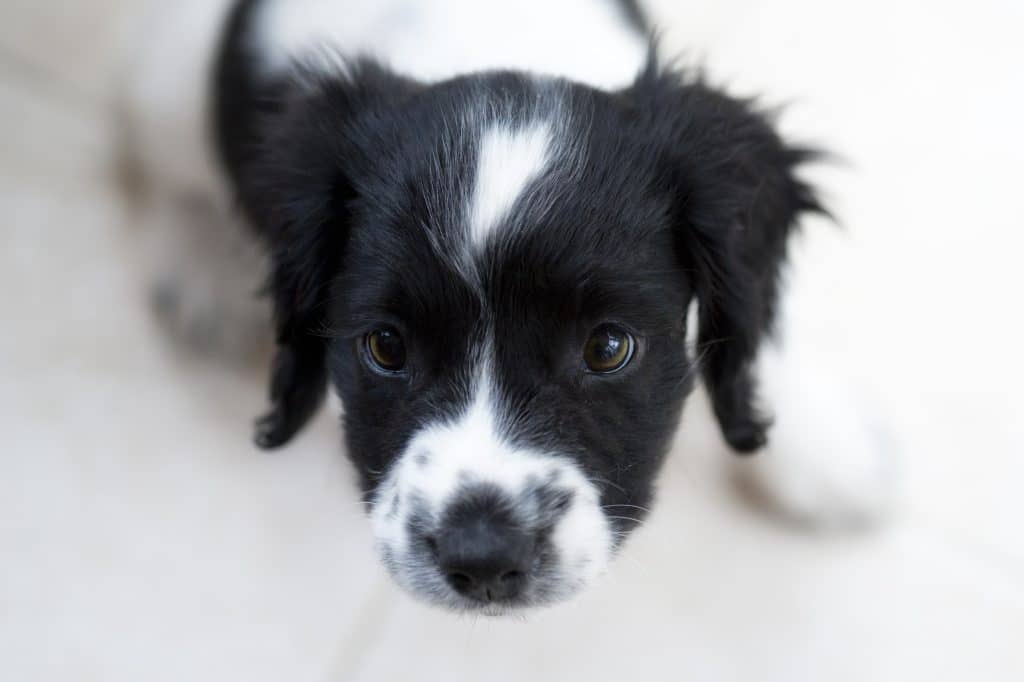
iStock/dageldog
How to Use Eye Contact to Deepen Your Bond
In addition to the bonding hormone oxytocin, science associates eye contact, like puppy dog eyes, with improved mood and enhanced trust. So, how can you encourage those moments of eye-to-eye connection? Here’s some how-to’s for eye contact from Wilkinson:
- Speak with them quietly and softly
- Engage in play or agility training
- Give them a reward, like a tasty treat
- Pet them in their favourite spots, like around the ears or near their tail
- Avoid intense eye contact or staring too deeply
Unsure if your dog likes eye contact? It might be their breed! Researchers in Hungary found that breed and personality can influence a dog’s likelihood to engage in eye contact. Young, playful dogs are more likely to hold a gaze than lower-energy, stubborn pups. So don’t take it personally if your dog doesn’t seem too keen to look you in the eye!
Takeaway
Puppy dog eyes are one of the many adorable traits we love about our pups. While it might just seem like a tactic to get extra treats or pets, dogs look at us to show their affection and how much they trust us. Remember that the next time your pup gives you the cutest puppy dog eyes you’ve ever seen.
They can also be a sign that your dog is enjoying their time. A photo from your sitter or boarding facility where your dog showing off those puppy eyes is likely a sign that they’re having a good time. Keep in mind that looks can be deceiving! Be sure to learn the all the signs of canine stress as reading your dog’s emotions is about observing the whole body, not just the eyes.