- Not a substitute for professional veterinary help.
Finding the right dog sitter is important for any pet parent. But when you have a reactive or anxious dog, it becomes even more crucial to choose a sitter who will make your pup feel comfortable, safe, and cared for while you’re away.
Reactive and anxious dogs often need extra time to adjust to new people. Ideally, you’ll want to find a sitter who understands the unique needs of your pup and is willing to build a relationship with them through regular visits. By slowly building trust, you’ll help your dog feel more comfortable and less stressed each time the sitter comes back.

Here’s everything you need to know about getting a new pet sitter for a reactive or anxious dog. In this guide, we’ll discuss how to introduce a new sitter to your pup, what to practice with the sitter while you’re still home, and how to set everyone up for success.
Introductions
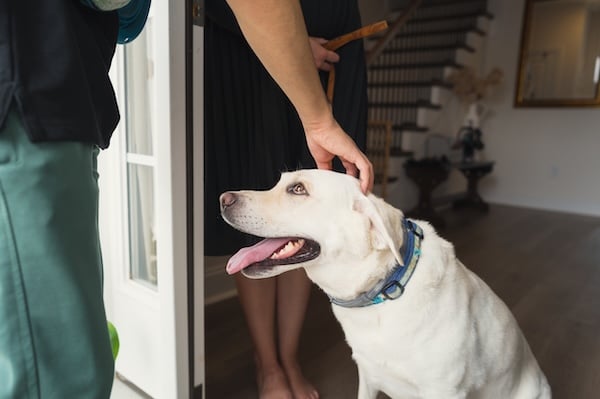
When introducing a reactive or anxious dog to a new sitter, aim for a quiet, calm, and slow introduction. Here are some expert tips on how to make the first meeting go smoothly, according to Ali Smith, a professional dog trainer and behaviour consultant at Maven.
Carefully plan the meeting place
Where you plan your meeting—whether that be at home or in a more neutral location in your neighbourhood—will depend on what triggers your dog’s anxiety or reactivity.
“If a dog is worried about strangers entering the home, I often like meeting elsewhere first and then walking home together,” says Smith. “Suddenly, the sitter isn’t the stranger who appeared in my house. They’re someone who arrived with their owner.”
On the other hand, if a dog is more reactive or anxious while out in the world, Smith says the home might actually be the place where they feel the safest for the meeting.
Give the sitter instructions ahead of time
According to Smith, the goal of the first meeting is to make the sitter seem as boring and predictable to your dog as possible. You may even want to direct the sitter to ignore your dog and avoid making eye contact initially to give them time to adjust. “We put so much pressure on dogs to say hello immediately, when a lot of them would much rather gather information first,” notes Smith.
How well the sitter follows your instructions during your meet and greet is also an indicator of how well they’ll stick to your preferences in the future. “If the sitter can’t follow your guidance when they’re in the same room with you, they’re unlikely to do it when they’re on their own with your dog,” says Smith.
Consider getting a trainer on board
Having a professional dog trainer help you acclimatise your pup to a new pet sitter is also a great idea for reactive and anxious dogs. A trainer can help you put together a plan to safely introduce your pup to the sitter and navigate any triggers that may arise.
If you already work with a trainer who knows your dog well, you can even ask them to be present for the first meeting to share important details about your dog’s routines, body language, and specific needs.
Respect your dog’s stress signals
If your dog starts showing signs of stress or discomfort, like excessive barking, trembling, fleeing, or hiding, it’s best to cut the meeting short. Pushing forward and ignoring what your dog is trying to communicate could create a negative association with the sitter.
Repeat sessions until your dog is comfortable
Book regular visits with your sitter while you’re still at home, so your dog has more opportunities to become more comfortable around them. These drop-in visits could include going on walks together or having the sitter spend time with your dog in a low-pressure way, such as sitting nearby while you and your dog go about your normal routine.
Keep scheduling these sessions until your dog appears comfortable enough to be alone with the sitter.
Note: These visits should all be paid time for the sitter after the initial Meet & Greet.
Schedule a practice run
Have your sitter do a trial run where they watch your pet on their own, while you stay close by at a nearby location, like a coffee shop or library. That way, you can be on-call to help if they have any questions or need assistance.
carlofranco via iStock
Things To Practice With a Sitter While You’re Still There
While your pet sitter is at your house with you still there, practice things in your dog’s typical caretaking routine so you can answer any questions they may have. Consider going over the following:
- Putting on and taking off your dog’s collar, harness, or leash
- Going in and out of the house for walks or toilet breaks
- Mealtime routines, including where the food is stored and where your dog eats
- Sleep schedules, including your dog’s preferred location and their typical bedtime routine
- How to administer any medications your dog takes
- How and when to give treats
- How to handle your dog’s most common triggers or stressors (shutting blinds, playing the noise machine, cueing an emergency U-turn, etc.)
- How to play with your dog or give them enrichment activities, like puzzle toys or snuffle mats
Signs a dog is doing well
Here are some signs that a dog is feeling comfortable around the pet sitter:
- Relaxed, soft body language
- Approaching the sitter on their own
- Sniffing the ground (this signals they’re comfortable enough to put their head down around them)
- Accepting treats or food
- Playing with toys or engaging in their normal routines
- Resting near the sitter
Signs a dog needs a break/to be left alone
Meanwhile, these behaviours are signs that a dog is feeling overwhelmed and needs more space or time:
- Growling
- Cowering or trembling
- Lip licking
- Excessive panting without being hot
- Turning away from the sitter or trying to hide
- Closely watching the sitter
- Freezing
- Struggling to settle down
Checklist for Reactive and Anxious Dogs
In addition to verbal instructions, create a checklist for your new sitter to reference. A detailed checklist can prevent miscommunication and help the sitter keep your dog’s routine and schedule consistent.
Here are some items to consider including:
- Your dog’s daily routine, including meal times and exact feeding amounts, frequency of toilet breaks, suggested walk routes, sleeping arrangements, and a medication schedule (if needed)
- Where your dog’s essentials are located, including dog food, water bowls, leads or harnesses, medication, cleaning supplies, etc.
- Handling instructions, including whether the dog likes to be petted/touched, how to put on their harness or lead, and any body language cues to watch for
- A list of your dog’s triggers or anything else that causes stress, whether it’s loud noises, people ringing the doorbell, or other animals
- Stress management strategies, including how to handle the above-mentioned triggers and any techniques or tips to help keep your pet calm
- A list of your dog’s favourite activities, toys, and treats that the sitter can use to keep your pet relaxed and calm
- The general house rules for both the sitter and the dog, including any furniture or room restrictions
- An emergency contact list, including your phone number, the phone number and address for your vet’s office, and the closest 24/7 emergency animal hospital